
Jeff Russo Talks Scoring Music for Earth, Reality, & Beyond
Jeff Russo has probably scored one of your favorite TV shows. He’s a longtime collaborator with Noah Hawley, who is known for Fargo, Legion, and more, and Russo has been the go-to composer for the Star Trek universe for about a decade. Coming from a ’90s rock band background, Russo brings a distinct perspective to all of his projects.
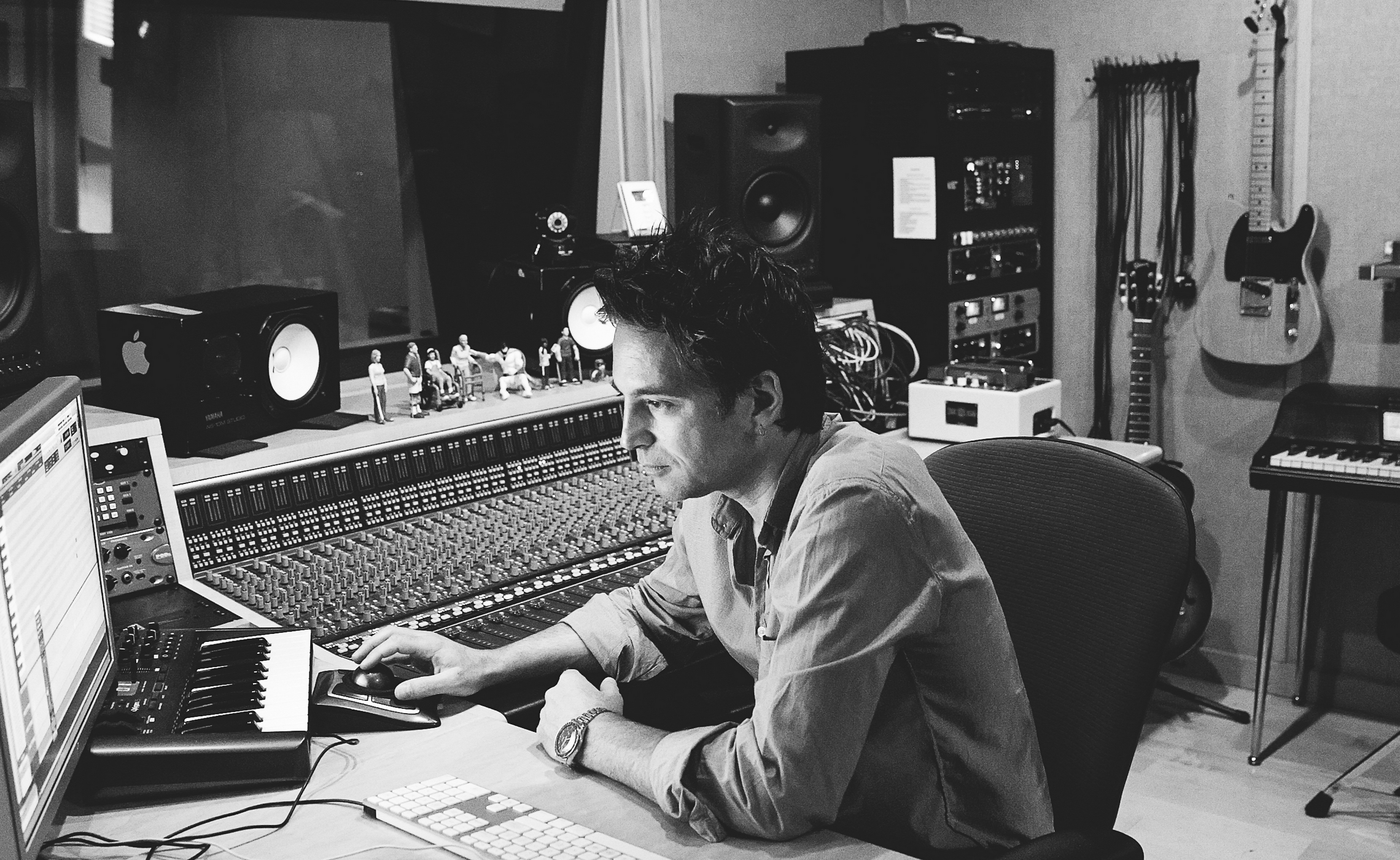
Courtesy of Jeff Russo
You were working on Alien: Earth, Star Trek: Starfleet Academy, The Twisted Tale of Amanda Knox, and For All Mankind in such quick succession with some overlap. Did any of them accidentally influence another?
Jeff Russo: I’ve never actually had that happen where I was writing for something, and then I was like, oh, this would be good for something else. If it doesn’t work for something, it usually just gets put aside because everything is unique. I want to keep everything as unique as possible.
When I sit down to write a score, I want to look at it with fresh eyes. One of the reasons I actually enjoy working on multiple projects is that it shakes the cobwebs loose. If I’m working on one thing for too long, I start to lose perspective. I start to lose my ability to take a step back and look at it for what it is. A lot of times when I’m doing that, I’ll jump to another project to try to shake it all loose.
I found it interesting that of all the projects I listed, three of them are about space in some way. I’m curious how each of these shows has talked about space thematically, and how that has trickled down into your scores.
You bring up an interesting point. I’ve been working in the Star Trek universe for like ten years and I don’t know that it has anything to do with space. For me, I really enjoy working in the sci-fi space, and that’s because I like drama. Sci-fi is really just drama dressed up in a science fiction background. Time travel and space travel are not necessarily things we see in our everyday lives right now, but things that we dream about. I really enjoy writing music for narratives that employ the human experience. Trying to stretch out for these things we’ve dreamed of, like longevity, space travel, equality, all these things we talk about in science fiction.
There are the science fiction stories that are much more dystopian, which I’ve worked on as well. Even the dystopian ones have this ideal, right? We’re in a dystopian world, but typically it’s in a dystopian world with a group of characters who are striving to get out of the dystopian world. That excites me creatively.
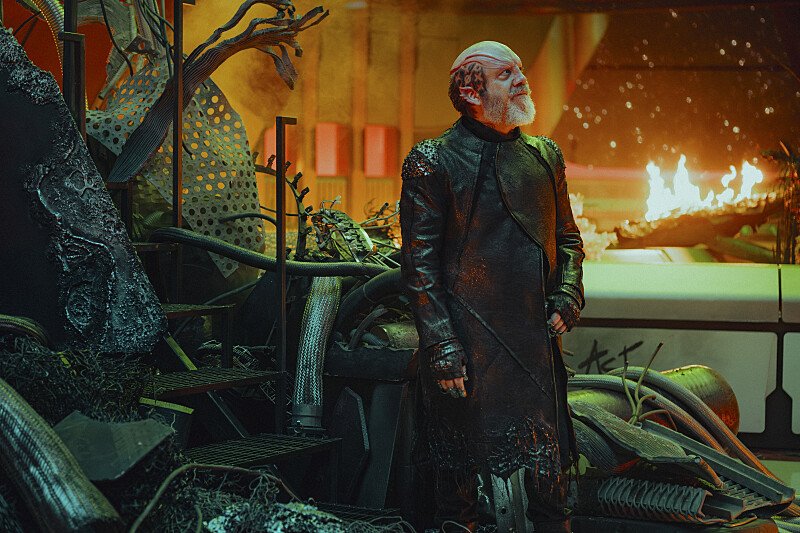
Photo Credit: Brooke Palmer/Paramount+
My dad is a huge Star Trek fan. He wanted me to ask how you get in the mindset of writing the score when you have to introduce an alien group on the show and if it differs at all when introducing humans?
It’s the same. It’s not any different than when I’m introducing a new group of people in any drama. I don’t look at it like, well, these people are from a different planet, so they have to have different-sounding music.
All I know about is humanity, right? From a personal experience. I treat everything as humanity, whether it’s human in actuality. When I’m working on Star Trek, there are many other species and beings from different planets. I treat them all as one. They’re a conscious being. I’m assuming they have feelings and thoughts just like the beings I know. I have to treat it from that perspective.
I don’t know that I ever look at it differently unless I’m told to. Sometimes, a producer or director might say, well, this particular species on this planet, they have this type of experience, so how do you think it relates to the sound of the score? Typically, it’s just the same way I would write anything.
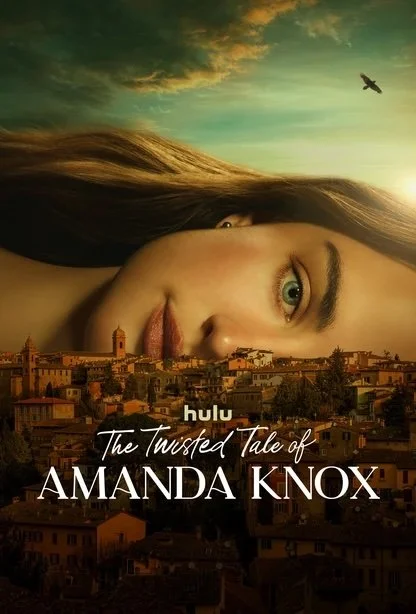
Courtesy of Hulu
The Twisted Tale of Amanda Knox is based on a true story and it’s a bit of a period piece for the early-2000s. You’ve worked in documentaries before and this isn’t a documentary, but it is meant to be telling a true story. Do you feel like your score had to work differently in terms of that than, say, something like Star Trek’s universe?
That’s also an interesting question because I had that same question for the showrunners. What we were doing was dramatizing the actual events of Amanda’s time in Italy. Because of that, I got to stretch out a little bit. I didn’t have to stay so far out of the way to make sure that the only thing we were thinking about was the facts, right? We were delving into the emotional content of it and into the relationship between Amanda and the prosecutor and Amanda and her family. Because of that, I got to treat it as a narrative story.
I wanted to make sure I asked the same question at the beginning. I said, I want to make sure I’m not trying to make this into a documentary.
If you were scoring for an Amanda Knox documentary, how would you have changed your score?
It may not have been as melodic, and it may not have been as much of a spoken voice in the narrative, you know? Typically, when I’m thinking about writing scores for any narrative, I have to think about what the voice of the score is.
In documentaries, you tend to not want to have a voice. In the music, you want to just be a subtle holding of the narrative, right? You’re there just for support and not to help drive the story, because the story is driven by the facts in a documentary. The moment you go away from that, all of a sudden it feels like, oh, you’re pushing a certain agenda.
That happens, but typically when I’m working on a documentary, I don’t like to do that. I like to stay with the facts and that’s what makes a good documentary, I feel like.
With Star Trek and For All Mankind, as you said, you’ve been working on these projects for quite some time. How do you feel the score has changed since the beginning? Are there bits of the early score that feel completely foreign to you now that you’re so far into it?
If we’re talking about For All Mankind, I would say there has been a through line from the very beginning. There are thematic elements that happened in season one that have been used throughout the entirety of the show. Nothing seems all that foreign to me. As a matter of fact, part of the idea of the score for For All Mankind was, how do we draw a through line for this entire story? Music was a really quick way to do that.
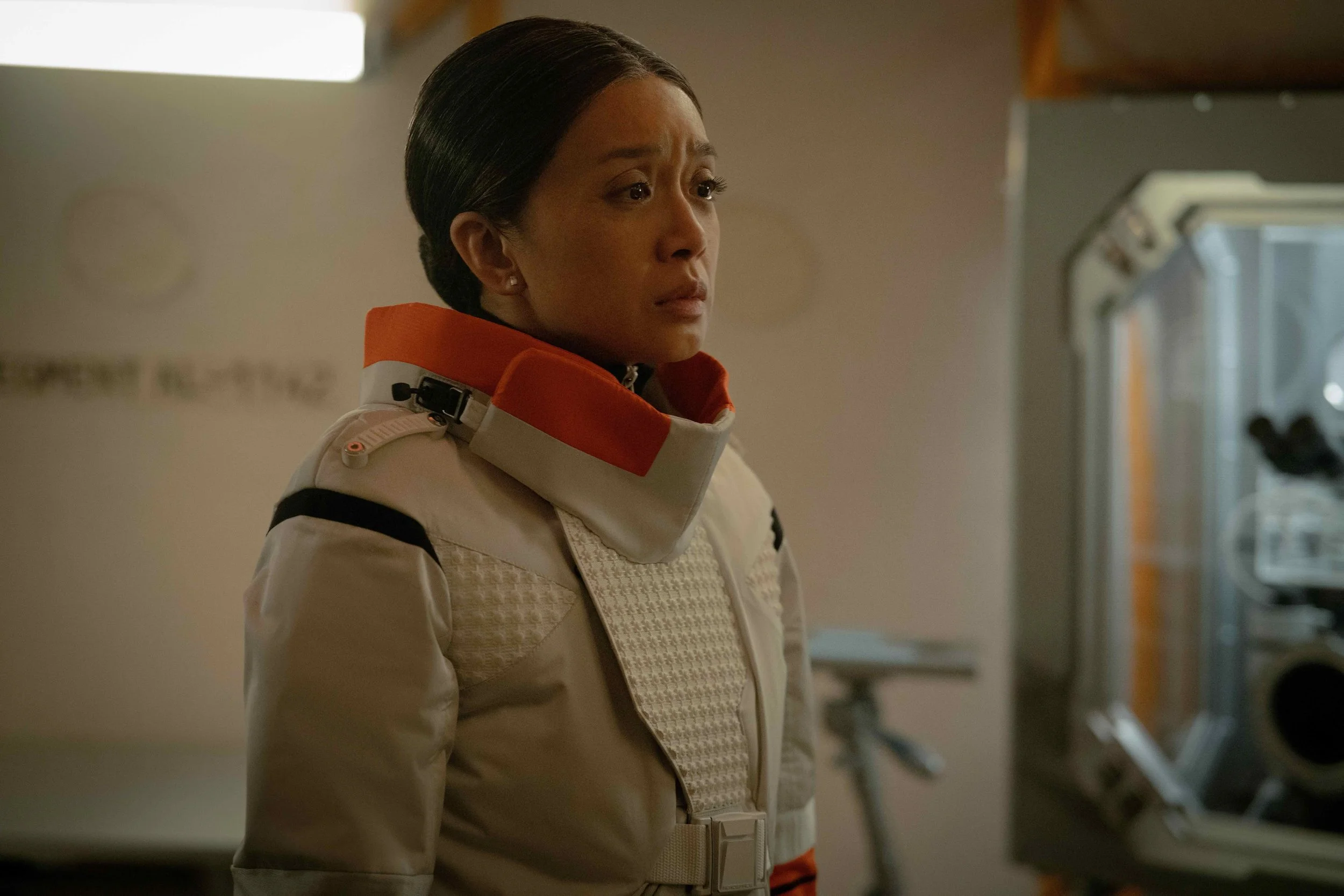
Courtesy of Apple TV+
With Star Trek, it’s a little different because I’ve worked on multiple Star Trek shows. You want to give a voice to each individual show because it’s a different story, it’s different characters. At the same time, it is Star Trek. There’s a certain sound and a certain vibe. We use an orchestra in a way that’s swashbuckling to a certain point, and also very emotional and cohesive in terms of character delineation and how we treat specific types of characters in all the shows.
I never really had anything that I wrote for Discovery end up in Picard or Starfleet Academy, except for the themes I would use. So I would use the original, big fanfare theme by Sandy Courage. I’d use some of Jerry Goldsmith’s themes. We delved a little more into the James Horner stuff from The Wrath of Khan, which happens to be my favorite score of all the Star Trek scores. I did delve a little bit more into that in the first season of Starfleet Academy, and also a little bit more into Deep Space Nine, because there’s a story arc that there’s a through line between Deep Space Nine and something we did in season one of Starfleet.
I can draw all these through lines, but still, there’s an overarching feeling of the sound of the score being kind of similar to what came before.
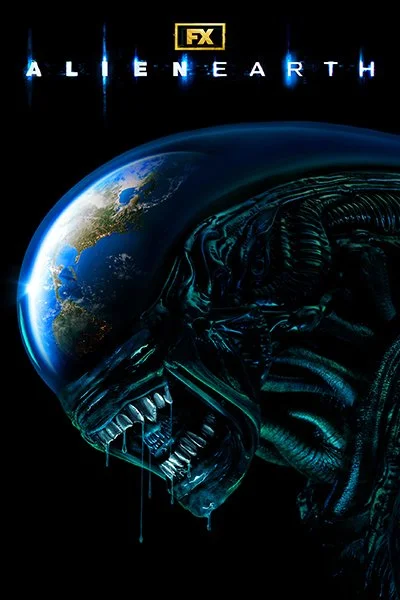
Courtesy of FX
Similarly, with Alien: Earth, you’ve worked with Noah Hawley for so many years. What’s the working relationship like? How has it changed over the years? Do you feel that because you’ve worked together for so long you get a little more freedom in terms of messing around, writing something unexpected for the score?
Noah is the kind of filmmaker who really does have a vision and an idea as to what he wants, but he’s also very open to artistic collaboration. I never look at these kinds of jobs as having freedom or being stuck. I’m trying to support the artistic vision of the filmmaker. Does Noah give me some leeway or latitude to present to him my ideas? Yes, he does.
I think a good filmmaker will always do that. A really good filmmaker, they know what they want, but they also know who they want to trust to help them bring their vision to life. We definitely have a vernacular. We definitely have a way of being able to communicate with one another.
He can say to me, oh, remember that one time we did that one thing and that one thing we worked on a long time ago…do that. I’ll know what he’s talking about. Whereas maybe that wouldn’t happen with another filmmaker. In the end, we’re all on the same page.
I understand what he wants, and he understands I’m going to do everything I can to get that within the context of what we can do. That’s not really granting freedom. That’s just him trusting his artistic partners to do what he thinks is right. I want to be as open and collaborative as I can because it takes a village to make these things. I’m not sitting in a room writing music for myself. If I wanted to do that, I’d be a concert composer or I’d go back to working with my band, writing songs, and not give a shit what anybody thinks. Just write songs for me. In this case, I’m a collaborator. I’m making something with someone else and that’s really important to always remember. Yeah.
In For All Mankind, you have a lyrical song that’s featured in the series called “A New Life.” What was it like to, in a way, return to those band roots?
My collaborator, Paul Doucette, and I were asked by the production to write a song for a character in the show to sing. That is a different flex completely.
It’s interesting because Paul and I are both from bands in the ’90s. Paul was in a band called Matchbox 20. I was in Tonic. Together, when we sat to write that song, it sort of came out very easily because it’s something we’re very used to doing. It was then our decision to rerecord that song in a much fuller way with Jessica Rotter, the actor from the series.
Follow me on BlueSky, Instagram, Letterboxd, TikTok, YouTube, & Facebook. Check out Movies with My Dad, a podcast recorded on the car ride home from the movies and I Think You’ll Hate This, a podcast hosted by two friends who rarely agree.
Support Your Local Film Critic!
~
Support Your Local Film Critic! ~
Beyond the Cinerama Dome is run by one perpetually tired film critic
and her anxious emotional support chihuahua named Frankie.
Your kind donation means Frankie doesn’t need to get a job…yet.