
“Love Letter” 4K Restoration Brings Memories to Focus
Despite the fact that death is one of the few things humans know to be true, the grieving process remains elusive. There is no right way to do it, no wrong way, but also no way that feels completely correct. Therapists, spiritual and religious figures, and art can help in these times, but it’s often the unexpected that provides the warmest balm. Shunji Iwai’s Love Letter lives in the aftermath of loss. It provides no concrete answer for how to go on, but finds potential in life’s strange coincidences.
Film Movement
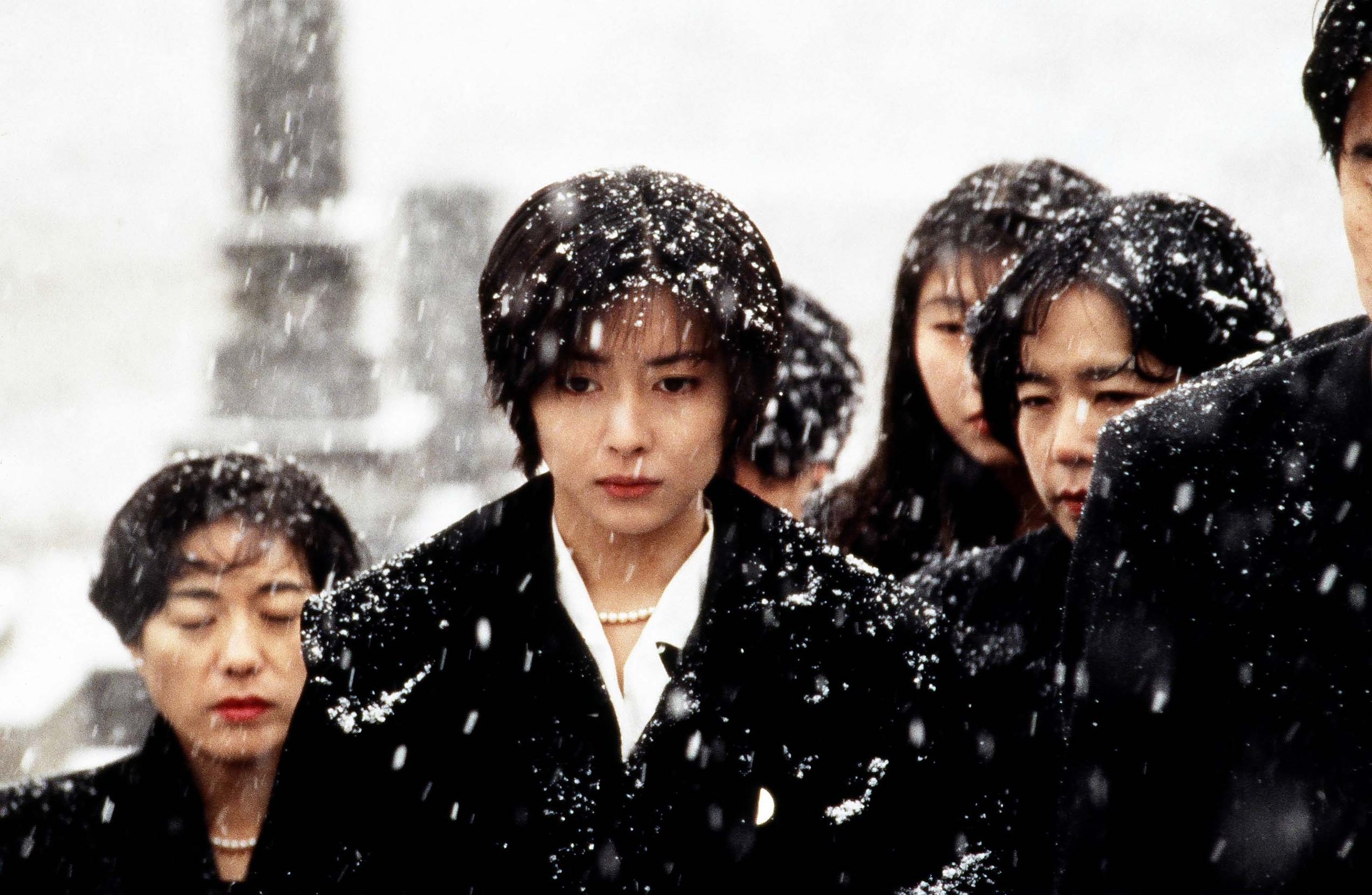
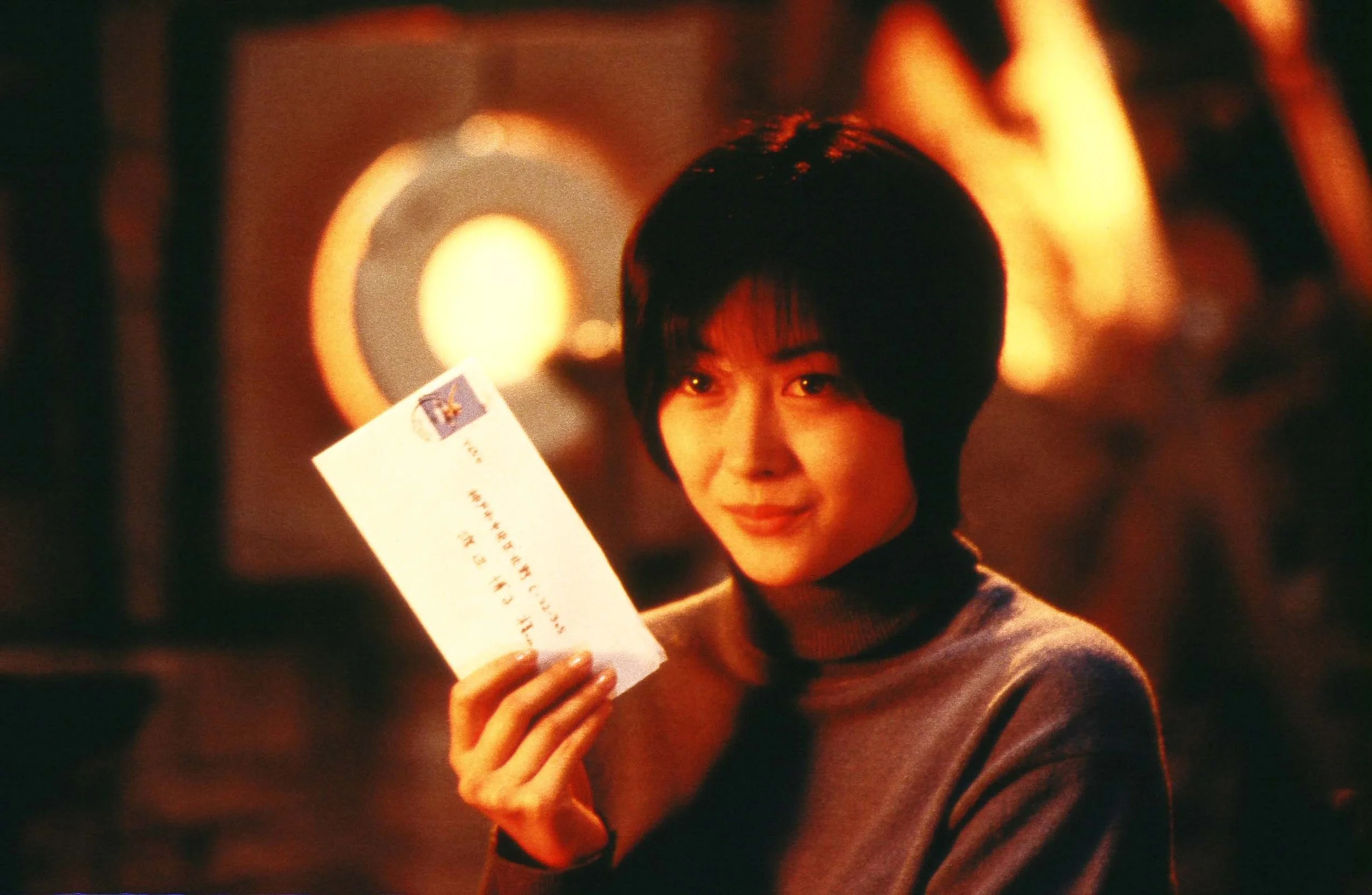
It’s been two years since Hiroko (Miho Nakayama) lost her fiancé, Itsuki Fujii. He died in a mountain climbing accident and Hrioko still struggles with the weight of his absence. After the two-year anniversary memorial service, Hiroko comes across an old yearbook from Itsuki’s high school. In the back of the book she finds the address where he lived at the time and decides to send a letter to him there. Hiroko is utterly surprised when a reply returns. She learns that there were two people named Itsuki Fujii at that school at the time. One was male, her now-deceased fiancé, and the other was female (also played by Nakayama). The two strike up an unlikely correspondence that allows their past to heal the present.
The thing about people is that they change. Hopefully they change, and the person they were as a teenager develops into a more well-rounded, truer version of themselves. We only know someone as they are in front of us. They can talk about who they were when they were younger, but there’s a chasm that exists between the past and the present. Only memories can act as a bridge between the two. Love Letter is a love story about memories more than it is about any romantic connection. Memories are the thread that connects us to ourselves and others. They’re the closest we may ever get to time travel.
Film Movement
“Seeing this photo now, his existence seems obscure.” This is uttered by male Itsuki’s mom when Hiroko is looking through the old yearbook. Maybe this is a funky translation and wouldn’t have been said the same way in English, but something in this turn of phrase encapsulates the entire film. Itsuki’s mom had known him since the day he was born. It’s only in his absence that her understanding of her son is hazy. In loss, it can be difficult to conjure up the image of a loved one, yet it’s all that those who are grieving want to do. Love Letter sees Hiroko desperate for memories of male Itsuki because they’re a finite resource. In order for her to feel like he’s still here, she needs more memories, ones she doesn’t know, to keep him alive.
Eventually, Hiroko acquiesces. “I probably only knew a portion of him,” she admits. The young version of Itsuki that female Itsuki tells Hiroko about bears little resemblance to the man she planned to marry. Humans are the sum of these memories. We exist in the corners of brains of people we may never meet again. It’s what makes life so strange, so impossible to grasp. Our memories belong to people, places, things, food, clothing, movies, and everything in between. To be in love, with life or with another human, is to document these important moments in some way. Create a sketch, a photo, or a memory, and remember it on purpose. Love Letter is sweepingly romantic, but not in the way one might expect. It’s not a film about falling in love in the traditional sense, but the quiet comfort of the moments that linger and the ways they shape the rest of our lives.
Follow me on BlueSky, Instagram, Letterboxd, TikTok, YouTube, & Facebook. Check out Movies with My Dad, a podcast recorded on the car ride home from the movies and I Think You’ll Hate This, a podcast hosted by two friends who rarely agree.
support your local film critic!
~
support your local film critic! ~
Beyond the Cinerama Dome is run by one perpetually tired film critic
and her anxious emotional support chihuahua named Frankie.
Your kind donation means Frankie doesn’t need to get a job…yet.