
Nick Sweeney & Samantha Mustari Talk Finding Home in “Noah Kahan: Out of Body”
There’s no place like home for Noah Kahan, and home is Vermont. In 2022, he broke through to the mainstream with his third album, Stick Season. The title track and the rest of Noah’s music caught people’s attention for their honesty and descriptive nature. No topic is off limits. The same is true for the recently released documentary that followed Noah as he prepared to play two sold-out nights at Fenway Park. Noah Kahan: Out of Body, directed by Nick Sweeney and produced by Samantha Mustari, is not your traditional concert documentary. It’s as intimate as the man at the center of the universe.
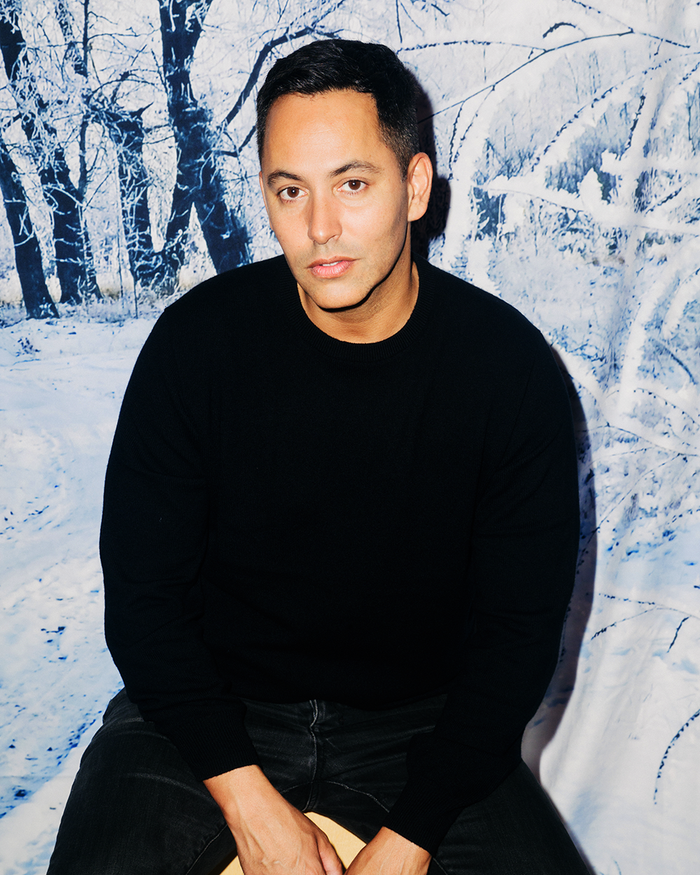
Courtesy of Nick Sweeney
Neither Sweeney nor Mustari grew up in New England in the way Noah did, but each of them has their own place that means the world to them.
“Sydney, Australia, is where I’m from,” says Sweeney. “It’s incredibly beautiful, but it’s also a place I moved away from. A lot of what Noah was going through in the film, adjusting to Nashville, trying to figure out where he belongs, if this is the right place for him, is certainly something I’ve related to in my life, having moved away from Sydney.”
“I grew up in Monmouth County, New Jersey, near the Jersey shore,” offers Mustari. “It’s a place that’s really easy to hate when you’re there all the time. Then my life took me away from where I grew up, and I lived in other places around the country. I found myself really wanting to be back on the East Coast, and now I’m there every chance I get.”
“When we were working with Noah, that was something I felt I could really relate to him on. He grew up with a very complicated relationship with his hometown, and I think being away from it gave him a new perspective about where he’s from and the people who live there.”
Much of Mustari’s producing work is in music-related documentaries like the Spring Awakening retrospective Those You’ve Known and Hazbin Hotel: Live on Broadway. The role of a producer is a nebulous one and, when asked, Mustari doesn’t have a way to succinctly describe it.
“The question I probably get asked the most in my entire life is what does a producer do?” laughs Mustari. “It’s really hard to answer because it’s a little bit of everything, especially in the documentary world.”
“It’s everything,” Sweeney jumps in, “A large percentage of every single person’s job is being done by Sam as the producer of a documentary. It’s a gargantuan amount of work. As a producer, Sam is also constantly kind of writing in her head. What’s the story? Where will it go? That informs all the decisions she’s making along the way, especially with a project as vast as this.”
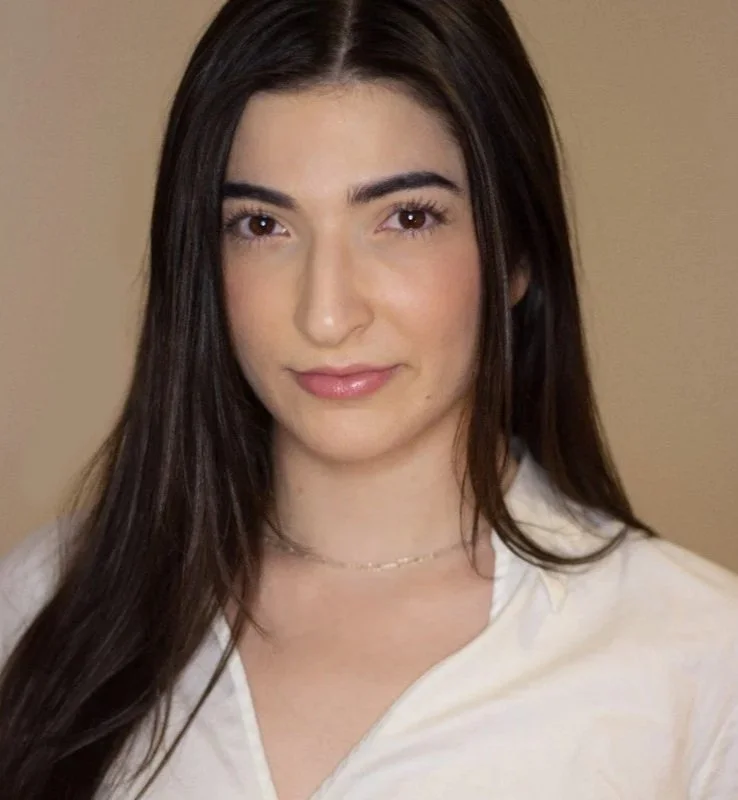
Courtesy of Samatha Mustari
“I think one of my favorite things about documentaries in general is not always knowing what’s going to happen,” adds Mustari. “It keeps us questioning our story and where we’re going with things. Does the story we’re telling hold up as plans change or does something more interesting crop up?”
“I think one of the best phone calls I’ve probably ever gotten on a project is, we’re adopting a new puppy tomorrow,’” smiles Mustari.
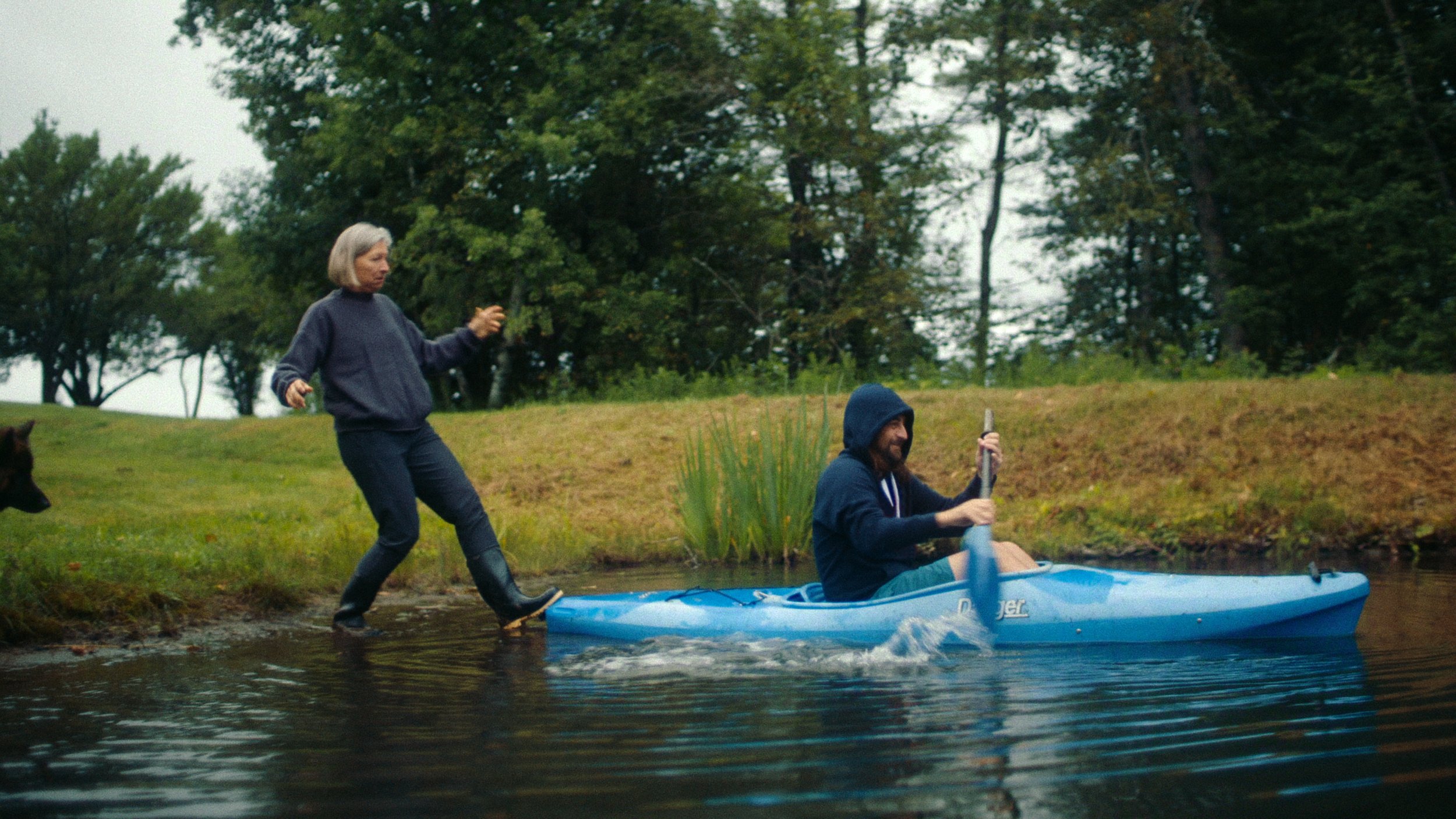
There are so many contradictions in Out of Body. In one moment, Noah will be performing to a sold-out, screaming Fenway Park with fireworks and chaos. Then the very next day he’ll be knee deep in pond water, helping his mom pull a dock into a body of water. For Sweeney and Mustari, one of the toughest aspects of the film was capturing this duality. Not only from an editing standpoint, but from the logistics of capturing Fenway and Madison Square Garden.
“We were able to capture this very specific moment in time with Noah and his career, where he was kind of putting the exclamation mark on this whole Stick Season era of his life,” explains Mustari. “We got to be with him at a real crossroads in his life. It’s an important part of his larger story and this era that he’s currently in with The Great Divide.”
“It can be hard filming in those huge venues,” recalls Sweeney. “Do you remember how hot it was? You’ll be filming in one part and then you’ll learn something’s happening all the way on the other side. It’s not just going to a different room, it’s like, no, you have to run everything all the way over to the other end of the stadium.”
“I went to Emerson College in Boston, so I went to a ton of Red Sox games,” says Mustari. “As somebody not from there but who learned the importance of Fenway and what it means to people, I appreciated that we were on hallowed ground when we were running around there.”
The documentary opens with a shot of Noah lying in the outfield grass. He doesn’t speak because he’s resting his voice for the shows, but he expresses his enthusiasm in text messages. So few people will ever get to experience a ballpark, let alone Fenway, from that perspective. It’s something Sweeney and Mustari considered when running around the stadium.
“We really wanted to show these different angles that people might not have seen,” Sweeney says. “We wanted to have the camera on the ground looking up to capture the incredible architecture. There’s another moment where he walks up to the Green Monster and does some songs from up there. The architecture of the structure is so remarkable and beautiful.”
Courtesy of Netflix
Out of Body was shot over the course of about a year. In the world of documentaries, a year is fairly short. Some are composed of decades of footage and production, but Out of Body is unique in that the depth and openness Noah relates seem like they should come from a relationship that has weathered storms.
“I was always waiting for Noah to say, let’s not talk about that or this is off limits,” recalls Sweeney. “It never happened. He was so interested in sharing everything. From his struggles with mental health to the things he was grappling with around his body or around fame.”
“I think being that honest really helped him and his family understand the reasons we wanted to film everything,” continues Sweeney. “There’s this amazing line that his mom says. “Noah makes the family’s dirty laundry seem like being human.” I think that is very much their philosophy; that sharing hard things helps other people. It’s a weird process that’s mystifying, taking part in a documentary.”
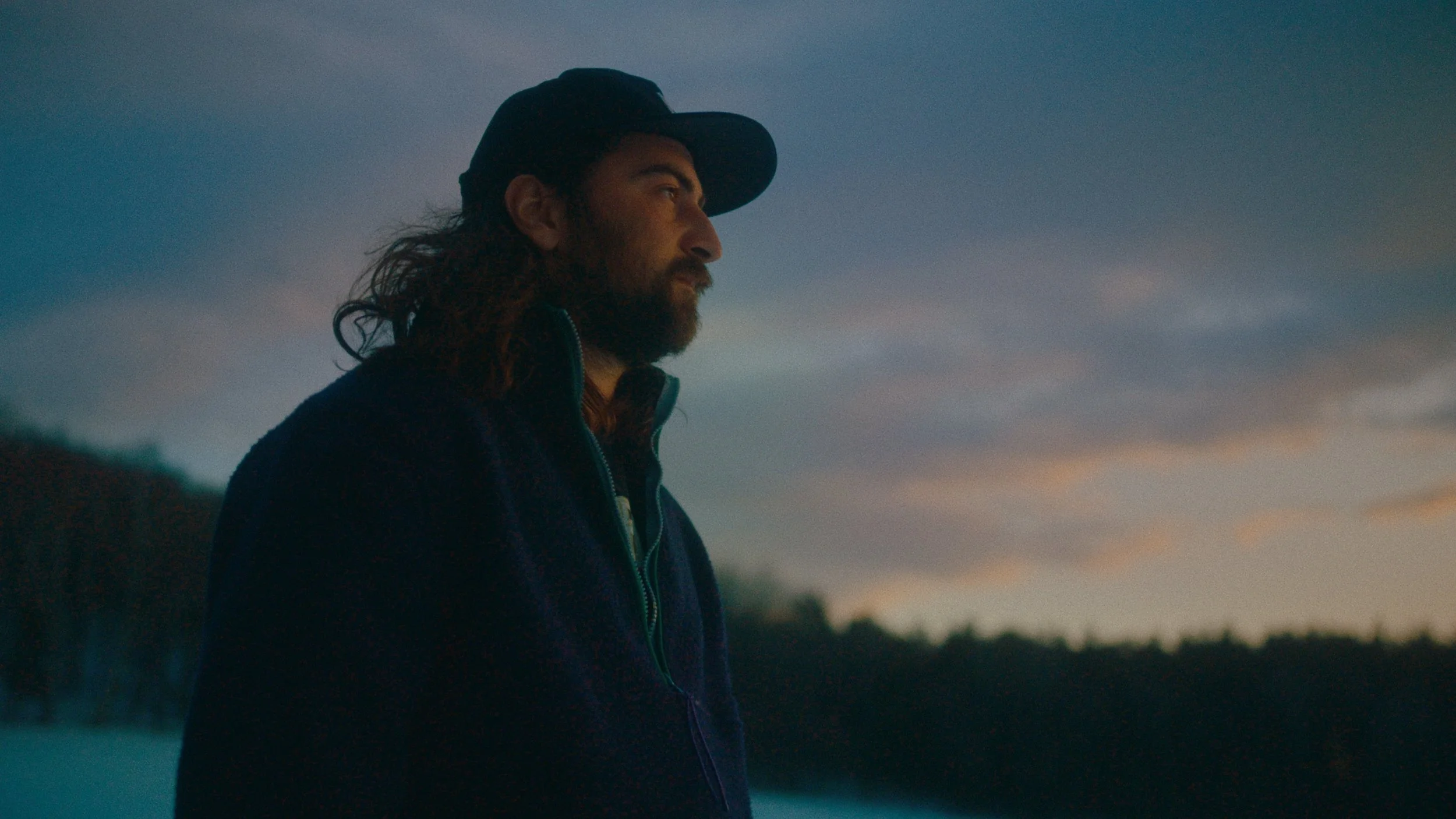
Vermont is an essential part of Noah’s music and storytelling. His sensibilities, by his own admission, come from being raised “out in the cold.” It’s impossible to separate him from this place, so Mustari and Sweeney, despite not having Northern roots, had to find a way to capture what it is about Vermont that matters so much to Noah.
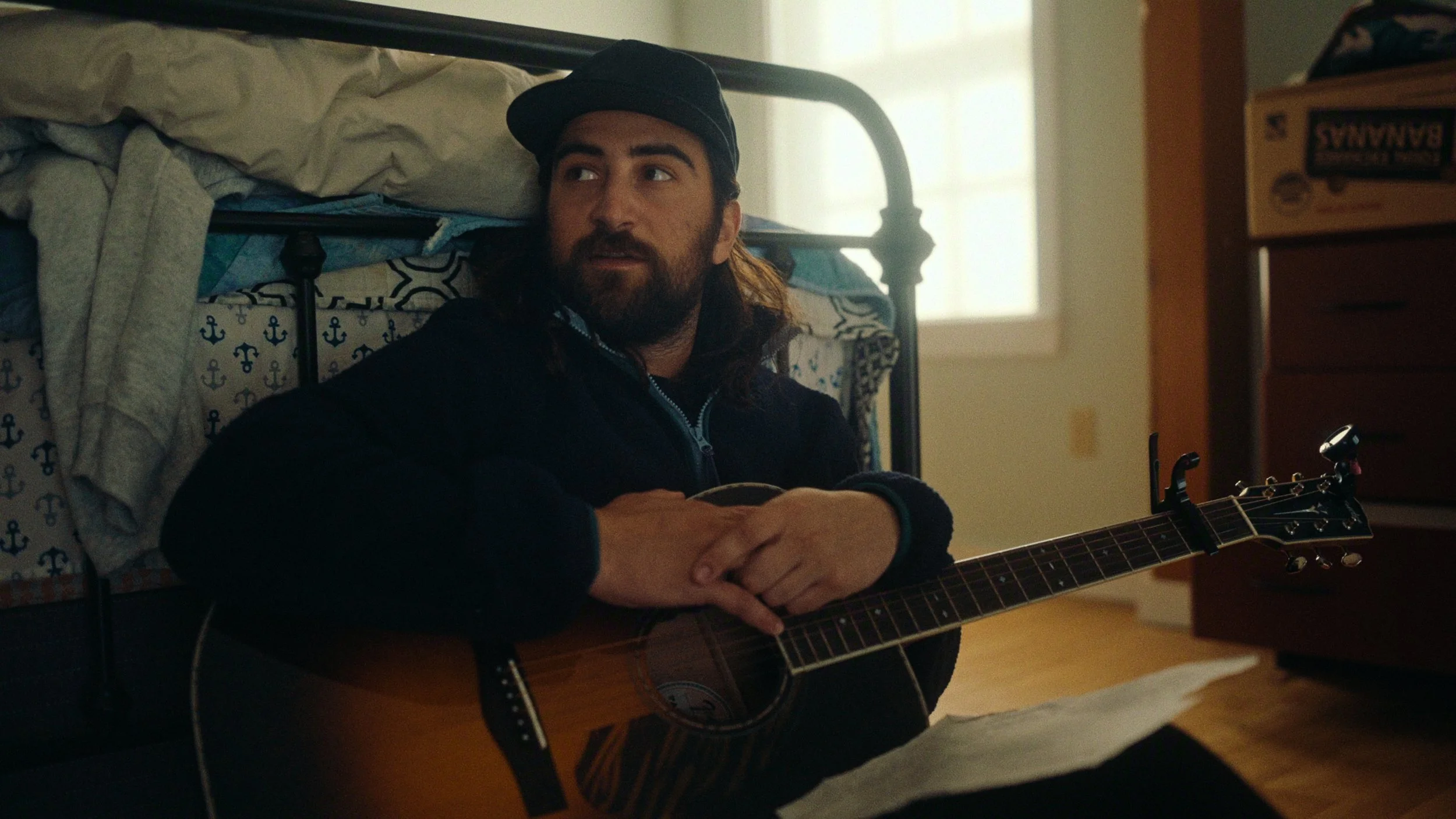
Courtesy of Netflix
“It was so fun to run around Vermont. We had the best time doing that,” Mustari remembers. “ I think all of us were like, okay, let’s stay here forever. Our two co-producers on the film, Henry Allison and Asher Brown, are also from the Upper Valley, where Noah is from. They were very helpful in finding amazing people who would help represent this place. It was important to us to spend a lot of time there to really understand Noah’s relationship with Strafford and the Upper Valley.”
“Something we never wanted to do was create a character caricature of something, but really get to know the people there and let them speak for themselves. Let them talk about how the music relates to them or how they fit into the story Noah is telling.”
“Oh, we had so much fun,” smiles Sweeney. “I mean, I did get a really, really intense amount of snow in my shoes. It was cold, but we loved it. I would have filmed even more there. Honestly, I think there was a limit to how much we could include in the film of beautiful Vermont propaganda. I would happily make a film that’s only Vermont scenes. It’s just so beautiful.”
This is not the first documentary that has brought Sweeney to the New England area. In 2022 he released Santa Camp, a beautiful, emotional look at people coming to New Hampshire to learn the tricks of the Santa Claus trade. Santa Camp and Out of Body may have nothing in common in terms of content, but they’re rooted in the same place and have similar thematic cores of identity. Visually, though, the two versions of New England could not be further from each other.
“With Santa Camp, we wanted to lean into the artifice and the performance of Santa,” explains Sweeney. “One of the ways we did that was by embracing these Santa backdrops and drawing attention to the plastic, artificial nature of it.”
“Noah’s world is so much more organic and natural,” he continues. “They’re very different in the way we look at New England, but they’re also both love letters to the area. I can’t stay away, I guess, from New England. I really love it. Both of them are quite emotional projects and they have quite funny elements to them.”
Courtesy of Netflix
Over the course of the documentary, it’s remarkable how grounded Noah feels. He’s cracking beers with his brothers, staying with them in an apartment the night before he plays MSG, instead of in a swanky hotel. This is someone reaching an unfathomable level of fame, yet he always comes across as a guy who would help you change your tire if you broke down on the side of the road. It’s a perspective of fame we don’t often see, and one that is refreshingly personal.
“He’s almost like an anti-celebrity in some ways,” ponders Sweeney. “He has so much imposter syndrome. He’s incredibly talented and the music is beautiful, but it’s so unlikely for any artist, no matter how talented they are, to get this big. I think his perspective on it is so interesting because he’s quite aware of what all of it means and also of how haywire it can go off.”
Since they’ve now spent a significant amount of time in New England, it only feels right to ask if Mustari and Sweeney have discovered their Dunkin order. Sweeney doesn’t have one off the top of his head, which Mustari takes the blame for.
“I definitely didn’t get Nick to Dunkin often enough, so maybe that one’s on me,” jokes Mustari. “Mine is definitely a medium iced caramel latte with oat milk, but you’ve got to get them to put that sugar in with the espresso or else you get the classic Dunkin sandy sugar at the bottom. I didn’t know the sugar at the bottom was a polarizing issue. I didn’t know they were pro-sugar at the bottom, folks. The more you know.”
Noah Kahan: Out of Body is a homecoming. Not just in the triumphant Fenway hometown shows, but in Noah deciding to move back to the place he grew up. For New Englanders, Noah Kahan is someone who sings from a place of sincere, truthful understanding of life there. The unspoken realities of being from somewhere. Both Mustari and Sweeney have an artist who wholeheartedly captures the place they so dearly love.
“There’s this painter from Sydney named Ken Done who is quite campy or over the top in a lot of ways,” Sweeney says. “He was really famous in the ’80s and ’90s for very colorful, tongue-in-cheek depictions of Australia. Now his art is on fridge magnets and oven mitts, but when it first came out, I think it was very quintessentially Australian.”
“There’s a little bit of cultural cringe about him,” he continues. “Maybe a little bit of a Thomas Kinkade vibe, but it’s still, I think, very quintessentially Australian in so many ways.”
“I’ll also just give a really quick shout-out. There’s an amazing artist, Jeremy Miranda, who I think really captures New England,” Sweeney adds. “He does these extraordinarily beautiful paintings that I want to somehow accumulate enough money to buy, which I never will, but they’re really, really beautiful.”
“I feel like I can’t say anything besides Bruce Springsteen or I would be a fraud,” laughs Mustari. “I love Bruce and he definitely created the soundtrack to many New Jerseyans’ lives and I think he depicts it in such a bittersweet way. Yeah, gotta love Bruce.”

Follow me on BlueSky, Instagram, Letterboxd, TikTok, YouTube, & Facebook. Check out Movies with My Dad, a podcast recorded on the car ride home from the movies and I Think You’ll Hate This, a podcast hosted by two friends who rarely agree.
Support Your Local Film Critic!
~
Support Your Local Film Critic! ~
Beyond the Cinerama Dome is run by one perpetually tired film critic
and her anxious emotional support chihuahua named Frankie.
Your kind donation means Frankie doesn’t need to get a job…yet.