
“Teenage Sex and Death at Camp Miasma” Needs More Flesh
Ah, the tried-and-true slasher genre. Masked men with knives, chainsaws, and whatever other weapon they can find chase screaming co-eds across campuses, suburbia, and sleep-away camps. Usually, only one person survives, believing they’ve beaten the masked killer and that everything will be okay. The problem is that movies are also a cog in the economy, and if a slasher does well, it’s time to find some way to bring that killer back from the dead. Teenage Sex and Death at Camp Miasma asks if there’s ever an end to these murders, or if they’re something that exists beyond our comprehension.
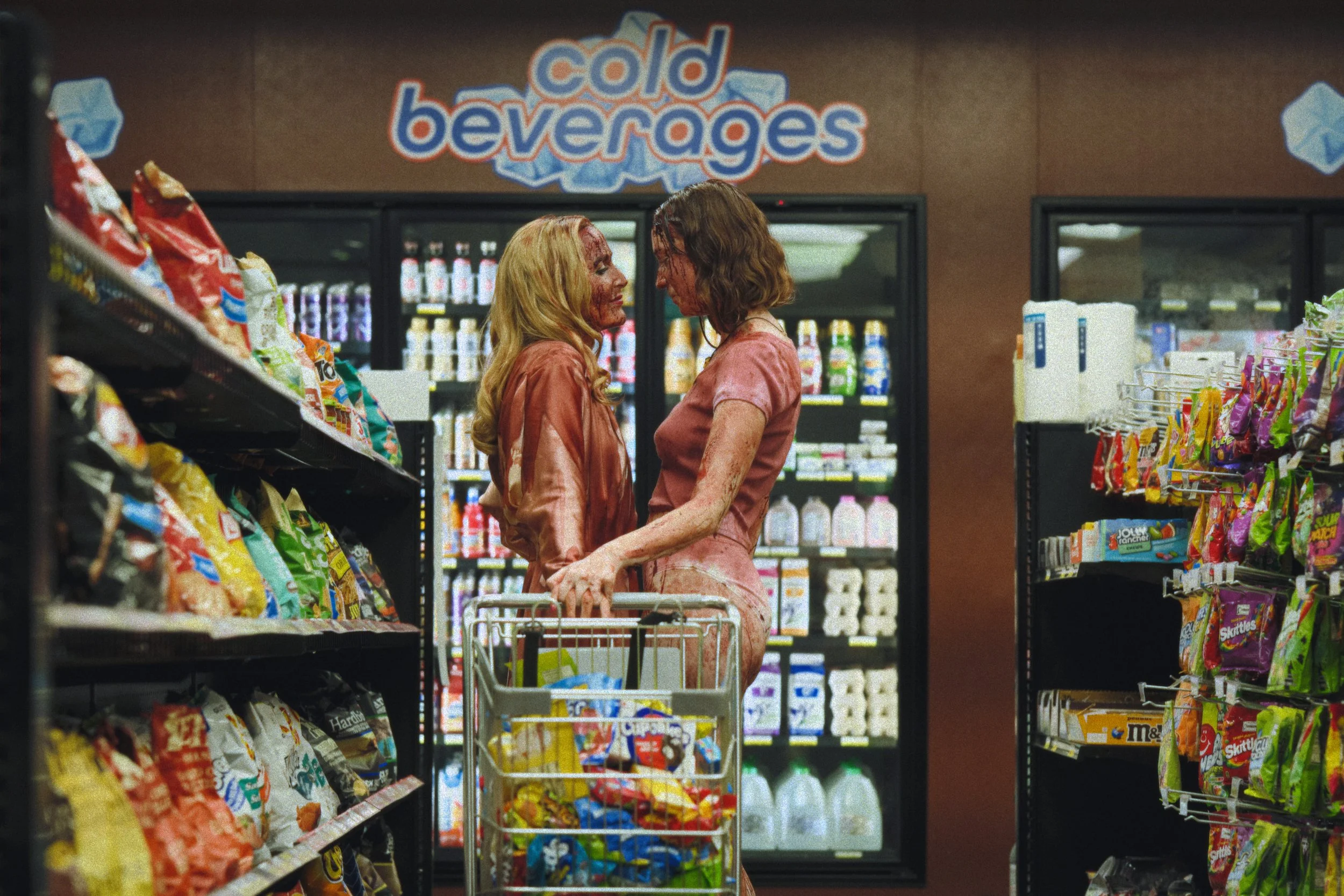
Once upon a time in the 1980s, a little slasher movie called Camp Miasma was a runaway hit at the box office. The film starred Billy (Amanda Fix), a young actress who finds her big break in the role as the wide-eyed Final Girl of Camp Miasama. Four decades later, Billy (now played by Gillian Anderson) is a recluse, but someone wants to drag her out of the shadows again. Kris (Hannah Einbinder) is a promising young screenwriter and director who has been tasked with resurrecting the Camp Miasma franchise after plenty of cheap, cash-grab sequels. To Kris, Camp Miasma is more than a slasher movie and she, with the help of Billy, wants to get to the bottom of what has drawn her to the franchise since she was a child.
©MUBI
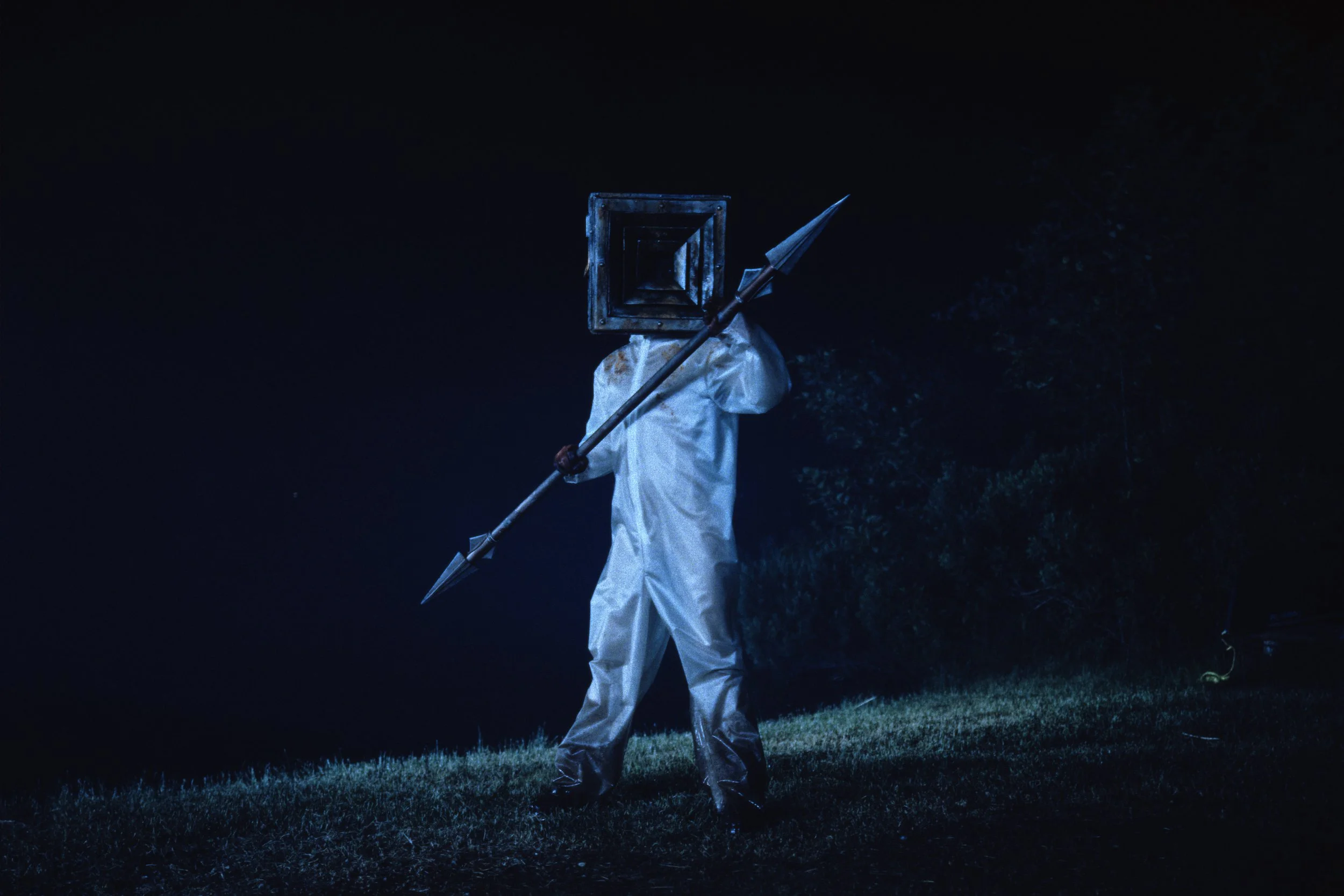
As the film implies, Teenage Sex and Death at Camp Miasma is about desire. After Kris and Billy get to know each other, Kris admits that part of what continues to captivate her is a certain look in Billy’s eye from the first Camp Miasma film. In the movie, the camera gets close on her, so close it almost takes up the entire screen. In the reflection in Billy’s pupil, the viewer can see the killer, Little Death (Jack Haven). Is it fear? Shame? Thrill? The answer eludes Kris. For all the times she’s watched the movie, as reverentially as she looks upon Billy both past and present, Kris doesn’t understand the crux of it. Or, she does intellectually, but cannot put it in practice.
This is a film about desire, but it doesn’t titillate. After its Cannes premiere, critics were throwing around comparisons to Portrait of a Lady on Fire, and while both are interrogations of what it means to be both the observer and the observed when it comes to art, the tensions in Portrait of a Lady on Fire are scalding. A natural progression exists between its two lead characters and grows their initial meeting to a simmer, then a roiling, unstoppable boil. Teenage Sex and Death at Camp Miasma lacks that burning undercurrent. There is no steady flame growing beneath Billy and Kris. The movie asks the viewer to fill in a lot of the blanks in their dynamic. To take their own thoughts about desire, pleasure, and pop culture and use them as the connective tissue that makes sense of the loose themes Teenage Sex and Death at Camp Miasma wants to acknowledge.
©MUBI
That unfinished feeling is the main component that keeps Teenage Sex and Death at Camp Miasma from being wholly invigorating. It’s a film that acknowledges a lot but grapples with very little. There are some half-hearted attempts to critique the film industry’s obsession with remaking intellectual property to cash in on nostalgia, but the script doesn’t dwell on that. As someone working in an industry so obsessed with bringing back the dead rather than looking to the future, it would have been interesting to hear screenwriter/director Jane Schoenbrun excavate that idea more. It must be equal parts frustrating and exciting to be asked to revitalize a piece of media that was fundamental in instilling your love for filmmaking, which is the exact circumstance Kris finds herself in. Yet that dichotomy isn’t used to its full potential.
Billy asks Kris if she knows why the first Camp Miasma movie remained so popular. When Kris says no, Billy explains that things were simple in that first one. It was all about “flesh and fluids.” Sex, death, blood, guts. They all go hand in hand in a slasher, and certainly in the finale of this film, but is that enough? Teenage Sex and Death at Camp Miasma is supposed to be a release, an explosion of flesh and fluids, but its scream is not as triumphant as one might hope.

Follow me on BlueSky, Instagram, Letterboxd, TikTok, YouTube, & Facebook. Check out Movies with My Dad, a podcast recorded on the car ride home from the movies and I Think You’ll Hate This, a podcast hosted by two friends who rarely agree.
support your local film critic!
~
support your local film critic! ~
Beyond the Cinerama Dome is run by one perpetually tired film critic
and her anxious emotional support chihuahua named Frankie.
Your kind donation means Frankie doesn’t need to get a job…yet.