
“Mārama” is a Gothic, Colonialist Nightmare
“This story is grounded in the colonised history of Aotearoa, New Zealand…to move into our future we must understand our past.” These are the words that open Taratoa Stappard’s Mārama. This epitaph is presented first in te reo Māori, the language of the Māori people of mainland New Zealand, then in English. Language is a powerful weapon. It’s a means of understanding or colonization, depending on how it’s used. Stappard’s Mārama is a weapon in its own right, a horror film rooted in the history of Māori people and the retribution that lies beneath the trappings of a classic gothic story.
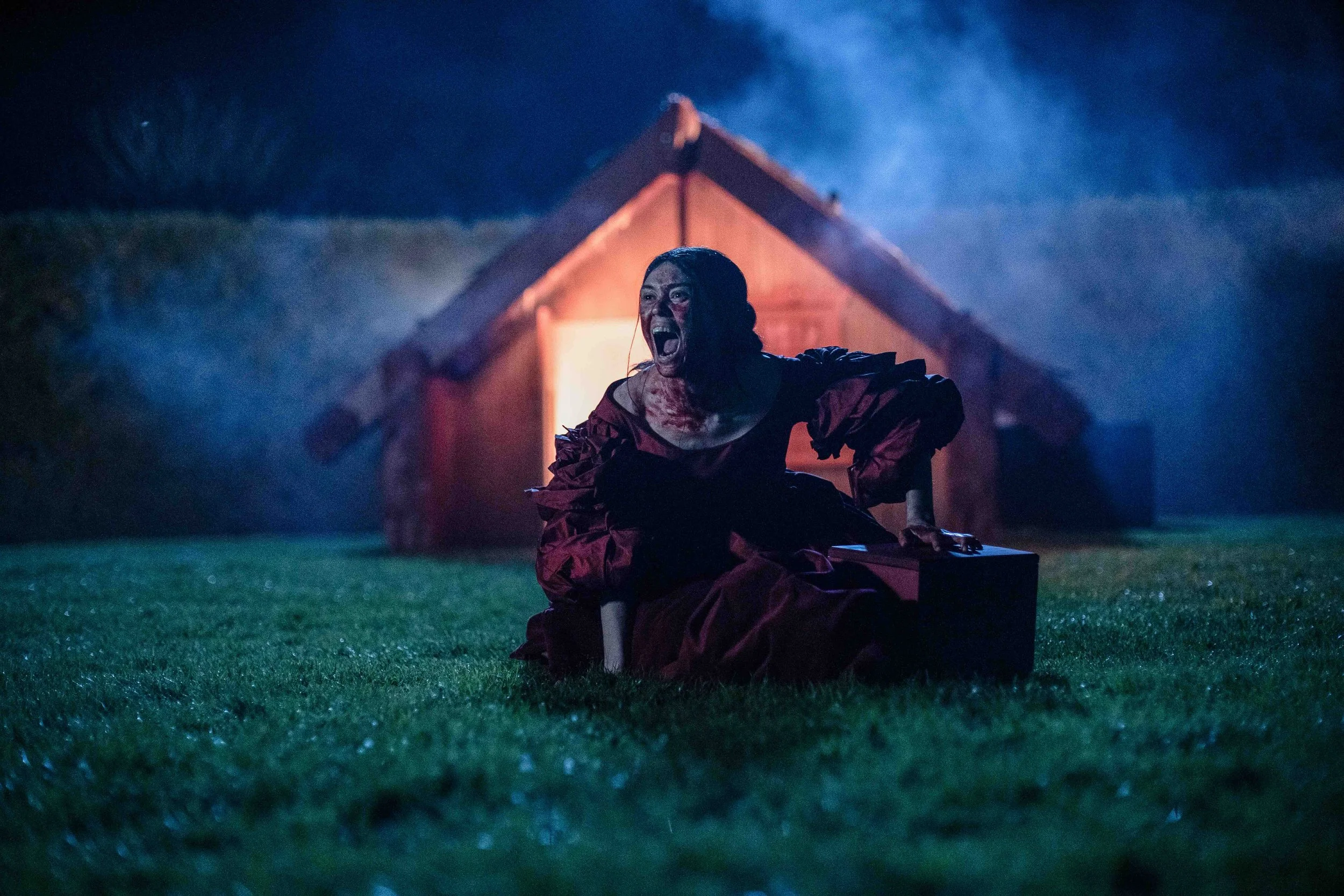
In 1859, a young orphaned woman, Mary Stevens (Ariāna Osborne), receives a letter from a mysterious Englishman. He asks her to visit him in Yorkshire, where he will give her more information about her heritage. Mary is not the name she was given at birth. It was an Anglicized one given to her to strip her from her Māori identity, known as whakapapa. Upon arrival at Hawkser Manor, she is met by Nathanial Cole (Toby Stephens), who immediately forces her into the position of governess to his granddaughter, Anne (Evelyn Towersey). Something about Hawkser Manor doesn’t sit right with Mary, who later learns her name is Mārama. Nevertheless, Mārama is intent on learning about her past, whatever the cost.
MPI Media
One of the film’s most harrowing moments isn’t supernatural or violent in a physical sense. Nathanial hosts a party at the manor where a Māori man, Jack (Erroll Shand), serves as the entertainment. Mārama watches as the English partygoers gawk at Jack’s display of his heritage, and she grows angrier by the second. Her frustration erupts into a haka, a ceremonial Māori dance. A haka can serve a variety of purposes, from welcoming important visitors to commemorating special occasions. Or, in the case of Mārama at this party, it becomes something more akin to a kaioraora, a haka that is a form of venting anger. When she finishes this clearly visceral dance, everyone applauds what they see as a display of a culture that is far below them. It’s harrowing to watch a civilization reduced to a party trick and to see how easily people deem others as less than. This man’s performance doesn’t physically hurt her, but it cracks open a generational wound that transcends time, space, and existence.

MPI Media
Mārama is a gothic ghost story set firmly in Māori traditions and pain. Mārama is haunted by the walls of this home and the stolen artifacts of her ancestors that rest as decoration throughout. That type of pain, loss, and anger doesn’t go away. It seeps into the very foundation of the house and manifests itself in ghastly ways. Mārama is a matakite, someone who senses the connection between the living and spiritual worlds, so living in a home like this is a specifically painful existence. The longer she stays, the more her visions increase as she learns the truth about her connection to Hawkser Manor.
There is great catharsis in burning it all down, both literally and figuratively. To setting ablaze the world that harmed you, your ancestors, and your identity. Mārama is a revenge tale, but simply calling it that would ignore the fuel that keeps the story running at full force until its final moments. Mārama is retribution for the past and a means of making way for healing in the future. In its specificity, Mārama speaks to the still-present effects of colonization on cultures whose identities were nearly smothered at the hands of the English. The fact that there’s a movie being shown in theaters across the world in 2026 where te reo Māori is significantly spoken proves that cultures can endure, despite the efforts of those who seek to rule the world. Mārama is a nightmare that is all too real.

Follow me on BlueSky, Instagram, Letterboxd, TikTok, YouTube, & Facebook. Check out Movies with My Dad, a podcast recorded on the car ride home from the movies and I Think You’ll Hate This, a podcast hosted by two friends who rarely agree.
support your local film critic!
~
support your local film critic! ~
Beyond the Cinerama Dome is run by one perpetually tired film critic
and her anxious emotional support chihuahua named Frankie.
Your kind donation means Frankie doesn’t need to get a job…yet.