
Composer Alex Somers Talks Broken Instruments of “Rental Family” Score
Director Hikari’s Rental Family has been heralded as a film that celebrates the connections that can arise between strangers from different backgrounds. Brendan Fraser plays Phillip Vandarploeug, an American actor who lives in Japan and is in an acting slump. Desperate for money, Phillip takes a job from Rental Family, a company that provides people with actors who can pretend to be family members or friends. In pretending to be a fiancé, estranged father, and hired journalist, Phillip begins to understand life is better spent around people and not in isolation. Longtime collaborators Jónsi and Alex Somers have reunited for the first time in ten years as the composers for Rental Family, and Somers sat down with Beyond the Cinerama Dome to chat about his work on the film.
Before Somers began scoring films, he was a kid growing up in Baltimore, Maryland, who discovered the power of music through a Tascam four-track tape recorder. He knew how to play drums, piano, keyboard, synths, and other instruments, but Somers credits the Tascam as the first time he realized that those instruments could be built and layered into a “musical environment.”

courtesy of Alex Somers
“Whether it was really complex or really minimal, I learned I could make an environment with sounds,” Somers recalls. “That's what made me obsessed with music, and it’s still the fabric of what I do with music and what I love about it. To this day, I'm less concerned with musicianship and I have less of a relationship with musical instruments than I do with the sonics of it, the treatment of the sounds, and the way you arrange them.”
Jónsi and Somers came onto Rental Family quite late in the filmmaking process. A rough cut of the film already existed by the time they joined, but that didn’t intimidate the duo.
“I think we knew immediately how we could help. Especially with supporting Phillip's character arc and making him feel even more small and lost in the beginning. Then we also had ideas about how the music could lift up his discovery of community, purpose, and sense of self-worth by the end.”
“It was the right movie for Jónsi and me to come together to score again. Hikari, the director, we connected with personally, and I think a lot of what I do, you just want to connect to the filmmakers. If you connect to someone as a friend and you find it easy to be around them, talk to them, and everyone's just really being 100% authentic, then it's easy to collaborate with those types of people. What’s really big for us is just, do we get on, do we see eye to eye, do we speak the same language?”
Jónsi and Somers have been speaking the same language for over two decades, and that allowed them to easily collaborate on the score. Most of the music was written with the two of them in the same room, whether that be at Jónsi’s studio or Somers’.
“We're very intuitive. We have a similar sense of which chords work, which chords are cheesier, which sounds are interesting, which sounds are cheesy. There's such a shorthand, and we find that we're already quickly circling the same idea.”
“It's fun when you're two because if I start an idea and Jónsi joins in, it would always surprise me or make me excited. The reverse is true, too. When you're solo, you really have to do that yourself. It's really fruitful when we work together because we just make a lot of music pretty fast. The challenge is to not let it all sound too sleepy, because that's kind of our space. We like durational music that's unfolding slowly. With film music, you can do that, but you also have to do stuff that has momentum. We're always figuring out a new way to do that.”
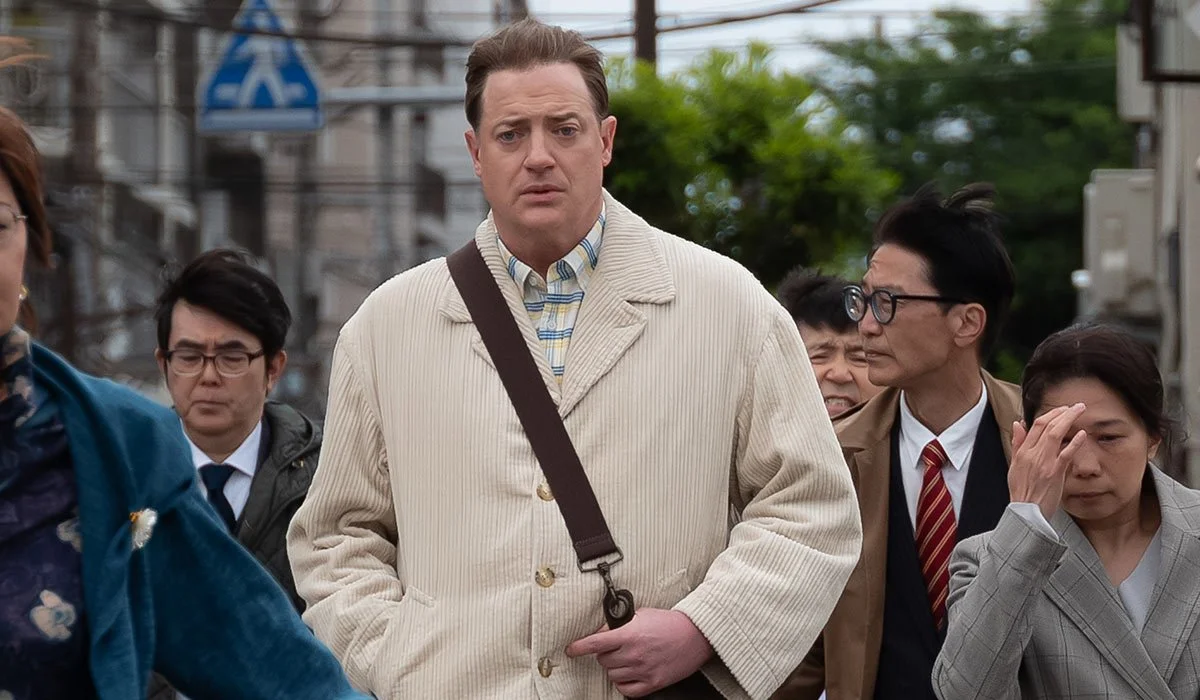
Photo by James Lisle/Searchlight Pictures. © 2025 Searchlight Pictures. All Rights Reserved.
A film like Rental Family could easily fall into the trap of being too cheesy or more akin to a Lifetime movie than an earnest, humanist drama. If you’ve seen the film, you know that Rental Family is a gentle dramedy that captures the beauty of human connection. Music plays a major role in ensuring that it doesn’t slip down the overly saccharine hill, though Somers feels confident that, even without the score, there’s no chance Rental Family could exude anything other than deeply human sincerity. He credits that to Fraser’s performance.
“The performance that Brendan Fraser gives for Philip is really amazing. Even if you mute the music, it's not cheesy. It's pretty authentic. He's an amazing character and a really cool person and he carries the direction and the aesthetics of the look of the film.”
“I don't think this movie was in danger of feeling insincere, but you're right. Anytime there's a humanistic and touching story, you almost hear cheesy movie music in your head. I'm always really allergic to that. We definitely want to avoid that. When we first watched the movie, the first conversations were about which instruments we might circle around because having some limitation is actually really healthy. So I always try to do that when I start a new film.”

Photo by James Lisle/Searchlight Pictures. © 2025 Searchlight Pictures. All Rights Reserved.
“What's the sound palette? Is it all strings? Is it no strings? We discovered on this that we were both thinking it was nice to work with really fucked-up, worn-out old instruments that have a lot of character and soul, and sound kind of terrible and unstable. We love sounds like that. We love bad sounds. We thought it would help to illustrate Philip's absolutely deep loneliness that we see at the beginning of the movie.”
“We started writing a bunch of pieces on the Optigan, which is an old early-’70s sampler keyboard made by Mattel, the toymakers who make Barbie. It's a very cool instrument. You feed it these flimsy, plastic vinyl records and it has an optical light that reads the grooves on the record. Then you play it on a keyboard, but it sounds very scratchy, like an old 78 record. A lot of the pieces in the movie were first written on that instrument, and then we built it up.”
“Instruments like this help. They help to make things not cheesy. When you're working with really crusty old instruments, or if you dub things through the cassette or microcassette, then every step of the way you're thinking about frequency spectrum. Not just the notes, but the sound quality of the notes. The more dirty and fucked up you let the music be, I think it has more attitude and soul.”
“A big part of that is the immediacy. It's somehow made a more direct chord between the music and the rest of the world. I can't find any words for it, but there is some kind of magic in that scratchiness that we like as people. We like imperfection. We like chance.”
The Optigan is a fascinating instrument and one that’s difficult to get your hands on. Yet somehow, over the course of Somers’ life, three have crossed his path. As he describes it, Somers has a “long, long saga with the Optigan.”
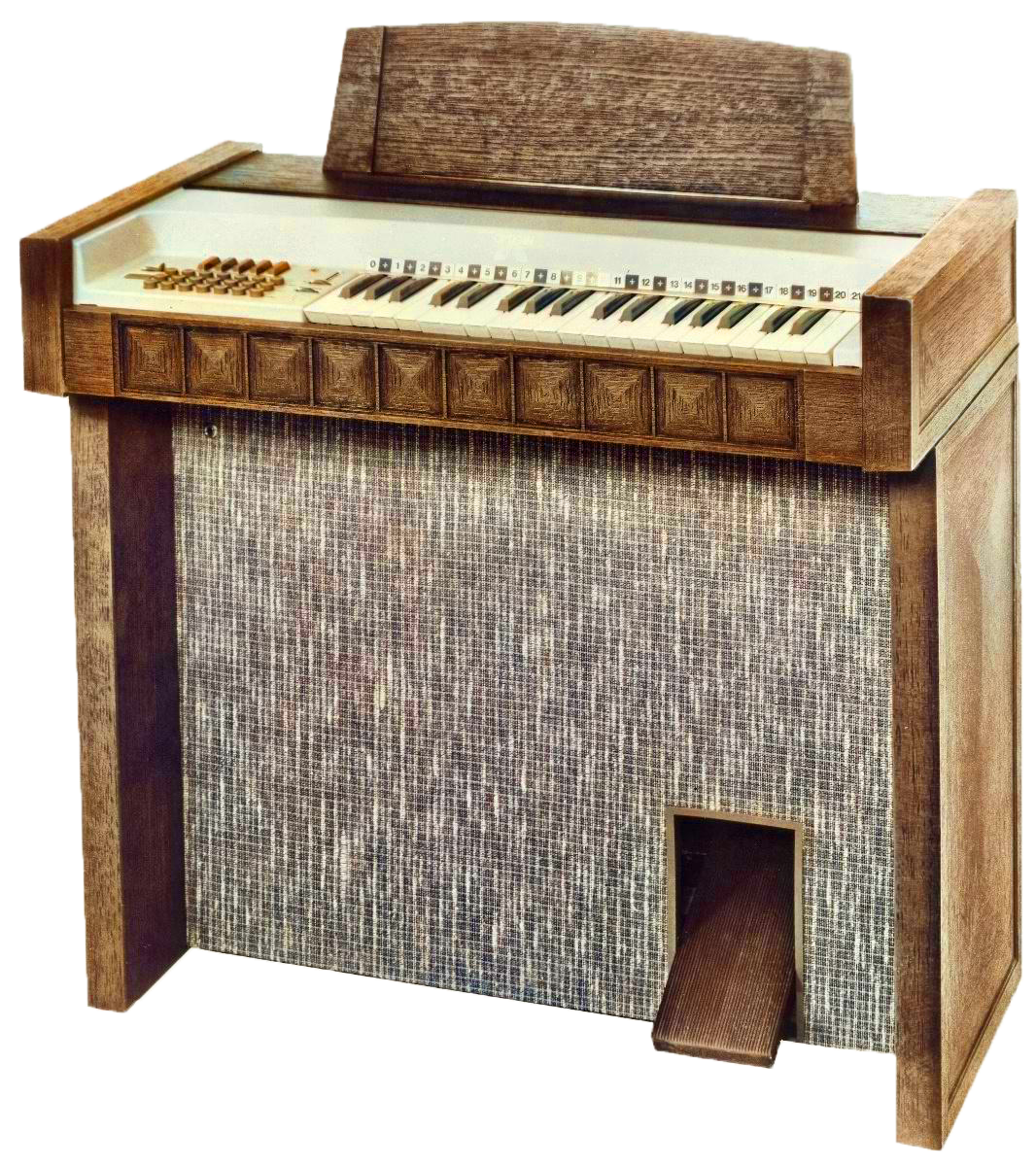
courtesy of Optigan.com
“When I was 18 and I first moved to Boston, I was studying at Berklee College of Music. I had an apartment with my brother. He called me on my first mobile phone, this little dinky thing, and he was like, come outside. I found this crazy keyboard on the street. It was an Optigan, but we had no idea what it was. Along with our friend, the three of us carried it all the way home to the apartment by hand, very clumsy.”
“We just experimented with it for months, never really knew what it was. Then I moved to Reykjavik when I was 20, so it ended up living in the garage for many years, and I semi-forgot about it.”
“When I was older and getting really into these types of instruments, I heard about it again. When I moved to Los Angeles in 2017, Jónsi and I popped into Caveman Music and they had an Optigan, so we immediately bought it. We just barely fit it in the trunk of the car and we've been using it ever since. Thirdly, the studio we like to work at, they have one too. It's just been floating around my orbit.”
“It's a great instrument for conjuring that ultimate lo, crusty soundscape.”
To accompany the Optigan, Somers used those aforementioned “fucked-up instruments.” One might wonder how messed up an instrument could really be and still be included on the score of a major motion picture. According to Somers, no instrument can be too broken to have purpose.
“The more broken, the better. The more you struggle when you play, the better. If something doesn't work, I get really excited. If the key sticks while I’m playing it, later when I listen back, I'm like, oh shit, that's the best part, even if on the day I was upset about it.”
“I've learned that over the years, if something's not working, don't just shut it down. Keep a little wiggle room open for chance and good things happen. I don't think anything's too broken to work.”
Somers is adamant that, despite enjoying broken instruments, he’s never taken a perfectly good instrument and ruined it for the sake of an interesting new sound. Somers has a passion for antique instruments and all the quirks that come with the natural aging process they’ve endured.
Along with these unexpected instruments, Somers and Jónsi also looked in a new direction to build the choir that plays a pivotal role in one of the scenes of Rental Family. Without giving away the plot, Somers mentions this “DIY” choir appears in a funeral scene and that the idea of a choir came from Hikari, who grew up singing in children’s groups.
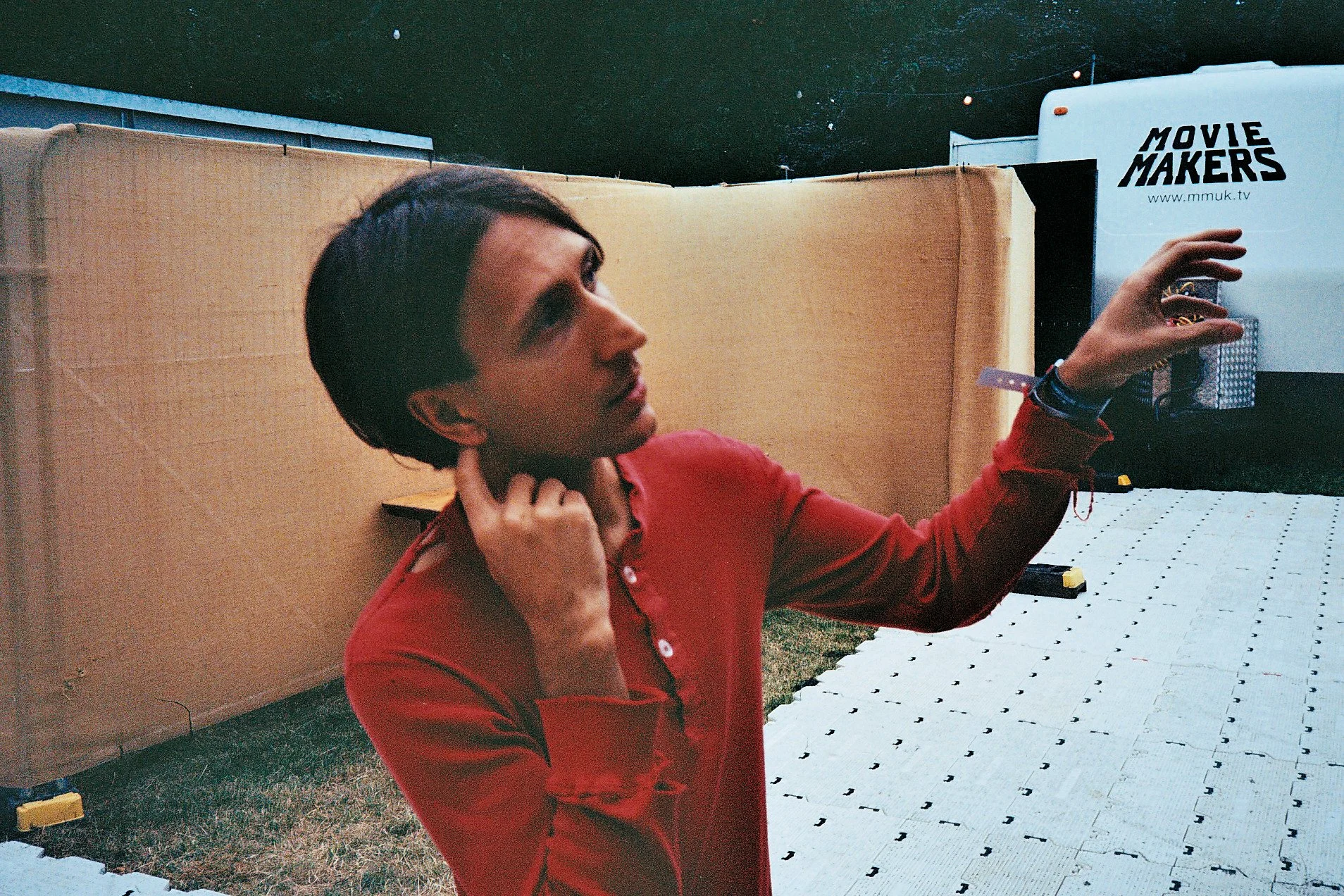
courtesy of Alex Somers
“Jónsi and I kept saying to each other, it would be so cool to weave Hikari’s voice into the music somehow, but we didn't have an idea immediately. It came to us as we were writing the music for this big funeral scene. That it would be really cool to do this humming or hushed little choral piece for the scene. We wrote this piece and we decided to ask Hikari to sing on it.”
“We all decided we would do this kind of funeral choir piece, and instead of hiring a professional choir we went to my friend Adrian Olsen’s studio and set up three microphones. Really simple. Hikari, Jónsi, and me in a little triangle. We sang 16 passes each to make a 48-voice choir. It's lush and dense and has all the harmonies a proper choir would have, but it's really just the three of us doing it in one afternoon. Quick, fun, spontaneous.”
“What you hear on the album is the actual funeral choir piece we wrote. For the film version, as we were watching it to picture and collaborating with the filmmakers, we kept being like, it's still too bright and high. Sometimes it's something as simple as taking the pitch of the entire piece and just pitch, shifting it down a semitone, then another, and then another until it feels kind of really blanketed and like a funeral, you know? The version in the film was pitched down. All of our voices sound even more androgynous, low, and blanketed in darkness.”
“We're always listening for stuff like that. You can always ruin something, distort it, reverse it, speed it up, or slow it down. Music, to us, is like clay, and nothing is too precious.”
Support Your Local Film Critic!
~
Support Your Local Film Critic! ~
Beyond the Cinerama Dome is run by one perpetually tired film critic
and her anxious emotional support chihuahua named Frankie.
Your kind donation means Frankie doesn’t need to get a job…yet.

Follow me on BlueSky, Instagram, Letterboxd, YouTube, & Facebook. Check out Movies with My Dad, a new podcast recorded on the car ride home from the movies.