
Composer Amanda Jones Puts Humanity in “Murderbot” Score
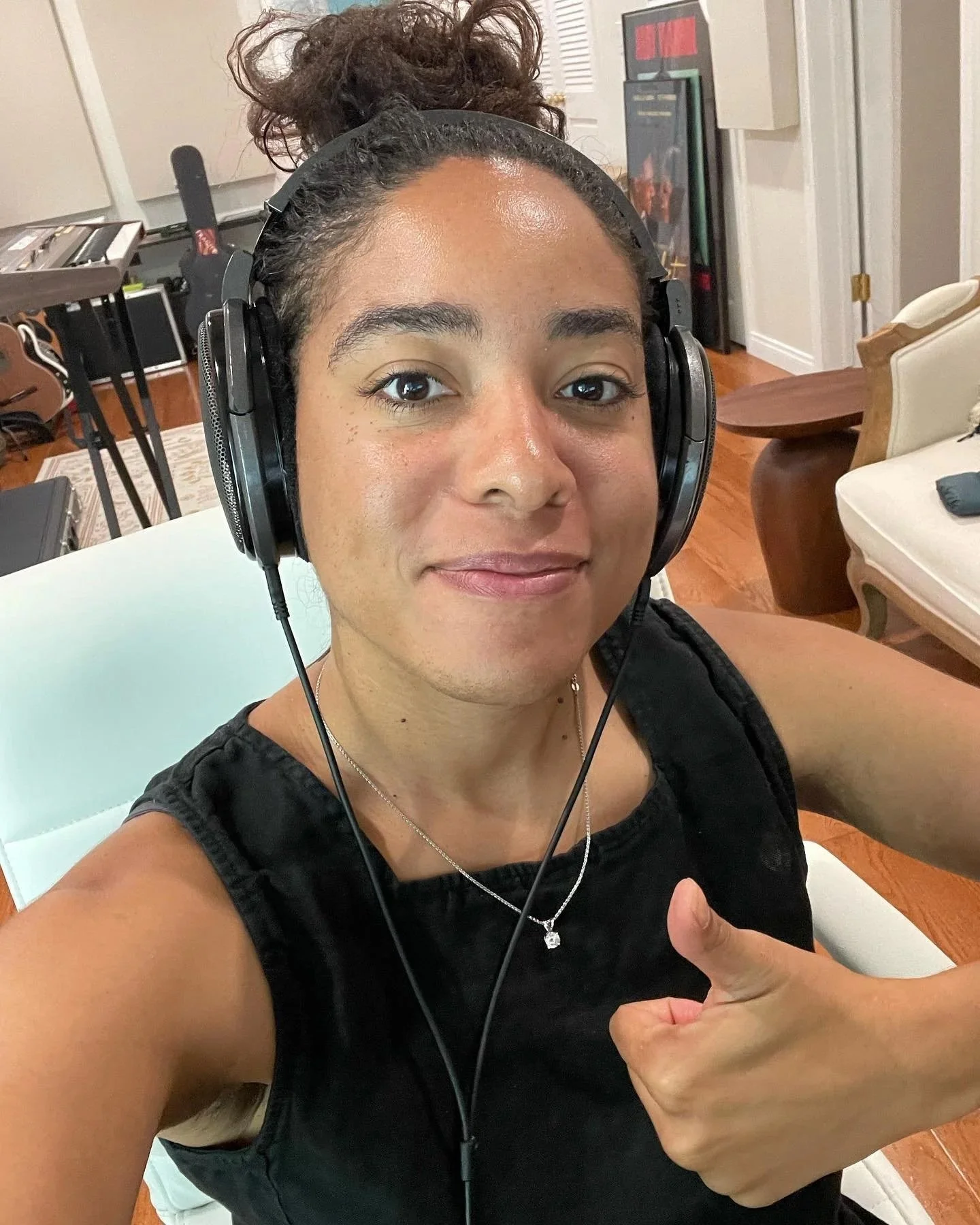
Courtesy of Amanda Jones
There are many paths a composer can take to get to the world of film and TV scoring. Some cut their teeth in a band, others in an orchestra, but Amanda Jones may be one of the only composers who credits her time as a senior music coordinator for Lionsgate as her start in the industry. Prior to her time there, she’d done all her “formative training, all the typical musician stuff,” including the Hans Zimmer internship. What her experience as a music coordinator afforded her was great insight into the way the world of film and TV works.
“My role there was to staff the musical talent on the show. The music supervisor, composer, and music editor. It was about understanding how to create those pairings for a show. A lot of success comes from which personalities mesh with a showrunner and their musical aptitudes. Everyone is so talented, so you have to make sure they can vibe with the creatives on the show.”
Jones’ filmography is sprawling, jumping from genre to genre. She has scored two episodes of the chaotic, animated series Adventure Time: Distant Lands, six episodes of the riotous A Black Lady Sketch Show, and documentaries like St. Louis Superman and the upcoming Cookie Queens. Jones’ love of the promise of something new is what draws her to such variety. She explains that each new project comes with “excitement and scariness,” a balance that’s thrilling to explore.
“Something like Murderbot, which has a lot of effects, has very, very long timelines. I’ll get a cut of something that’s just the raw footage and a lot of green screen. It’s so cool to see the behind-the-scenes movie magic. In episode one, there was a giant worm fight. The first cut I saw had a guy in a green suit who comes in and picks up one of the characters. Ultimately, VFX will turn that into a worm biting this character.”
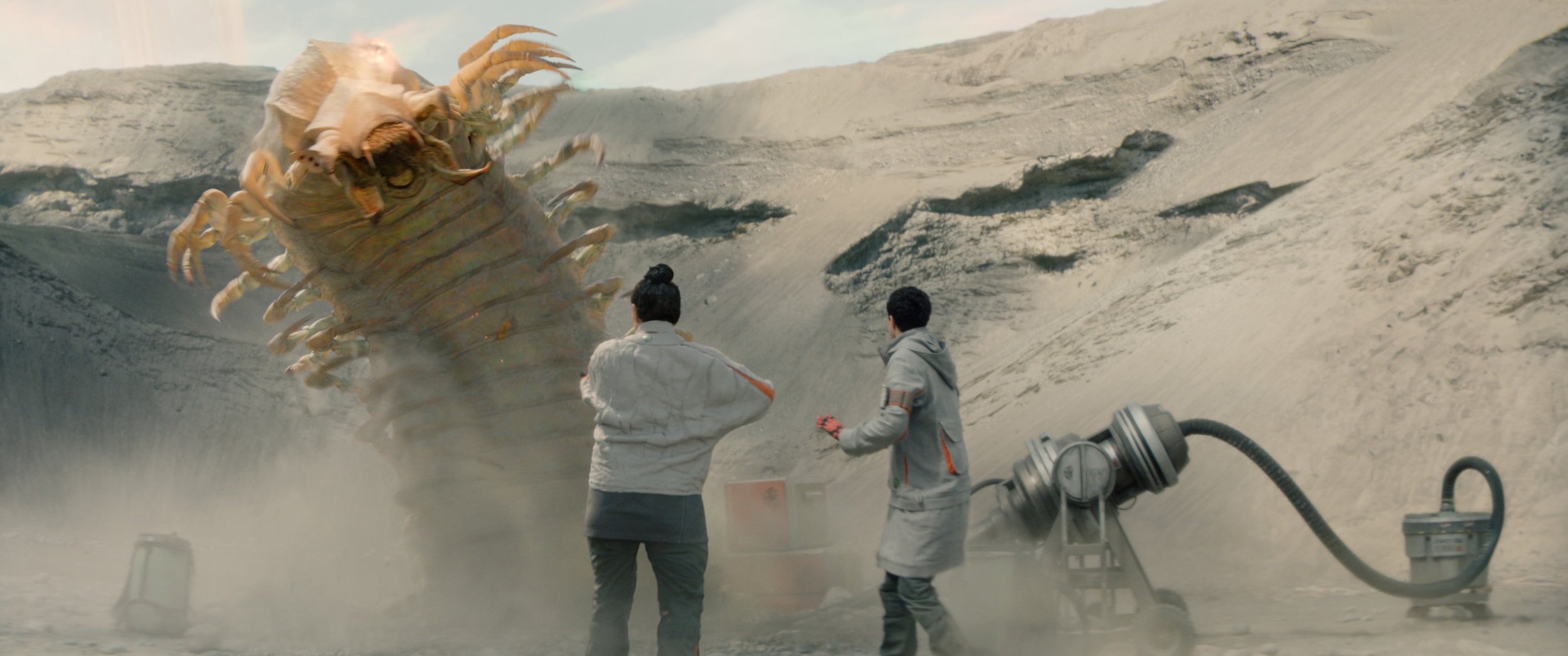
“I get to see all the different versions. When I get closer to mixing, I’m like, oh, there’s the VFX version, there’s the worm, there’s a spaceship, you know? I’m a highly imaginative person and it’s cool to see wind blowing and know there’s going to be a spaceship there. Then I ask myself, okay, what is the theme for that thing that will eventually be there?”
Murderbot is the Apple TV+ show based on the series of novels The Murderbot Diaries, by Martha Wells. A private security cyborg (Alexander Skarsgård) has been quietly hacking its own built-in safeguards as it plans to overtake the humans who have been treating it meanly. When it succeeds in hacking and gaining autonomy, it renames itself Murderbot. Its plot against humans is stalled when Murderbot is assigned to a group of scientists who are exploring a dangerous area.
Prior to joining the series as composer, Jones was already a fan of the series. While reading, she had little bits of inspiration for what Murderbot the series could sound like. Now, years later, bits of those initial ideas have made their way into the official score.
“I had so many different ideas, and then those ideas were kind of swirling with the filmmaker’s ideas. My initial thoughts were fairly close to where we ultimately landed. The score started in a place where I was like, okay, it’s a robot, but becoming more and more human. I have this vintage Roland Juno 60 synth. It’s an analog synth, but it’s also very human in the sense that you can create a sound that will never exist again. This machine is out of control. It can malfunction at any point. I felt like this is Murderbot.”
“I created a bunch of themes using the synth, my voice, and some strings. The showrunners were like, okay, cool, but it’s also sci-fi in this way, so what if they want to make it ’70s? This Vince Guaraldi vibe. I added a big orchestral punch, blending those two synth ideas. Analog synthy elements melded with a fifty-piece orchestra.”
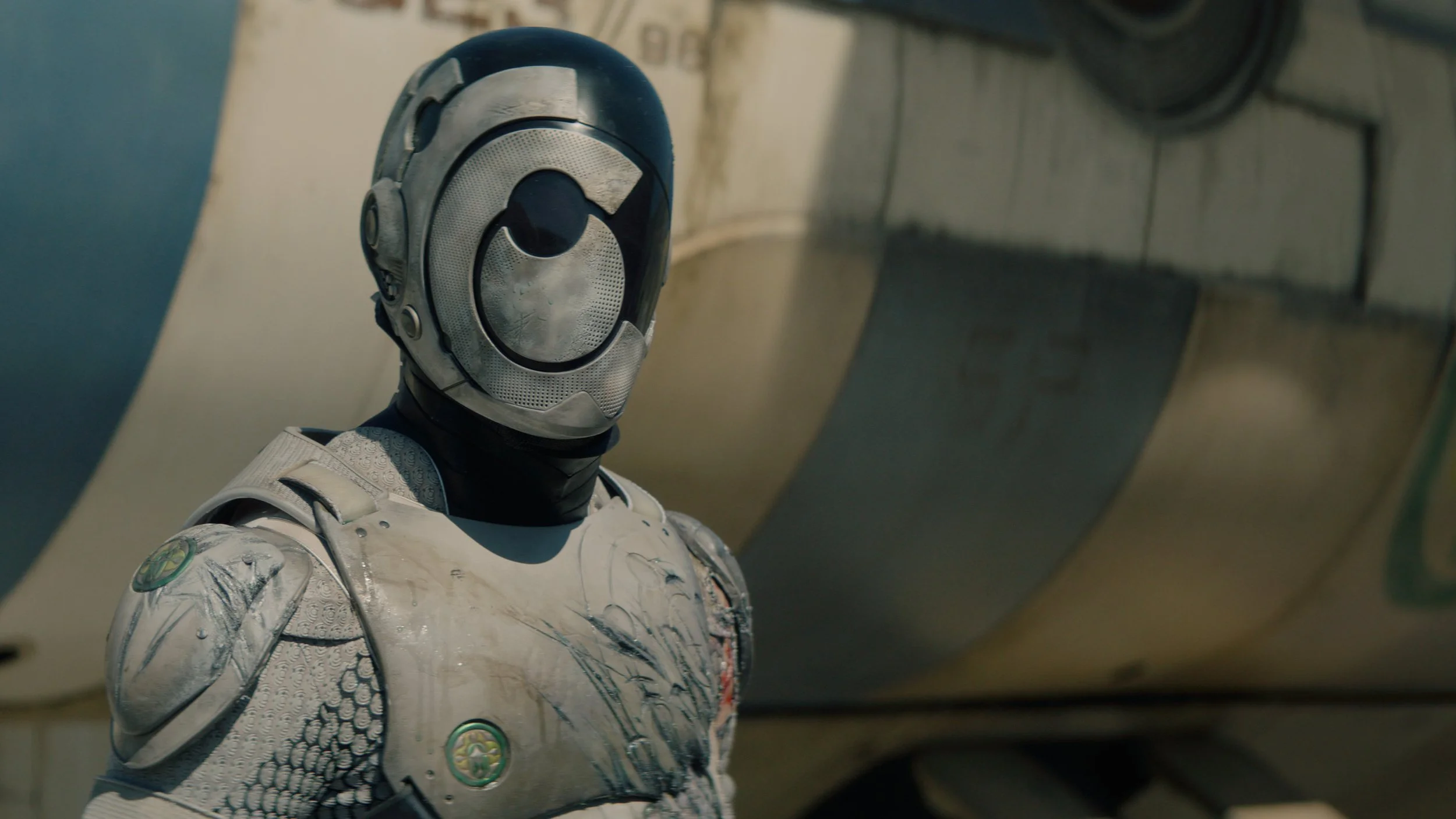
Courtesy of Apple TV+
This duality is best heard in the show’s main title selection. The grandness of the orchestra is buoyed by the modern liveliness of the synth. Jones recorded the selection with fifty musicians, though she originally pitched a one-hundred-piece orchestra, like Star Wars. That was nixed, but Jones is quite thrilled with the “nimble, full orchestra” she was able to work with.
“Sci-fi has a beautiful musical history of these big, big orchestras for their scores. The number of musicians we settled on allowed us to blend with the synths in such a cool way. They both cut through so nicely, and I can mix them up and down.”
Jones was able to play in the sandbox of the stories tradition of those big, bold science fiction scores. Within the world of Murderbot is a show called The Rise and Fall of Sanctuary Moon. Think Star Trek blended together with a daytime soap opera. It’s over the top and saccharine, a playground for Jones to absolutely let loose.
“That was stream-of-consciousness writing. Ever since I was a kid, I’ve thought of orchestral ideas when I’m walking around, doing everyday things. A goal of mine is to hone my personal voice with an orchestra. I love what Ennio Morricone has done, Bernard Herrmann too. I’m so excited to continue developing my voice with an orchestra because it’s a limitation that’s so interesting. Anyone can make a song sound good by bringing all these other elements together, you know? If you just have the orchestra to work with, you have to really think about the writing, rhythms, and melodies.”
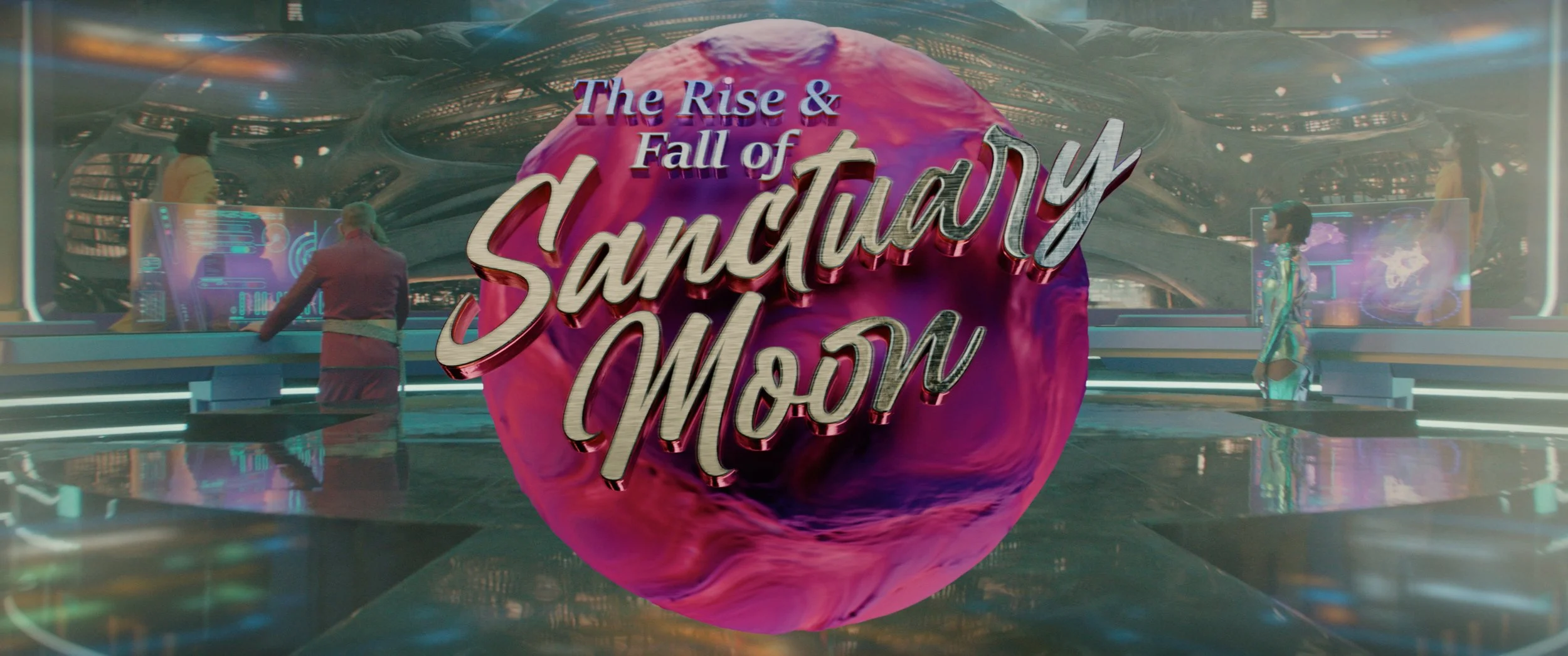
courtesy of Apple TV+
“I was able to start doing that with Murderbot and, especially, with Sanctuary Moon. That show-within-a-show is 100% orchestra. There’s no doubling or any sense of anything like that. It was just so cool to have that raw sound. It’s definitely inspired by Herrmann a little bit, but there are more elements to it. I just was going crazy with it, a lot of stream-of-consciousness writing. I’d be like, it’d be cool to do a really fun flute thing here, weird glisses there, and weird clusters here.”
On top of her work as a composer, Jones is also involved with the Composers Diversity Collective. It’s an organization dedicated to developing the voices of underrepresented composers in the film and TV industry. Jones serves as treasurer for the group and takes pride in the mission of the Composers Diversity Collective.
“The organization did not exist during my time at Lionsgate. The biggest issue, when there was an opportunity for composers to be presented to producers and showrunners, was that a lot of the time, it was the same white men over and over and over again.”
“The more you normalize having a female composer, Black composer, Brazilian composer, Iranian composer, or any composer from different backgrounds, the more you normalize seeing those submissions. It’s then more likely those folks would get hired.”
“It was really important to create this group, not only to foster community, but to recognize that we’re not alone in this space. I’ll find myself being the only Black person on the soundstage or the only woman in the entire room. This group allows us to feel part of something larger.”
In addition to creating a sense of community, the Composers Diversity Collective also offers important opportunities for newer composers to learn about industry expectations. While they may be confident in their musical abilities, there are certain aspects of the film and TV world that are inherently different from making music by and/or for yourself.
“We run a panel about the composer’s relationship with the director and showrunner. If someone does get an opportunity to do a TV show, you don’t want them to fail, right? It’s really important to have these programs to support folks who are breaking through. We want a unique voice to win and get the gig, but then they need to keep the gig. A lot of times it comes down to the fact that they may or may not have had experience to know what it’s like to keep the gig. They may have their own methodology, but that’s not the methodology that studios are used to. There’s a standard of how the cake is made, so to speak, the way one composes a TV show front to back. There’s a methodology to it and it’s very standardized. We want to make sure folks are aware of that standard process but then can add their own spin to it.”
“When you have a group like this, you feel empowered. We can share notes. We can learn from each other, and we realize that we’re not so alone in this pursuit of being a composer. We’re in this together. This is awesome. Now let’s fight the powers that be.”

Support Your Local Film Critic!
~
Support Your Local Film Critic! ~
Beyond the Cinerama Dome is run by one perpetually tired film critic
and her anxious emotional support chihuahua named Frankie.
Your kind donation means Frankie doesn’t need to get a job…yet.