
VFX Supervisor Eran Dinur Brings '50s NYC to Life in Marty Supreme
This interview was originally posted on Film Obsessive.
When people hear about the job of visual effects supervisor, their thoughts immediately go to otherworldly planets or aliens. They see visual effects as a means of creating something that only exists in a far corner of our imagination. VFX supervisor Eran Dinur agrees that special effects have the ability to transport the viewer to a place they could never go. In the case of his latest project, Marty Supreme, that place is the 1950s. Dinur and his team recreated the chaos of New York City in the ’50s, the splendor of the Egyptian pyramids, and the fervor of a ping pong ball flying across a table. Dinur’s career, though, began in music.
“I studied classical music composition. The main career I had as a musician was writing music for theater where you work with a director and designer. Part of what I could bring with me as a VFX supervisor was being used to working with the creative team and dealing with the different challenges that you have there.”
“It’s also very, very different. I just fell in love with CG and visual effects art almost by mistake because I started playing with different software. I really got hooked on the worldbuilding idea. The fact that, for example, someone like me, who loves landscape photography and mountains, could actually create my own photographs of mountains without being a painter or going there in photography. That idea of worldbuilding really caught me.”
“I taught myself. Back then it was mostly books. I’m talking about the late ’90s, early 2000s. I was still working as a musician. I still wrote music for theater. On the side, I was doodling with all this stuff and teaching myself more and more and more. There was just this urge to learn, and I was so fascinated by animation, by CG. Of course, some movies that I watched back then had a hand in making me want to learn.”
“The Lord of the Rings trilogy was incredible. It goes back to mountains and vistas, and I think the fact that they blended the real, amazing landscapes of New Zealand with the additions to make it Lord of the Rings castles captured me. I started posting stuff I made through different outlets online and somehow got to the company that was making the software I was using. They offered to have me work for them and create demo scenes.”
“Eventually, I started working at a relatively small company called Brainstorm Digital. Their niche was mid-level budget movies, or auteur movies, as you like to call them, that require more of this invisible visual effects stuff.”
courtesy of A24
Along the way, Dinur was contacted by Routledge Publishing to see if he was interested in writing a book about VFX for filmmakers. This is not a guide for people interested in learning VFX and becoming compositors, but as a crash course of sorts for filmmakers to understand why some shots cost more than others, how camera movement impacts cost, and general language to explain what they’re seeking from adding VFX to a shot.
The Safdie Brothers have developed a distinct style in their frenetic, fast-paced films of scammers who think they’re one step ahead, but the viewer knows they’re one wrong step from drowning. Good Time, Uncut Gems, and now, Marty Supreme, are all characterized by their anxiety-inducing, fast-paced, harebrained schemes that take the viewer on an odyssey across New York City. Good Time and Uncut Gems, which Dinur also worked on, were directed by Josh and Benny Safdie. Marty Supreme, however, sees Josh alone in the director’s chair.
Marty Supreme is the story of Marty Mauser (Timothée Chalamet), a twenty-something, arrogant table tennis player who believes he’s on the verge of greatness. There are just a few things standing in his way. First, he’s got no money. Second, no one in the United States really cares about table tennis. Those things don’t faze Marty all that much. He’s got a dream that’s bigger than anyone, except for him, can see.
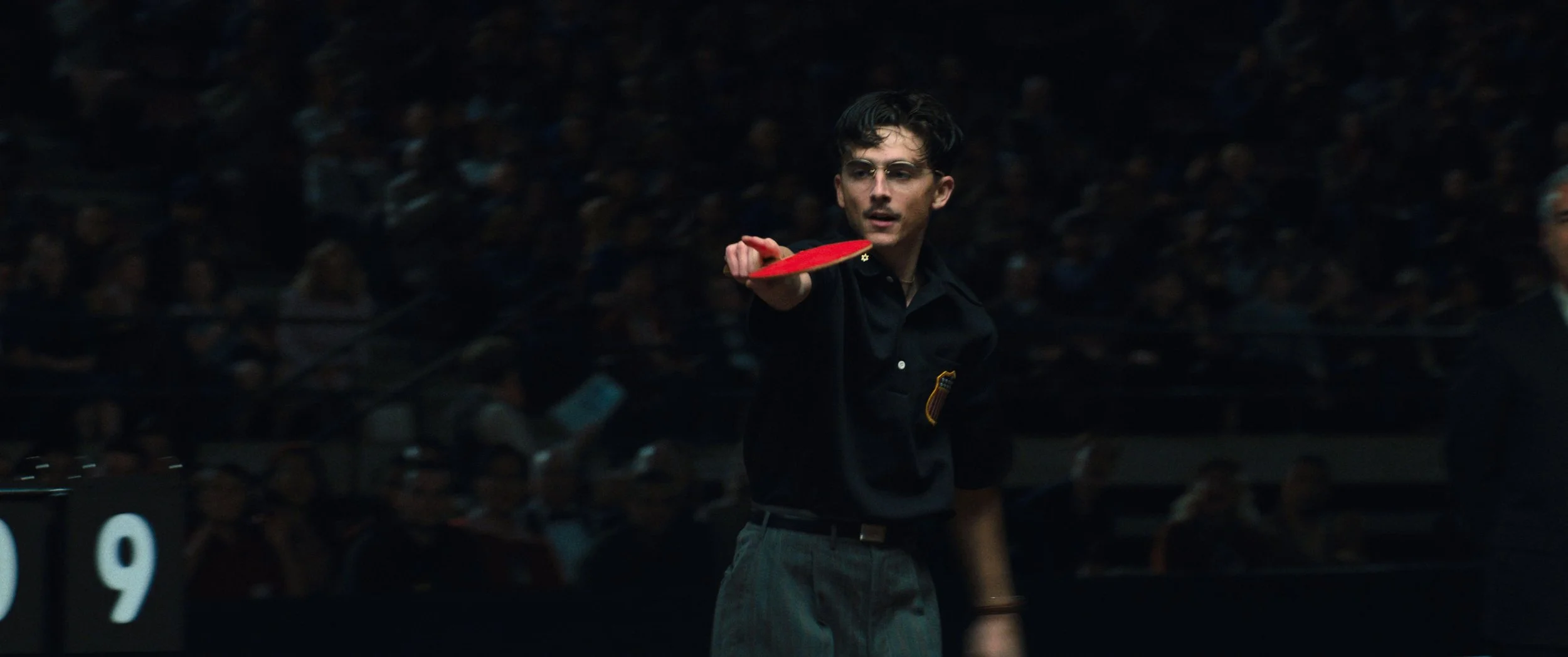
The film shows Marty as he competes on the largest stage for table tennis. These scenes have the signature Safdie urgent camera movements that add an immense thrill to the matches. Chalamet trained for years to look like a world-class table tennis player, and it pays off. These matches were carefully choreographed so the points would feel natural, even if the viewer has no table tennis experience of their own. Josh Safdie wanted to allow his actors to fully focus on the choreographed movements, so the decision was made to insert the ball through CG.
“We knew we would probably need to do a CG ball for some of the shots. We didn’t know exactly how many. It depended on what happened on the set. Timmy practiced all these points, a very precise choreography. He and Koto Endo knew exactly for each point what they’re supposed to do, how to react.”
courtesy of A24
“It was already pre-choreographed with Diego Schaaf and Wei Wang, the ping pong experts who trained them. Timmy trained a lot, to a point where his movements look completely professional. If you play table tennis, you can tell very easily if somebody just plays in a basement or they’re actually a professional player. Timmy got to a point where he was super accurate.”
“The main challenge, of course, is the timing. If you react one or two frames too late, that will force us, if we add the CG ball, to slow down the ball to a point where it feels unnatural. That was the big concern I had when we worked on those shots where they played without a ball. At first, Diego and I thought we would have the ability to replay every take and he would count the frames and he would tell us, okay, this is good, this we need to do again.”
“We quickly realized that this takes too long and we have to move very, very fast on the takes. On set, I had to mostly rely on him to tell me just his intuition. He can look at the take and say, okay, the timing feels right. In the end, even though I was concerned about it, we had an amazing starting point because both Timmy and Koto were doing it really, really well. Their timing was really good.”
“It’s a challenge, though, because a ping pong ball is a very small ball, very light. It’s affected by air and gravity, but also a lot by the spin. The whole game is based on spin because, otherwise, if you hit the ball hard, it’s just going to fly off the table. It’s not going to land. If you add the top spin, it pulls the ball down. If you add under spin, it slows the ball and makes it float more. All these things we had to implement as an animation and there’s no way to do it as a simulation.”
If it sounds like Dinur is a table tennis expert in his own right, that’s because he caught the bug while working on the film.
courtesy of A24
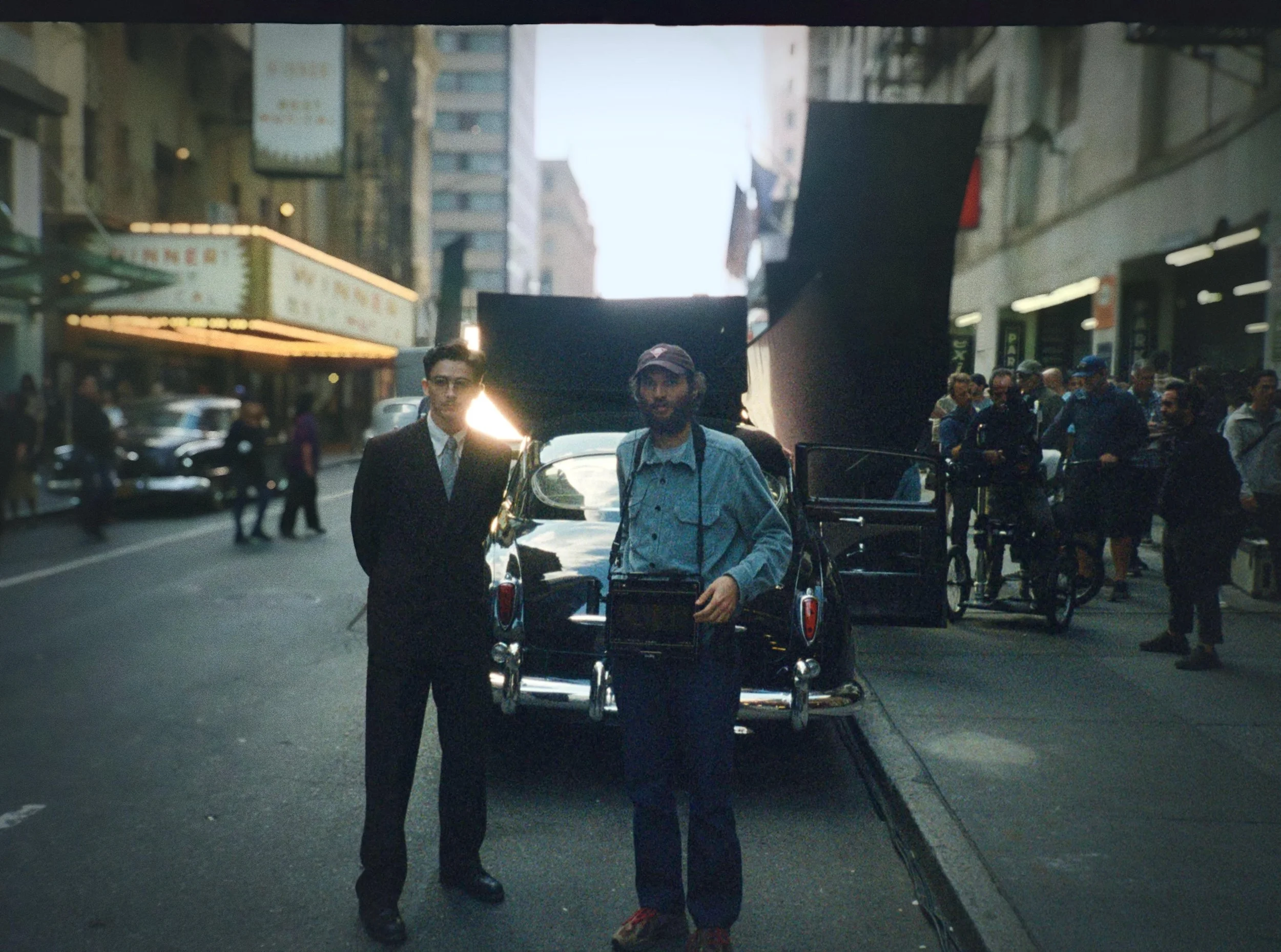
“When we started pre-production, I decided to go and take lessons because I wanted to get a better understanding of the techniques and the spin. I thought, eventually, I have to talk to the animators and give them notes and lead the whole project…I’m still playing it. I got really addicted to it. I mean, I don’t think I’m very good, but I got better at least. We used to play on set, too. A gaffer, producer, everyone.”
While the animation of the ping pong ball was difficult in terms of the timing and making it look realistic, Dinur mentions that it was actually the crowds at these matches that proved more difficult.
“The whole idea was that we’re going to have strong light in the center on the tables that kind of dissipates and dies down toward the audience. We knew we had a very limited number of extras to do the whole thing. With extras, it’s a big budgetary consideration. A discussion that started as early as pre-production was about how to do the crowd and also how to make sure that not every single shot needs CG crowds, so you could do close ups.”
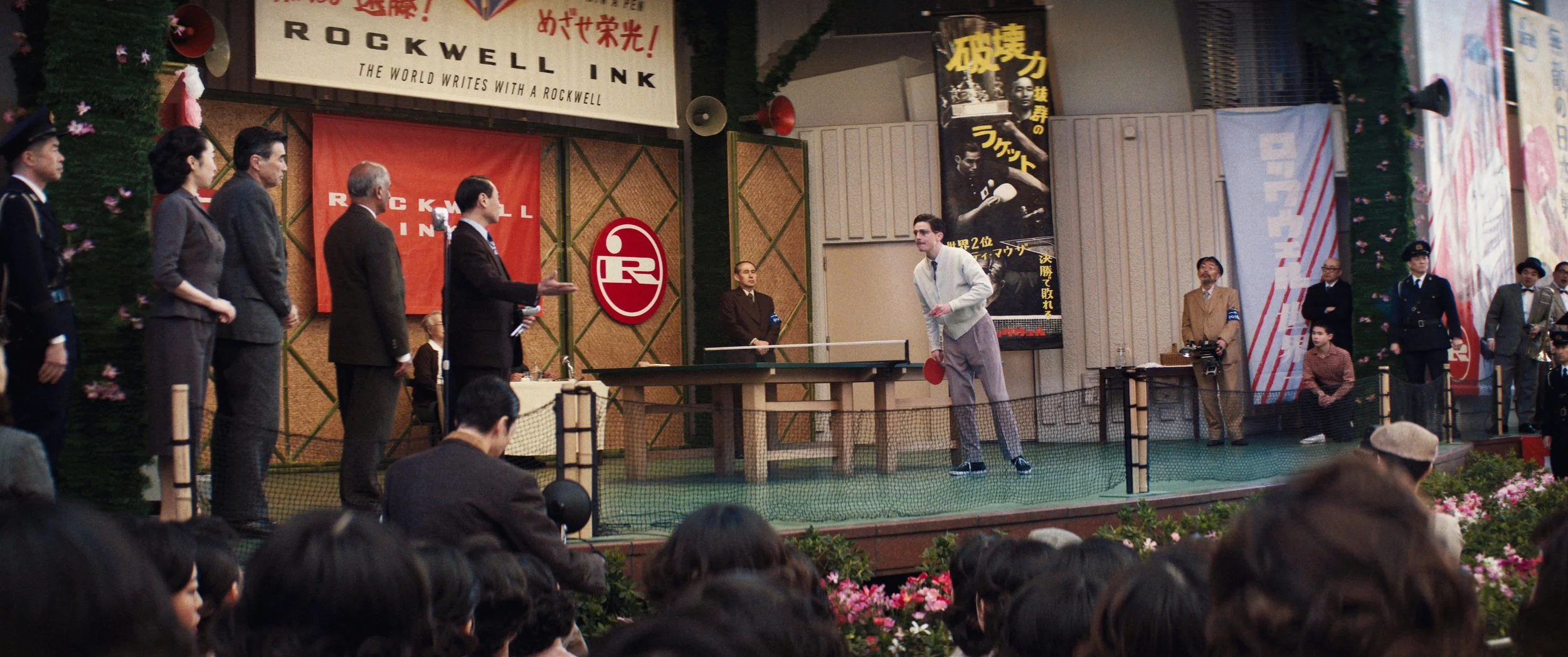
“From the beginning, Josh was saying that he would probably shoot with several cameras. The Tokyo crowd was the most difficult. It’s shot in the daytime, so you can’t hide in the darkness. You see everything. The crowd is also a lot more colorful. We had kids there, old people, people wearing different clothes. It’s like this carnival crowd coming from all parts of society, as opposed to the more suit-wearing crowd at Wembley for the other match.”
“You start by scanning extras, bringing extras into sort of a truck or a trailer that’s a scanning studio. They stand in the middle and there’s an array of cameras around them. That gives you a three-dimensional scan, but it’s still a static mesh model.”
“First of all, for example, if the wardrobe is loose, think of the women wearing kimonos in the Tokyo scene, what you don’t get from the scan is the reaction of the fabric.This is called cloth simulation. You have to rebuild these to be able to animate them. We scanned maybe 30 extras at most. You have to replicate these and change the color of the clothes, put a different hat on, put on different props, etc. to create enough variety so you don’t start seeing duplicates. Of course, the animation is difficult because you have to animate the mass of people who react in a certain way.”
courtesy of A24
“When a VFX artist gets a shot to work on, they first need to track the camera. If the camera is moving around, you have to create a virtual camera that will do exactly the same. Before you do any animation, you have to rig the CG people. You have to put a skeleton inside that you can move. All this goes into a specific software that creates a simulation of a crowd. Instead of hand-animating every single person in a 500 or 5,000 capacity crowd, you create these variable conditions so people react slightly differently from a library of reactions.”
“Then, of course, you have to light it, and the lighting needs to match exactly the lighting we had there on the set. You have to composite the crowd in the shot, which means they need to be integrated to a level where it feels like they were in-camera. Darius Khondji, the cinematographer, who I worked with on several movies before this one, likes to use a lot of atmosphere to create depth and help with the lighting and the feel. For visual effects, the atmosphere is always a challenge because you can take the same person, put them in different spaces, and in each place they would need a different amount of atmosphere or color correction to feel like they’re there.”
“This is not new. It’s been done for years. On a movie like Marty Supreme, you also have limitations of budget. It’s not Avatar. I think it came out pretty good because I don’t hear many people say, oh, is the crowd real? That’s the best compliment for me and all the artists who worked on it. If we manage to integrate the crowd so it feels like it’s in-camera and nothing stands out, that’s about the best we can do. That’s the highest achievement in this kind of movie.”
Another one of Dinur and his team’s invisible visual effects has to do with recreating the pyramids of Egypt and the Lower East Side of New York in the 1950s. It becomes a question of what will be built by the production team and what will be animated by Dinur and his team. Jack Fisk was the production designer on the film and the two discussed what needed to be built and what could be animated based on time, money, and other constraints.
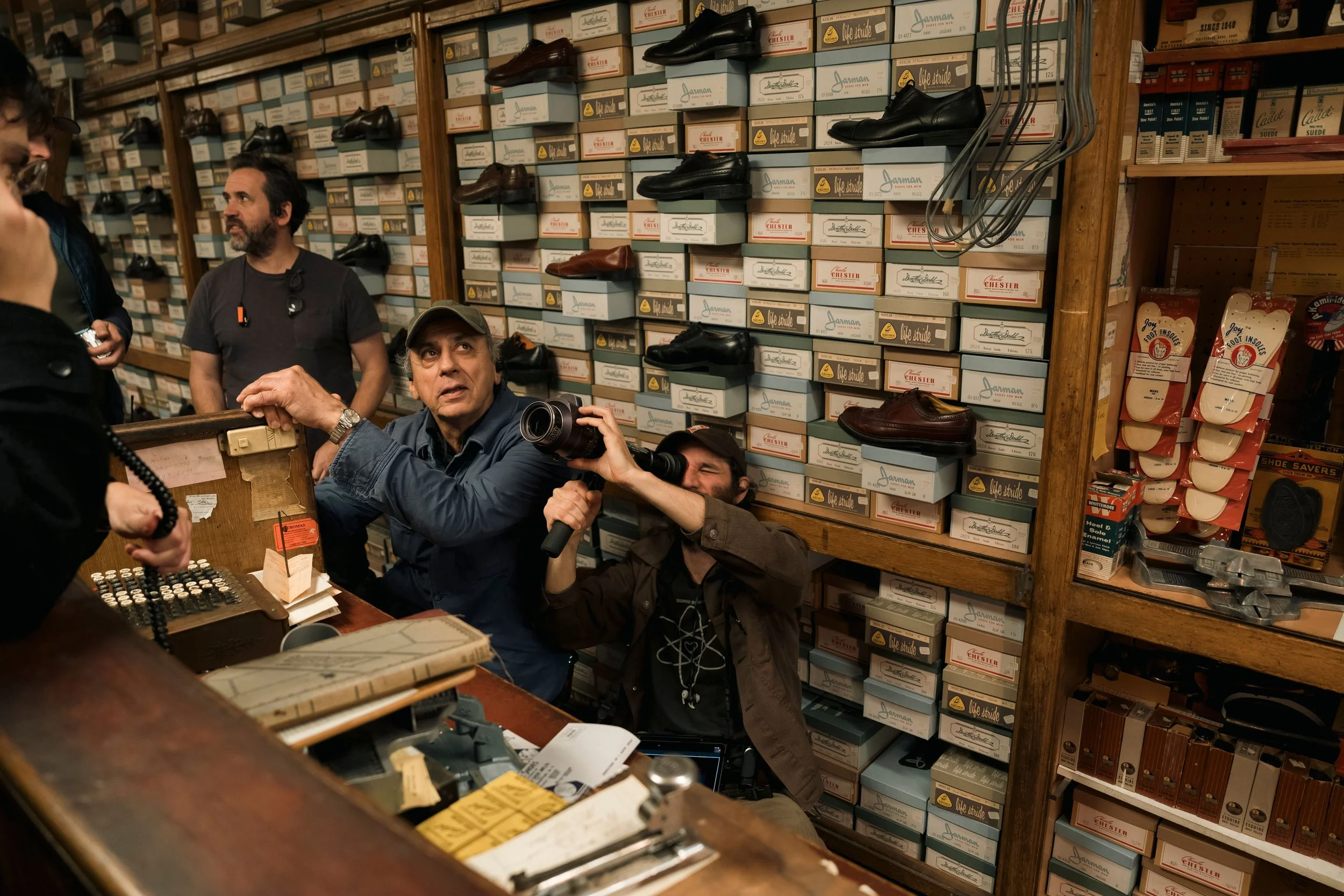
“Jack is such a meticulous production designer that some of these Lower East Side locations were so well-built and decorated that we almost had hardly anything to do except remove AC units and things like that that you cannot obviously physically remove.”
“There were also some environments we had to do, almost everything like the pyramids. We shot that on the beach in Connecticut. It was a funny shot because the camels are real. The donkey is real, but not much else is. That was a challenging one because they used a very long zoom and also a lot of these lenses are old because Darius likes to use old glass. The distortion change is pretty prominent as you zoom in, which kind of affects everything you put in there.”
“The Haneda airport, where they land in Tokyo, we shot in Long Island at a regional airport. In the background, you have the Home Depot and shopping malls. Everything had to go. The whole scene in the Holland Tunnel was obviously shot on a soundstage with green screens in the car. Overall, we had about 500 visual effects shots in the movie, for sure.”
“This is one of those movies where I felt that, at every step of the way, I was there. From pre-production through the shooting and all the way to the end of post-production. Every step of the way. I was working with other people in collaboration, and that changes the whole picture, because you’re not just kind of putting Band-Aids on or sticking stuff in it to fix something.”
“Things are discussed and planned in a way that helps us. I think it’s super important in this kind of movie to not grab any attention at all. I have to say that it’s very, very exciting for me to work on movies where the main goal is to stay invisible because I’m fascinated with photorealism. Just the imitation of realism with digital tools. To me, there’s something very rewarding in finishing or seeing the finished shot and looking at it and saying, okay, that just works. It just feels coherent. I like it very much.”

Follow me on BlueSky, Instagram, Letterboxd, TikTok, YouTube, & Facebook. Check out Movies with My Dad, a new podcast recorded on the car ride home from the movies.
Support Your Local Film Critic!
~
Support Your Local Film Critic! ~
Beyond the Cinerama Dome is run by one perpetually tired film critic
and her anxious emotional support chihuahua named Frankie.
Your kind donation means Frankie doesn’t need to get a job…yet.