
Siân Richards Talks Redefining Vampires with Sinners Make-up Design
This interview was originally published on Film Obsessive.
Ryan Coogler’s Sinners sits at the top of many best-of-2025 lists, and as we enter awards season it’s proving to be a juggernaut. The National Board of Review and the American Film Institute have it on their top ten lists. Sinners picked up seven Golden Globe nominations and leads the pack with seventeen nominations for the Critics’ Choice Awards. One of those Critics’ Choice nominations was for Best Hair and Make-up, a team led by make-up designer Siân Richards.
Richards worked with Coogler on Black Panther and calls the writer/director a visionary. Anyone who has seen Sinners would agree. The film takes place in the Mississippi Delta in 1932, where twins Smoke and Stack (both played by regular Coogler collaborator Michael B. Jordan) have returned home after working for Al Capone in Chicago. The twins plan to open a juke joint with all the money and liquor they acquired up north. Sinners is a mix of drama that comes from two men returning home to face the people they left behind and full-on supernatural happenings. In initial conversations about the vampires at the heart of the second half of the film, Richards found inspiration in an unexpected place.
“When I read the script, the thing that hit me about Sinners was that it wasn’t a vampire film. It was a period drama with some vampires thrown in. When you get through the first act and then hit the second act where all hell breaks loose, it’s like, oh my God, this is insane. It’s brilliant. It’s completely fresh.”
“Ryan and I were on a phone call one day and I told him that I wanted to design it like a proper period piece. Like it’s crafted to look like a British period piece. For the vampires, though, I really wanted to do something different. I was so bored with just the bite on the neck and small trickles of blood. I thought the fans needed something different. If we were to honor our fan base and prolong the vampire movie genre, I thought we had to do something fresh and new.”
“I sent him a moodboard that I’d made. It had everything on it, from sharecropping to gangsters in Chicago to juke joint gatherings to Chinese immigrant families and their work environments. Also, there was a big area dedicated to lions and hyenas post-kill. I really wanted the vampires to look like they were feasting. Absolutely feasting.”
“There was a picture of a lioness. She looked slightly mad. Her entire face was covered in blood. I said, that’s Mary. Ryan went, you’ve taken me to the Serengeti. This is incredible. Now I know what my movie’s going to look like.”
“I said, why do they always have to be bitten on the neck? Why can’t we have someone being bitten on an arm or bitten somewhere else? The whole point about a vampire bite is the bite itself. It’s not the position of the bite. Why can’t we have them bite anything and everywhere? Why don’t we just shift all of that?”
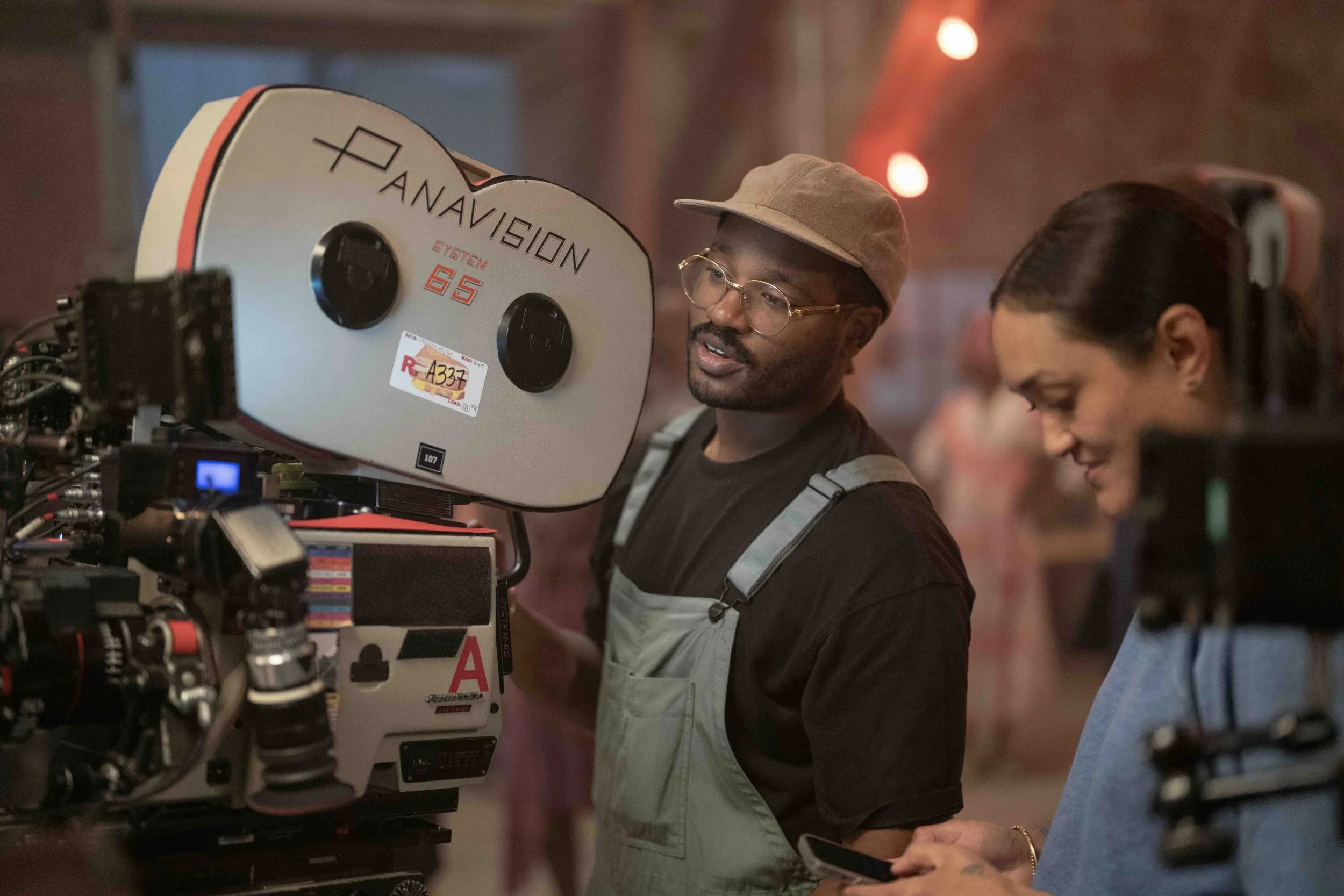
Photo Credit: Eli Adé. Director RYAN COOGLER and Director of Photography AUTUMN DURALD ARKAPAW in Warner Bros. Pictures’ “SINNERS a Warner Bros. Pictures release.
“That brings it into the real world, which was really important for the longevity of the vampire. When you look historically into vampires in cinema, Nosferatu is one of the most beloved vampires in cinema history. One of the things that kept coming up was that the reason he’s so beloved is because fans could relate to him. He was just like a regular person. The emotions he felt, they related to him on a visceral level and on an emotional level. For our vampires to move away from that, especially with the script Ryan wrote, it was never going to happen. That was the genius of Coogler. He just sees things differently.”
Another aspect of the genius of Coogler is the most-talked about dream sequence at the juke joint. Sammie (Miles Caton), the younger cousin of Smoke and Stack, is an immensely talented singer and guitar player. When he plays at the juke joint, he mystically conjures spirits of the past and future for a profoundly unforgettable sequence. It’s the ancestors and the children of the future all mingling together, moved by the power of the music.
For Richards, this meant an immense amount of research about the past and contemplation for the future. However, she didn’t have to undergo this research alone because Ruth Carter, costume designer extraordinaire, proved to be a fount of knowledge.
“I have to give it up to Ruth Carter, my sister from another mister. I absolutely love Ruthie. She’s an amazing costume designer. The girl wins awards like you pick them up from Trader Joe’s or something. She’s that talented. She’s a generational hit, proving to everyone how beautiful African culture and Black dandyism are.”
“The way Ruth sees color, works with textiles — she is a visionary. Ruth is a walking encyclopedia of historical knowledge. We were doing similar types of mood boards without even knowing it. Coming up with images that were completely in alignment with each other.”
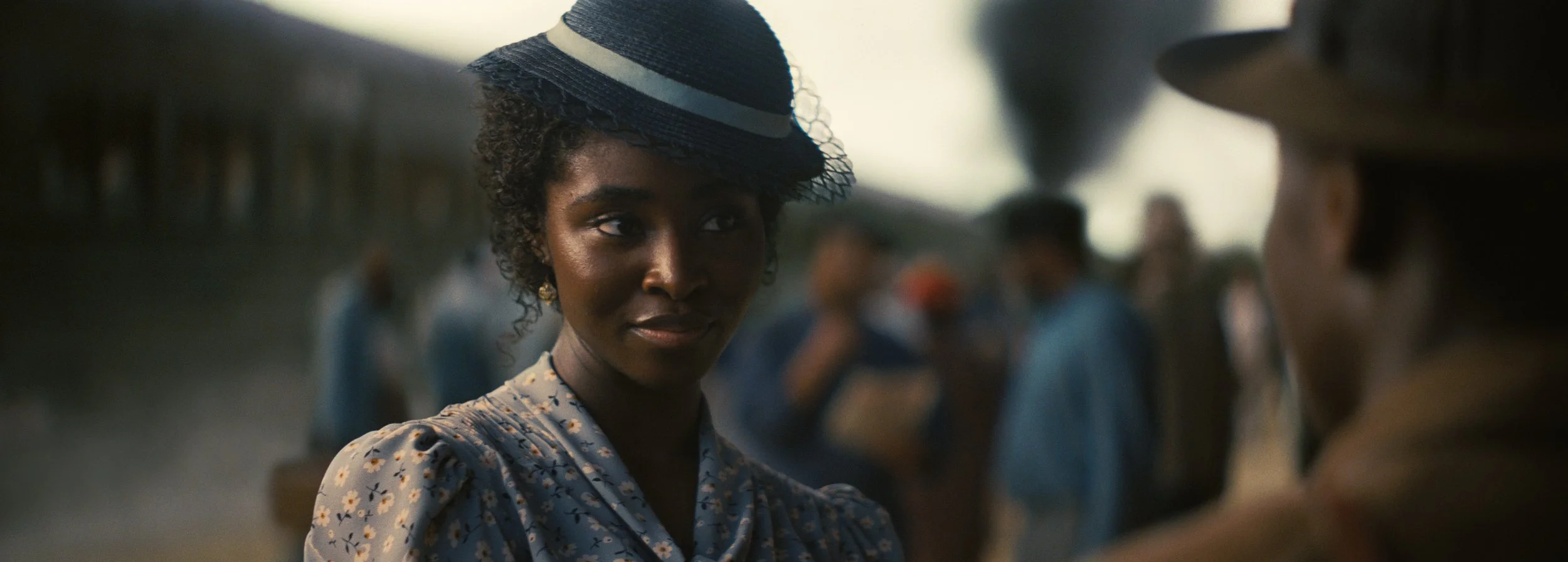
Courtesy of Warner Bros. Pictures. JAYME LAWSON as Pearline in Warner Bros. Pictures’ “SINNERS,” a Warner Bros. Pictures release.
“Originally, the dream sequence was visually very different. Ryan really honed it and kept refining it because it was so important to get it right. My original idea was to start looking at African tribalism, looking at Ruth’s costumes, looking at Pearline’s ancestors, looking at everybody’s ancestors, in fact. Looking at scarification and noticing the difference from East Africa to West Africa. Most of the slaves were gathered in West Africa, not East Africa, so you have to make sure that any scarification that you do is representative of that coast of the African continent. Then tribe by tribe, every tribe had its own trademark.”
“Ruth, of course, already knew this. Her costume design really started to put it all into place. Ken Diaz, who came in as department head later down the line, took my mood boards and carried them through with Ruth for the tribal African makeups. Ken had done similar stuff, but not the same, when he was assistant department head for Black Panther.”
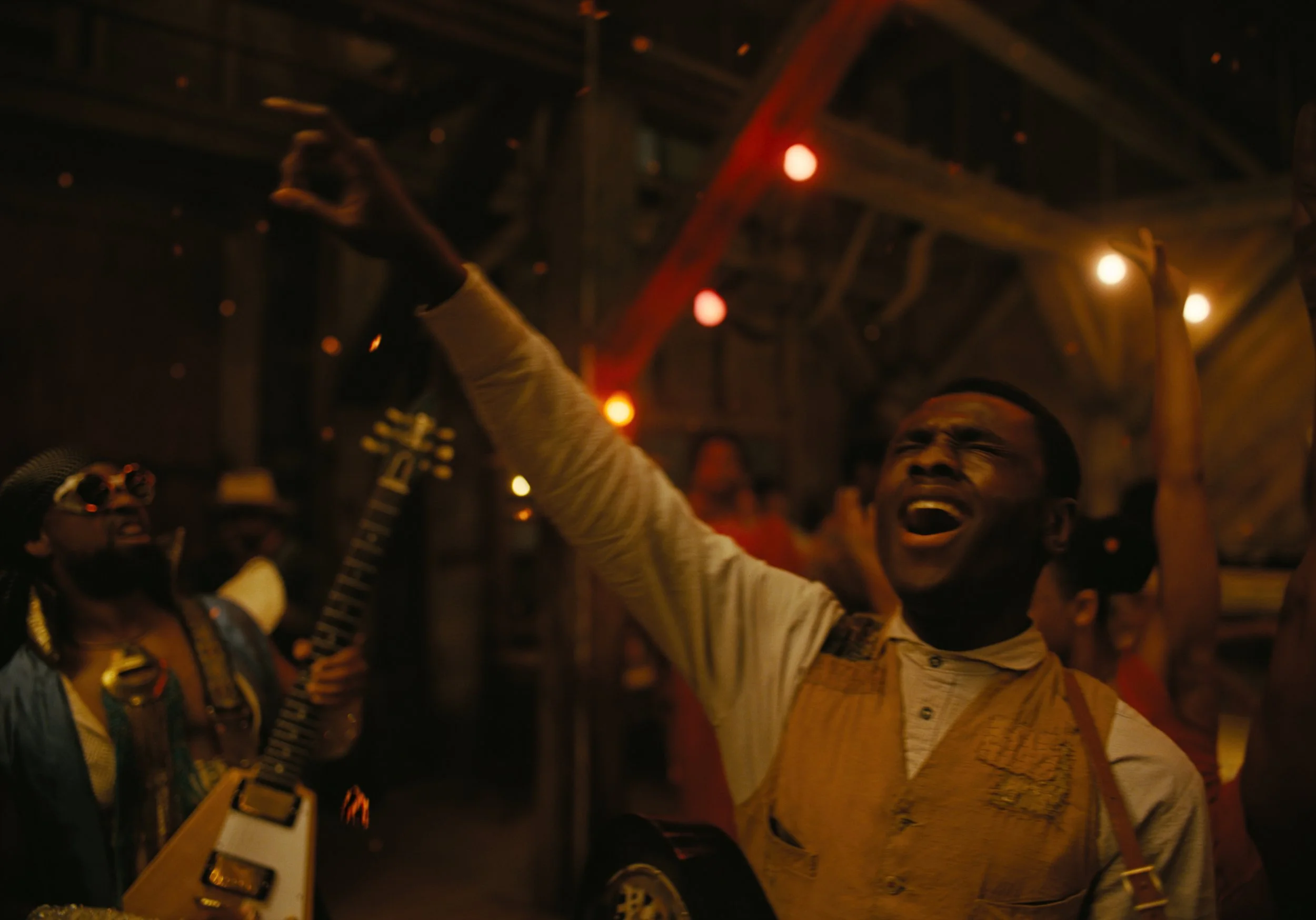
Courtesy of Warner Bros. Pictures. MILES CATON as Sammie Moore in Warner Bros. Pictures’ “SINNERS,” a Warner Bros. Pictures release.
I think my favorites are the Chinese ancestors. Ryan had scripted that there was Water Sleeves, who was Grace Chow’s ancestor. She came from Beijing Opera. It’s a beautiful character in Beijing Opera. She was going to be floating around esoterically. I felt very strongly that if we were going to give Grace Chow an ancestor, we needed to have balance visually and historically and give Bo an ancestor too.”
Grace is played by Li Jun Li and Bo is played by Yao. They’re a married Chinese immigrant couple who run the general store in town and help the twin brothers open their juke joint for the night.
“I was talking with Yao and I said, look, I really want to make a proposal to Ryan that we have your ancestor as well. I had an idea in my mind of what I wanted to do, but I wanted to offer it up to Yao because I love working with actors. They always give you a different perspective. I said to Yao, if you could have anyone in Chinese mythology, theater, or opera, which character would you want to be your ancestor? He said, oh, Monkey King. That is exactly who I wanted.”

Courtesy of Sîan Richards
“The reason I wanted Monkey King was because, growing up as a child, there was a great show in the ’80s called Monkey Magic. It was about monkeys, pigs, and all these mythological characters. Monkey King was thrown out of heaven for eating the Emperor’s peaches. He was a very bright and mischievous character. I used to watch Monkey Magic every single week, without fail. It was beautiful. My love of monkeys as mythological characters in Chinese history goes back easily to when I was about 12 years old.”
“I went to Ryan and said, I know we’ve got Water Sleeves, but can we please do Monkey King for Yao? Ryan looked at it and I knew he loved it. He said, as long as it doesn’t cost me any more, we can do it. I said, it will cost you nothing. We’ve already got all the makeup, just let us do it because it’ll look amazing on camera.”
“I found all these videos on Facebook of Chinese opera artists applying the makeup and the way they did it, the flow of the brush. I’m like, we have to find a way to do that, because it’s not just about doing the makeup, it’s about the energy in which it’s applied. These are tried and tested hands that maybe do it every day, and that’s how it needs to be done.”
“Ned Neidhardt, key makeup artist, developed this way of applying the makeup so it would last the sweaty conditions of the Delta but still look like the real thing. Monkey King and Water Sleeves really stand out in the sequence. I think it’s partly because we just don’t ever see Chinese mythology in American cinema, unless it’s once in a blue moon.”
Movie watchers may only consider the concept of texture when it comes to costume designs. Richards mentions that Ruth Carter has an astute eye for the use of different textiles in her work, but Richards is also concerned with the way make-up textures look on screen. It was extremely important for her to be period-specific in her work. More than that, much of Sinners required what’s called “non-make-up” looks. These are instances where the character is supposed to look natural, but that’s as a result of Richards’ make-up design.
“In the 1930s, make-up was made of different crude formulas. Very crude. It’s basically oils, powders, pigments, or waxes. It’s very rudimentary. Honestly, that kind of structure goes back to the very first makeup box discovered in a cave in South Africa that dated to 3,000 years ago.”
“They would crush pigments, they would mix them with an oil or a chalk, and they would make their tribal markings from those raw materials. If we’re looking at the 1930s, it’s more refined than that, but the fundamentals are the same. When we’re trying to do a look that’s a beauty makeup or a theatrical makeup or a tribal African makeup, we have to replicate the texture of that makeup and the pigment of that makeup because pigments have changed as well. I want the makeup to evoke that era in the way it sits on the skin, the way it moves on the skin. It will look different.”
“Let’s talk about a beauty makeup design. The only person in the movie who had makeup that should look like a beauty makeup was Hailee Steinfeld’s Mary. When we were doing her makeup test, I was saying to her makeup artist, this is how it needs to look. This is how her foundation needs to look. When it comes to the lip, we need to use more of a wax-based cream so it’s more representative of the viscosity of the lipsticks they used back in the ’30s.”
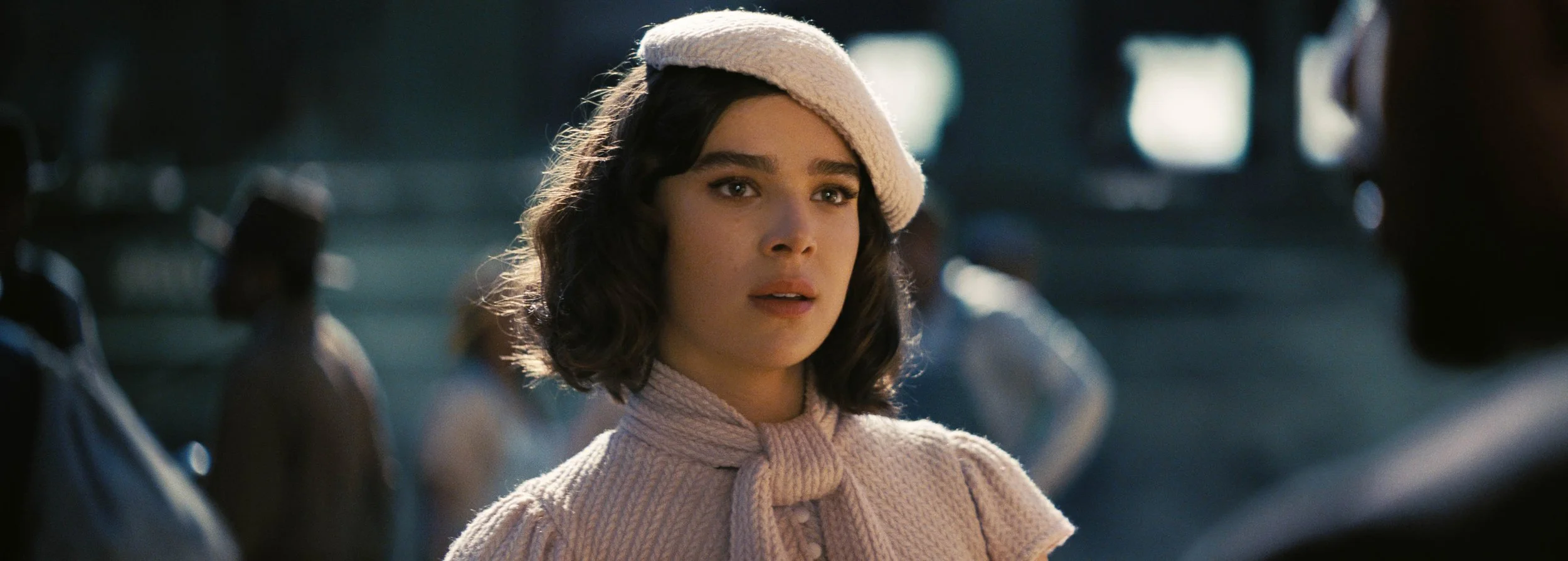
Courtesy of Warner Bros. Pictures. HAILEE STEINFELD as Mary in Warner Bros. Pictures’ “SINNERS,” a Warner Bros. Pictures release.
“They didn’t have so much of a shine. Although they were creamy, they were velvety and they had more volume to them. They coated the lip more. Hailee pointed to a pink lip color and it was the right shade of pink. She said, well, why can’t we just use this? I said, because it’s not the right formula. She said, what do you mean? The lip color she pointed to was a silicone formula. They didn’t use silicone in those days, so it’s not period appropriate. It really comes down to that. That was the approach for everything.”
“In terms of skin for the Delta people, they had to look like they had no makeup on. It was completely invisible, translucent makeup. We achieved that with color washes of a silicone formula that I make in my makeup line. I’ve developed a technique where I find the right product, but because it has so much pigment in it, I paint with a very small brush. We apply it like an artist would paint a portrait. Multiple pigments together. You’re not just painting a wash of one color or two colors. You’re painting them as if you were doing a Rembrandt.”
“These were techniques no one had ever shown them how to do. My local crew had never done any work like this in their careers. Even Ned, when I showed him, he said, oh my God, I’d never think to paint like this.”
“With Black skin especially you have to paint like this. The way the skin absorbs light, reflects light. The way it responds to green shadows or blue shadows or orange shadows. You have to be color correcting, painting, and doing it invisibly all the time. It was a complete learning curve for a lot of people. For me, it’s my standard. It’s how I paint faces, especially no-makeup looks. It’s what I’ve done for years.”
As Sinners careens to its bloody conclusion, Richards must figure out how to handle the massive amounts of artificial blood the movie requires. During the scene where Stack dies, they went through nine gallons of blood. That itself is a feat of make-up, but Richards knew that Jordan doesn’t like the feeling of stickiness on his body. She needed to create a way for Jordan to be blood-soaked yet able to fully focus on his performance.
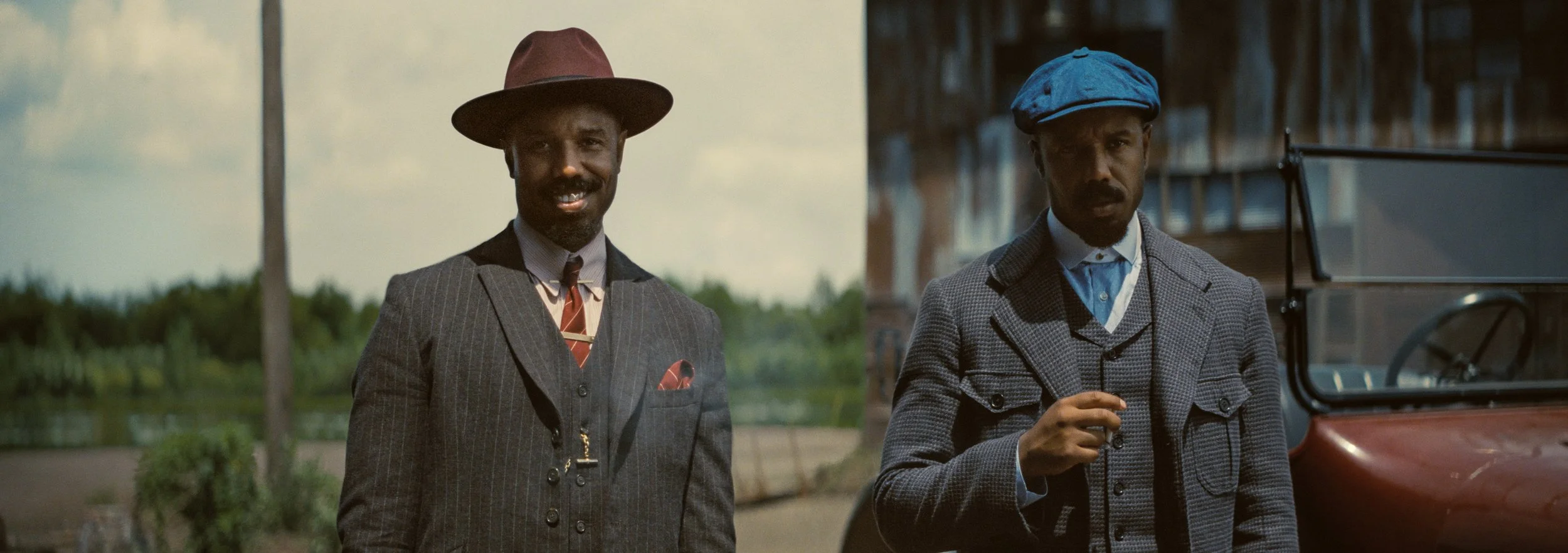
Courtesy of Warner Bros. Pictures. MICHAEL B. JORDAN as Smoke and as Stack, in Warner Bros. Pictures’ “SINNERS,” a Warner Bros. Pictures release.
“The thing with Mike is that he was on camera pretty much all the time. You’ve got to remember that. He worked his rear end off. I saw him last week, and I said, honestly, I’m astounded by the performance you’ve given. I was so close to it while filming that I couldn’t step back because I was so busy all the time. Finally seeing the film, this is a career-best performance to date. He was magnificent. Not only in his performance and differentiating between Smoke and Stack, but the fact that the guy is on camera all the time and we’re doing quick makeup changes. One minute he’s Smoke, the next minute he’s Stack. It’s almost bipolar by the end. He was pretty remarkable.”
“I would paint on his body every day. He had an all-over body patina that was alcohol-based makeup. I would also use oil, rose oil, so he smelled good. When needed, I would paint over with blood. What it accomplished was that he got the base he needed with paint so the dressing would be less, and then we would mist it with water.”
“Texturally it helped him enormously because it meant he had less sticky stuff on him and the oil gave him slip instead of stick, you know? It was a lot. I mean, honestly, in that Stack death scene, the special effects department went through nine gallons pumping out of his wounds on that scene alone that day. All the rest is me dressing and spraying with water.”
“In the end, it got to be so much for poor Mike that he said, can you just leave the spray bottle here? Even Ryan was spraying him at the end of it. It was so funny. It was such an intense scene that you didn’t want to keep going in there all the time. I would be trying to avoid going in as often as possible. Leaving him as long as I could, with his own little set-up, so he could self-set if need be. I would go in if I really needed to clean up and reapply paint.”
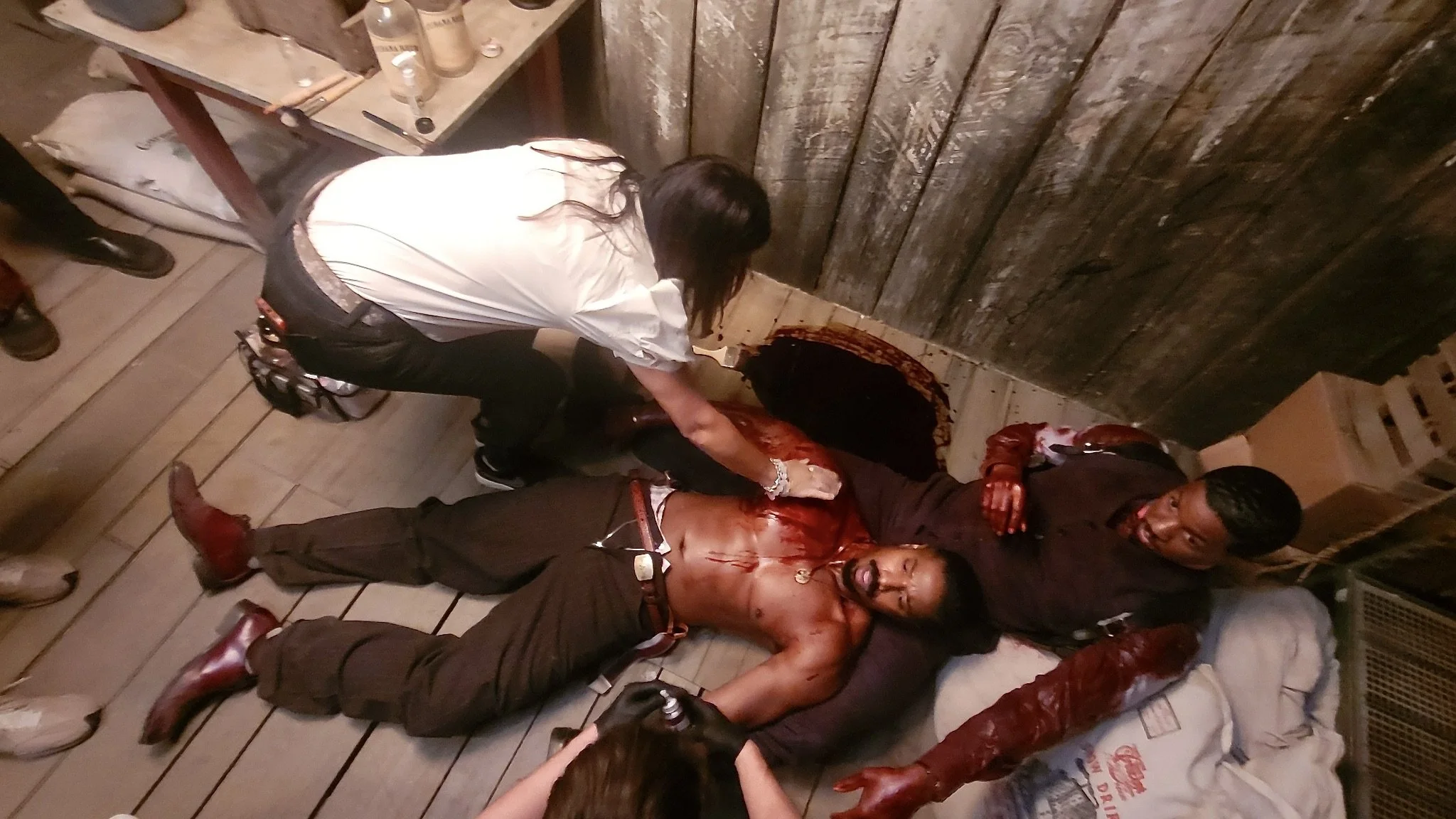
Courtesy of Sîan Richards
Richards’ work on Sinners is the culmination of over three decades of experience. She sees a future where she trades in the make-up brushes for a producing role. Part of that desire comes from a sheer, unadulterated love of the craft of filmmaking.
“I do want to produce, because living in Southern California and seeing the work leave, I want to bring work back. My goal is to to produce medium-sized budget films and start working on those. I’m working with some writers. I’ve got some backup from my agency from United Talent, which is great. I want to give the opportunity to people and encourage them to hone their craft, and then to create the work to enable them to do that.”
“I love the process. I love telling stories. I love camera work. I love everything about movies. I love the history of film. That hasn’t changed throughout my career. I’m the same person I was on my first day. Just a few more gray hairs that have been dyed.”
“I’ve worked on a lot of feature films in my time, but seeing Sinners in 70mm and seeing that opening scene, when Smoke is with Sammy in the car and they’re driving off…their faces were so huge. It blew my mind. I messaged Ryan, and I said, I am so proud of you because of what we’ve done. You’ve made me fall in love with film yet again.”
Support Your Local Film Critic!
~
Support Your Local Film Critic! ~
Beyond the Cinerama Dome is run by one perpetually tired film critic
and her anxious emotional support chihuahua named Frankie.
Your kind donation means Frankie doesn’t need to get a job…yet.

Follow me on BlueSky, Instagram, Letterboxd, YouTube, & Facebook. Check out Movies with My Dad, a new podcast recorded on the car ride home from the movies.