
Executive Producer Suzanne Lavery on the Search for Connection in Apple TV’s “Twisted Yoga”
Yoga is an inherently spiritual practice. There is reason to believe it could have existed during the Bronze Age, but has been confirmed to have existed since early in the first millennium. So many forms of exercise have far more recent origin dates, but that longevity is part of what draws people to practice yoga. In its modern form, it’s just exercise for many people, but others take a more traditional approach that focuses on wellness and health in a mental, physical, and spiritual sense. The dark underbelly of yoga is that there is an unfortunate history of people co-opting these practices to inflict abuse upon those who are simply interested in connecting with a higher calling. Apple TV’s upcoming Twisted Yoga is a docuseries that gives ex-members of a tantric yoga school the opportunity to speak out about the abuse they endured.
The story of Twisted Yoga is still ongoing, which is not often the case for subjects of a documentary. Executive Producer Suzanne Lavery didn’t come across this story in a typical fashion either.
“The women came to us. It was quite an unusual genesis for a project like this. We have a producer named Bernadette Higgins, who we’ve worked with at Lightbox over the years. She was approached by these people who said they had a story to tell. It was Ash, Ziggy, and Miranda. They’re our key interviewees in the series. They really kickstarted the whole thing. It was great for us as producers because we knew they were behind the project. They really wanted to get their message out and raise awareness about the experiences they’d been through.”
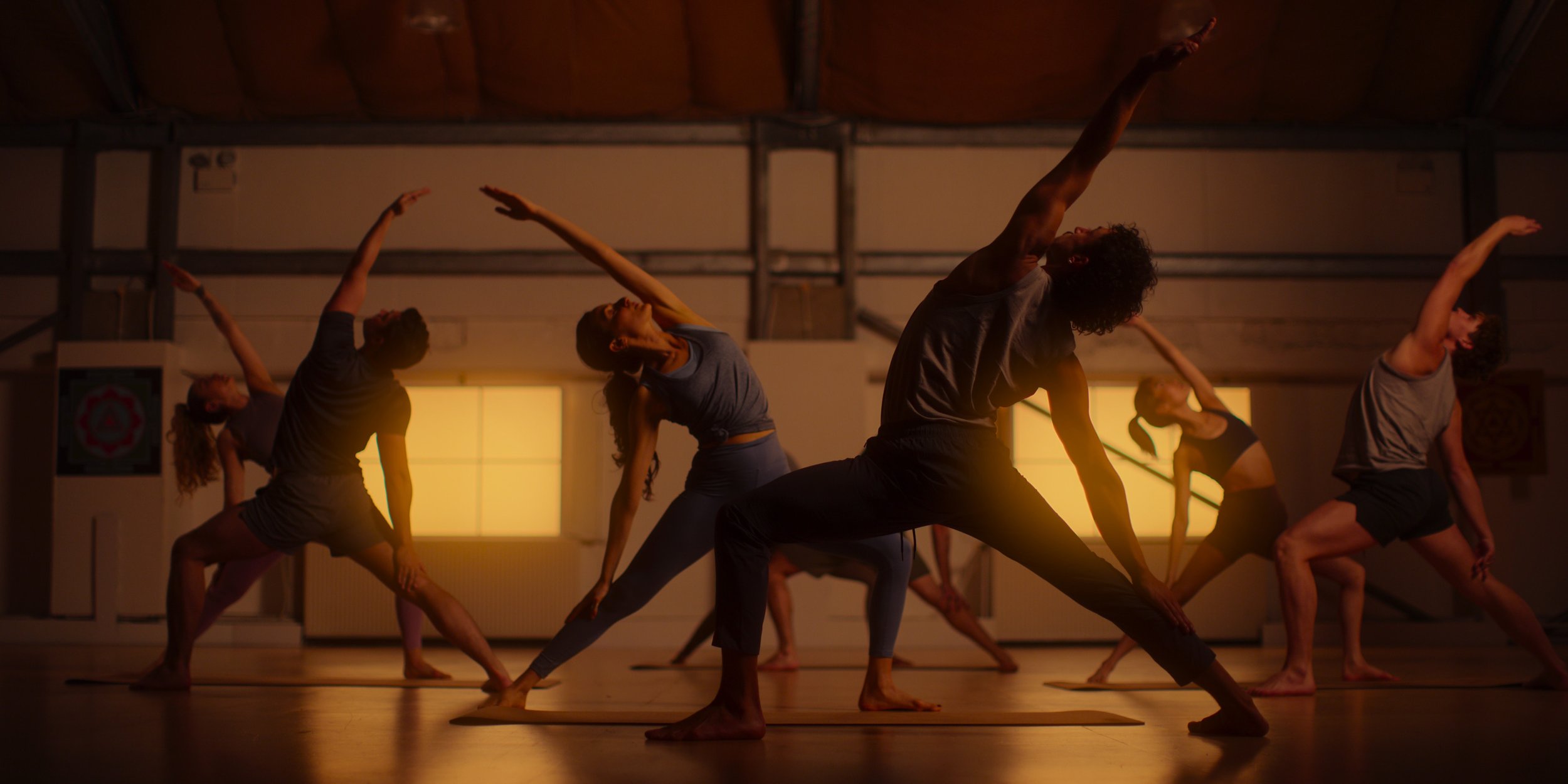
Ash, Ziggy, and Miranda were all members of a tantric yoga school. It goes by various names depending on the country where you join, but all are united under the teachings of Gregorian Bivolaru, a Hungarian guru who founded the Movement for Spiritual Integration into the Absolute (MISA). His teachings are a combination of yoga and tantra, the latter of which is a sexual practice. Women who are members of this yoga school were invited to visit Bivolaru in France. Upon arrival, their passports were confiscated and they were taken to Bivolaru’s home to have ritualized sex with him.
Courtesy of Apple TV
Twisted Yoga is very much a story that’s still unfolding. At the time cameras started rolling, the organization was doing business as usual. Women were still arriving in France, unaware of what was awaiting them. It’s a risky time to start a documentary, but the timing felt essential to both the producers and the participants.
“It was certainly a leap of faith, but it was one of the aspects of the project that excited us as filmmakers. There was a real journalistic purpose, because when we started production Gregorian Bivolaru was still receiving women in Paris.”
“He was arrested when we were about halfway through the filming process. Our director, Rowan Deacon, was filming with Ash and Ziggy at the time he was arrested. It was a surprise to us and a surprise to them. It was very exciting to us as filmmakers to be able to capture their immediate reactions in the moment.”
“The fact that everything hasn’t been totally resolved sort of spurred on our sense of purpose and made us want to dig into the story. It still isn’t resolved. The guru is in custody now, but he’s waiting to find out whether he’ll be brought to trial. It’s not even clear whether there will be a trial at the end of this.”
“We’re not campaigning as journalists to change the law or to have something happen, but we’re starting the conversation. We’re getting those ideas out there and making people think about what control means, what agency means, and what joining an organization should bring you and what it should not bring you.”
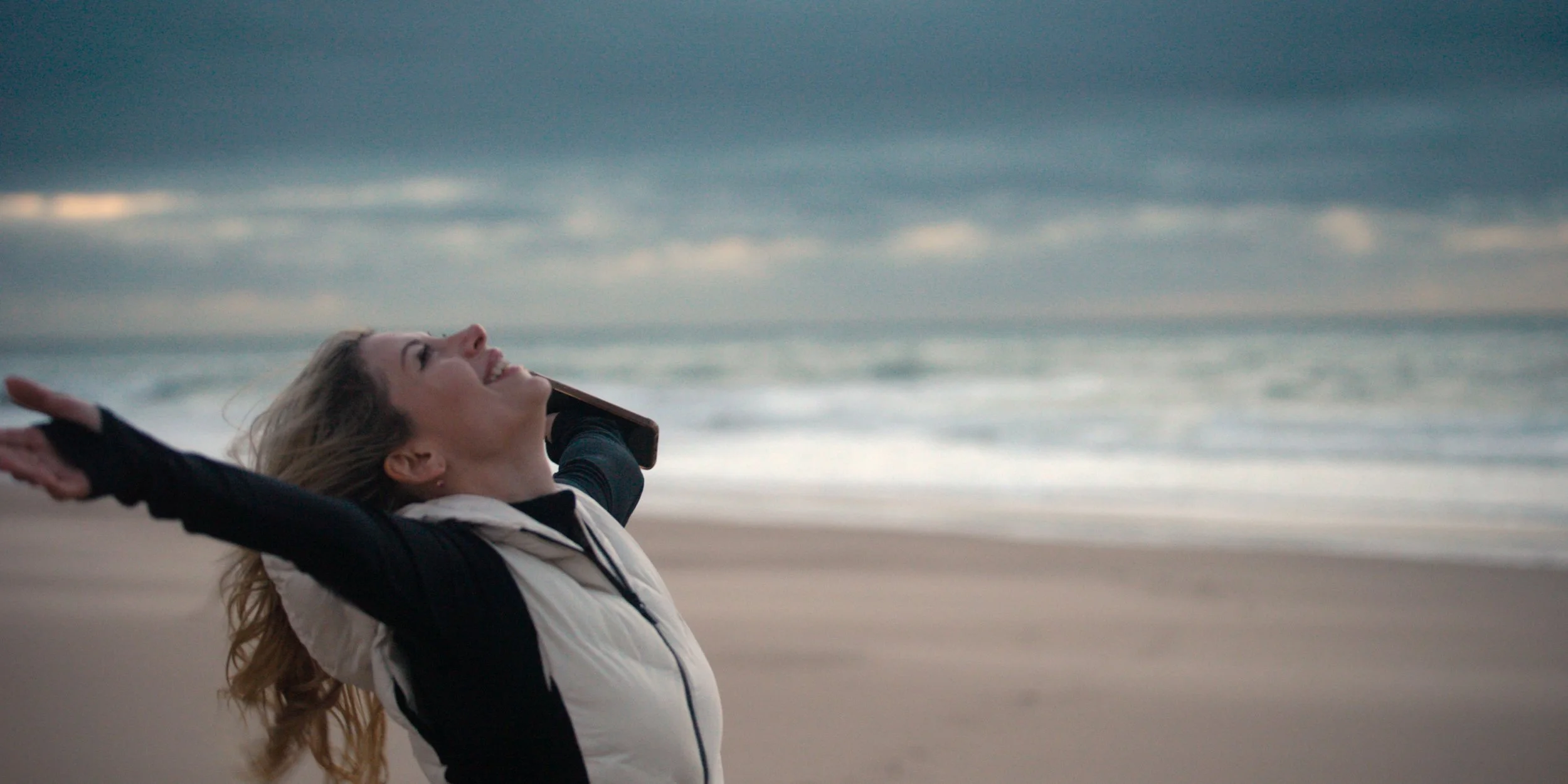
At the heart of Twisted Yoga is the story of people who want to find connection. While this school has been around for decades, the pandemic and its aftermath were a turning point for people in terms of how they’re finding community. Scholars say that we’re in a loneliness epidemic. The fact that these people went out of their comfort zones to participate in something larger than themselves is beautiful, which makes it all the worse that this experience was tainted.
Courtesy of Apple TV
“I think we’re all drawn to the allure of something bigger. It makes me sad that they had such positive intentions. It’s incredibly sad in some ways that this beautiful community they did find then led them to such negative experiences.”
“Personally, having been through the process of making Twisted Yoga, I still want my tribe. I still want my people. I still want to belong, but I suppose I listen to my red flags more. I’m more aware of boundaries and I would push my friends, family, and my daughters to really keep their eyes open and trust their instincts.”
Many of the practices taught by this yoga school are about internal growth. It’s the pursuit of spirituality, which isn’t something that’s distinctly visual. You can see someone pray or do a series of yoga poses, but the transformation is one that’s not externalized. In making Twisted Yoga, the filmmakers had to figure out how to make this personal, internal experience into something a viewer could see with their own eyes.
“We had endless conversations about this because it was one of the biggest challenges in the production. The crimes are contested, the trial hasn’t happened. Everything is denied. If there was a crime here, it was a psychological one. The journeys the women are speaking to us about on camera are psychological ones, and that’s very difficult to capture. There isn’t a crime scene. There isn’t a body. There isn’t a safe that’s been cracked, you know?”
“We really needed to find a visual way to translate that idea. It was the key part of the women’s experience because they were seeking enlightenment. Part of the process they were asked to undertake was to transfigure the person they were with into someone else. Finding a visual means to show transfiguration on camera was something we chewed over a lot.”
“We discussed VFX. Rowan, our director, was very keen to do it in camera because she’s a sort of filmmaking purist. We hit on projection mapping, which was really quite magical to watch when we were shooting it. I think it’s really effective when you see it in the series.”
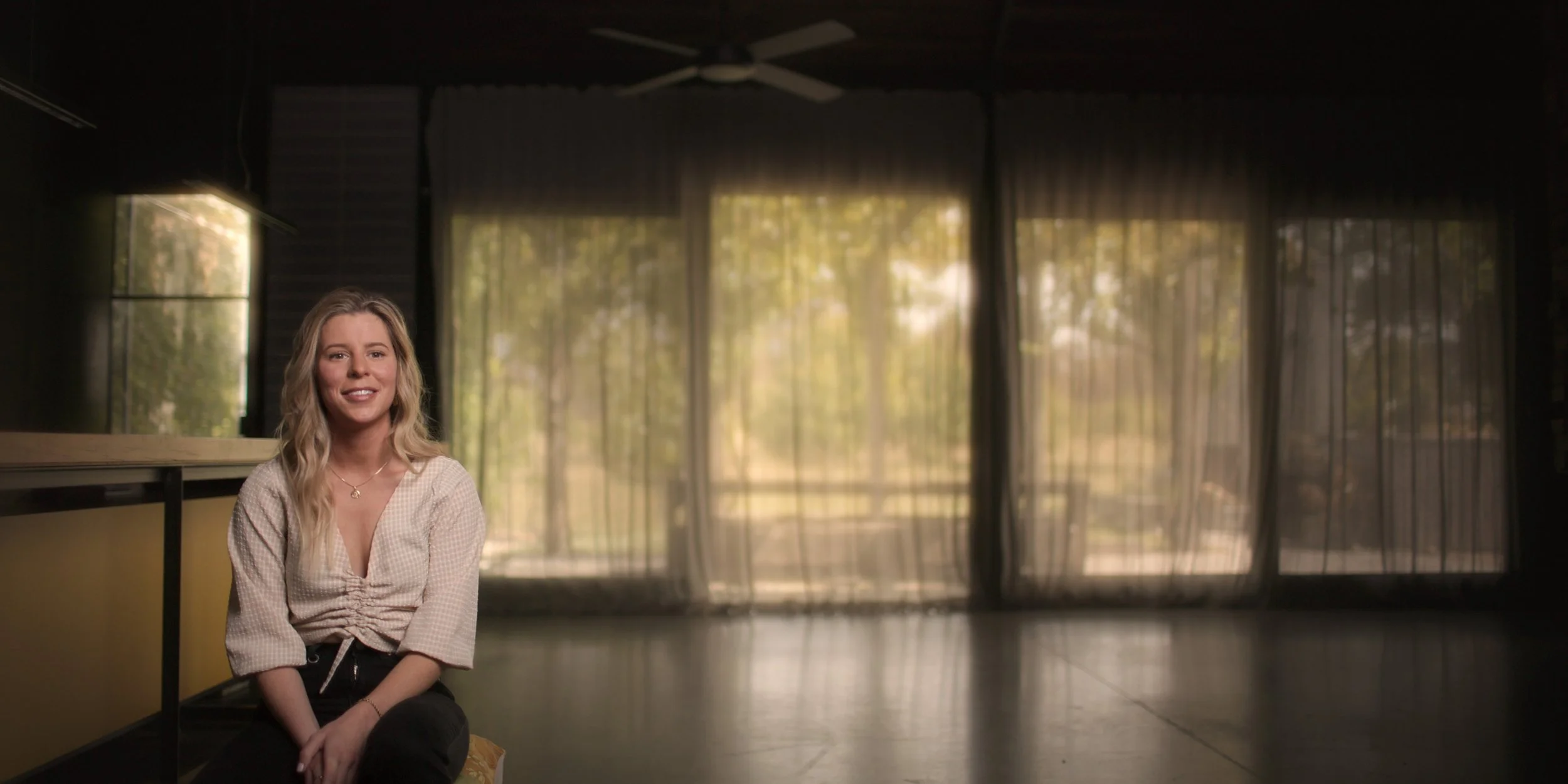
In the final episode of the three-part series, Andrea, another ex-member, says, “we can’t just keep a gaze up to the light while we’re standing in a pile of shit.” It works almost as a thesis statement for not just the series, but for the experiences of the women as they begin to process what they endured.
Courtesy of Apple TV
“It’s such a great line because I think the process that all the women who have come out of this, who spoke to us, who have come out of this school, have had to undergo is one of rigorous honesty. Unpacking the learnings they did while they were part of that organization.”
“That’s a very painful process. It might feel more comfortable and safer to keep the illusion alive and to keep the distance and name things differently. For many of them, once they were faced with the stark reality of what had happened with therapists or law enforcement, how they articulated, how they perceived the experiences they’ve been through had to change.”
“There’s a moment of having to let go and name things differently. Not transfiguration and not initiation, but rape. That’s a very different, difficult thing to accept that you’ve been through. I think Andrea puts it perfectly. Although it might feel easier in some ways to protect yourself and say that didn’t happen to me. I think actually being rigorously honest about it is freeing in the long run, but incredibly challenging.”
All episodes premiere March 13 globally on Apple TV.
Support Your Local Film Critic!
~
Support Your Local Film Critic! ~
Beyond the Cinerama Dome is run by one perpetually tired film critic
and her anxious emotional support chihuahua named Frankie.
Your kind donation means Frankie doesn’t need to get a job…yet.