
SXSW '26: Sara Robin and Kristin Bride Advocate for Healthy Tech in Your Attention Please
This interview was originally published on Film Obsessive.
The SXSW-premiering documentary Your Attention Please is a decisive look at technology and the grip of social media on the modern world. Director Sara Robin’s first inclination that social media’s influence could make a compelling subject was back in 2009. It’s been a seventeen-year journey that has morphed and expanded its scope as the world around us has become more reliant on this interconnectivity.
“2009 was when Facebook first entered my life,” recalls Robin. “I didn’t like how it was shifting the people who were interacting. I didn’t like that we were expressing friendship as a number, and I decided not to go on it. Once you do that, you have an outsider’s perspective and it’s a little easier to see some of the negative things because you’re not in it.”
“Eventually, I did join Instagram because I had a lot of pressure to be on there as a filmmaker. I moved to Los Angeles in 2016 and people were like, oh, if you’re serious about your career, you need to be on Instagram. I did that gradually, and I very quickly noticed how it changed my thinking. Rather than just going through the day, I went through the day thinking about, oh, this could make a good post, that could make a post.”
“Before you know it, you’re doing things you otherwise wouldn’t have done just to create a post, you know? I didn’t like it. It’s a push and pull,” she continues. “I became quite attached to my phone because of work. It wasn’t even Instagram. It was email, honestly.”
At this point in Robin’s story, it’s around the time of the beginning of the pandemic. The Social Dilemma documentary had been released and Robin was “on a mission to fix [her] own relationship with [her] devices, especially the phone.”
“I was talking about what I was doing to minimize my phone time and I realized that pretty much all of my friends were like, oh, what do you do, how do you do that, I need to do that too,” recalls Robin. “That was so different from the experience I had when I first rejected Facebook, because then everyone was like, you’re missing out. All of a sudden I was like, oh, times have changed. Maybe this is the time for me to make a film about this because I’d been wanting to for a long time.”
The success of The Social Dilemma proved to Robin that there’s an audience out there for this topic and that people are ready to thoughtfully engage with the topic of social media. For so long, it was written off as a fad that would have little to no impact on our collective psyche. Robin wanted to chronicle how we got here and a sustainable path forward.
“What are some of the solutions that actually work?” posited Robin.
“The initial idea was a film about a bunch of people breaking up with their phones. Very quickly, as I spoke to experts, parents, and young people, I recognized that this is a larger issue than just personal habits. We’re talking about well-being. We’re talking about our agency, our privacy. These things need collective solutions, and I don’t want to fall into the trap of trying to fix climate change by not using plastic straws with this topic.”
“As soon as I met Kristin, I was like, okay, we’re definitely talking about collective solutions. The scope had grown. 2023 is when I jumped in earnestly.”
Kristin Bride is a mother fighting for legislative reform. In 2020, she lost her son Carson to cyberbullying through an anonymous app. Since then, Bride has become an advocate for kids who are experiencing something like what Carson did and founded The Carson J. Bride Effect organization. Bride created National Social Media Victims Remembrance Day (June 23) to honor over 250 children who have lost their lives because of the harms of social media. She has testified in front of the Senate in support of the Kids Online Safety and Privacy Act (KOSPA). It passed in the Senate with bipartisan support, but it was tabled in December of 2024. Your Attention Please weaves the story of Bride and her family through a larger tapestry of reclaiming our humanity in spite of technology’s influence.
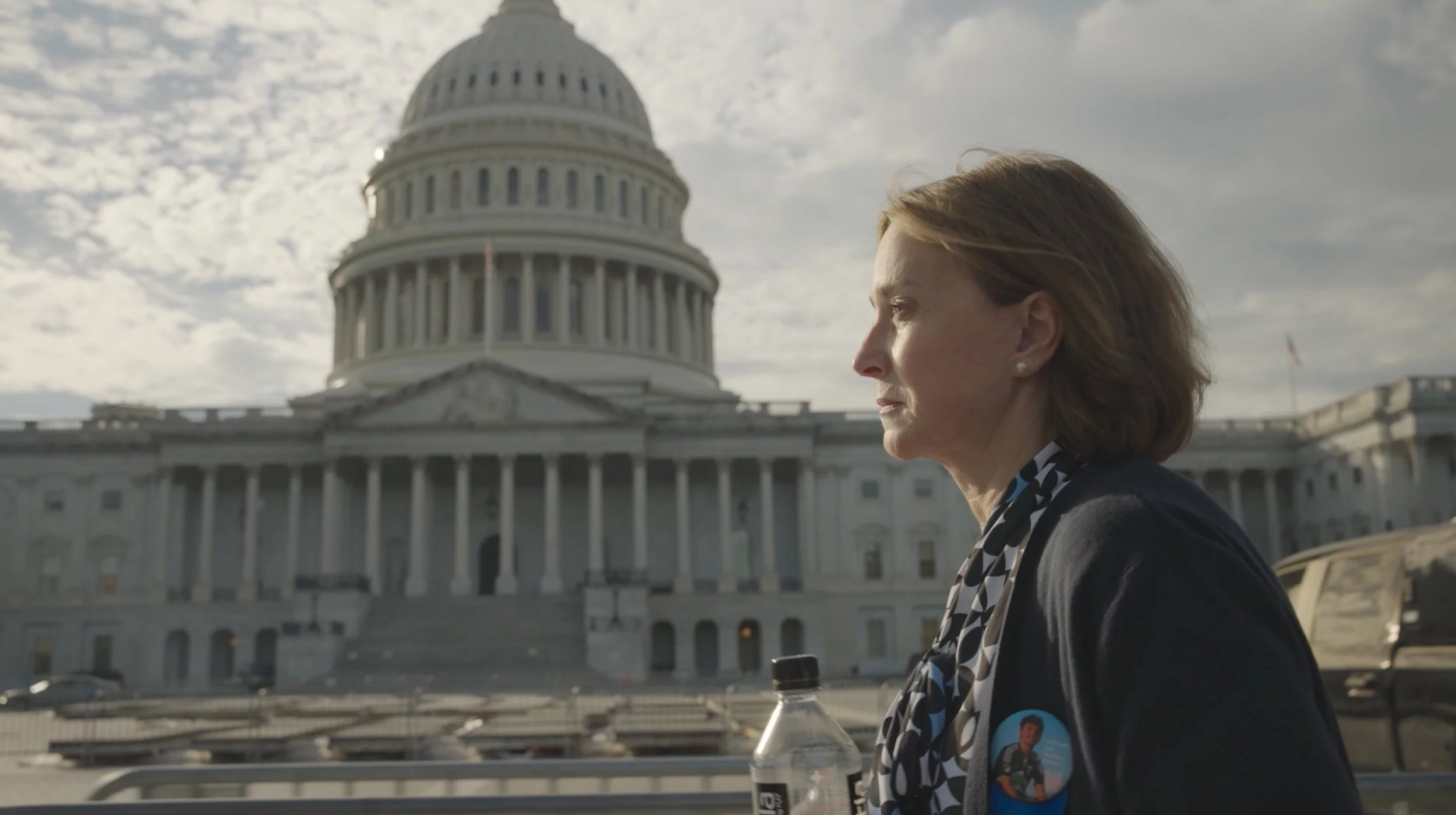
Courtesy of Yahna Harris
Much like Robin, Bride wasn’t initially interested in social media and only joined because of a work necessity.
“I was a very late adopter of Facebook, and it was only because I was forced to do it, because I was on a board of directors. I did it very begrudgingly and I never got into it,” remembers Bride. “As soon as this happened with Carson, I got off of all that. Now I use only LinkedIn for my advocacy work because I truly believe I cannot fight the dragon while feeding it.”
Other people had approached Bride and her family to tell Carson’s story and talk about her advocacy work. She turned down all the offers until Robin came along. The two were introduced through a connection at the Center for Humane Technology, and Bride knew immediately that Robin would be the right person.
“What I really liked was that it wasn’t somebody on the outside looking in, horrified by what happened to Carson,” explains Bride. “I felt like we were sitting side by side because she’d had her own negative experience with social media. In my heart of hearts, I knew she was the one to tell Carson’s story. I’ve been so happy, we’ve spent a lot of time together filming, and now have a great real-world friendship.”
Much of Your Attention Please consists of interviews and footage of the subjects going about their own forms of advocacy. For Bride, that means testifying in Washington, D.C., but for The Offline Club, another subject in the film, that means phone-free hangouts in bars in Amsterdam. By necessity, though, there are portions of the documentary that are animated by the team at COLA Animation.
These animated sections are hand-drawn, and one of the most striking attributes is how the studio captured the hypnotic sensation that comes from social media and phone usage. A spotlight shines from the phone and we see the hand-drawn characters hunched over, their faces aglow in this entrancing light. It’s an excellent means of capturing the addictive quality of these devices that we so often overlook.
“We had several segments of the film that were difficult to show visually,” explains Robin. “We had a very tragic, difficult story, and we wanted to make sure we didn’t re-traumatize or traumatize people who watch this. We wanted to be very delicate there. I often think less is more when it comes to difficult experiences like that. We also had some backstories that we needed to tell, like The Offline Club.”
“Then we had some abstract things,” Robin continues. “How do you depict the algorithm, you know? How do you talk about that? How do you show what it feels like when you unplug, when you’re present again in a moment and you don’t have that constant pressure?”
“We realized animation could do all of these, give us some consistent language, and do it in a way that’s hopefully gentle enough that you can actually engage with it,” says Robin. “This goes back to social media, but a lot of the techniques that documentaries and films in general employ are just to shock the viewer into paying attention, right? We didn’t want to do that.”
“It was tough in the beginning because our schedule didn’t align with COLA Animation. I remember sitting there and being like, I know it has to be them. It absolutely has to be them,” Robin states.
“Sarah and I had some back-and-forth about how to portray the actual cyberbullying,” Bride recalls. “I was so happy with how it ended because I knew that, with the things that were being said, those messages coming through, saying he was a loser, that he had no friends, and he had no future, that that is ultimately what led him to end his life. We basically wanted to show the underlying feeling that gets created, right? It’s not so much the specific things that are being said, which is often where people want to go. What does it actually feel like?”
One of the central points of Your Attention Please is that social media cannot replace in-person connection. That when we lose sight of the people in our lives and swap them for pixels on a screen, we’ve lost something essential to our wellbeing. In many ways, the mere act of making this film is proof of the film’s thesis statement. Your Attention Please doesn’t want to wholly destroy technology, but to use it as a means of creativity expression and interpersonal connection.
“This film was a crazy mix of both worlds. COLA, for example, we just met them for the first time yesterday in person, because Ala Nunu, our director for animation, she’s in Portugal, and then our director of animation is Sophie Culfer, who’s in Hong Kong. They themselves rarely get to hang out,” explains Robin.
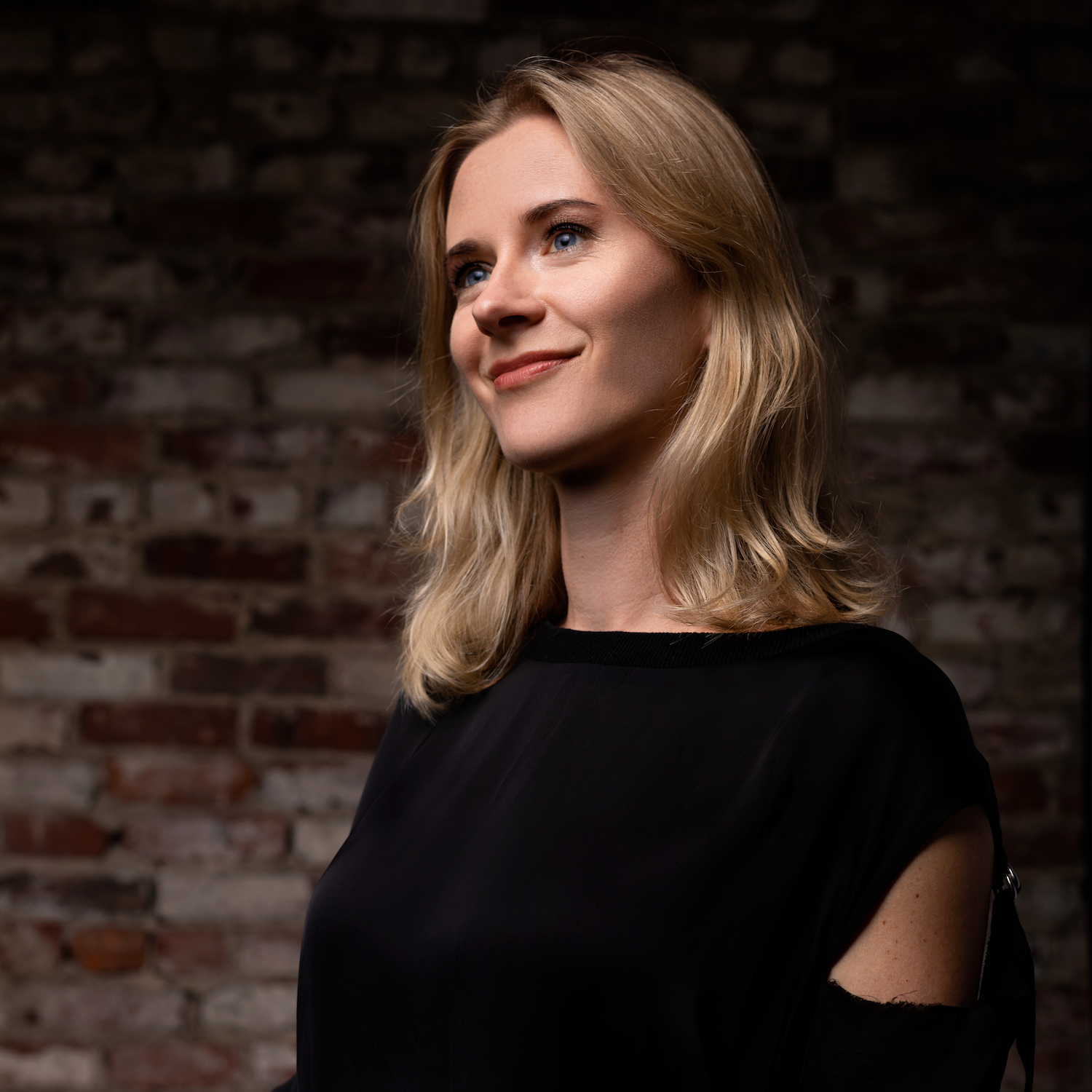
Sara Robin. Credit: Nicole Marie
“It’s all mediated through technology, but it is, at the same time, very collaborative. It gives you an example of how great tech can be to make this possible,” says Robin.
“Then, we spent countless hours in the editing suite, in person. At some point, I told Jack LeMay, a senior editor at Vagrants, I was like, I think we need to be better at unplugging,” recalls Robin. “I pitched him on doing an edit retreat for two weeks. For the first two days or so, we didn’t get much done, but then we kind of got into a groove. The quality of the work and the focus we were able to achieve was very different. We definitely experimented as well with what are the right ways to work because our typical work has so many distractions coming in. We both also work in commercials, so you’re juggling a lot of things and getting that space where you can really do a deep dive.”
“You have to create it. You have to fight for it. When we did, it was so worth it,” says Robin emphatically.
Over the course of filming, Robin and Bride spent quite a lot of time together at Bride’s home in Arizona. Two weeks after they met on Zoom for the first time, Robin flew to Arizona, where Bride offered Robin a place to stay. All of a sudden, they went from strangers with a common goal to temporary housemates.
“We definitely had to establish some boundaries,” smiles Bride. “Like please don’t film when I wake up with my hair sticking up. That was a big one.”
“I think it helped solidify the whole process for us. It gave insight for Sara into what my world is like,” explains Bride. “Watching me do the meetings and then going to DC with us. Trudging up and down the hill hallways. Seeing how exhausting that was.”
“It’s just physically so intense, just the amount you have to walk is physically so intense,” adds Robin. “Then the emotional labor of literally having to relive the worst day in your life over and over again, sometimes telling that story to people who are completely tuned out. It is a heartbreaking process and an incredibly strenuous process.”
“I remember the first time tagging along, we did one day, and after that, we had a two-hour dinner just trying to decompress and process what we had experienced,” remembers Robin. “And then we realized you do that for days on end.”
SXSW is as much a technology festival as it is a film and television festival. On the film side of things, you could hear filmmakers proudly saying that AI had no hand in their work. If you partook in the tech side of the event, there were panels about the role o f AI in building our world with a more positive slant toward the technology.
“SXSW was definitely my top festival to premiere at because of that aspect,” says Robin. “I went to SXSW three years ago, and that’s how I got connected with Frances Haugen, the Facebook whistleblower who’s also in the film. I flew myself to SXSW in the hope I could run into her after her panel and talk to her about the film. That’s how it ended up happening. I’m also happy to say a lot of the connections in the film were made in person.”
“Back then it struck me because ChatGPT, I think, had just come out,” recalls Robin. “You were sitting in panels and all of a sudden everyone’s eyes were glued to their phones because they were trying out the new ChatGPT and everyone was like, oh, holy shit, it’s so much better. AI was the talk of the town three years ago. Depending on which room you were in, you could hear some very different stories. In some rooms, it was like, this is the greatest thing ever, it will make us so productive, it will democratize art. In other rooms, it was like, we have a problem.”
“I commend SXSW for showing that breadth of opinion and making space for it. I think it’s quite a difficult thing to do in today’s world, and the fact that they take a film like ours, that’s very critical of a lot of the things that sessions here are about, speaks to the commitment to having the whole conversation,” says Robin.
“In this advocacy work, we so often see our messages requesting that tech do a better job in protecting our kids and change their business model get shadow-banned because of the influence of tech,” states Bride. “In the film, you see the influence of tech at the end, and the impact on KOSPA. I was worried that we might not get into SXSW because of that, and I’m so glad we’re here and that this film festival is showing the whole picture.”

Follow me on BlueSky, Instagram, Letterboxd, TikTok, YouTube, & Facebook. Check out Movies with My Dad, a podcast recorded on the car ride home from the movies and I Think You’ll Hate This, a podcast hosted by two friends who rarely agree.
Support Your Local Film Critic!
~
Support Your Local Film Critic! ~
Beyond the Cinerama Dome is run by one perpetually tired film critic
and her anxious emotional support chihuahua named Frankie.
Your kind donation means Frankie doesn’t need to get a job…yet.