
“Backside” Captures Humanity’s Connection to Horses
The Kentucky Derby is known as “The Fastest Two Minutes in Sports.” A horse race that takes place yearly at Churchill Downs, the Derby is held on the first Saturday in May. Its existence and legacy go back to Lewis and Clark as Meriwether Lewis Clark Jr., grandson of William Clark, founded the Louisville Jockey Club. In later years, it would be renamed to Churchill Downs. For over 150 years, the Kentucky Derby has seen jockeys and horses rumble around the track for a chance at glory. What people don’t see when they tune in to the broadcast or find themselves on the grounds are the hundreds of, mostly, immigrant workers who care for these multi-million-dollar animals. Raúl O. Paz-Pastrana’s Backside explores the connection between humans and animals, the unseen labor that goes into an event like this, and the class and racial disparities that impact American culture daily.
Courtesy of Backside
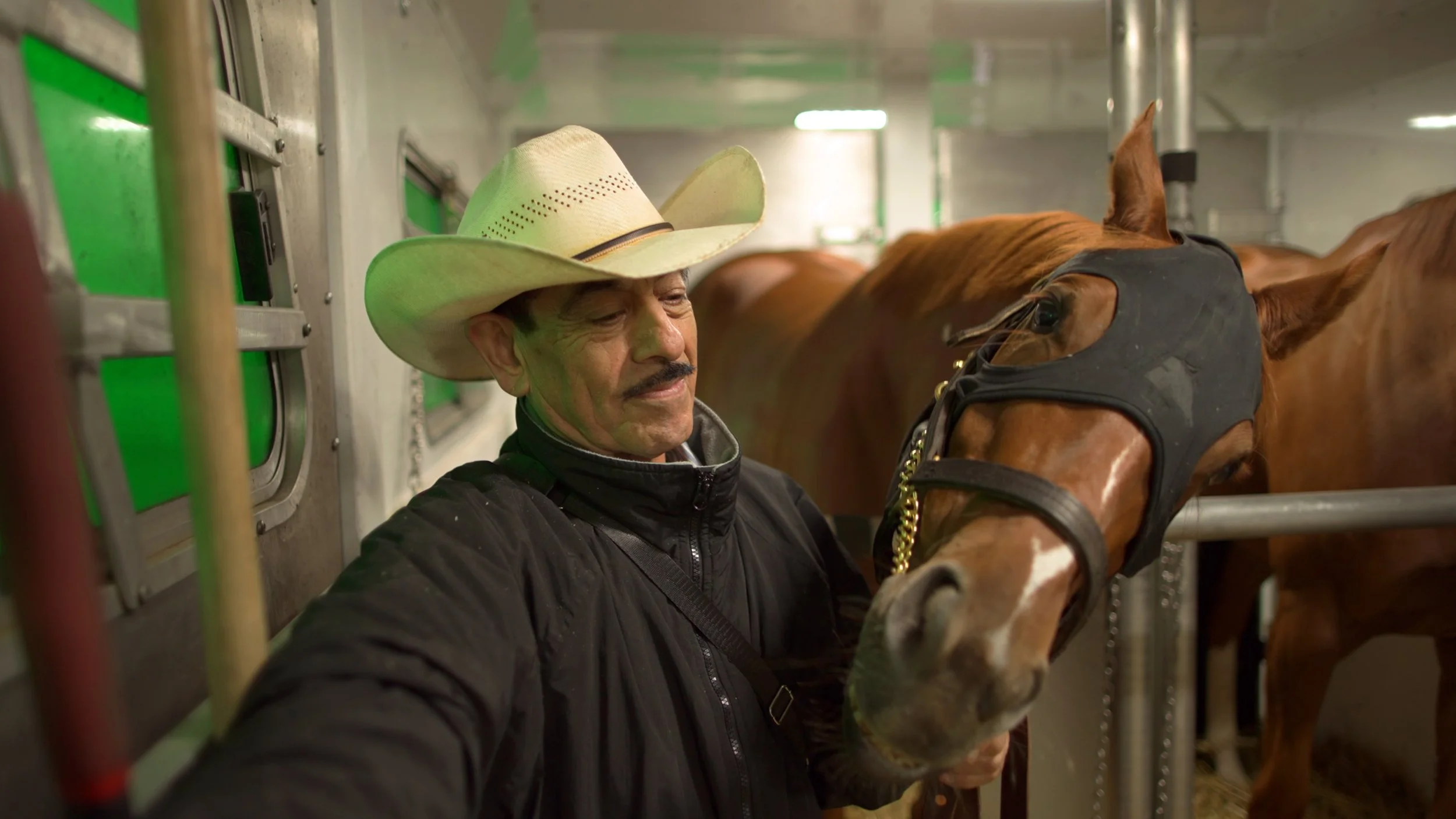
After a brief introduction to the culture of the Kentucky Derby, we are introduced to one of the film’s main subjects. Backside is not your traditional documentary where the participants sit down in front of a backdrop and talk about their experiences. Instead, we are placed in the home of one of the horse grooms. The clock on the oven reads 1:56. The world is dark and quiet, and the realization dawns that this is 1:56AM. From there, Backside unfolds at a leisurely pace. It remains largely quiet without much dialogue. This allows the documentary to paint a beautiful portrait of these animals and the people who care for them.
For a film that takes place almost entirely at the Churchill Downs’ barns in Louisville, Kentucky, Backside is not particularly interested in the horse race. The film chronicles the season in the lead-up to the Derby and ends with the race, but this is not a film about the event itself. Rather, the focus is on the immense labor that goes on behind-the-scenes in order to make something like this exist. It’s a sharp juxtaposition between the exhausting, sometimes dangerous working conditions of these grooms and the wealth and pageantry that are the result of their labor, with little or no acknowledgement of it.
Courtesy of Backside
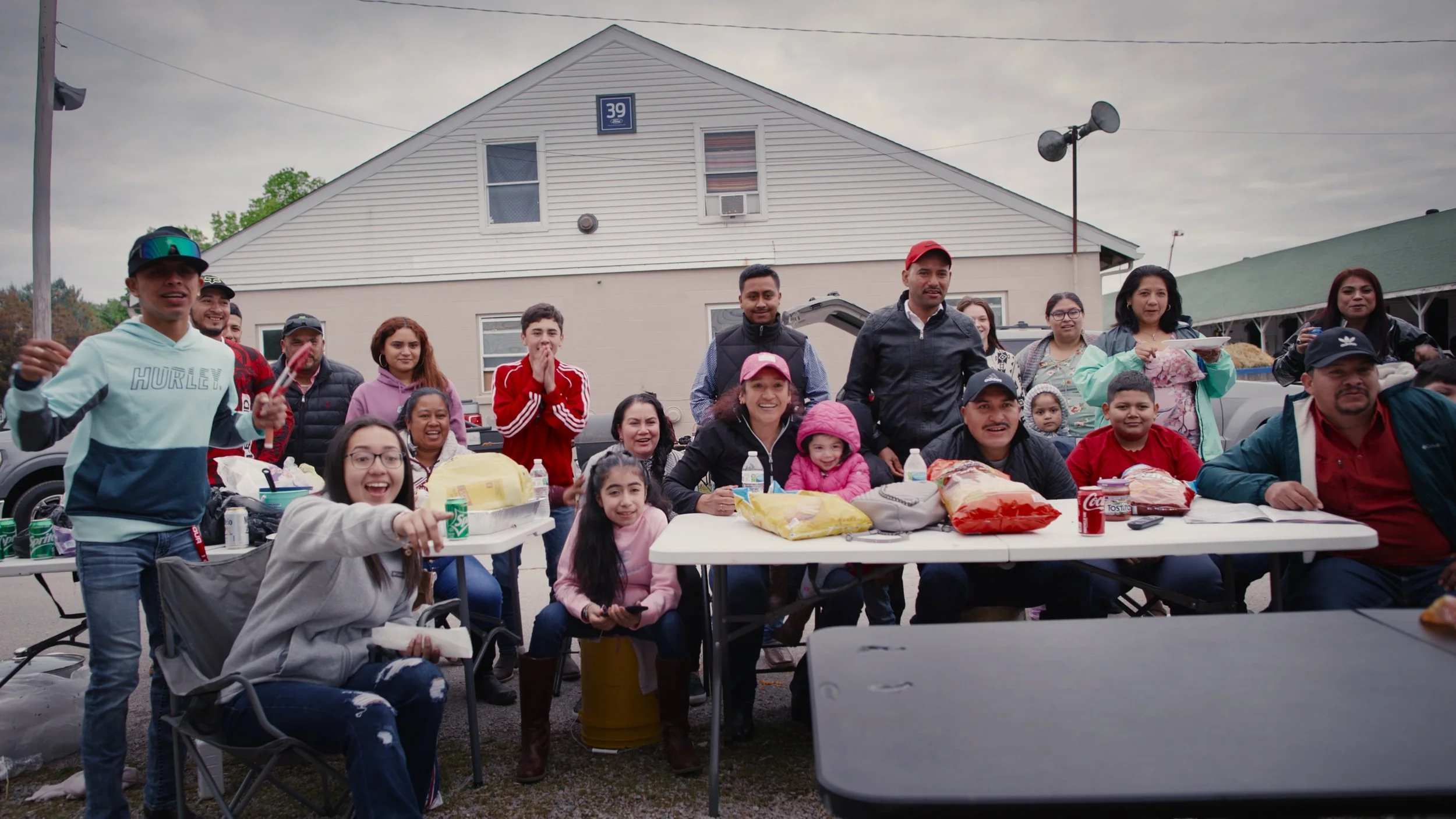
Backside is an unwavering recognition of the lives of immigrants working in the United States. So many industries are supported by this sort of invisible labor, and Backside pulls away the curtain. At a time when the rights of immigrants are under attack here, this documentaryfeels more essential. It views the history of this country through the lens of what is considered a deeply American tradition. What Backside has captured is merely a microcosm of our larger blind spot: the treatment of those seen as “other” and therefore lesser.
There is a quiet, beautiful stillness to Backside. A gentle camera follows the families whose lives revolve around horses and shows the ways they keep their culture alive in their new home. Backside is empathetic documentary work that doesn’t rely on talking heads or overexplanation of the lives we’re witnessing. Instead, it is observing, putting the audience as closely into the shoes of the subjects as physically possible to create an understanding of a life that is not the viewer’s own. It’s a film about the fastest two minutes in sports, but Backside is lovingly languid in its approach to the unseen world of horse racing.
Backside premieres April 13, 2026, on PBS. Check your local listings.
Follow me on BlueSky, Instagram, Letterboxd, TikTok, YouTube, & Facebook. Check out Movies with My Dad, a podcast recorded on the car ride home from the movies.
support your local film critic!
~
support your local film critic! ~
Beyond the Cinerama Dome is run by one perpetually tired film critic
and her anxious emotional support chihuahua named Frankie.
Your kind donation means Frankie doesn’t need to get a job…yet.