
“Belén” Fights for Truth
One of the first things a child learns is the difference between right and wrong. Well, they learn what’s accepted and what’s not. That principle can be at odds with what’s right and what’s wrong. Something right can be ignored in favor of something wrong that’s more beneficial to an individual in a position of power. That’s perhaps one of the hardest pills for a child to swallow as they grow up. That the foundational right and wrongs they were raised on may actually be meaningless. Dolores Fonzi’s Belén is based on a true story where right, wrong, injustice, and justice are seen as interchangeable.
Belén opens with an extended scene of a young woman on her way to a hospital. When the audience meets Julieta (Camila Pláate), she is writhing in pain in the backseat of her mother’s car. They arrive at the hospital and Julieta is admitted for abdominal pain. The nurse and doctor ask if she’s pregnant, Julieta says she’s not, and they note her appendicitis scar. As the doctor begins to tell the nurse the preliminary steps to find out what’s wrong, Julieta announces that she needs to use the restroom. She’s confident that, despite the pain, she can make it there by herself. It’s in the restroom that Julieta and the hospital staff discover she’s having a miscarriage. They send her to the gynecology department and, as Julieta is bleeding on a hospital bed, cops burst into the room and arrest her. In a different bathroom, a fetus was found and the cops have decided that it’s Julieta’s child.
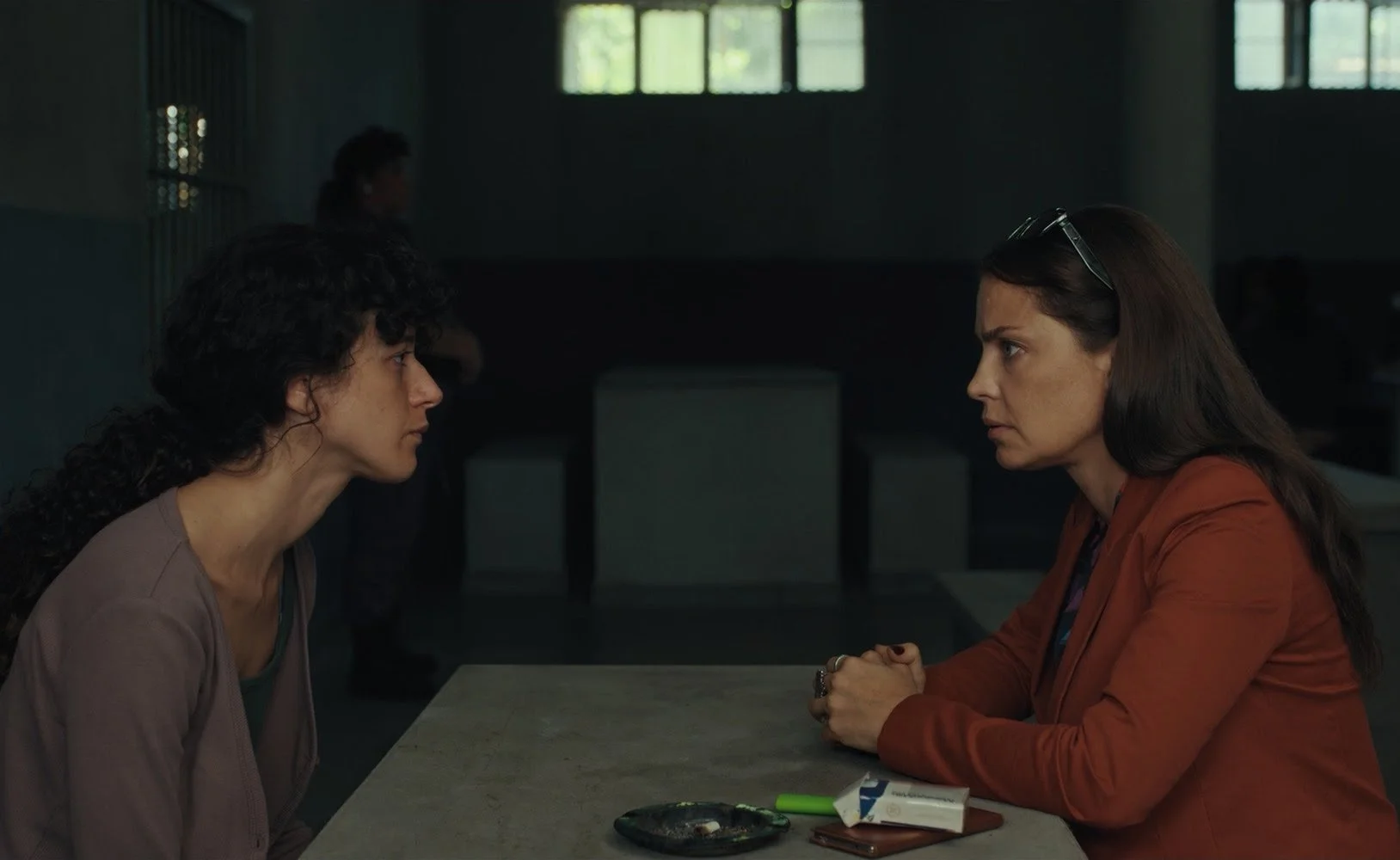
After Julieta’s first lawyer fails to fight for her innocence, Julieta meets Soledad Deza ( Fonzi), a woman who has built her law career on fighting for women who often aren’t listened to because of their socioeconomic standing. When describing the case on national TV, Soledad asks the viewer to imagine the scenario Julieta found herself in. You go to the hospital for extreme pain and, instead of being treated by healthcare workers, you’re arrested and assumed guilty before a trial is even scheduled. This is a horrifying situation. Julieta later says she couldn’t even grieve the loss of the child she hadn’t known she had because she was behind bars. She spends two years in prison before she’s sentenced to serve over two decades. All because the cops decided to act as judge, jury, and executor against a woman who isn’t wealthy and doesn’t have the means to fight for her innocence. A fight that shouldn’t even be happening in the first place.
Courtesy of Amazon MGM Studios
The film’s title comes from Soledad’s renaming of Julieta. She believes this case needs to be tried by public opinion, and that the only way to do that is to tell Julieta’s story. By putting Julieta’s real name out there, though, her friends and family risk losing their jobs because they’re related to a woman who has been convicted of infanticide. Soledad renames her Belén, meaning Bethlehem, and makes sure everyone in Argentina knows about the injustice that’s taking place before their eyes. It’s incredible, and a gut punch, to see how many women come forward with similar stories to make Belén’s voice unavoidably loud for the court. As Belén lays out the facts of the case and the myriad ways the cops, doctors, and others involved denied Julieta’s due process, it becomes an infuriating exercise in how humans are willing to sell integrity for a taste of money and power.
Belén’s opening sequence is a taut nightmare. It’s presented primarily as one take, with claustrophobia mounting as the pain ripples through Julieta. The scene serves as a stark means to set the stage for the exploration that is to come. At times, Belén feels a little too on-the-nose. Some scenes that are clearly an amalgamation of injustices that arose throughout the case come across as precisely purposeful rather than naturalistic. Regardless, it’s hard to fault Belén for something that small when it’s so firm in its belief for body autonomy. Belén is a fight for truth to be seen, heard, and, most of all, respected. Anyone can tell the truth, but those who control the scales of justice have to uphold it, even if it doesn’t align with their own assumptions.
support your local film critic!
~
support your local film critic! ~
Beyond the Cinerama Dome is run by one perpetually tired film critic
and her anxious emotional support chihuahua named Frankie.
Your kind donation means Frankie doesn’t need to get a job…yet.

Follow me on BlueSky, Instagram, Letterboxd, YouTube, & Facebook. Check out Movies with My Dad, a new podcast recorded on the car ride home from the movies.