
Dominik Moll’s 2025 film, Case 137, tells the audience that what they’re about to watch is inspired by true events, but it’s ultimately a fictional story. Upon viewing it, however, Case 137 doesn’t feel too far from our reality. In fact, one could argue that the ending is guessable from the beginning, once the scenario has been set up. Of course, having an inkling of the destination doesn’t mean there isn’t something in the journey. The Case 137 journey is maddening and frustrating, but not because of the filmmaker. Because of how the world has been built.
From mid-November 2018 to June 2020, there was a series of protests in France categorized by the demonstrators wearing yellow vests. These protests were a response to the rising cost of living and the belief that the burden of tax hikes was coming at the expense of the middle class. During a protest that took place on December 18, a teen boy (Côme Péronnet) is hit in the head by a projectile fired from a riot gun. His mother (Sandra Colombo) wants this attack to be investigated, and she’s adamant that he wasn’t provoking the police officers. The case falls to Stéphanie Bertrand (Léa Drucker), an investigator with the IGPN, the organization in France that looks into cases involving police officers. In Stéphanie’s words, the IGPN polices the police.
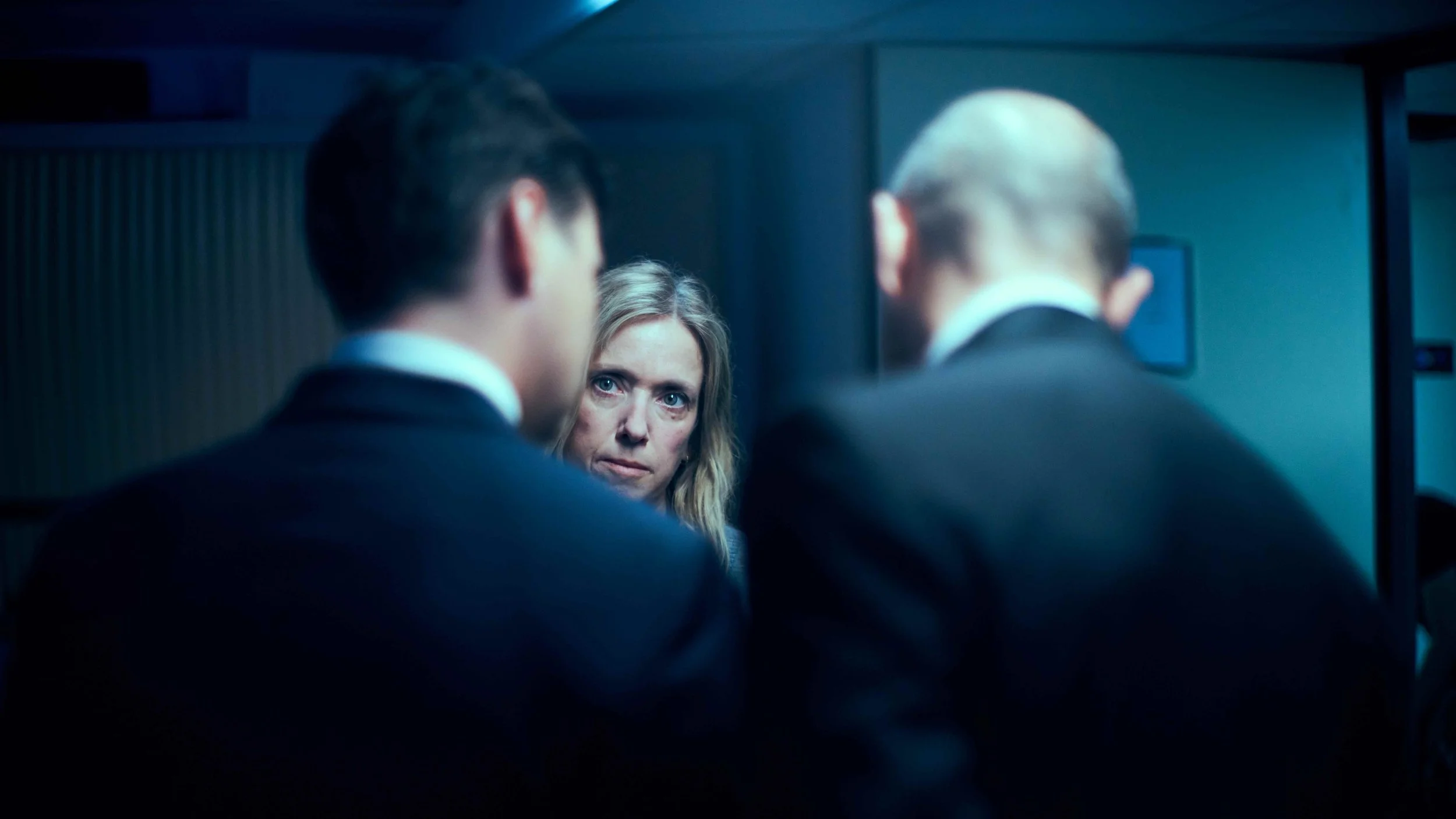
Photo by Fanny DeGouville
Even with this outside organization meant to keep police officers honest, there’s still a rising level of distrust between the French public and the police. Stéphanie’s son, Victor (Solàn Machado-Graner), is ashamed to tell his friends what his parents do for a living. While Stéphanie may not be a cop anymore, she was employed as one before transferring, and her ex-husband still works in the force. To police officers, Stéphanie’s job is the equivalent of being a rat. She and her co-workers undermine the credibility of the police. Never mind the fact that if the officers under investigation had followed protocol, there would be no need for the IGPN. The police officers would rather protect their own than see someone brought to justice for brutally harming a boy running from conflict.
Stéphanie finds herself at various roadblocks as the officers close ranks. The public, who might have information, don’t want to come forward because they don’t believe anything will come of it. Not thinking anything good will come of giving testimony, but anything period. They’ve seen their government turn a blind eye to due process in the name of protecting police officers, so why risk their own livelihoods? As Alicia Mady (Guslagie Malanda), a housekeeper who witnessed the attack, points out, this sort of energy and investigation don’t happen when it’s a Black or a Brown person who was injured. She pushes back against Stéphanie in a way that’s different from Stéphanie’s ex-husband and her new partner. They want Stéphanie to stop investigating because she’s just making a problem for cops, but Alicia wants to steer clear of this because she knows she could become a target. And if/when she does face retaliation, how much energy will be put into solving that crime?
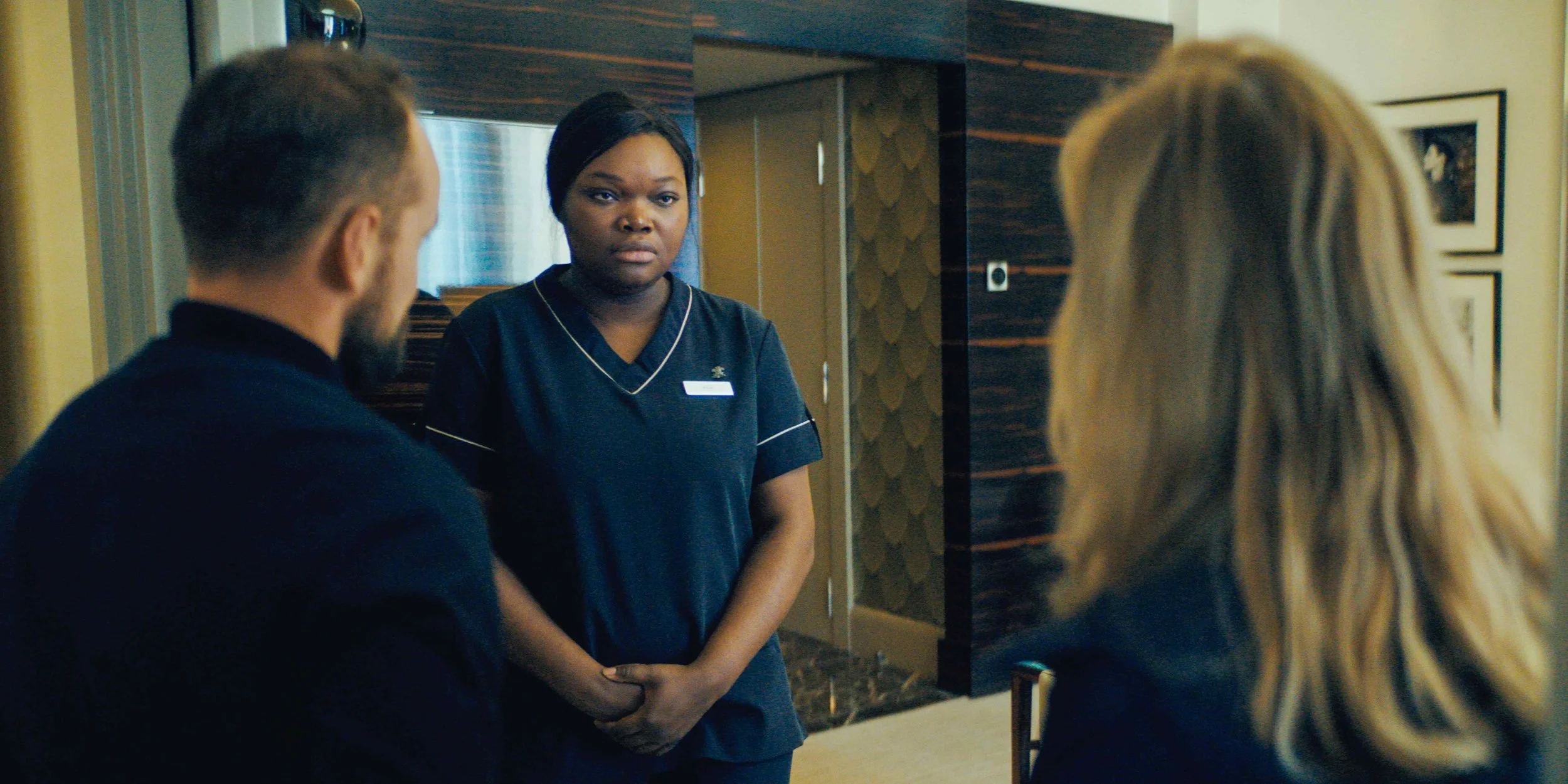
Photo by Fanny DeGouville
Case 137 provides a stark, procedural look at the paperwork side of investigation. Stéphanie does some boots-on-the-ground testing and surveillance, but the film also highlights how much of her work is sending emails to request files. It feels like a miracle that anything is actually solved when the bureaucratic side of things weighs so heavy. As frustration mounts when the investigation falters, Stéphanie finds herself playing faster and looser with standards than she should, given her role as the police of the police.
That’s the curious part of Case 137. If the people being investigated aren’t playing by the rules, shouldn’t the ones seeking justice do the same? Then what remains? Is there order left to be had if neither side wants to follow the standards set before them? The conclusion of Case 137 will not shock the viewer. It’s the sort of ending we’ve grown accustomed to in this age, where justice feels more elusive than ever before. Moll has constructed a tense thriller about the legal system in France. While the film doesn’t put any pressure on the societal circumstances that led to this systemic issue, Case 137 questions if truth and justice can be attained for the common person anymore.
Follow me on BlueSky, Instagram, Letterboxd, TikTok, YouTube, & Facebook. Check out Movies with My Dad, a podcast recorded on the car ride home from the movies.
support your local film critic!
~
support your local film critic! ~
Beyond the Cinerama Dome is run by one perpetually tired film critic
and her anxious emotional support chihuahua named Frankie.
Your kind donation means Frankie doesn’t need to get a job…yet.