
NYFF: “For the Moon” Shows the Scrappy Creativity of Art
In 1951, Samuel Beckett published the novel Molloy. It’s the first of three books that would come to be known as the Beckett Trilogy. Molloy is created from the internal monologues of characters, and it’s a quote from the book that opens Éric Baudelaire’s For the Moon. The quote begins, “For the moon was moving from left to right or the room was moving from right to left or both together perhaps” before continuing on to describe the narrator’s perception of the moon. Baudelaire’s film is one of perception, of putting the camera in the hands of its subjects and allowing their understanding of themselves in the space around them to guide the movie.
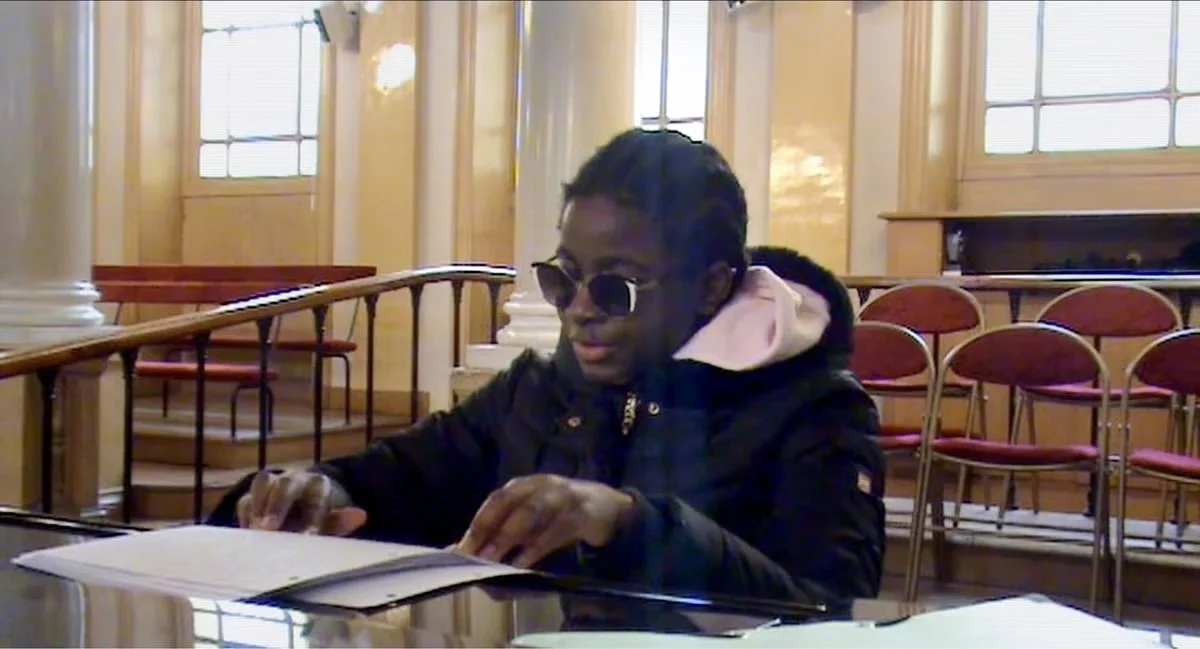
For the Moon is a documentary that doesn’t have an end goal in sight. Many other movies in this genre seek to prove something or to chronicle a series of events that lead up to a specific moment in time. For the Moon is unique in that it’s not rooted in trying to prove anything. It’s an experiential documentary that takes place at the National Institute for Blind Youth in Paris. Baudelaire gave students attending the institute their own cameras and the direction to film what mattered to them. There are no formal sit-down interviews between the filmmaking team and the students. It’s merely life as they live it, captured from their own perspective.
Courtesy of NYFF
At Slamdance, earlier in 2026, Brailled It shared a similar ethos in terms of its storytelling. Directors David Grabias and Brendon Schulze also gave cameras to students who are blind or have low vision as they competed in the annual Braille Challenge competition. Unlike For the Moon, the students in Brailled It are in a high-stress environment as they prepare for the testing scenario. There’s tension in Brailled It that makes the documentary feel more akin to a sports documentary, where the viewer is holding their breath until the moment of triumph. For the Moon is more relaxed. There’s no through line of competitive rivalries, but rather, collaborative connection.
One of the film’s subjects talks about the experience of shooting a movie without being able to see exactly what they’re capturing. Eventually, they come to the conclusion that they think “intuition is more beautiful” than meticulous planning. They’re right. For the Moon is an entirely different viewing experience from a sighted director who does have the ability to perfectly frame each shot however they want. The students in For the Moon are running solely on instinct, and it creates this dynamic piece of filmmaking with its own style that cannot be replicated. Each of the subjects has their own approach to shooting, whether they recognize it or not, that comes from the freedom of having no preconceived notions of what filmmaking looks like. It’s passion and artistry, unrestrained by expectations.
Judging by what the subjects of For the Moon choose to film, they’re immensely passionate about the art they make. Some play piano, others sing, all of them celebrate that creation comes in different forms. For the Moon offers the viewer the point of view of young people as they process their lives and the world around them through the art of filmmaking.
Follow me on BlueSky, Instagram, Letterboxd, TikTok, YouTube, & Facebook. Check out Movies with My Dad, a podcast recorded on the car ride home from the movies.
support your local film critic!
~
support your local film critic! ~
Beyond the Cinerama Dome is run by one perpetually tired film critic
and her anxious emotional support chihuahua named Frankie.
Your kind donation means Frankie doesn’t need to get a job…yet.