
“OBEX” is a Lynchian, Analog Quest
The summertime hum of cicadas is a maddening drone. It’s a constant vibration of insects that have just slithered out of the ground. Maryland is unlucky. Not only are there cicadas that emerge every 13–17 years, but parts of the state have some that return every year, a constant noise that signifies summer has arrived at last. Albert Birney’s OBEX takes place in Baltimore in the thick of cicada season. OBEX isn’t about bugs, not really, but it is about nature’s means of creeping into the lives of everyone. Even those who try to wholly isolate themselves in a technological world.

Oscilloscope Laboratories
It’s summer in Baltimore in 1987, and the world begins and ends for Conor (Birney) within his home. He doesn’t venture outside often, mostly just to let his dog, Sandy, do her business. Conor’s neighbor, Mary (Callie Hernandez), buys and delivers groceries for him, so he doesn’t have to go beyond his front porch. He works from home, perhaps a rarity in the ’80s. Even rarer, he creates computer-made ASCII portraits for people based on photos they mail to him. Every day is the same for Conor and Sandy, and that’s exactly how Conor likes it. While browsing through a magazine, he comes across an ad for a computer game called OBEX that’s promised to be state of the art. The ad says the company is able to use cutting-edge technology to put the player into the game. When Sandy goes missing, the thin line between reality and games becomes blurred and Conor must go on a quest to find his best friend.
The constant hum of the cicadas is as much of a score as the actual music written by composer Deakin . The sound of the insects mirrors that of the gentle buzz of technology that makes up the main audio landscape for Conor. He’s a self-imposed recluse who exists in this cross section of technology and nature. His house is surrounded by woods that are a barrier between himself and the rest of the world. Conor has crafted a means of living in the most isolated way possible and, by doing so, he has lost connection with the rest of the world. Even though Mary drops off groceries for him, he talks to her through the door only. Conor’s life is a series of contradictions. Technology vs. nature. Isolation vs. the human connection that his job is fueled by. People send him images of loved ones, asking him to create ASCII portraits as momentos, a means of celebrating relationships. It’s completely antithetical to what Conor wants, yet the audience can sense that he has a real passion for it.
Oscilloscope Laboratories
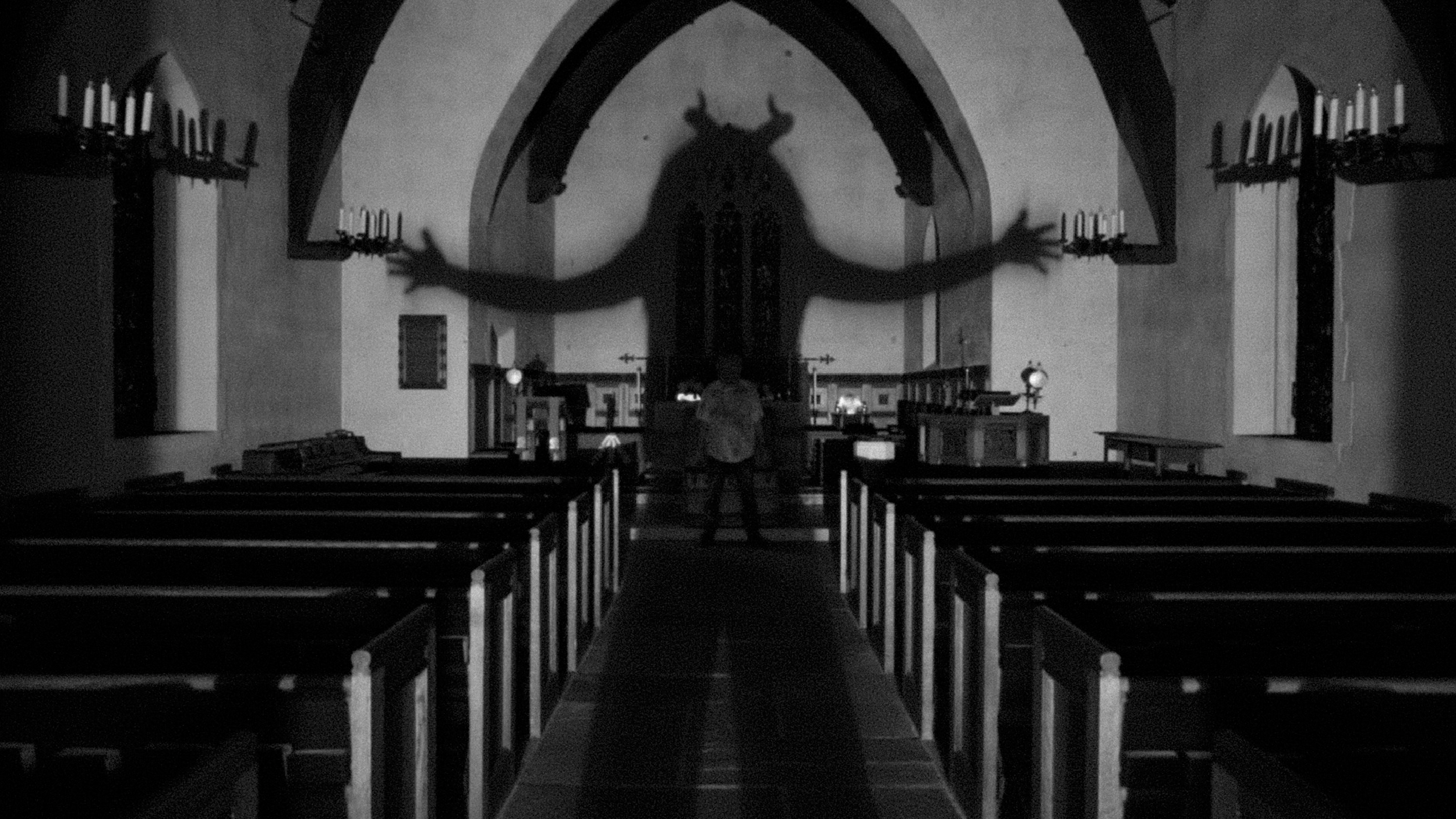
There’s another contradiction in the presentation of OBEX. It’s black and white, gloriously done, but the smoothness of the camera movements makes it feel immediately modern. The way the camera almost floats through the rooms of Conor’s house adds to the weightlessness of the otherworldly quality of the film. There’s a thin veil between the worlds of reality and technology that can easily be pierced by answering a strange ad in a magazine.
As one might imagine, OBEX is not going to be for everyone. It has pieces of DNA that connect it to the mumblecore movement, not a surprise given that Pete Ohs is co-writer, cinematographer, producer, and co-editor. OBEX would also be entirely at home in a double feature with any David Lynch flick. There are nonsensical moments that feel foreboding, even if the audience doesn’t quite grasp what Ohs and Birney are trying to convey — like the cicada being smushed through a printer. For the people who crave an understanding the purpose of all the symbolism and imagery, OBEX will be a bit of a nightmare, but that’s on purpose. Even if the viewer isn’t fully onboard with the way the film goes about its experimental nature, it’s impossible to deny that Birney knows what he wants from it. Those who enjoy the corner of cinema Lynch has carved out will appreciate that OBEX does its best to fill in the space he has left behind.

Follow me on BlueSky, Instagram, Letterboxd, TikTok, YouTube, & Facebook. Check out Movies with My Dad, a podcast recorded on the car ride home from the movies.
support your local film critic!
~
support your local film critic! ~
Beyond the Cinerama Dome is run by one perpetually tired film critic
and her anxious emotional support chihuahua named Frankie.
Your kind donation means Frankie doesn’t need to get a job…yet.