
Slamdance ’26: “Brailled It” Rewrites Filmmaking Perspectives
The Slamdance-premiering Brailled It documentary is described as “filmed by the blind for the blind.” The film opens with a voiceover from Meredith, who informs the viewer that she will be acting as a guide of sorts for the audience. She tells us that most of what viewers are about to see has been shot by blind and low vision teenagers, so the visual language will be quite different from that of sighted filmmakers. Brailled It is part of the Unstoppable program at Slamdance that seeks to champion filmmakers with visible and non-visible disabilities and, by doing so, change the audience’s understanding of what film is capable of.
Courtesy of Brailled It
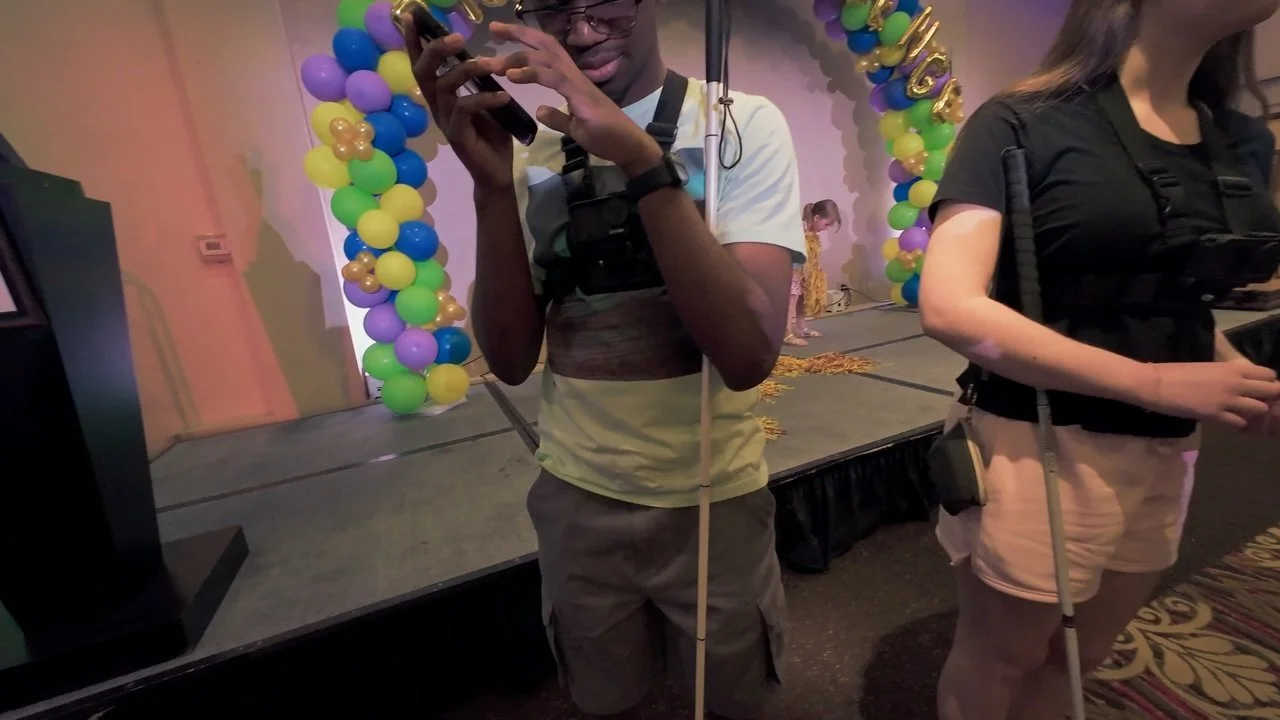
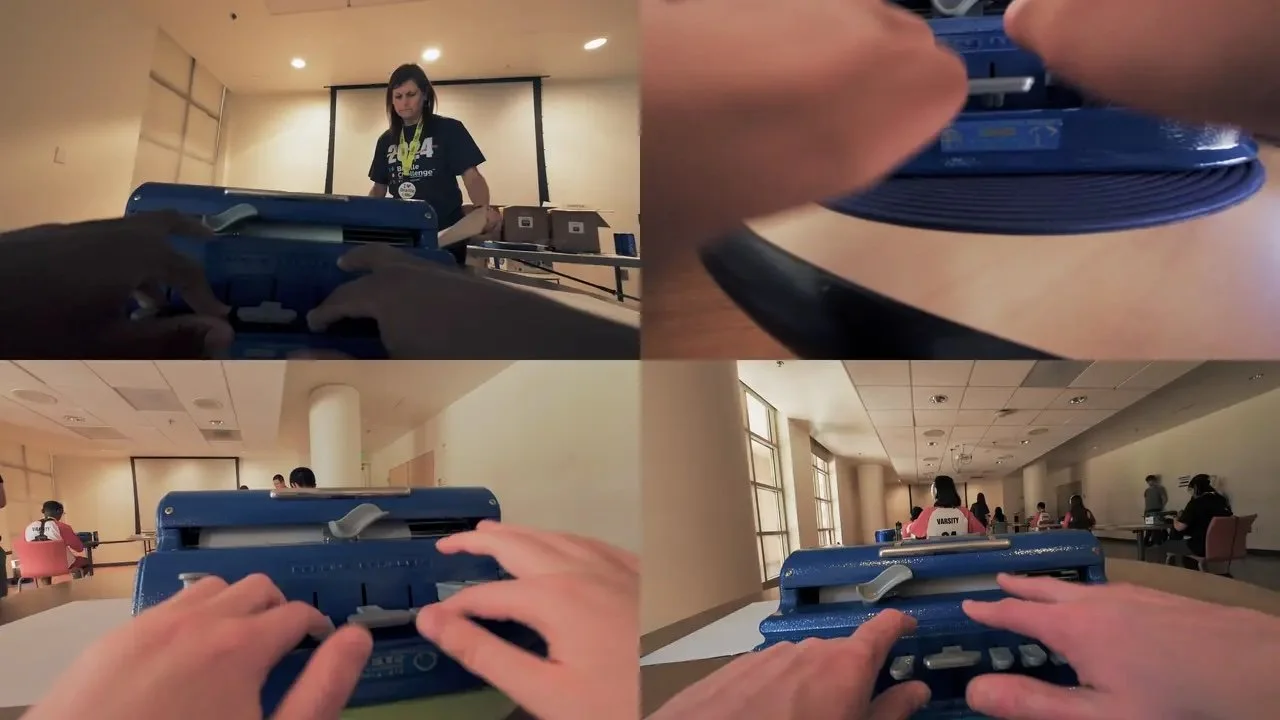
For twenty-five years, the Braille Challenge has been held annually for students who are blind or have low vision. It’s an academic competition that encourages students to improve their Braille literacy skills. The top fifty students around the world are invited to compete over the course of two days at the in-person event. Brailled It was filmed at the 2024 Braille Challenge. The documentary team, David Grabias and Brendon Schulze, decided to put the camera in the hands of three participants: Salome Cummins, Isaiah Gauthier, and Christopher Morgan. Each of these teenagers has a Go Pro-type camera on their chest. It’s up to them to decide what they want to film and what aspects of the competition they want to document. Alongside Grabias and Schulze, the teens are given director’s credits on the final film.
Part of what makes Brailled It so special is the candor with which it captures teenage life. There are sweetly awkward moments between two contestants who may harbor a crush on each other. On the other end of the spectrum, there’s a rivalry heating up between another two contestants. It’s the mundanity of life told through a perspective that a lot of viewers may not ever experience. We see the contestants walk to find food, meander around the hotel, and, of course, compete in the challenge. Some of them provide narration for their actions, while others don’t. It varies teen to teen, moment to moment.
Courtesy of Brailled It
The fact that the camera is in the hands of Salome, Isaiah, and Christopher opens the door for a new kind of storytelling. With documentaries, a subject’s story is filtered through the lens of the director and the decisions of the editor. While the trio of teens wasn’t in the editing bay, Brailled It allows for a unique sense of agency for a documentary subject. Rarely are people, in a film or in real life, able to control what they share with the world and how they’re perceived. It’s a profoundly compelling means of letting the audience walk in the shoes of someone else.
Beyond what Brailled It does for accessibility in storytelling, it’s also a tried and true competition film. Unlike most movies centered on academic challenges, Brailled It is able to be up close and personal as the participants are actively competing. There are a few sections for students — proofreading, charts, speed, etc. They’re given a packet of information for each section, as well as a braillewriter they will use to complete the test. The kids type with such fury that it’s hard not to get swept up in the tension of the race of these young people as they try to reach glory. Brailled It is many things, but above all, it’s a testament to the ability of film to be adapted and changed to allow more perspectives to be shared.
Catch Brailled It at Slamdance! Visit the Slamdance website for tickets and screening information.
Follow me on BlueSky, Instagram, Letterboxd, TikTok, YouTube, & Facebook. Check out Movies with My Dad, a podcast recorded on the car ride home from the movies.
support your local film critic!
~
support your local film critic! ~
Beyond the Cinerama Dome is run by one perpetually tired film critic
and her anxious emotional support chihuahua named Frankie.
Your kind donation means Frankie doesn’t need to get a job…yet.