
“The King of the Internet” is Frenetic Madness in the Early Digital Age
Anyone who experienced the internet of the early aughts could tell you that it was a bit like the Wild West. While some people were marveling at the interconnectedness, others saw a new pathway open up, one ripe for the taking and exploiting. Fabrício Bittar’s The King of the Internet takes viewers back to those dial-up days of web surfing. Don’t let the time period fool you, though. This isn’t a nostalgic look at the simple days of the World Wide Web. No. The King of the Internet is a roller coaster ride of sex, drugs, hacking, and how it all came crashing down.
Daniel Nascimento (João Guilherme) is fifteen years old when at-home computers begin to be commonplace. His parents don’t get what all the fuss is about, but they do see a way to help their son prepare for the future after he successfully completes a computer class. And Daniel feels like he’s found something he’s good at. Hacking wasn’t taught in the class, but Daniel picked it up out of curiosity. Before he knows it, he’s breaking into bank websites and stealing credit cards. His actions catch the eye of other Brazilian hackers who bring him into their world of unprecedented power and money. All before Daniel turns seventeen.
Courtesy of “The King of the Internet”
“This is a true story according to someone who spent his teenage years lying to his parents and scamming people online.” For months, Bittar spoke with the real-life Daniel about the rise and fall of his criminal empire. He’s a few years older than Daniel and grew up with a slightly younger internet. Bittar, like Daniel, spent hundreds of hours online in chatrooms, browsing blogs, and playing early video games. In that sense, The King of the Internet feels personal. This is the internet Bittar was raised on, the one that shaped him. Even though he wasn’t heisting money like Daniel, he has a certain awe and reverence for what Daniel was able to achieve, despite the rudimentary nature of the computer.
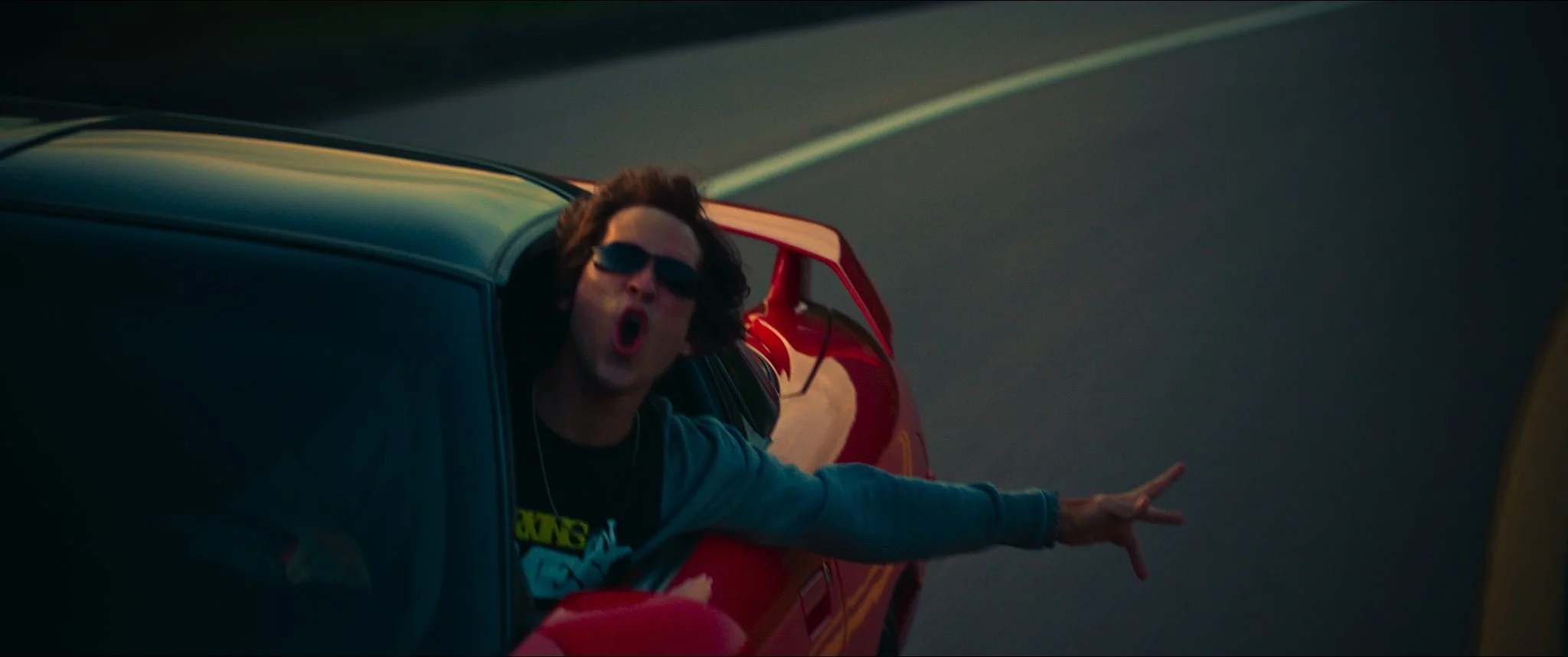
There’s a drug-fueled energy to The King of the Internet that matches Martin Scorsese’s The Wolf of Wall Street. A kinetic sensation that allows the audience to get a taste of the madness that propels the men of these films. The King of the Internet opens with federal police officers raiding Daniel and the other members of the crime ring. It all comes to a screeching halt when Daniel is tackled onto the floor. Without actually fitting the totality of the trope, it’s very much the record-scratch, freeze frame, “yep, that’s me” introduction. Tonally, it sets the groundwork for the rest of the film. An equal mix of mayhem, adolescent humor and confidence, and genuine reflection about the state of internet safety in the early 2000s. Perhaps the best example of such a blend of styles is Daniel’s nightmare where the Linux mascot, a penguin, comes to him and bares its ugly, horrifying teeth.
“Why join the navy when you can be a pirate?” asks Daniel in one of his voiceovers. As with the The Wolf of Wall Street, The King of the Internet is more about the rise and fall of one man than exploring the impact that man’s actions had on the victims of the crime. The film is a ride, a bumpy one, but one that’s exhilarating to witness. The speed with which Bittar tells the story captures the feeling of that era, when the internet still felt malleable, under-explored, and ripe with possibilities. The King of the Internet wholly puts the audience in Daniel’s seat. It’s a sometimes uncomfortable, sometimes freeing place, sometimes criminal place to be.
Follow me on BlueSky, Instagram, Letterboxd, TikTok, YouTube, & Facebook. Check out Movies with My Dad, a podcast recorded on the car ride home from the movies.
support your local film critic!
~
support your local film critic! ~
Beyond the Cinerama Dome is run by one perpetually tired film critic
and her anxious emotional support chihuahua named Frankie.
Your kind donation means Frankie doesn’t need to get a job…yet.