
“The Plague” is an Expertly Paced Teenage Nightmare
The horror of adolescence is unique. It’s a time built on contradictions. Kids are given more freedom to express and explore, but their every action is under scrutiny. It can be a time for great growth, but also a source of profound pain for those who don’t conform to the norm and don’t have a desire to do so. Charlie Polinger’s The Plague captures this world of contradictions so painfully accurately that it’s almost uncomfortable to watch. It’s a film about a group of young boys at a water polo camp. Ben (Everett Blunck) has just moved to town and feels like an outsider among the tightknit group of boys led by the strikingly mean Jake (Kayo Martin). One boy is wholly on the outs: Eli (Kenny Rasmussen). The kids tell Ben that Eli has the plague, a made-up affliction that the popular boys use to cruelly isolate any boy who is different from them in some way.
Films are full of fantastic examples of the turmoil of teenage girls’ adolescence manifested in the supernatural. There are classics like Carrie, new works like Julia Ducournau’s Raw, and adaptations like IT that have been remade for generations. When movies are made about teenage girls in this time of their lives, they’re often brutal because of what it’s like for them to be on this cusp of childhood and adulthood. Films that center on teenage boys tend to fall to either end of a spectrum; either comedy or immense brutality. We have Superbad or A Clockwork Orange and fairly little in between, which is what makes The Plague such an urgent piece of filmmaking. There is bullying and there are moments of comedy, but the film is an anxiety-ridden return to middle school where life exists in the murky middle.

Courtesy of Steven Breckon. An Independent Film Company release.
The Plague demonstrates how easy it is for vulnerable people to fall into a dangerous crowd. When the audience meets Ben, he immediately bristles at the treatment of Eli by his campmates. He makes conversation with Eli, but only when they’re alone in the locker room. It’s only over time, when Ben feels that he’s at risk of fully being ostracized, that he gives in. So much of Blunck’s performance as Ben is internal, a war raging within him. Does he stand strong and choose kindness? Or does he fall in line with what all the popular kids are doing because ostracization is far worse than the guilt of being mean? The film’s culmination is a stunning monologue from Ben that is the moment the dam bursts for him. Where the guilt does outweigh the desire to fit in, but the way Ben expresses it shows how lost he really is.
A film like The Plague is an example of why we’re long overdue for an award for casting directors. Rebecca Dealy, who worked on Hereditary, served as the casting director for The Plague, and the amount of new talent she found is nothing short of extraordinary. Blunck was previously in Griffin in Summer, a criminally underrated indie gem, and Elliott Heffernan starred in the Saoirse Ronan-led Blitz from 2024, but most of the boys had never acted before. To see someone like Martin come onto the set so confidently and play one of the nastiest boys ever committed to film is a thrill. It’s a true ensemble film that’s grounded by great urgency from this new crop of young actors.
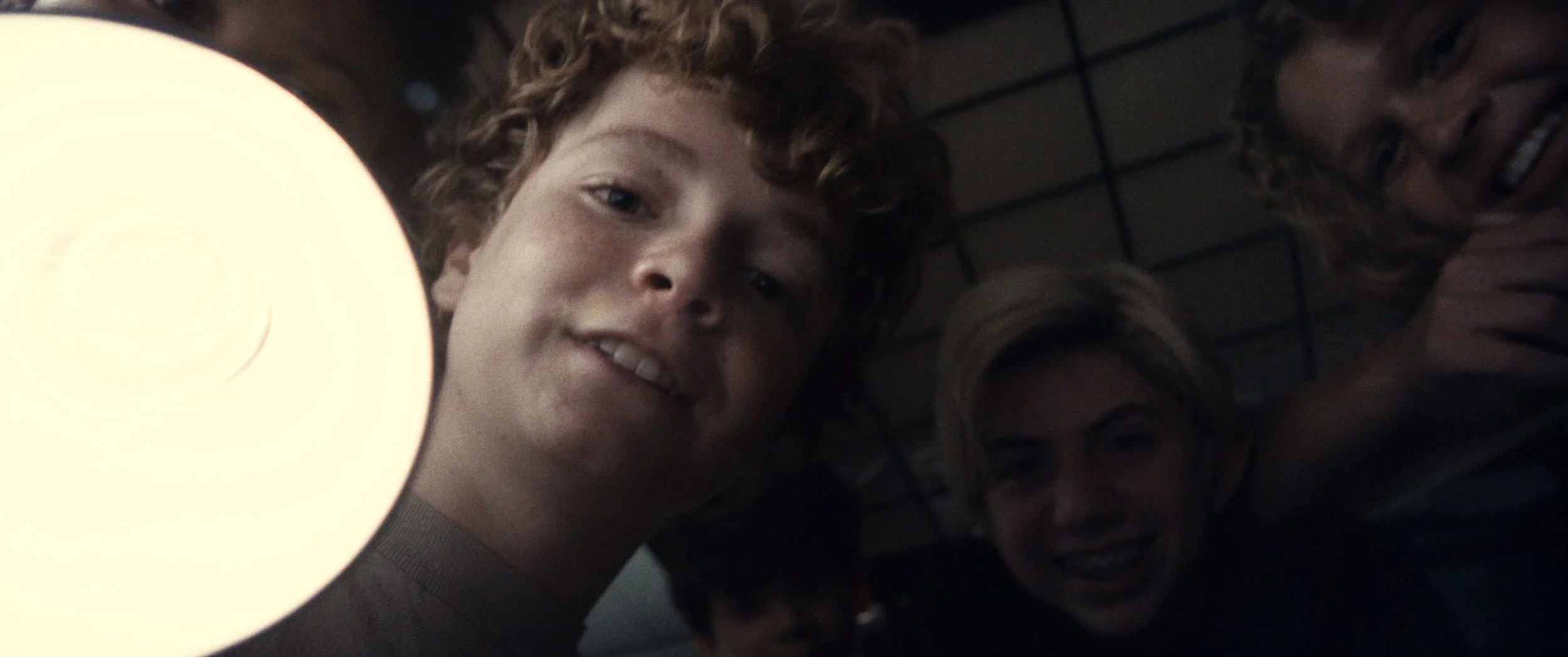
Courtesy of Steven Breckon. An Independent Film Company release.
Every inch of The Plague feels as though it was constructed to make the viewer uncomfortable. The opening shot is beneath a pool of still water. Slowly, bodies start to fall in and create waves. We don’t see their heads, just their limbs flailing as they begin their water polo warm-up. It’s uncomfortable to view this spectacle from this angle, but it’s an expert means of introducing the audience to the concept that the body is a source of so much concern for the characters at the center of the film. The scenes where the boys actually play water polo feel gladiatorial, limbs toppling over one another, pushing and dunking, duking for dominance. Johan Lenox’s score adds to the tense nature of the film by rooting itself in loud vocal hums, yet another reminder of how front-of-mind the boys find their bodies to be.
The film takes place in 2003, and little bits of pop culture from that era seep into the film. Ben and another camper talk about the new Star Wars, likely the 2002 release, Attack of the Clones. They debate the pros and cons of aligning with the Jedis or the Sith. Ben says that he would join the Sith as a means of trying to change perceptions from within. It mirrors how he looks at the way the popular boys treat Eli. Ben thinks that if he befriends the popular boys, he can get them to change their minds and admit that the plague isn’t real. Anyone older can tell Ben this isn’t the way to go about it. That by getting close to these boys with his desire to be accepted is a slippery slope. The Plague is a cautionary tale of adolescence that’s searingly difficult to watch. It’s a masterful introduction to a new filmmaking voice.
support your local film critic!
~
support your local film critic! ~
Beyond the Cinerama Dome is run by one perpetually tired film critic
and her anxious emotional support chihuahua named Frankie.
Your kind donation means Frankie doesn’t need to get a job…yet.

Follow me on BlueSky, Instagram, Letterboxd, YouTube, & Facebook. Check out Movies with My Dad, a new podcast recorded on the car ride home from the movies.