
“Tony” Lacks Anthony Bourdain’s Understanding of the Human Condition
“I was — to be frank — a spoiled, miserable, narcissistic, self-destructive, and thoughtless young lout, and badly in need of a good ass-kicking.” So says the quote that opens Matt Johnson’s Tony. The words come from the man at the center of the movie himself: Anthony Bourdain. At first blush, the man half-responsible for the madness that is Nirvanna: The Band: The Show: The Movie may not seem like the right choice to helm a more serious biopic. His feature, Blackberry, about the rise and fall of the man behind the Blackberry phones, was extraordinarily compelling. Can he bring that same success to the kitchen of a seafood shack in Provincetown?
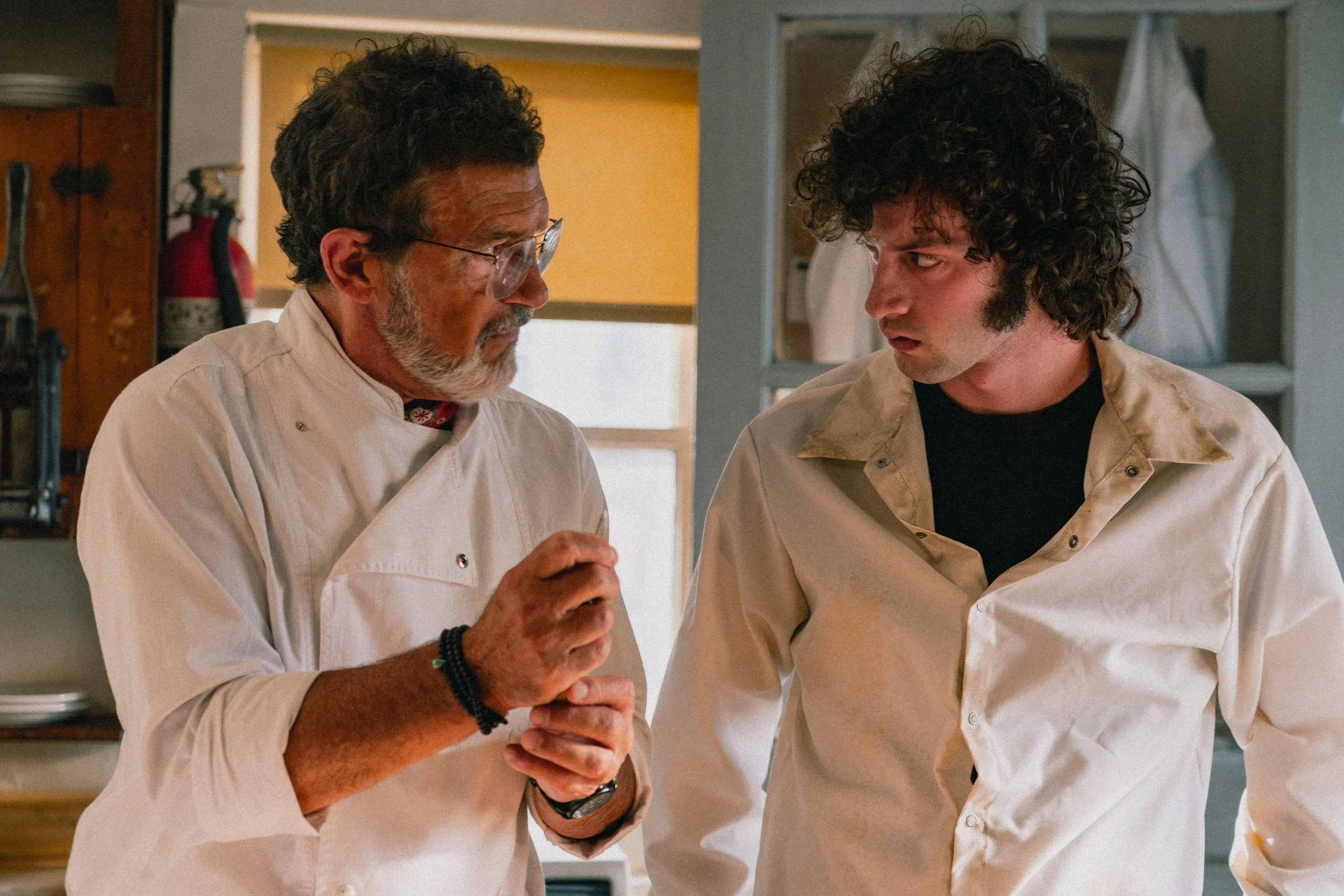
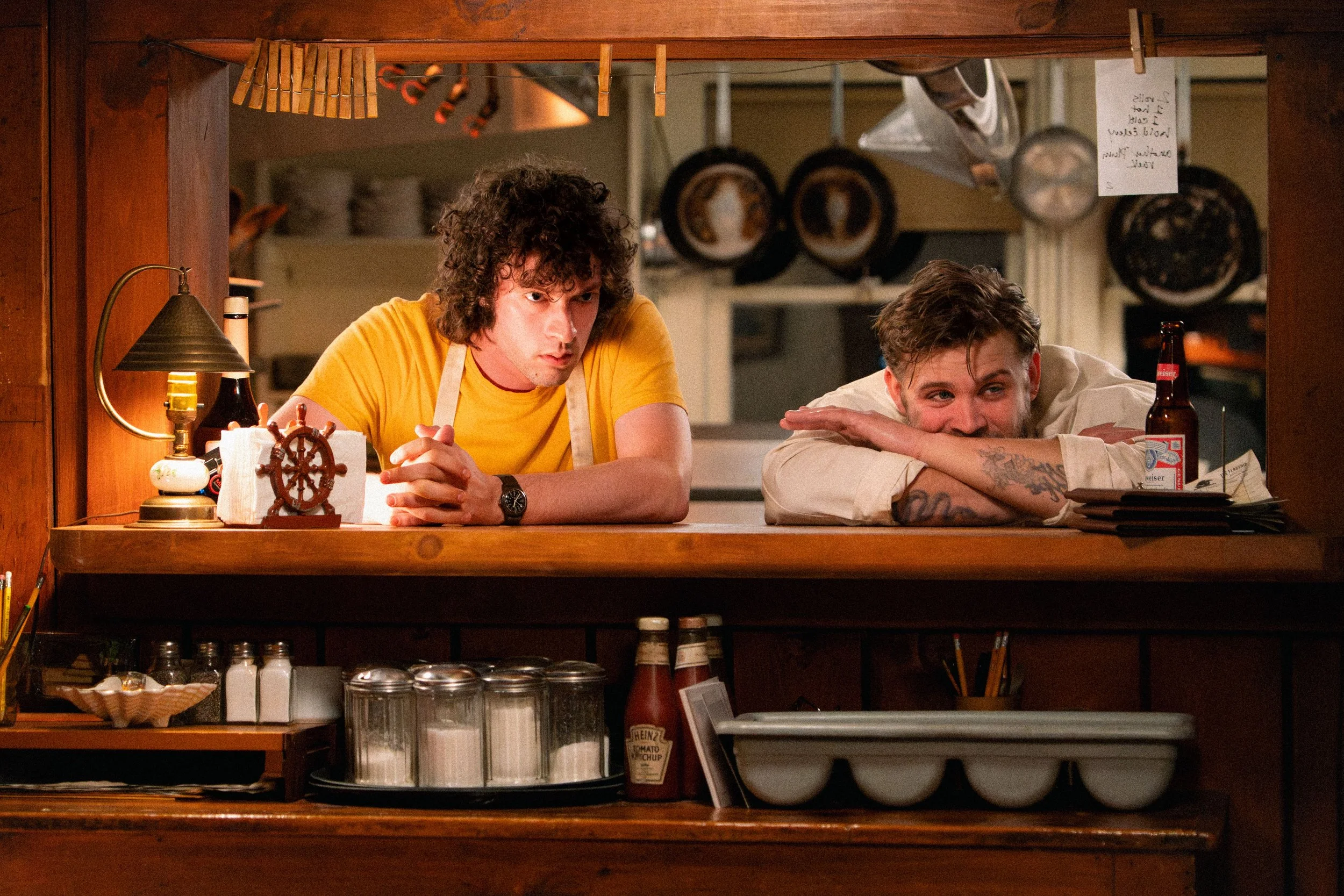
Nineteen-year-old Tony (Dominic Sessa) is wrapping up his second year at Vassar with an interview for a prestigious writing fellowship. He pitches an extremely pretentious book and is fully convinced the fellowship is his, but his bubble bursts and Tony is shattered. This facade he has created as a moody, cool, writer has broken, but he refuses to accept the reality of not getting the thing he wants. Tony runs away to Provincetown, where he knows the girl (Emilia Jones) he had a crush on in high school will be spending the summer. While there, he gets a job as a dishwasher and slowly falls in love with the culinary world.
Courtesy of A24
Biopics are often criticized for how gently they handle their subject. Despite the fact that the genre exists to paint an honest picture of a person who has made a great impact on the larger world, these people are often simplified. They’re crushed down and condensed into the most digestible, easy-to-understand version of themselves. Thus, the biopic becomes a greatest hits parade with a few shades of gray. If ever there was a person who would be happy to let his warts and all be on display for the public, it would be Anthony Bourdain. It was something he did time and again. He wasn’t afraid of having his flaws examined by others. Anthony wanted to show them, to be honest about the human condition.
Courtesy of A24
While the summer that Tony takes place is only a snapshot of Anthony’s life, it’s missing the essence of who he was — his fascination with and interest in the people around him. That’s what made his writing and his television programs so compelling. He was as interested in Michelin star chefs as he was in the people running street-food carts. In fact, he probably felt more compelled to talk to the unpretentious people who cooked food because they had pride in it. The movie version of Tony misses that. Sure, he likely wouldn’t be that introspective as a nineteen-year-old boy, but since the audience knows this person, glimmers of the man he would become should shine through cracks. Over the course of the movie, Tony does learn how to be less selfish, but this is unconvincingly portrayed through Sessa glowering in a corner, away from the crowd.
If what Tony wants to capture is the way one summer can change the course of a person’s life, it misses the mark. The film doesn’t put in the work to prove this summer’s importance, and it relies on the fact that the viewer knows how things turn out. If someone were to come to Tony with no knowledge of the real man, there’s not much to fall in love with here. The film makes one wonder why people keep taking a chance on this kid when he’s violent, rude, and quick to anger. That’s not to say that someone who’s struggling like this shouldn’t be given a chance, but the movie never explains why that chance is given. Instead, because it happened in real life, it’s happening here. Real life, though, has a lot more moving parts that help make sense of people and situations like this. Tony is stagnant, missing the truth behind the man who could make friends with anyone.

Follow me on BlueSky, Instagram, Letterboxd, TikTok, YouTube, & Facebook. Check out Movies with My Dad, a podcast recorded on the car ride home from the movies.
support your local film critic!
~
support your local film critic! ~
Beyond the Cinerama Dome is run by one perpetually tired film critic
and her anxious emotional support chihuahua named Frankie.
Your kind donation means Frankie doesn’t need to get a job…yet.