
Tribeca: “American Zoo” Holds Decades of Secrets
Many families have secrets. Some are small, like a recipe that has been passed down through generations but never given to anyone not blood-related. Others are large, like second families in neighboring states or less-than-savory political affiliations. These pieces of hidden information are closely guarded, but few things stay uncovered forever. In the Tribeca world-premiering documentaryAmerican Zoo, one such familial secret accidentally unravels an entire legacy.
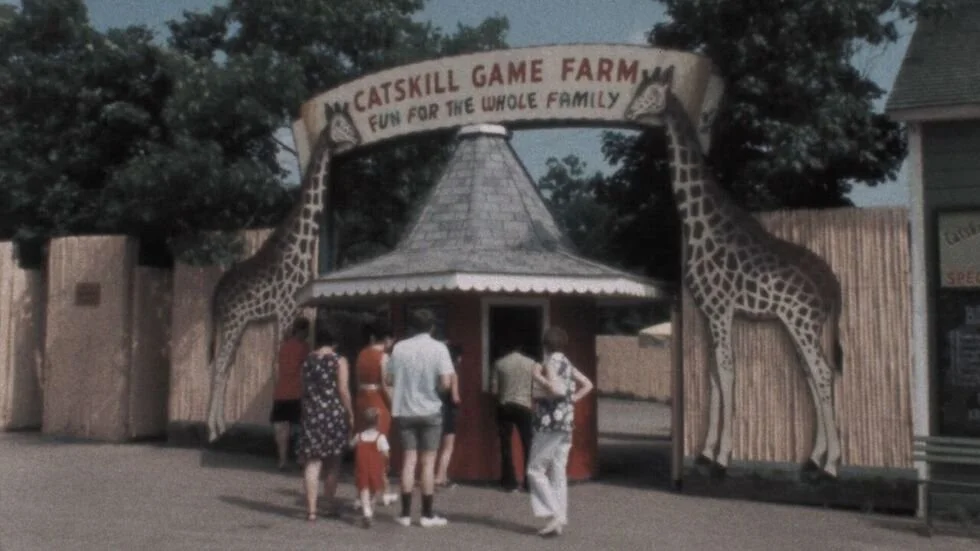
The Borscht Belt is the unofficial nickname of the southern foothills of the Catskills Mountains in New York. The name comes from the fact that this area was a vacation haven for Jewish residents of New York City from the 1920s through the 1960s. Resorts, bungalows, summer camps, and more popped up in the region so these summer travelers could escape the city. In 1933, American Dream: The Catskill Game Farm was opened by German immigrant Roland Lindemann. It was the first and largest privately owned zoo in the United States, and was operated for 73 years. Many people fondly remember visiting the zoo every summer, but the unexpected uncovering of thousands of pieces of archival material puts the zoo’s legacy in a different light.
It’s very difficult to talk about American Zoo without mentioning what was uncovered in this archival discovery, so this review will remain vague. That being said, the fact that it was opened in the mid-1930s and that a Berlin doctor was invited to become director in 1959 should point you in a certain direction. One of American Zoo’s greatest strengths is the way it ties the actions of zoological employees to the larger social web and demonstrates how the actions of those in animal care can have a large impact on human nature.
Courtesy of Tribeca
The amount of archival footage and physical materials that director Tim Travers Hawkins and his team were able to find for this documentary is impressive. Additionally, there are interviews with family members, old employees, and individuals who visited the zoo at some point in their lives. These memories are hard to listen to as the archival footage plays. There’s also modern imagery from the land that was once the Catskill Game Farm. It’s incredibly jarring to go from the warm, grainy images of smiling folks on vacation to the slick, dim, digital look of the contemporary footage, but that’s the thesis of American Zoo. The past is only as warm as present-day information allows it to be.
As the film comes to a close, American Zoo looks to the future and how companies are continuing the unsavory aspects of the Catskill Game Farm, just rebranded in a new way. As the old saying goes, “history is doomed to repeat itself.” We have not learned from the mistakes of our grandparents, let alone from those of our far more distant relatives. With the direction our society is headed, the general public will be at the mercy of the whims of the uber-rich. Those people are not asking themselves the famous line from Jurassic Park about scientists not considering the difference between can and should. The same might be said for the zoologists of American Zoo.
Lesser documentaries want to find distinct differences between those in the right and those who have done wrong. They simplify humans, often to the detriment of the truth. In American Zoo, Hawkins doesn’t put labels on the people who are the subjects of the film. He presents all the information he and his team have accumulated and allows the viewer to parse through it themselves. American Zoo is a searing look at how something as seemingly disconnected as a zoo can actually be a tool for the rise of fascism.
Follow me on BlueSky, Instagram, Letterboxd, TikTok, YouTube, & Facebook. Check out Movies with My Dad, a podcast recorded on the car ride home from the movies.
support your local film critic!
~
support your local film critic! ~
Beyond the Cinerama Dome is run by one perpetually tired film critic
and her anxious emotional support chihuahua named Frankie.
Your kind donation means Frankie doesn’t need to get a job…yet.