
Humans are extremely confident in their ability to recall a moment or a series of events. Our memories are a source of escape, survival, and productivity. Muscle memory allows us to complete our daily tasks in an efficient manner. Emotional reminiscence allows us to return to a place in time that has come and gone. Recollections of danger, either lived experience or those passed on from previous generations, keep us alive. It is memories that lend themselves to the Tribeca world-premiering film title from Miiku Sakanishi. Memorizu is an ode to the moments in our lives, the ones that are fleeting and the ones that remain.
Yuta (Tasuku Emoto), Yuki (Moeka Hoshi), and their daughter, Hana (Masayo Umezawa), are a small family living in Tokyo. When the audience meets them, they’re at a ferry depot. Yuta is traveling to a rural town in Kyushu for two months to care for his father-in-law, Makoto (Issey Ogata), who fractured his leg. Makoto runs a photo studio that, in this rural town, still sees a decent amount of business. During those two months, Yuta stays in contact with Yuki and Hana through videos, pictures, phone calls, and video calls. All the normal ways that people who are separated try to stay connected. Through these fragmented pieces of a life, the audience sees the full picture of this family.
Memorizu is a gentle movie that unfolds itself over time. It’s not necessarily working toward a traditional story arc with rising and falling action. Those looking for a film with a more cohesive narrative structure may be disappointed in Memorizu. All the film asks of the viewer is to allow the glimpses of memories over the course of the two months wash over them. All the film provides is that, as advertised. Scenes grow familiar and routine: a girl riding her bike, a band practicing a song, the turning of the store sign from “closed” to “open.” These become expected and comfortable, but when something changes, it’s as jarring to the viewer as it is to Yuta.
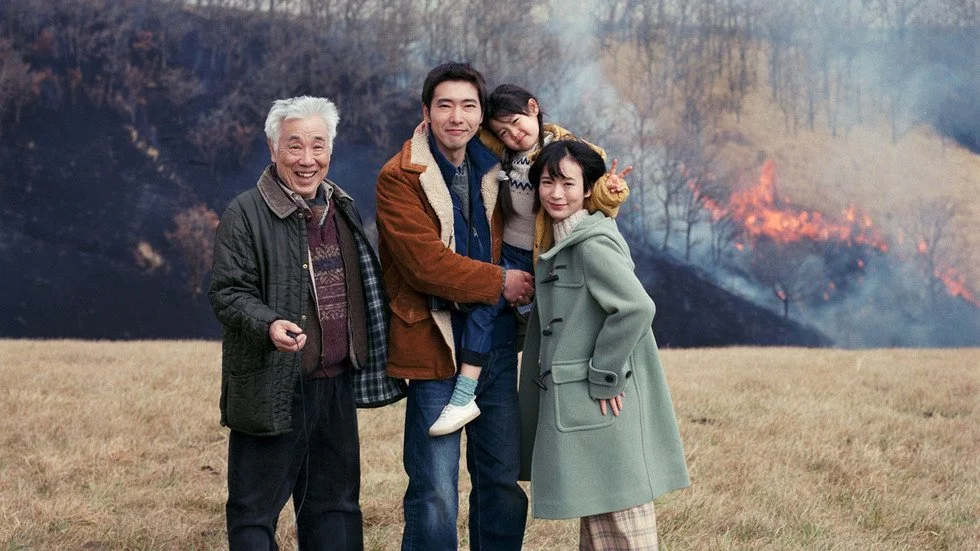
Courtesy of Tribeca
A striking moment in the film is, unsurprisingly, a simple one. During his stay in Kyushu, Yuta drives Makoto to the funeral of a friend. On the drive, Makoto relays some memories of this man. His likes and dislikes, information that will be of no use to Yuta, Makoto, or anyone else for that matter, now that this man is gone. Yet those memories affect Yuta and he doesn’t understand why. He calls Yuki and tells her that any time he sees Hoppy, a Japanese malt beverage, he might think of this man. It’s memories like this one that keep people alive long after they’re gone.
While Yuta is in Kyushu, Yuki remains in Tokyo. Her job seems to be a tour guide of sorts for Chinese tourists. While showing some tourists a bookshop, Yuki offers to take their photo. One of the tourists nods excitedly and says, “to remember coming here.” So much of Memorizu is to remember a place and time, or to allow someone else to feel as though they can exist in that same world, if only for a moment, if only through the magic of technology.
That same magic comes to life when Makoto shows Yuta an old-fashioned slide projector show of a trip he took with his wife and Yuki when she was a child. After a few photos, Yuta sits forward. He recognizes the place. Suddenly, the film becomes a montage of a place over the span of two generations. Memorizu shows that time and people are circuitous. Humans are creatures of habit and return to places that have meaning many times over a lifetime. In its gentle, wholehearted approach to the fallacy of memories, Memorizu has constructed a film that celebrates humans for their insatiable desire to remember everything.
Follow me on BlueSky, Instagram, Letterboxd, TikTok, YouTube, & Facebook. Check out Movies with My Dad, a podcast recorded on the car ride home from the movies.
support your local film critic!
~
support your local film critic! ~
Beyond the Cinerama Dome is run by one perpetually tired film critic
and her anxious emotional support chihuahua named Frankie.
Your kind donation means Frankie doesn’t need to get a job…yet.