
“You Can See Everything” Proves Secrets Hide in the Open
“Why would I deceive you?” is the simple phrase that sent the internet in a frenzy when it was uttered in a teaser released in September. The question is uttered by Elizabeth Holmes, who, according to a federal grand jury, has been criminally deceitful. She founded the revolutionary high-tech startup Theranos in 2003, which promised to be the future of healthcare in the 2010s. It was supposed to allow individuals to be in control of their healthcare and remove access barriers like a fear of needles or a lack of funds. With just the prick of a finger, Holmes and Theranos promised that a user would quickly be able to learn what ails them. The device that would analyze their blood would be the size of a small home appliance. Unfortunately, any American can tell you that the healthcare system has not been revolutionized by at-home testing devices. Elizabeth Holmes, at this very moment, sits in a prison in Texas. Before she went to prison, though, she invited a film crew into her home to make a documentary. That’s how You Can See Everything begins, but it’s a very simplistic explanation of the journey co-directors Lance Oppenheim and Nathan Fielder take the viewer on.
Courtesy of A24
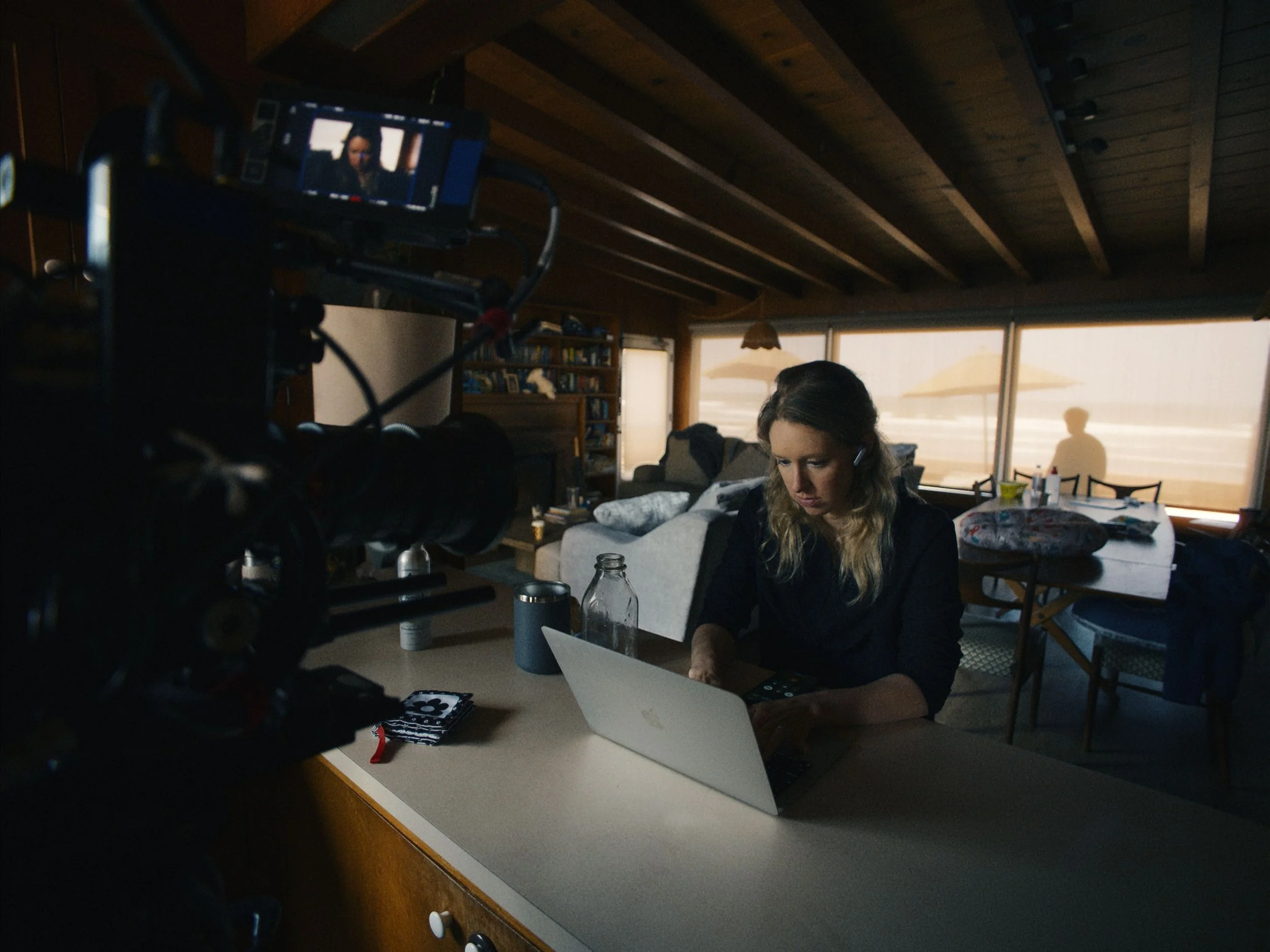
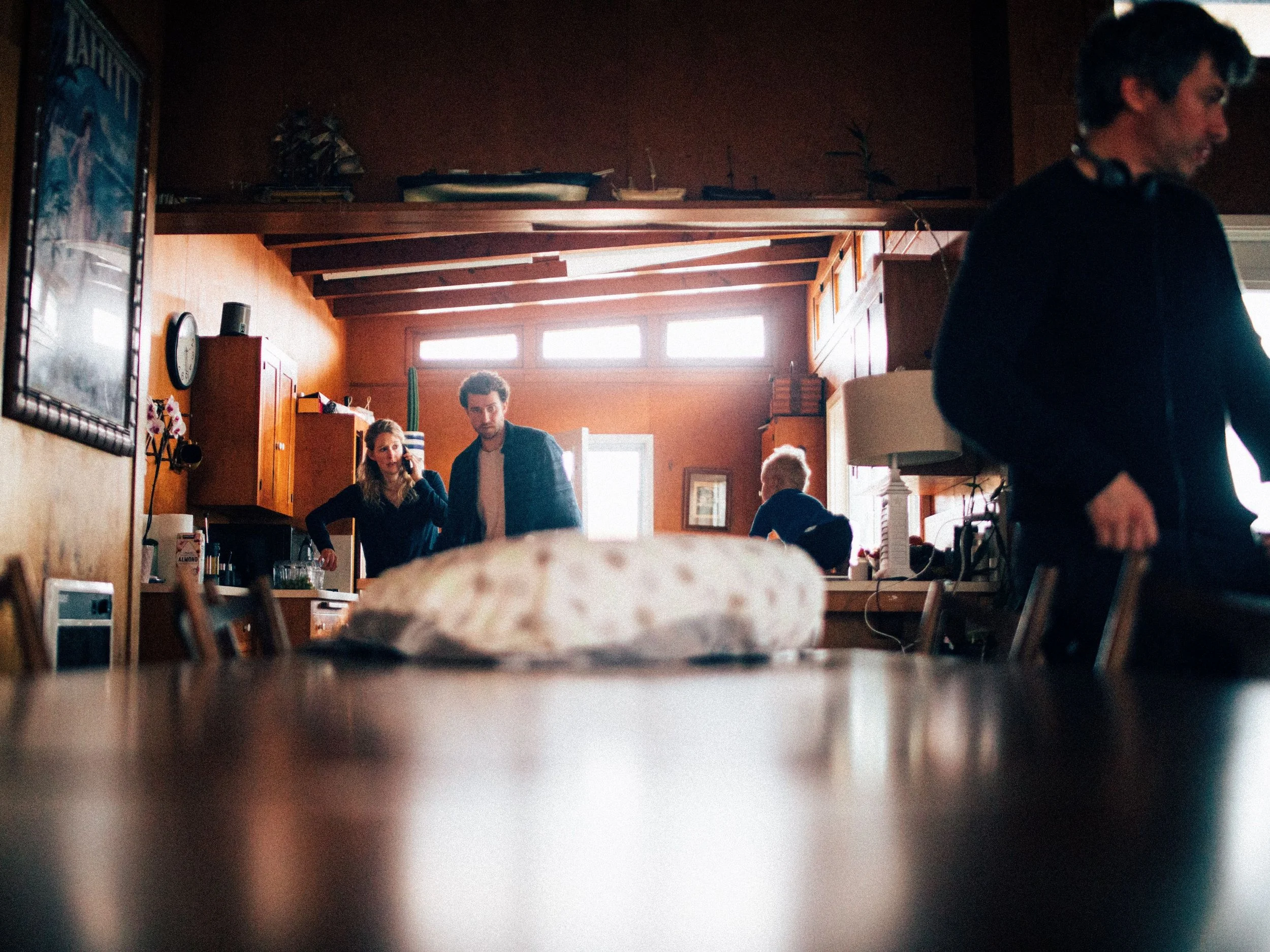
You Can See Everything starts innocently enough. Oppenheim, Fielder, and their small film crew have been invited by Holmes and her husband, Billy Evans, to capture Holmes’ final thirty-four days of freedom before she goes to prison. In the beginning, Fielder is a bystander. The first time the audience sees him, Fielder is lurking in the background with cheap headphones around his neck and a film monitor in his hands. He’s observing a couple and their two children go about their days, but seems incapable of stopping himself from pressing and prying. Anyone familiar with Fielder’s work knows that his specialty is prodding questions that force subjects into a corner without them even realizing it, followed by the awkward silence he leaves for them to hang themselves on. You Can See Everything doesn’t stop when Holmes goes to prison, and that’s where things really pick up steam.
It’s often stated in reviews on this website that a movie has to prove its worth to stretch to a three-hour runtime. You Can See Everything clocks in at 174 minutes, six minutes shy of three hours. Yet Oppenheim, Fielder, and Holmes have the audience in the palm of their hand, waiting with bated breath to see where things go next. It had been a long, long time since Holmes agreed to sit in front of a camera, and it’s baffling that this is the thing that breaks that fast. Fielder has met his match with Holmes. Neither of them is afraid to sit in silence, staring at the other. It’s something that usually rattles a person, but both of them, for different reasons, are unfazed. It’s an intimate duel that is entrancing to watch.
Courtesy of A24
One of the critiques leveled against people who bought into Theranos, pretty much sight unseen and including Henry Kissinger, was that they were easily swayed by a young twenty-something with no real experience in the field. Holmes was able to convincingly hold these powerful men under her thumb, and those on the outside simply couldn’t fathom how she did it. Her publicized interviews weren’t particularly engaging, even a little self-deprecating. What You Can See Everything does so masterfully is show the magnetic pull Holmes has on people around her. Her bright blue eyes are twinkling when she talks to Fielder, and you see him kind of lose himself in them. How could you not? The colors of the film with Holmes at the San Diego home are saturated, but soft, feeling like a warm memory more than anything else. She’s making such concerted eye contact with Fielder and, by association, the viewer. But is it all an act?
This review is as spoiler-free as possible, but know that You Can See Everything is a behemoth of a film that goes to unimaginable places. It’s a documentary that questions the very idea of truth. Is a person’s word worth anything? Even if it’s captured on camera and they are vehement that they’re stating fact…can we take them at their word? The film’s title comes from something Holmes says early on. Shouldn’t the fact that she and Billy have invited this camera crew and this man, notorious for finding a person’s slip-ups, into their lives, mean that Holmes has nothing to hide? You Can See Everything is a fever dream of a documentary, a masterpiece that is unyielding in its pursuit of something, anything, real, but only finding that the chasm between fact and fiction is wider than any of us realized.

Follow me on BlueSky, Instagram, Letterboxd, TikTok, YouTube, & Facebook. Check out Movies with My Dad, a podcast recorded on the car ride home from the movies.
support your local film critic!
~
support your local film critic! ~
Beyond the Cinerama Dome is run by one perpetually tired film critic
and her anxious emotional support chihuahua named Frankie.
Your kind donation means Frankie doesn’t need to get a job…yet.