
Hansen Bursic Talks Advocacy and Documentary Work in Pittsburgh and Beyond
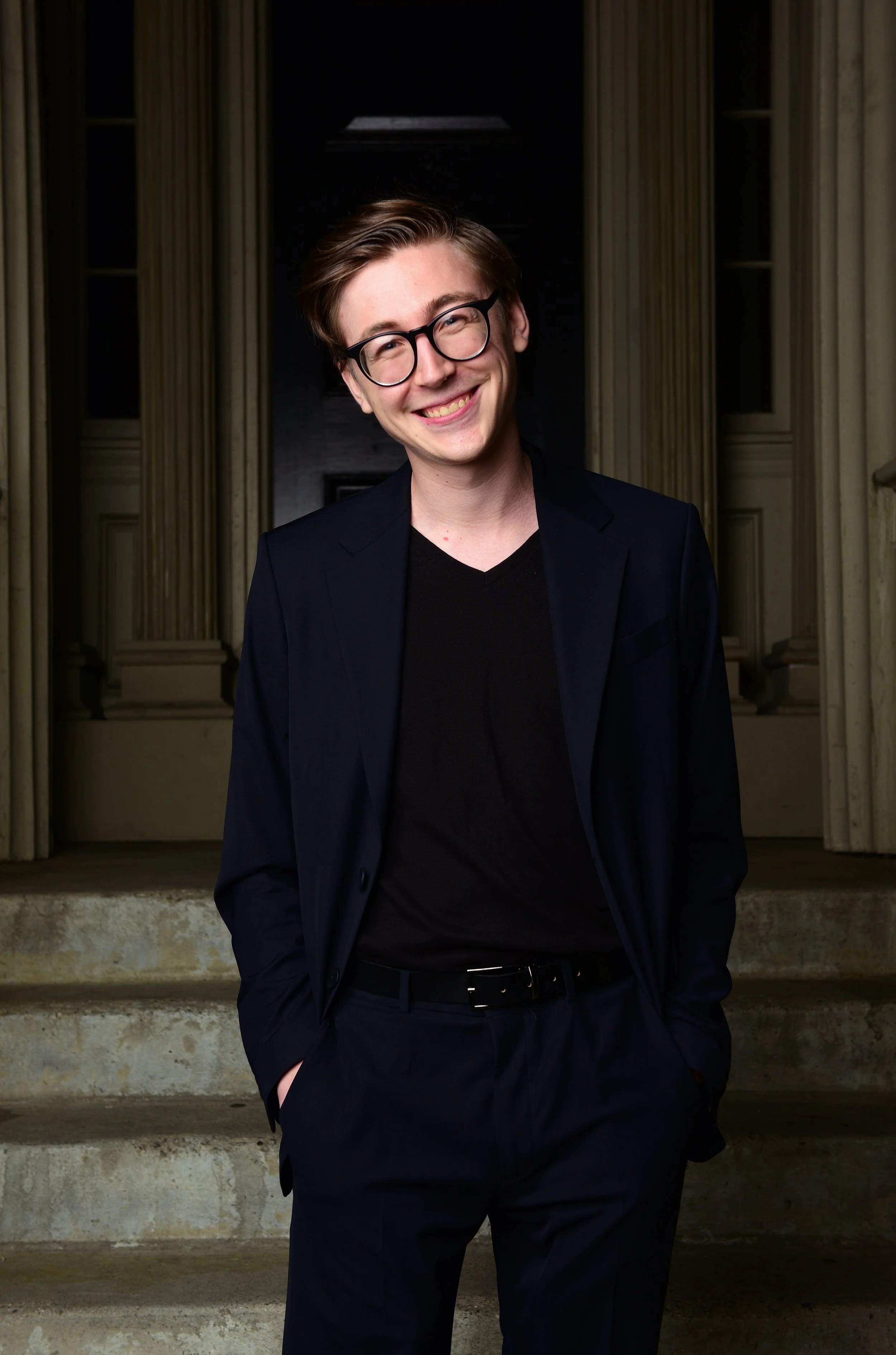
Hansen Bursic’s path to filmmaking started in self-described “god-awful narrative student films.” He was studying at Temple University under the impression that fiction would be the focus of his film career, but Bursic’s natural inclination to advocacy changed that path. At the same time he was making the aforementioned “truly atrocious” student movies, he was also volunteering at local and rural non-profits that focused on LGBT issues.
“When I was doing that volunteer work, I was like, why am I not combining these two things? So I started making documentaries, and part of the motivation to do that was because I wasn’t seeing media around queer and trans people in rural areas at all. The rare time that a documentary was focusing on rural queer and trans communities, it was emotionally charged and traumatic. Or it was stories about how horrible it was and how they needed to get away.”
“While I was watching this media, I was physically there in rural communities seeing people thrive and find their own way in these spaces that I think a lot of people don’t think about. I don’t know if there was a specific piece of media or a specific film that drew me to the work that I’m doing now, but rather the lack of that media that really put me on this path.”
Courtesy of Hansen Bursic
Bursic grew up outside Pittsburgh and now splits his time between the Steel City and Los Angeles. His first award-winning short film, The Toothmans, focuses its lens on a family in McConnellsburg. The titular Toothmans are a quiet family living in a quiet town. Parents Deb and Jim Toothman’s sense of routine is disrupted when their child, Cooper, comes out as transgender. Bursic’s documentary is an empathetic look at a family in transition and has played at many festivals, including Frameline, the largest and oldest LGBT film festival in the world.
Coming from the world of activism and advocacy to one of documentaries was a bit of a readjustment. Advocacy work is often hands-on, and activists are frequently on the front lines of societal change. In documentaries, the director is usually more hands-off, allowing subjects to speak for themselves without leading them to the story the director wants to tell.
“As an advocate, you’re there to help people and empower them. That’s your job. In the traditional sense, a documentary is supposed to have a journalistic kind of coldness to it. That was the way I was taught originally. It was traditional within the industry to come in and be a fly on the wall. You’re not supposed to interact, you’re not supposed to interfere, you’re not supposed to direct. You’re there as a conduit for the story to come through. To a certain degree, I still practice that.”
“I think coming from the advocacy world freed me from some of the constraints of traditional documentaries. The documentary industry right now is having a hard conversation about ethics. It’s been a big conversation about what our role as filmmakers and storytellers is, how we should be telling stories, and how we’re protecting and best serving the people who tell these stories. They are not our stories.”
“There’s a vast history of extractive storytelling and documentary. Filmmakers who go into communities to get what they want, leave, and never come back. Coming from the advocacy space really put the ethical consideration in my head. I’ve seen a lot of filmmakers go through a lot of reprogramming from their film school experience and what was traditionally taught to them so they could best serve the stories they’re trying to tell.”
“My model has always been thinking about impact and what are the community organizations we’re working with on every single step of this documentary in order to make it impactful? The advocacy space aligned me with my values as a filmmaker from the first moment I started. I knew what I was getting myself into by doing this, and I knew what my approach was going to be.”
A key component of many documentaries is archival footage. It’s used either as the primary source of media or as a supplement to a contemporary story to provide context for the larger film. It takes a curatorial eye to sift through the hundreds, perhaps thousands, of hours of archival materials in order to find what best supports the film. While some viewers may see these pieces of history as filler, there is a greater weight to these glimpses into the past of LGBT individuals. We take for granted the fact that history has been written down or captured in some way, but a lot of the stories of queer people throughout time have been lost or never cataloged.
Courtesy of Hansen Bursic
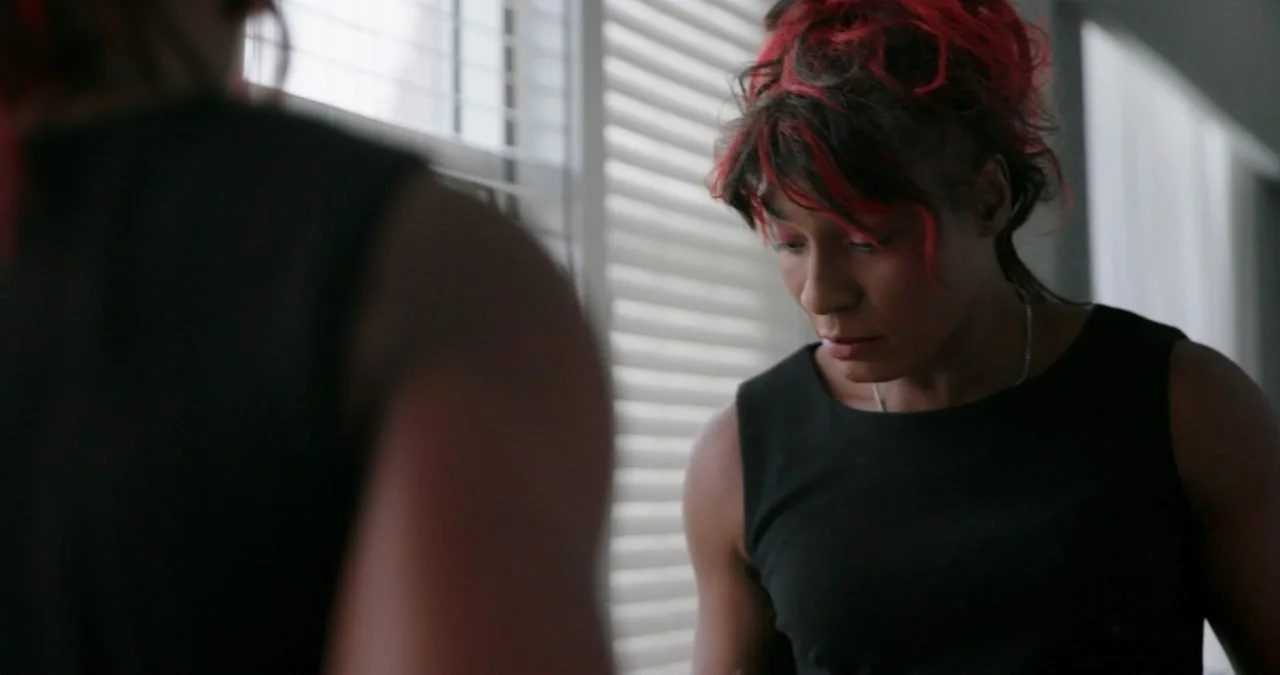
In Bursic’s latest documentary, Trans Heaven, Pennsylvania, he relies heavily on archival footage. In this film, though, the archive he was perusing was Facebook. The documentary reminisces about New Hope, Pennsylvania’s legacy as a safe haven for gay men in the 1970s and 1980s. By the 2010s, though, the community had changed to transgender women. Bursic talks with those who traveled from all over to attend legendary weekend-long parties and build a community that went far beyond New Hope.
“So much of trans history has been erased on purpose. It has been ignored and neglected. When I’m telling people about this documentary and how it takes place in the 2010s, people are like, oh my God, that was like yesterday. Why are you framing this as a historical documentary?”
“This is our history. The history for queer and trans people is different. When we come of age is different. When we go through pivotal moments in our lives, that’s different from other folks. Because of that, our history and the way we think about and preserve these things changes.”
Bursic is currently in production for a new documentary, The Trans Trucker Project. After a community screening in New Hope for Trans Heaven, Pennsylvania, a woman who attended many of the parties talked about in the film approached Bursic.
“She said to me, point blank, have you ever considered making a documentary on trans truck drivers?”
The answer was no, it wasn’t something remotely on Bursic’s radar. The woman was reading a book by Anne Balay called Semi Queer: Inside the World of Gay, Trans, and Black Truck Drivers. Balay is a scholar who focuses on marginalized voices in the trucking industry and now serves as a producer on Bursic’s upcoming film. Balay estimates that 3% of all truck drivers in the United States are trans women, which is about 90,000 women.
“I had come off getting fired from my day job, in part because of my association with the union. I was thinking through working-class things that I really cared about. Every conversation would come back to the cost-of-living crisis, the plight of working people right now. I began to think through how queer and trans people fit into this narrative. It’s very 1 to 1. Hearing that statistic, it just felt like this is what we’re missing.”
“I teamed up with Mars Verrone, who was the producer of Union, the Amazon Labor documentary. We shared the same feelings of why aren’t there more working-class trans stories? We both thought through how we could help fill this gap.”
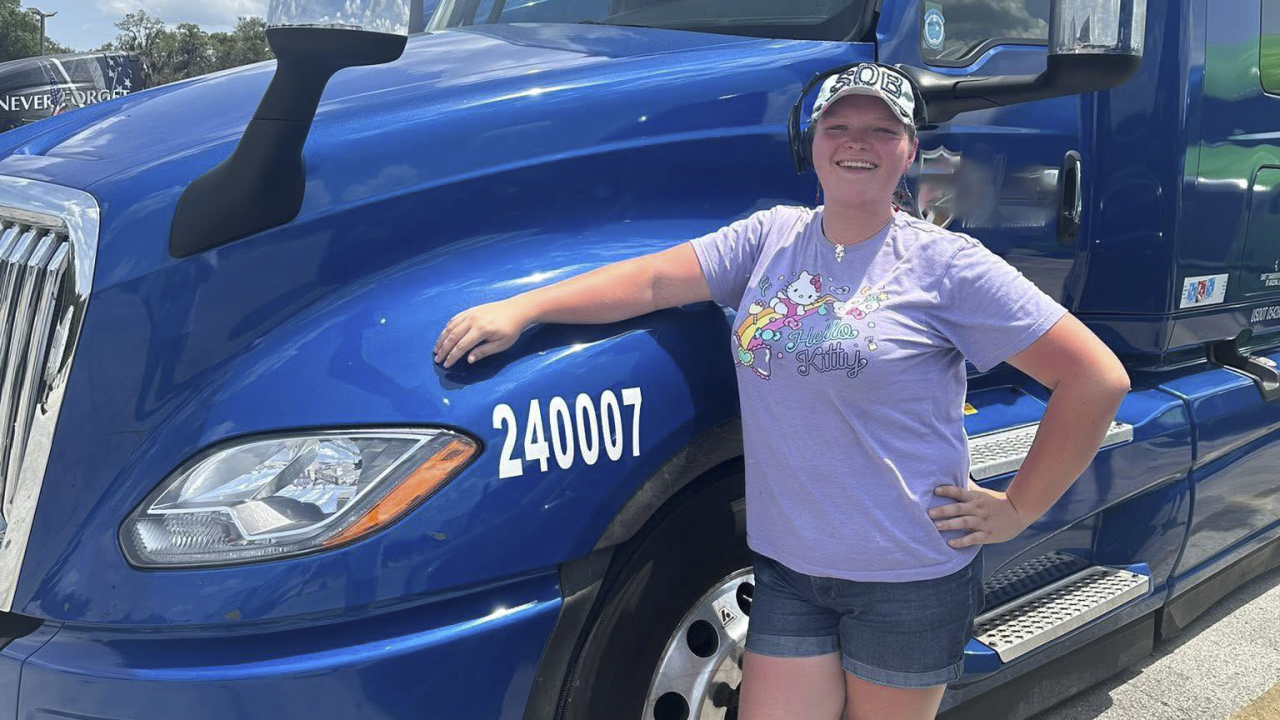
“Then we found Ashley and it was kismet from there. She’s 24 years old. She’s been trucking for about a year now, but she’s a third-generation truck driver. Her dad was a trucker. Her grandfather was a trucker. She never saw herself fitting into trucking. After she came out as trans, she met trans truck drivers and found herself in the same community that her father and grandfather were.”
Courtesy of Hansen Bursic
“Originally we thought we were going to focus on an older trans woman who had the seasoned perspective of being around for a long time. Meeting Ashley, she just feels like the new face of labor and logistics, people who really do keep America running. We never hear their stories and people don’t know that trans women are such a big part of this industry.”
As a native Pittsburgher and a documentarian whose work takes place in Western Pennsylvania, Bursic sees the development of the film industry as a positive. He points to the economic gains that are the result of bigger productions coming to town to shoot, but as someone who loves the city, he also hopes Pittsburgh will have a chance to stand on its own merits. Instead of being a cheaper stand-in for New York or Toronto, Bursic hopes Pittsburgh can be seen as itself on the big screen.
“I think people don’t understand what Pittsburgh is. The visual language of Pittsburgh is ever-present, but the stories of Pittsburgh are continuously left out. You see this during election cycles, right? The media comes in, they tell the story, try to interview people, and then they leave. Then there are years where Pittsburgh isn’t in focus anymore. I think there’s no better place to check the pulse of America than somewhere like Pittsburgh.”
“Pittsburgh has so many stories to tell. It’s a shame we’re muddied down to just a backdrop for major films, when in fact, there are so many storytellers here who have so much to share.”
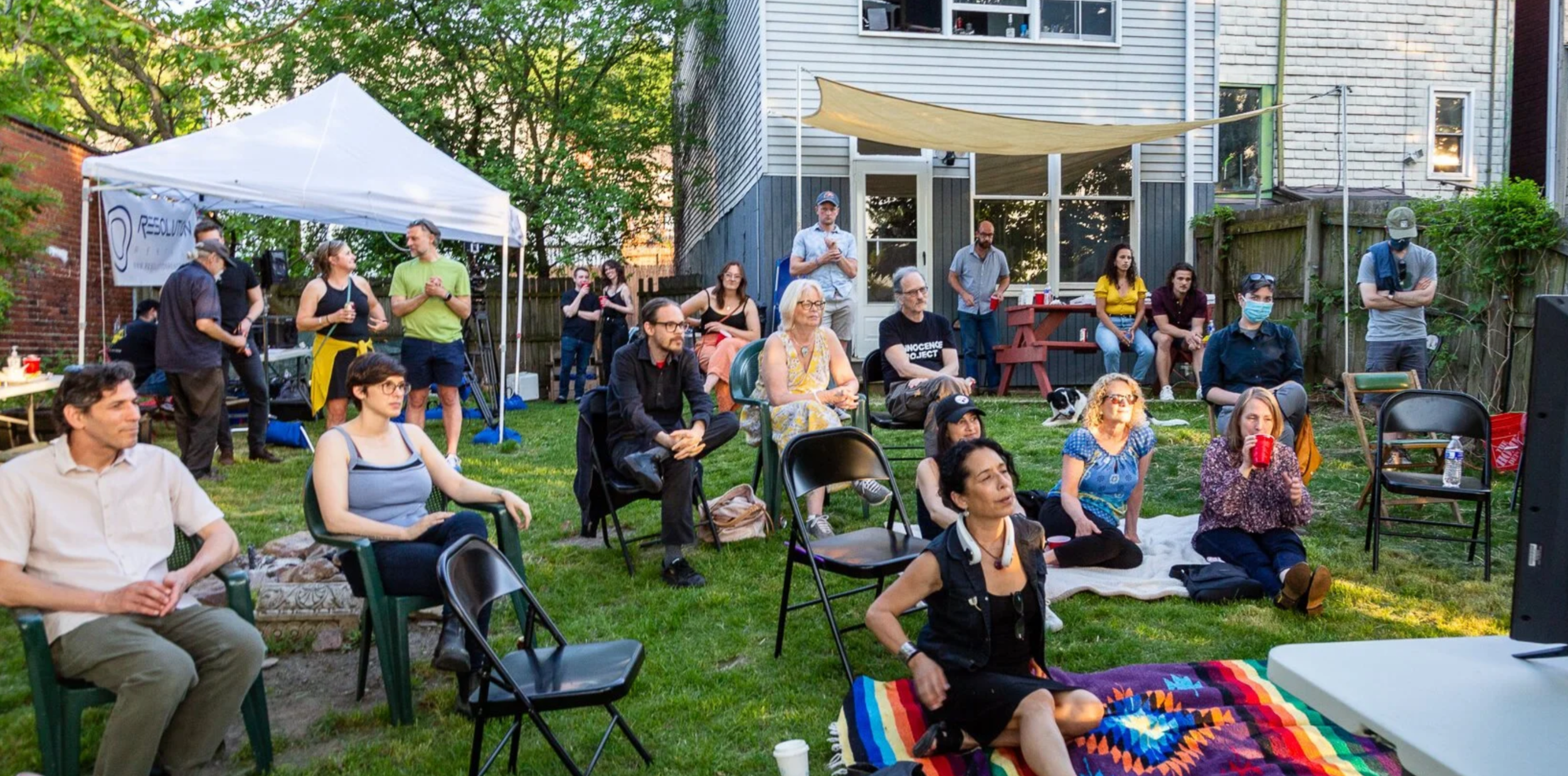
Bursic does his part in ensuring that Pittsburgh and local stories have a chance to be seen on the silver screen with his film festival, Backyard Docs. He describes it as “redefining the Rust Belt and Appalachia through documentary.” He combines voices of national and international filmmakers with those shooting in Pittsburgh’s backyard.
Courtesy of Backyard Docs
“When we started Backyard, me and Nick Childers, who is the executive director and a working filmmaker, it was in the wake of Pittsburgh Filmmakers closing and the loss of a lot of resources for nonfiction filmmakers. We realized that there really needed to be organizations that are dedicated to supporting local storytelling. For us, local storytelling meant regional storytelling. Ohio, West Virginia, greater Appalachia, and the Rust Belt. We developed a program that was like a love letter to the storytelling of this region, with a heavy emphasis on Pennsylvania creators.”
“You can tell when it’s a film that was shot by a filmmaker from West Virginia about West Virginia. There’s a texture to it that’s so specific. If we’re going to have a diverse and broad film ecosystem, we need to be focusing on storytellers from this region.”
“As much of a film festival as we are, we are also a connector and an industry space. We have an industry day where we train filmmakers together. We have talks. Our goal is to get as many filmmakers at the festival as possible. We’re really a filmmaker-first festival. People are often surprised at how young our audiences are. I think it comes from that hunger to see yourself reflected on screen, but also the fact that we don’t shy away from topics that other festivals might consider politically taboo. A lot of the films are pretty radical. I think people appreciate that honesty. Even if they’re disagreeing with some of the things the film says, they learn something new about communities and they resonate with the storytelling that looks and feels like the places that they grew up in.”
Anyone who’s been to both Los Angeles and Pittsburgh will tell you that the two don’t have much in common. There are certain Pittsburgh-esque things you can’t find in the City of Angels, and it’s not specific, like fries on salad. It’s something less tangible that speaks to what Bursic values about this city and the region.
“There’s something truly magical about Pittsburgh dive bars. They feel untouched and unfettered to any kind of branding or trendiness. LA is the quintessential city for talking about organizations that rebrand to stay relevant and new.”
“Pittsburgh scratches this itch that I have to just be in a space. To not be bothered and be surrounded by people who are there for the same reason I am, rather than being surrounded by people who are there because they saw a TikTok about it, you know what I mean?”
“Dive bars and diner food are the two things I really haven’t been able to find here. I don’t think people think about it, but it really is such an important part of life. To have those third spaces that don’t feel forced or fabricated. They just exist as what they are. A place to eat, drink, be in community, and that’s it. Yeah, that’s what I miss.”
Follow me on BlueSky, Instagram, TikTok, Letterboxd, YouTube, & Facebook. Check out Movies with My Dad, a podcast recorded on the car ride home from the movies and I Think You’ll Hate This, a podcast hosted by two friends who rarely agree.
Support your local film critic!
~
Support your local film critic! ~
Beyond the Cinerama Dome is run by one perpetually tired film critic
and her anxious emotional support chihuahua named Frankie.
Your kind donation means Frankie doesn’t need to get a job…yet.