
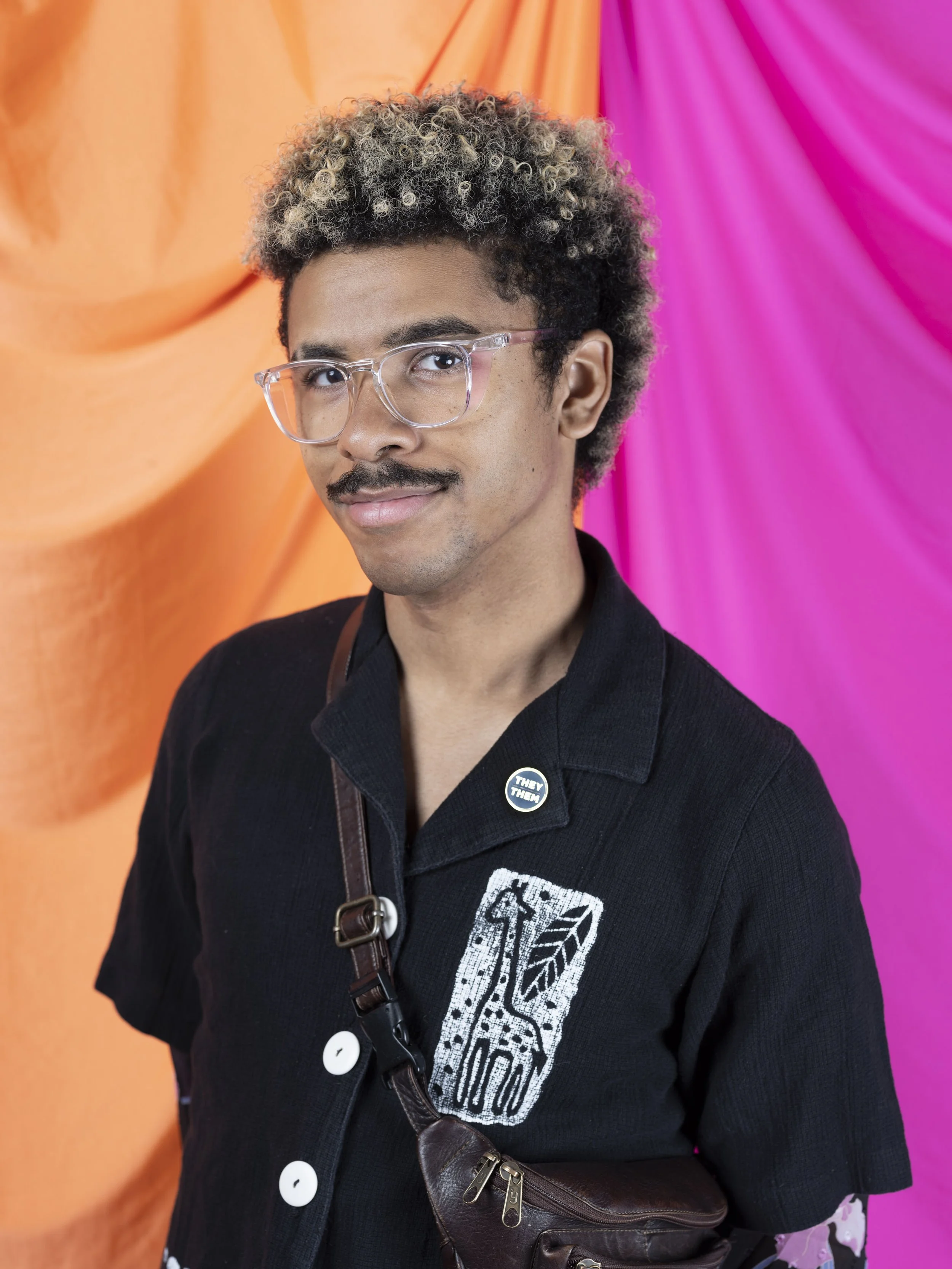
Like many others during the Covid-19 pandemic, Marcelese Cooper was looking for an artistic outlet. They had just moved to Houston for a graduate program, and the shutdowns began halfway through the first year. While they had begun to make some friendships, Cooper, naturally, felt isolated. They had no friends or family in the Houston area and the house they were living in had other residents staying there on paper, but in actuality, Cooper was alone for much of that year.
Courtesy of Marcelese Cooper
“I definitely have to credit one of my friends, Jamie Robertson, for what would become Story Drive. We had a podcast together for a number of years and she had talked about the idea of collecting community dreams. A lot of my thesis work was centered around dreams and nightmares and the idea that folklore is shared across different countries, nations, and cultures. There are shared narratives that we all experience. I loved the idea of doing that in a less formal sense, like a hotline.”
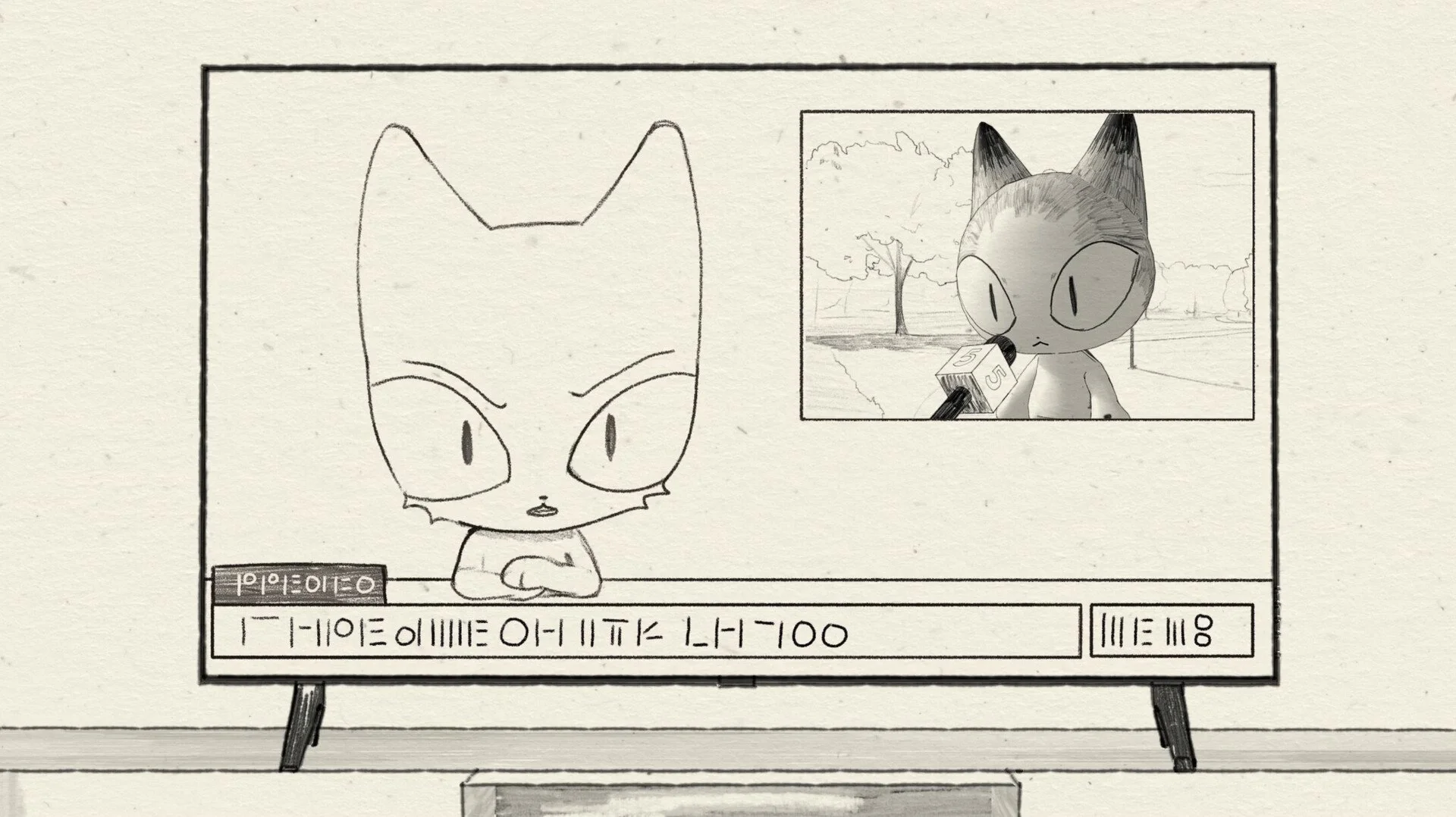
Story Drive is an ongoing project. Initially, Cooper has created a phone number for anyone to call in and leave a voicemail about their dreams. When you open something up to the public, especially in an anonymous format, people feel more free to do as they please. As part of the Story Drive project, Cooper promises that every voicemail will be animated. Not always by Cooper, but they envisioned it as a resource for students, emerging animators, or anyone at all who wants a creative outlet. With the voicemail, Cooper has amassed over 200 calls from people telling stories or dreams, all ripe for animating.
“I think there’s just a lot of loneliness and trauma from people. They leave thoughts, feelings, stories, anything. It was always a goal to learn how to animate through it. I wanted inspiration that felt like I was engaging with someone and not just working on my own ideas. It feels as if you’re in collaboration with ghosts.”
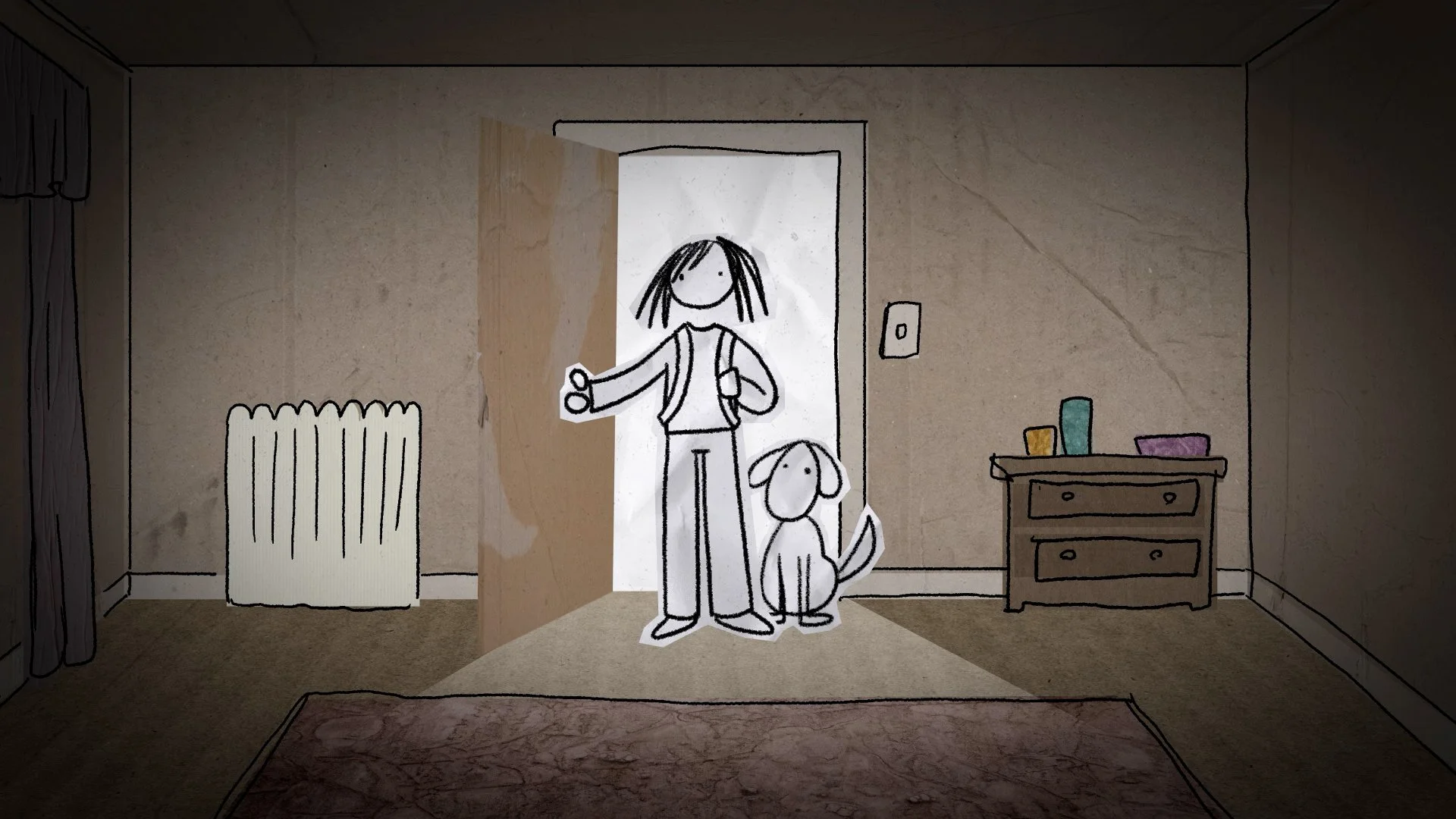
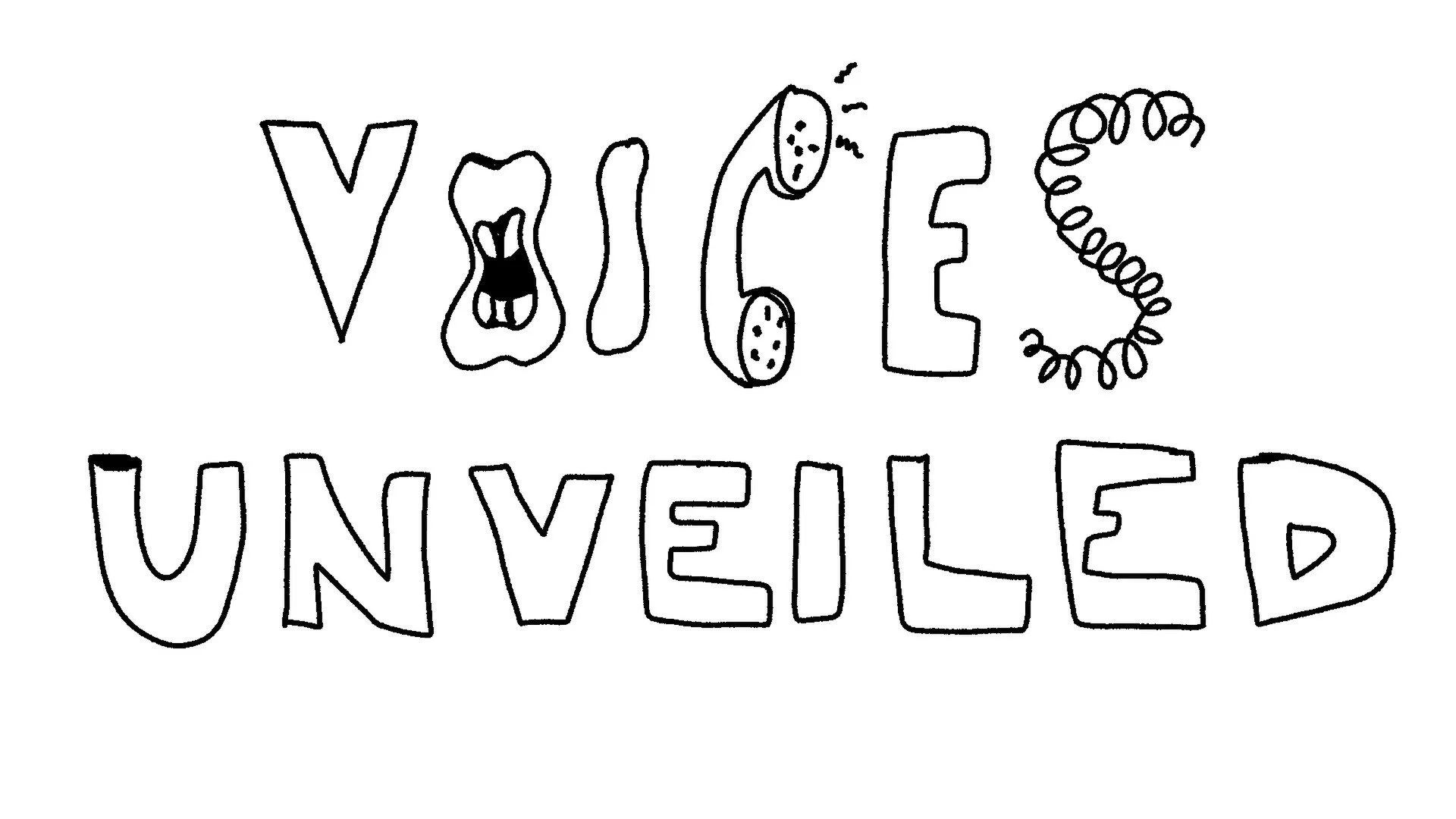
Cooper will be screening Story Drive: Voices Unveiled, an anthology of five voicemails left on the hotline, at the Three Rivers Film Festival. Cooper animated the “Juniper Only Dates Guys with Long Hair” and the “All I Did Was Kiss My Roommate and Break Up with My Boyfriend (A Few Days Later)” segments. “This Country” was animated by Kate Nikles, Camilo Gonzalez edited “Portal,” and Alex Bugg animated “Create Your Own Story.” Together with Cooper, Annalise Breaux co-directed the short. While all the stories and animation styles are unique, there’s a common surrealist thread that connects them. It’s a thread Cooper returns to time and again.
Courtesy of Marcelese Cooper
“Growing up, I saw a lot of films in traditional theater spaces. Being that Gen Z, millennial-cusp child, I'm playing on CD-ROMs and going to the movies, but then, all of a sudden, YouTube and all these virtual spaces pop up.”
“Combine that with the formalized academic space, where I'm being exposed to people who are maybe not filmmakers by trade. They're painters, sculptors, performance artists, and your David Lynches of the world. It's just all so damn queer. There's an inherent queerness to it.”
“I'm drawn to films that embrace the concept of the surreal, this idea of what I'm experiencing. Maybe it's not the norm, but it is the reality of my situation, or it's the reality of my body or my narrative. Queerness isn't a monolith, but we all go through a lot of the same stuff. There are some greatest hits.”
There’s a generalization that people of Cooper’s age don’t like making phone calls. It’s an often-joked-about stereotype that millennials are terrified at the prospect of picking up the phone. Perhaps it comes from existing in the transition between landlines, AIM, and cell phones. In working on a project wholly rooted in the action of a phone call, where does Cooper stand when it comes to dialing a number?
Courtesy of Marcelese Cooper
“It definitely changed my perspective on the potential of voicemail. I FaceTime my folks every week or so and I'll call my partner, but I'm the lurker online. I'll message people, I'll text, and I can do a phone call if I need to. My partner hates that I’m a speech-to-text person and that if I have to call for an appointment, I'll do it in front of her on speaker. I suddenly age 30 years when I do this.”
“I think there's something special about voicemails. I think it's partially because I can tell that half the time people are calling, they know I'm not going to pick up. It almost turns into a confessional, whether or not there are any heavy emotions to what they're saying or if they're kind of joking. It's not often that you walk up to someone you know or even barely know and monologue at them.”
“I feel like most people don't engage in oratory storytelling that often. A voicemail can be that. And I think voice memos have filled that space in the current era, but a voice memo is also expecting a response. I just love the idea that like, no, this is a library. The response will be the project and maybe you come across that, but there’s something so intimate about talking without the expectation that you will be judged.”
Queer history is often written in the margins and rarely told by those who lived it. Instead, queer experiences are filtered through a heteronormative lens that loses the honesty and truth of life as a queer person throughout time. With Voices Unveiled and the larger Story Drive project, Cooper is allowing people to tell their stories in their own words and have that be accessible to those who seek it out. There’s power in knowledge and freedom in expressing one’s genuine self.
Courtesy of Marcelese Cooper
“Who gets to dictate what tools you have and what narratives are interesting? I think the interesting part is the making. Sometimes you hear people say there are only ten stories and we're telling the same ones over and over. I mean, yes, something happened to me and maybe something similar happened to Hamlet, but I care about the real person it also happened to. It's more exciting to consider that there are people who have very interesting lives, and if they had the space, the capacity, the belief in self to draw, make a comic, write it down, keep a diary, animate something, we could learn from them.”
“A lot of my work is focused around community engagement. I think this is a series that asks, what is your life and how do you feel about it? It’s a moment of reflection, which I think is so worthwhile. Doing that through art, or at least giving people access to the tools, is important. There's an organization that I did some work with in Pittsburgh, Dreams of Hope, that’s a queer youth arts organization. I was in post-production for Voices while I was there. Being there, face to face, instead of remote, just doubled down on the idea for me that queer stories also exist in the mundane.”
“I love Moonlight, but it doesn't always have to be on the Moonlight scale. I want to see the two-minute melodramatic epic of trying to see Charli XCX, and it was the worst night of my life. The things that have no stakes, but they're important to people.”
Cooper is not a native Pittsburgher, but came here by way of California, Missouri, and Texas. What they immediately noticed about the city was that there was a sense of pride they didn’t see elsewhere.
Courtesy of Marcelese Cooper
“I've never lived anywhere that has this many things in terms of arts and culture combined with history. California has history, but it's just like, in 1845, this is where the prospectors were. I love the Black Panthers and a lot of the different civil rights history that's there, but Pittsburgh is just steeped in everything. From cryptozoology to industry to punk music, there's something about Pittsburgh that feels like all the stuff I cared about as a teen.”
With their upcoming screening at the Three Rivers Film Festival, Cooper is excited at the prospect of meeting people with a shared interest in film and storytelling. Another pro of Pittsburgh, according to Cooper, is how the city is big, but also small enough that they could run into someone from the screening while walking through their neighborhood. It’s an intimacy that’s hard to find in other cities.
“Any time you end a project, it's not finished. You just stopped. Any time you get to screen work at a festival, it's a miracle. Anyone who sat down is an angel, because whether they loved it or hated it, they cared enough to stay seated. There's an intimacy in it that’s beautiful to me. My hope is that I can do more work like this. I want to be able to connect with people in the city, the region, to do more of this work.”
Follow me on BlueSky, Instagram, Letterboxd, TikTok, YouTube, & Facebook. Check out Movies with My Dad, a podcast recorded on the car ride home from the movies.
Support your local film critic!
~
Support your local film critic! ~
Beyond the Cinerama Dome is run by one perpetually tired film critic
and her anxious emotional support chihuahua named Frankie.
Your kind donation means Frankie doesn’t need to get a job…yet.