
Will Simmons is not a Pittsburgh native. He grew up in a small town in western Virginia, and when he first moved here thirty years ago, Pittsburgh felt like a big city. In 2015, Simmons began Pittsburgh Orbit, a blog that describes itself as having a focus on the “deeper dive and the day-to-day.” Simmons explains that he wanted to visit every single place in the city and some of the surrounding areas. It was this blog, which ran for ten years, that ultimately prepared him to make Yoiaanisqatsi: A Pittsburgh Tone Poem, which is playing as part of the 2026 Three Rivers Film Festival.
“I won't claim that I've been to every single place in town, but it’s close. I had a bank of locations when I started making the movie in earnest. I immediately came up with this list of places and events that I wanted to shoot. Making the movie was a little bit effortless because of all that background work that had happened with Pittsburgh Orbit.”
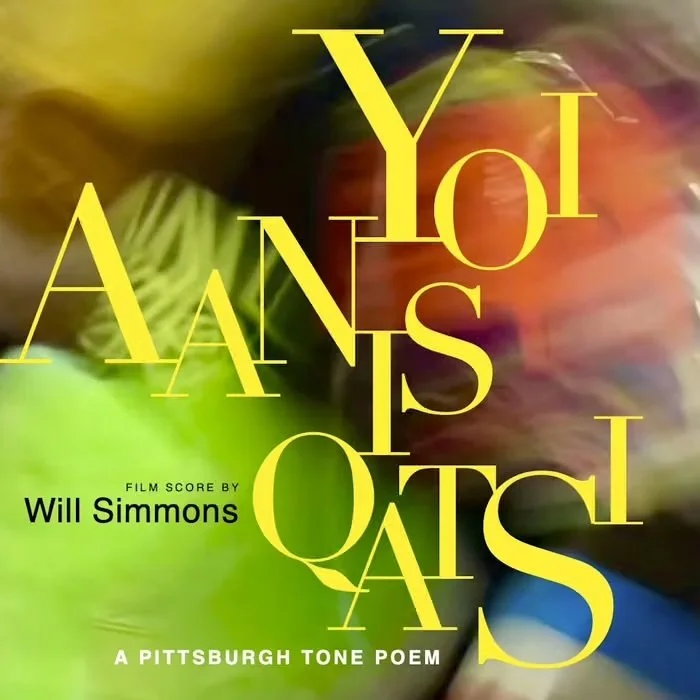
The title of Yoiaanisqatsi comes as an homage to the 1982 experimental art film, Koyaanisqatsi by Godfrey Reggio. That original title is a Hopi word that means “life out of balance.” The initial inspiration of Koyaanisqatsi was to be a non-narrative, filmic essay about American life that combined time-lapse, stock, and slow-motion footage. Simmons always saw Yoiaanisqatsi as an homage rather than an exact copy. While Koyaanisqatsi was filmed in many cities across the United States, Yoiaanisqatsi is all about Pittsburgh. Like its source of inspiration, there’s no overarching storyline, simply a rumination on the goings-on in this vibrant, busy city of ours. It’s a love letter to a place that Simmons has fallen in love with.
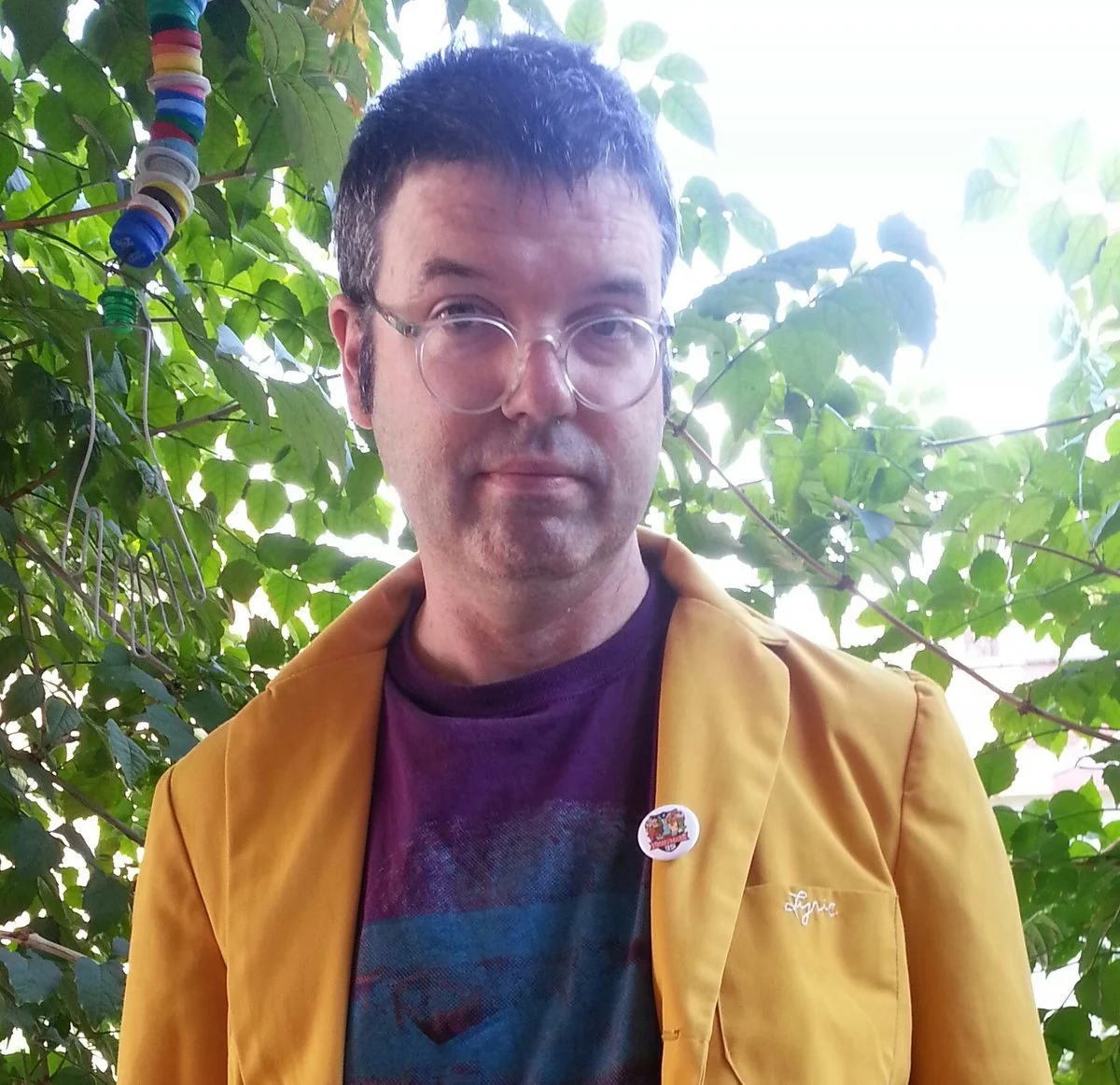
Will Simmons, courtesy of Will Simmons
Yoiaanisqatsi is a play on the catchphrase from Pittsburgh Steelers radio color commentator Myron Cope. “Yoi” was an expression of joy, anger, or whatever mood the Steelers got him feeling that week.
“It's this funny thing, because people outside of Pittsburgh don't know ‘yoi.’ In fact, younger people in Pittsburgh don't remember Myron Cope. Older people, though, might know ‘yoi’ and the original movie I’m paying homage to.”
Simmons doesn’t have an official count of how many locations are featured in the film, but it feels staggering from a viewer’s perspective. He shows some of the greatest hits of the city’s views, but then digs deeper into what all the differing neighborhoods have to offer. Events like Picklesburgh, Anthrocon, and the Vintage Grand Prix are featured, as well as famous buildings like the Cathedral of Learning, Phipps Conservatory, and plenty more. It’s a meditative reflection of the many faces of Pittsburgh. Some of Simmons’ ideas didn’t make the final cut of the film.
“I wanted to film the cheese counter at Penn Mac. I went down there several times on a Saturday morning with a crowd, but it felt too intrusive. I couldn't get the right perspective. I’ve also been involved with Art All Night for a long time as a volunteer, so I shot that, but I just didn’t get anything good. To me, though, Art All Night is a super-Pittsburgh thing.”
Yoiaanisqatsi features many sequences of time-lapse footage. Some of these sections are of clouds moving in the reflection of buildings like PPG Place and the fountain at Point State Park. In making the film, Simmons doesn’t think any of the clips he shot were longer than ten minutes. He notes that time-lapse videos allow you to see how much movement there is, even on days where it seems like the clouds don’t move at all.
One of the time lapses Simmons knew he wanted to capture was that of traffic flying by. It was something that made a lasting impression in Koyaanisqatsi. Pittsburgh drivers are their own special brand of motor vehicle operators, but Simmons’ work on Yoiaanisqatsi sure makes them look beautiful.
“I had a friend who was involved with the movie, Paul Schifino, who’s a graphic designer. He’d mentioned going out with a photographer one night to shoot, and he was bummed out because it was a rainy night or something. The photographer said, no, that's exactly what you want because the streets all gleam when it rains.”
“There's one scene where I had to cross Bigelow Boulevard on a snowy night. It was fairly safe because there wasn't a lot of traffic. I parked at the off ramp that never happened from the Hill District, ran across to the median, jumped over the median, and then ran across to the other side because there's no other way to get there on foot. It was snowy that night, so the whole thing was wet and icy.”
Courtesy of Will Simmons
If you’re imagining Simmons running across Bigelow Boulevard with a bulky camera and tripod set-up, you’re mistaken. Yoiaanisqatsi was shot on his iPhone. Having a background in photo editing allowed Simmons to do some light color-grading after the fact, but he attests that much of the raw footage wasn’t messed with. It’s a testament to the powerful cameras sitting in all of our pockets, as well as to Simmons’ eye for composition.
In addition to filming and editing, Simmons also scored Yoiaanisqatsi. He points to this part of the project as fairly natural since he was a musician first. Each time he finished a section of the film, he would work on the music that would accompany it. Simmons explains that being responsible for both the music and the editing allowed him to have a greater flexibility in terms of both creative aspects of the film.
“If I'd been working with a composer and then had to say, you know what, we need ten more seconds of this cue…that would have driven somebody bananas. For me, it was really easy.”
“I made a real conscious decision that I didn't want to copy Koyaanisqatsi’s score, which was all done by Philip Glass. I just wanted to do something I thought would illustrate each scene. In some cases, like the rowing sequence, I did three different versions. Some of it was time-based, others were mood-based.”
There are also moments in Yoiaanisqatsi that are silent, a personal favorite being the Vintage Grand Prix sequence. Simmons explains that he could have easily written music that would go along with the imagery of clouds on the hoods of these pristine old cars, but he much preferred the friction caused by the silence and the roar of the engine. It makes for a wonderfully contrasting sequence when compared to the relaxing moments of rowers from earlier in the film.
In film, Pittsburgh has acted as a stand-in for cities all around the world, but rarely does it get to shine as itself on the silver screen. With Simmons’ Yoiaanisqatsi, the city has an opportunity to boldly be itself and be celebrated for its uniqueness.
“My wife and I both have past experiences of being somewhere else, like New York City at a party. You'd tell people you lived in Pittsburgh and there was this visible sort of reaction that was like, I'm sorry, you live in a sewer.”
“I don't feel like that same reaction is out there anymore. I also think America has woken up to the fact that, at this point in time, mid-sized cities offer real advantages. Fifty years ago, if you wanted to find creative people and make a movie, you had to go to one of a handful of metro areas where all the weirdos were. Now, America is not like that. Every mid-sized city has an art scene and offers these opportunities.”
Follow me on BlueSky, Instagram, Letterboxd, TikTok, YouTube, & Facebook. Check out Movies with My Dad, a podcast recorded on the car ride home from the movies.
Support your local film critic!
~
Support your local film critic! ~
Beyond the Cinerama Dome is run by one perpetually tired film critic
and her anxious emotional support chihuahua named Frankie.
Your kind donation means Frankie doesn’t need to get a job…yet.