
“Me and Earl and the Dying Girl” and Location Manager David “Wino” Weinstein
Last time we spoke with David “Wino” Weinstein, we got a glimpse into how he became the go-to location scout and manager in the Pittsburgh area. The question today is what happens if Weinstein knocks on your door?
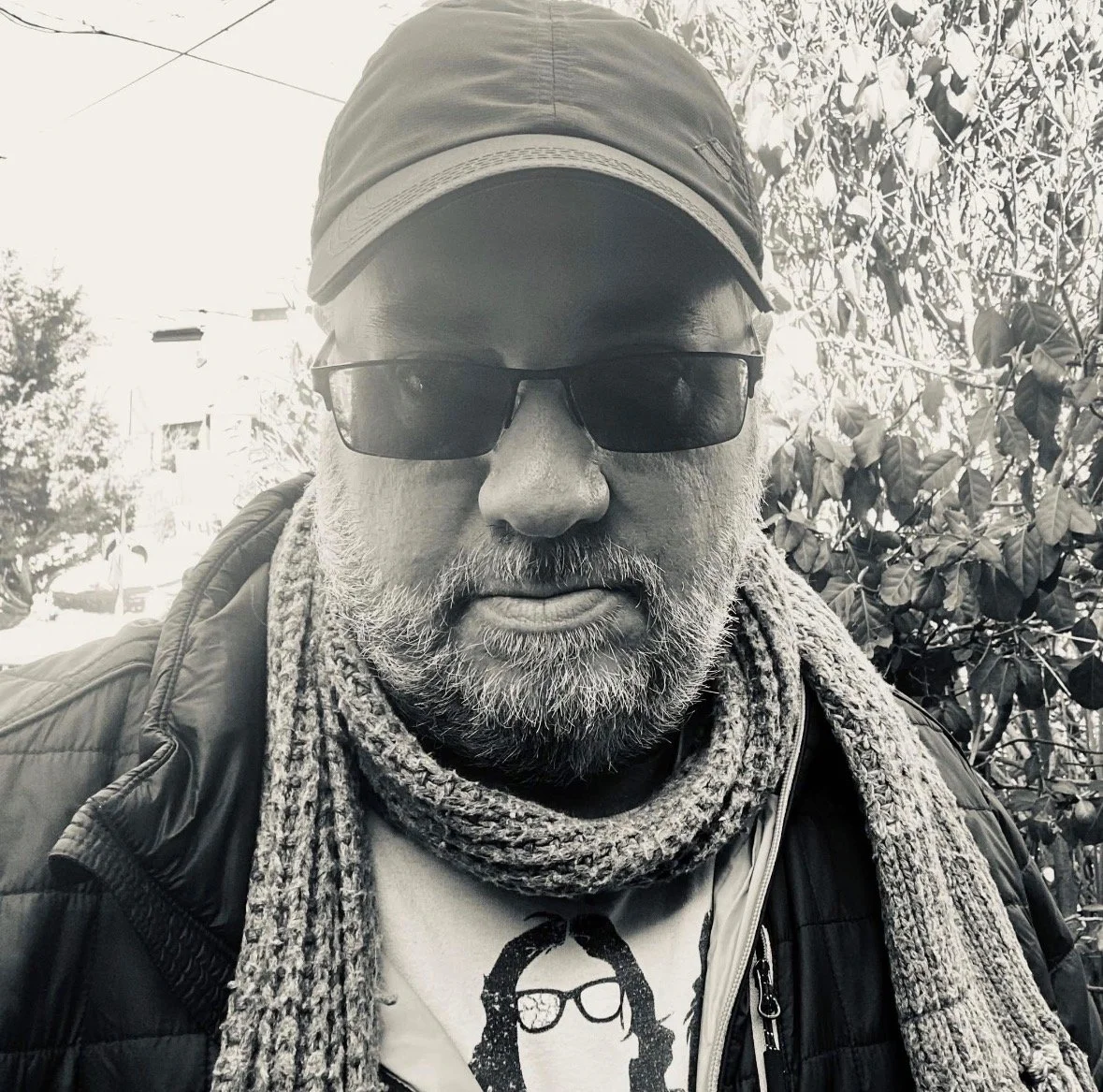
Courtesy of David “Wino” Weinstein
As a location scout, it’s Dave’s job to scour the city to find all the distinct architectural and location needs of a production. Think about the last movie or television show you watched. For every real location you saw on-screen, someone like Weinstein collected pictures, information, and addresses for four or five options. Sometimes the director will ask for a dozen potential spots, and some locations are easier to find than others.
“If it’s something commercial, like when I worked on Kingpin, there are only so many bowling alleys around. You go to all the bowling alleys and say, here are your options. If it's a home, it's a little tougher.”
“You may ride through a neighborhood with the production designer and they'll say, well, these houses are nice, can we get into any of these? Then you do your best to knock on doors. Now that I've been doing it for so long, I know a lot of people and I use those people,” laughs Weinstein. “The person who cuts my hair or my dentist or people I play tennis with…I ask them, do you know anybody who has a house that looks like this?”
“I'll use realtor friends as well to find a place that's available for sale. That way, you don't have to make the family move out for a week or however long. When we're using somebody's house, it always makes me laugh because you'll have the director and production designer tell you, this is perfect, I love it. Then they go, can we paint? Can we change this? We'd like to move all the furniture and put our own. It's quite a process to get it the way they want it sometimes.”
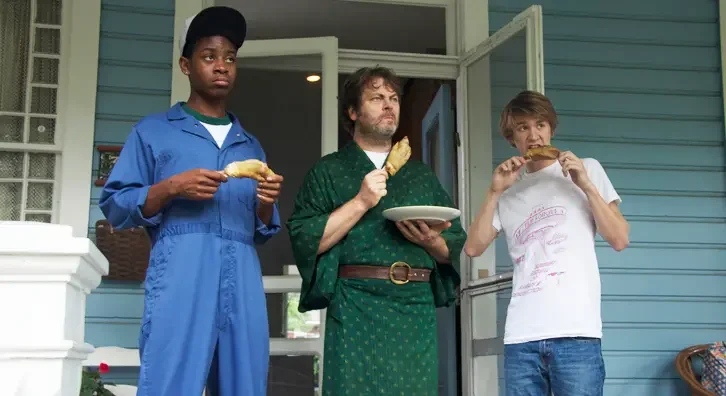
Me and Earl and the Dying Girl is a 2012 novel by Jesse Andrews, a fellow Pittsburgh native who has recently had writing credits on two Pixar films. Three years after the publication of the book, a movie of the same name, directed by Alfonso Gomez-Rejon from a script by Andrews, premiered at the Sundance Film Festival.
The story follows Greg (Thomas Mann), a senior at Schenley High School. He and his best friend, Earl (RJ Cyler), make parody movies at Greg’s home in the Point Breeze neighborhood of the city. When Greg’s parents push him toward a friendship with his old childhood friend Rachel (House of the Dragon’s Olivia Cooke), who was recently diagnosed with leukemia, the three form a strange friendship.
Weinstein was location manager for the film, but he didn’t have to go through his location rolodex to find Greg’s house. Andrews’ own parents moved out of their Point Breeze home so the production could move in.
“First you have to start with permitting and permission from the city. Then you have to figure out parking so you don't completely screw up the neighborhood flow. Oftentimes, you'll have to find a larger church or something like that for eating. If you have 150 people, you've got to have a place to put them, to change them into their wardrobe, then run them through hair and makeup. Which means then you need ten hair and makeup stations. And tables and chairs for everyone to eat.”
“Everyone in the neighborhood has to be informed, and that's the location manager's responsibility. You're also responsible for any security, any police. If you want to close the street while you're filming, you've got to provide police officers for that.”
“You're managing the crews who are coming in to paint or move furniture, or the set dressers. The art director’s coming in and telling people to remove this from that window and here's some curtains and all of that. You have to manage all those things and then restore it all afterward as well. You have to have someone there the whole time it's happening, while you're also prepping the next location and cleaning up from the last location you were at.”
When it’s described that way, it sounds like a miracle that any film is ever made, let alone some of the larger-scale productions that require upward of fifty locations. Me and Earl and the Dying Girl is a hidden gem of Pittsburgh-shot films. Not only does it take the viewer on an emotional narrative experience, but the different neighborhoods of Pittsburgh are on beautiful display. It’s clear that it’s a film crafted by someone who knows the nooks and crannies of the city. For Weinstein, someone else who appreciates the hidden gems of the city, a project like Me and Earl and the Dying Girl means something more.
Fox Searchlight Pictures
“I like any project that's set here. It's not often that happens, you know? They don't necessarily want it to be Pittsburgh. You get a lot of shows that are supposed to be in Pittsburgh, but they're not shot here. They come in and they get their exteriors, like The Pitt. They'll do a few exterior shots or something on the roof or things they can't get in Los Angeles.”
“I drive my friends around when they come to visit, and they want to know, where did this take place and where does that take place. Let's say you turn down Seventh Avenue going toward Liberty Avenue. The way the buildings are designed there, it looks like Chicago from the ’60s. It's almost like everywhere I go is a former location for something. It makes me proud to know this city can work for those different projects.”
“You have to really know this place and understand its locations as well, so that when someone describes something to you, you go, I know I've seen that, where can I drive around and find it? It could be something that seems simple, but it's not.”
“I did a commercial where they wanted a woman to be hanging off the lowest branch of a tree, like she was a cat. I had to drive around to different neighborhoods looking at people's trees. In that case, if you find a tree that looks good, then you go knock on the door and explain your crazy story and see if they like it.”
Follow me on BlueSky, Instagram, Letterboxd, TikTok, YouTube, & Facebook. Check out Movies with My Dad, a podcast recorded on the car ride home from the movies.
Support your local film critic!
~
Support your local film critic! ~
Beyond the Cinerama Dome is run by one perpetually tired film critic
and her anxious emotional support chihuahua named Frankie.
Your kind donation means Frankie doesn’t need to get a job…yet.