

Cr. Carla Oset/Netflix © 2026.
Javier Calvo and Javier Ambrossi’s queer epic, La bola negra, premiered at the 2026 Cannes Film Festival before winning the People’s Choice Award at the Toronto International Film Festival. That award is a harbinger of things to come in the upcoming award season, and indicates a probable nomination for the Academy Award for Best Picture. La bola negra is a staggering piece of filmmaking prowess, one as grand in its story as it is in its imagery. While nominations for the Oscars are still a ways away, it feels safe to say that La bola negra will be a title that will be talked about throughout the awards season.
La bola negra weaves together the stories of three men in three different years. In 1932, Carlos (Milo Quifes) seeks membership to the prestigious Granada casino. Not solely a casino in the modern sense, it’s a gambling hall and social club that Carlos’ families belong to. His membership is denied because of rumors that Carlos is gay. In 1937, Sebastián (Guitarricadelafuente) is one of the sole survivors of an attack on his home village by Italian forces. He’s forced to join the Nationalist faction, where he’s assigned to keep watch over Rafael Rodríguez Rapún (Miguel Bernardeau), a Republican prisoner of war. Finally, in 2017, Alberto López Azcuna (Carlos González) has just learned that the grandfather he never met has left him something in his will. It’s this mystery around the will that reveals the thread that connects Carlos, Sebastián, and Alberto through time, space, and desire.
While not a traditional historical epic, La bola negra has some real-life truth. The film’s title comes from the name of an unfinished play by Federico García Lorca, who was murdered during the Spanish Civil War. The gist of the play was shared in a letter by Lorca to fellow Spanish playwright Cipriano Rivas Cherif, but Lorca was never able to finish the story. With La bola negra, Calvo and Ambrossi have crafted a reality where Lorca is given a chance to finish the story he never got to tell.
The root of La bola negra is desire. All these men, in their various periods of time, find themselves faced with a desire they feel they have to hide from the world. For Carlos, to be openly queer would be to be more ostracized than he already is. For Sebastián, it would mean death. For Alberto, it’s familial shame. All three men choose to deny their truest sense of self and discover that it causes them more pain than they would have had if they’d been open about their desires.
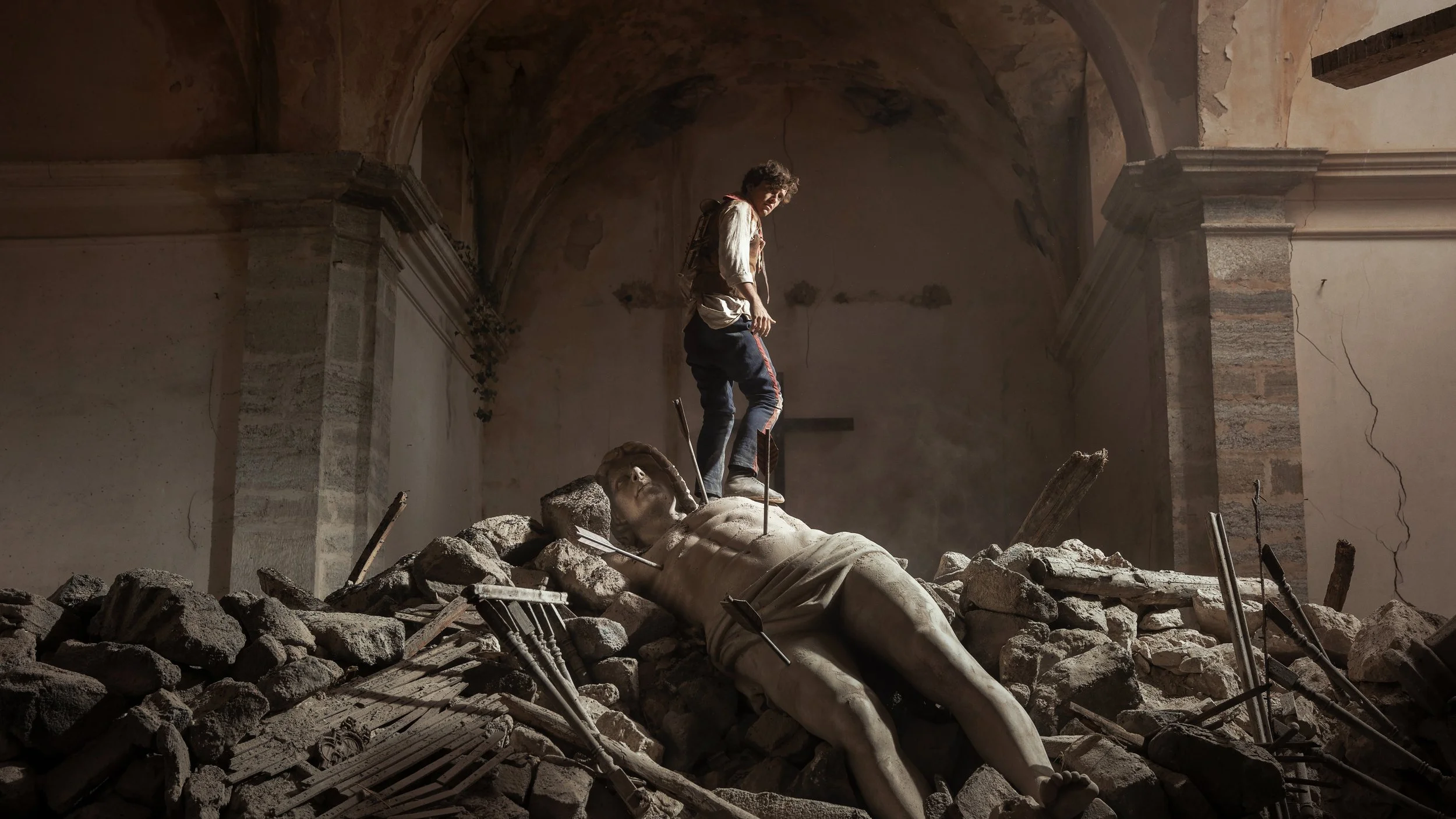
Cr. Carla Oset/Netflix © 2026.
“I feel like I’ve never lived because the hours never belonged to me.” La bola negra is about life and all its aching pain. One of the great tragedies of history is the stories that never get to be told in the future. The stories of queer people have been hidden in the cracks and crevices of time, seen only by those who cared to look. Those who took the time to dust them off and care for the people history ignored. La bola negra is both devastating and triumphant. The weight of the loss of the past cannot fully be ignored, but the hope of the future is a lighthouse in a storm. The life Alberto has could not have been conceived of by Sebastián, and that alone is a magnificent twist of fate, time, and love.
La bola negra’s grandeur is spectacular and achingly lonely. These men feel like monuments to something bigger than themselves, pillars of queer history whose stories never had the chance to be properly told. Stories unfolding now in the spotlight and in the shadows, life being worth living because it’s honest. In all three stories of La bola negra, there is a pressure on each of the men to conform to societal forces around them. The film dances effortlessly among these men, showing the ways society has grown and the weights we have yet to shake off. La bola negra is a feat of filmmaking that’s an open wound of love, pain, and history’s ever-reaching roots.

Follow me on BlueSky, Instagram, Letterboxd, TikTok, YouTube, & Facebook. Check out Movies with My Dad, a podcast recorded on the car ride home from the movies.
support your local film critic!
~
support your local film critic! ~
Beyond the Cinerama Dome is run by one perpetually tired film critic
and her anxious emotional support chihuahua named Frankie.
Your kind donation means Frankie doesn’t need to get a job…yet.