
“Mother Mary” Thrums with Potential
It’s no secret that fame is a prison. To make an existence performing is both a gift and a curse. A popstar can travel the world and sing to adoring fans, but has to return to the cold emptiness of a hotel room in a city they never really get to experience. Hollywood has been exploring this since life almost since the invention of film as a medium. While David Lowery’s Mother Mary captures the isolating nature of fame, the film also looks at another, less represented relationship in media: the one of the artist and their collaborator.
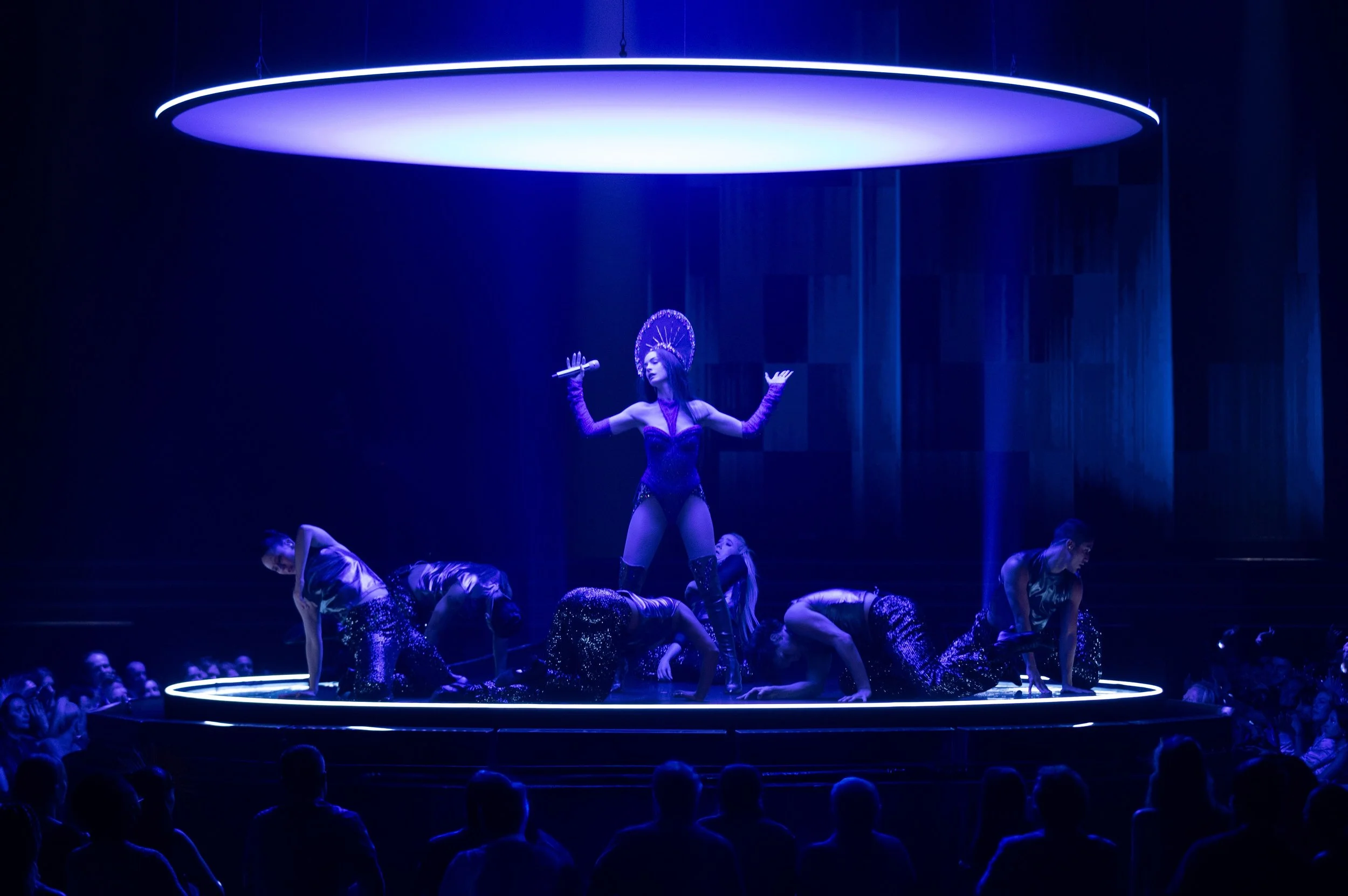
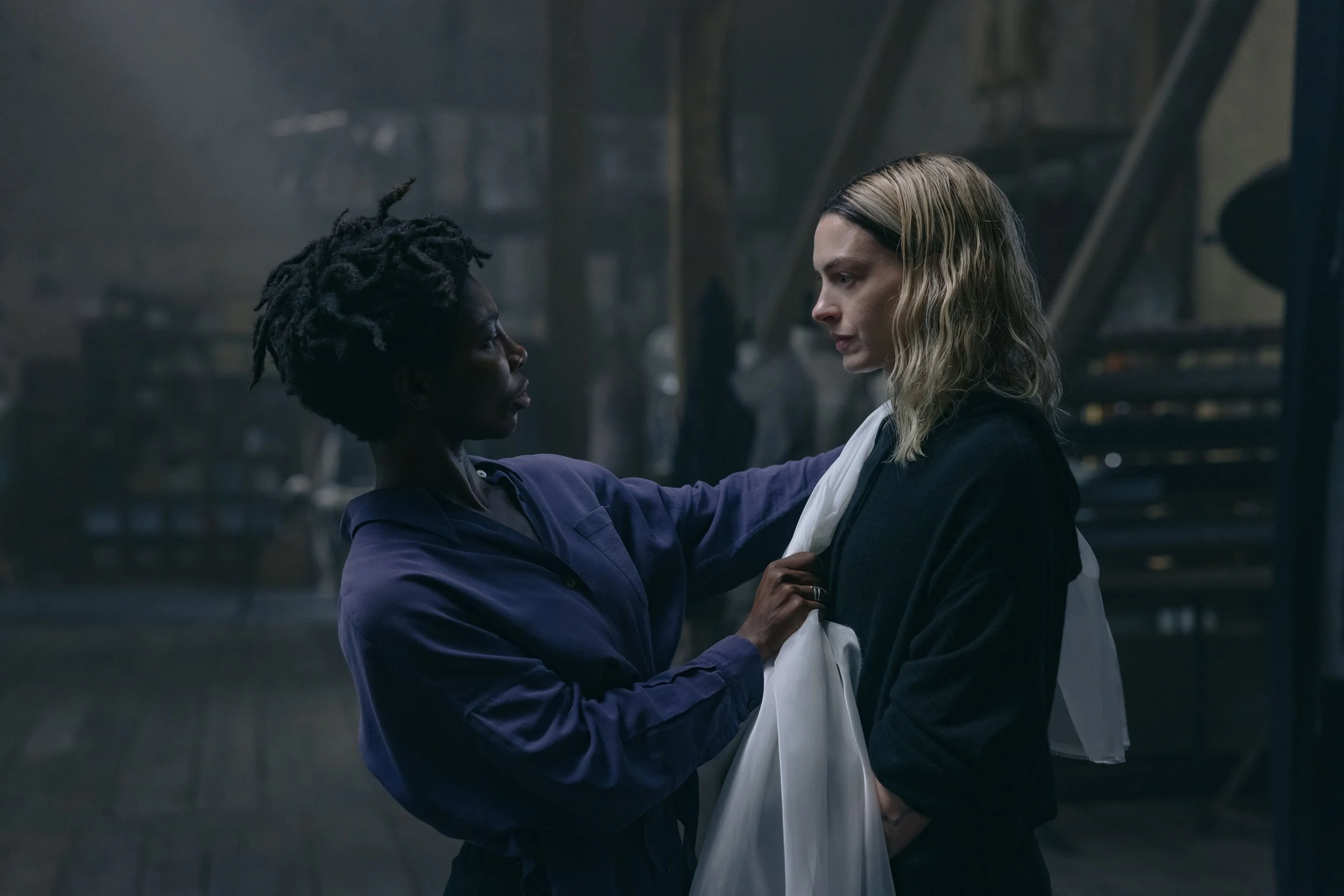
Pop singer Mother Mary (Anne Hathaway) has disappeared from the spotlight after a scary accident at one of her concerts. Slowly but surely she’s been planning her return, although there does seem to be some residual nervousness about her comeback. These feelings come to a head at a dress fitting, and Mary flees to the English countryside. She shows up on the doorstep of old friend and now-famous fashion designer, Sam Anselm (Michaela Coel). Mary wants Sam to make a dress, just like the old days, for Mary’s first performance since the accident. As the two talk, years of unspoken anger, love, and frustration come to light.
courtesy of A24
The first half of Mother Mary is special. It’s Sam and Mary in a single setting, going tête-à-tête with barbs of wit and the decades of history between them forcing their way to the surface for the first time in years. One of the most interesting set-ups for a relationship dynamic to be explored in a film is this, where it’s painful, even for the viewer, to watch two people dance around each other and everything they’ve avoided speaking about. Surely they’ve talked about their fallout with other people in their lives, but never with one another. People with this much connective tissue are so aware of what makes the other tick, yet beneath the pent-up anger and vitriol is the delicate fleshiness of love. Even though they spent years blocking the other from their lives, a part of them cannot let the other go. That is intoxicatingly powerful, both for the characters in the film and for the audience, who gets to see this play out like an emotional boxing match.
With all this building tension, the fear begins to creep in…how will Lowery land this plane? What the beginning of his script offers is a layered look at fame, friendship, and the artist/muse relationship. Mary admits that she didn’t always like the dresses Sam made, but she loved the way Sam saw her. No one since has been able to see Mary the way Sam has. What does it do to a person, especially one as lost and isolated as Mary, when the connection to reality is severed in this way? Lowery’s response to that is more of a non-answer. He takes the trappings of prestige horror, where a ghost can be a metaphor for oh-so-many things, and makes that the film’s second act.
It’s a jarring shift when the first half of the film is so dialogue-heavy, so rooted in the deeply haunting performances of Coel and Hathaway. There’s no question that the women handle the second-half change well, but they shouldn’t have to. The audience and the characters deserve more of an ending to this friendship than a ghost that’s a stand-in for conflict resolution. Mother Mary twists itself into a horror movie while losing the actual terror that was already present. It’s frightening to be both known and unknown. No one really knows Mary. To her fans, she’s more of an image or an icon than a person. That in and of itself is like being on the edge of a cliff. On the other side of the coin, it’s just as dangerous to stand in front of someone who knows you. Who can see a lie from a mile away. That’s the dynamic between them.
courtesy of A24
Sam also struggles with perception. Everything she’s built now is on the rubble of her breakthrough as the designer for Mother Mary. Yet she must also fight for her own voice to be heard outside of the creative endeavors of her path. Both of these women know they don’t need each other to succeed, but they’re afraid to admit they want one another in their lives somehow. Mother Mary does not need the curveball it throws. Lowery’s lack of confidence in the tension he built makes him rely on visionary tricks to get the intended effect. The concert sequences benefit from his ability to take things to an extreme, but everything about Mother Mary keeps coming back to these two women.
Strip away all the theatrics, all the ghost elements, and you have two women in a barn having a conversation. Mother Mary is proof that’s all you need to create something entrancing, to find the sort of magic that puts the viewer in the palm of the movie’s hand. It’s the high that film lovers go to the movies for, to be swept up in something small that feels so very grand. Mother Mary may lose itself in the spotlight, but you’ll be hard-pressed to find a film that delivers such a wallop in the form of Coel and Hathway.

Follow me on BlueSky, Instagram, Letterboxd, TikTok, YouTube, & Facebook. Check out Movies with My Dad, a podcast recorded on the car ride home from the movies and I Think You’ll Hate This, a podcast hosted by two friends who rarely agree.
support your local film critic!
~
support your local film critic! ~
Beyond the Cinerama Dome is run by one perpetually tired film critic
and her anxious emotional support chihuahua named Frankie.
Your kind donation means Frankie doesn’t need to get a job…yet.