
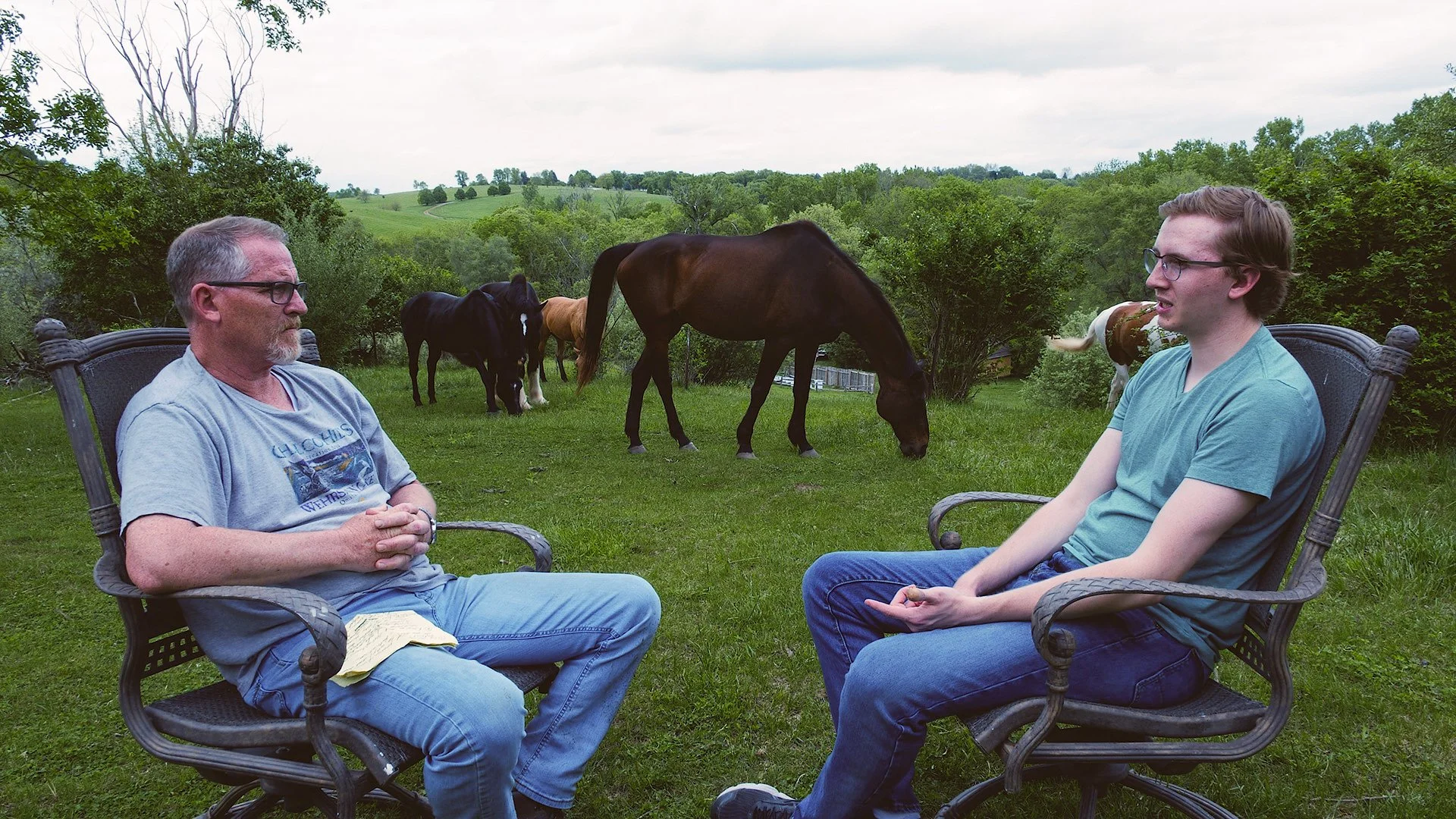
The rise of Donald Trump has splintered families and friends across the United States. Those who are staunch defenders of the man believe he’s the first politician who doesn’t play by the rules. The ones who are adamantly opposed to him can see him for who he is — a narcissist who is only using his position of power to further his own financial means. With the documentary My Omaha, director Nick Beaulieu undertakes a series of conversations that will sound familiar to anyone who has lost a loved one to the Fox News psychosis. Beaulieu uses his relationship with his father as a springboard to return to his hometown and take stock of the place where he grew up.
In an early narration, Beaulieu describes Omaha, Nebraska, as a “tale of two cities.” He explains that Omaha has a legacy of racism, segregation, and economic discrepancy. It’s also the birthplace of Malcom X and home to a modern racial justice movement that’s rapidly growing. Beaulieu wants, in part, to make the film to show the divide that is ever-growing between the predominantly White neighborhoods of West Omaha and the predominantly Black neighborhoods of North Omaha. He attends community meetings where he meets Leo Louis II, an activist fighting for the voice of North Omaha to be heard. All the while, as Beaulieu is returning to his hometown, he has conversations with his father, Randy, who identifies as a devout Trump supporter. The conversations are tense and loaded, becoming even weightier when Randy is diagnosed with stage-4 cancer.
Courtesy of “My Omaha”
My Omaha juggles a lot. It’s more than a White man recognizing the complicity of inaction. Of being only a few miles away and never engaging with people from North Omaha until now. As one of the Black attendees at a meeting says, “White folks sometimes have the privilege to do nothing.” It’s easy to stay in the bubble of privilege, a word that rubs Randy the wrong way. Even after attending one of the community meetings about Omaha’s racial divide, Randy insists he’s never had an ounce of privilege in his life. Beaulieu pushes back, but the audience can tell he’s holding back a little. After all, this is his father who is dying before his eyes. It’s a knowledge that hangs heavy over many conversations the two have with one another.
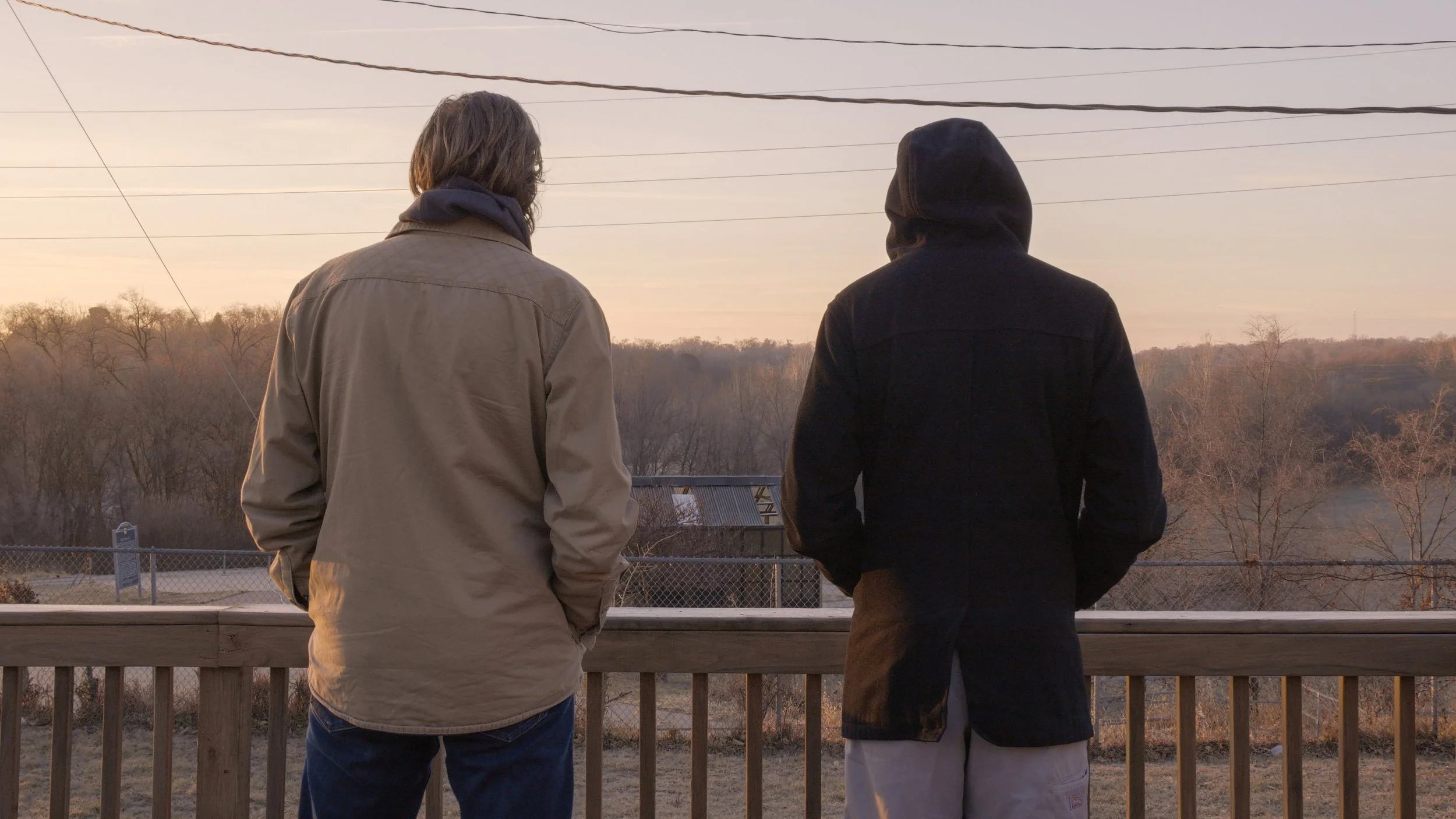
Much of the conflict between Beaulieu and his father lies in the fact that both men believe they know the truth. That whatever source they rely on, whether it be Trump’s news or the “mainstream media,” has the answers. That the other person has been transfixed by a propaganda machine, and that devastates them. They each, in their own mind, want to save the other from the prison they’ve been locked in. Beaulieu is upfront from the beginning that My Omaha is a movie in pursuit of the truth, but that guiding light feels more and more nebulous with every passing day. How do you capture it when everyone seems to have their own definition? Is this a concept that should even be able to be defined in a multitude of ways?
Courtesy of “My Omaha”
In making the film, Beaulieu comes across William C. Jersey’s 1966 documentary, A Time for Burning. The film follows the minister of an all-White Lutheran church in Omaha who encourages his congregation to reach out to their Black Lutheran neighbors in North Omaha. With sixty years in between, A Time for Burning and My Omaha cover the same divide through different lenses. When Beaulieu feels lost in the production of his film, he reaches out to Jersey, who gives him advice about Beaulieu’s obsession with truth. “You’re never going to find the truth,” Jersey tells Beaulieu. “What you will find is, in the process of pursuing truth, you become a better person.”
The other main subject of My Omaha, aside from Beaulieu and his father, is Louis II. He and Beaulieu form a friendship over the course of filming. Their first interviews together are more buttoned-up, with clearly defined roles as interviewer or interviewee, but as the film progresses, a fondness grows. Beaulieu asks Louis II how he sees the future changing, how they reckon with the state of the world. Louis says that it’s shared experiences like the ones they’ve had over the course of two years that are what will change the world. My Omaha has a sense of hope that was built from immersing one’s self in community, compassion, and learning from each another.

Follow me on BlueSky, Instagram, Letterboxd, TikTok, YouTube, & Facebook. Check out Movies with My Dad, a podcast recorded on the car ride home from the movies.
support your local film critic!
~
support your local film critic! ~
Beyond the Cinerama Dome is run by one perpetually tired film critic
and her anxious emotional support chihuahua named Frankie.
Your kind donation means Frankie doesn’t need to get a job…yet.