
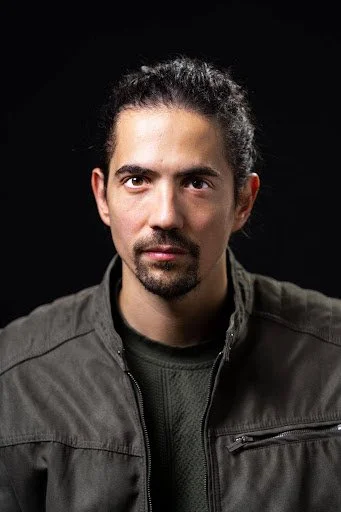
Courtesy of Francesco Le Metre
Judy Heumann is the real-life 1970s disabilities activist at the center of Siân Heder’s third feature film, Being Heumann. Played by Ruth Madeley, Judy fought for the first federal civil rights protections for people with disabilities in the United States. It was Judy’s efforts that would lead to the eventual creation and passing of the Americans with Disabilities Act in 1990. When it came to the score for Being Heumann, composer Francesco Le Metre took a punk rock approach to mirror the DIY, scrappy nature of Judy’s activism.
I read that you have two branches of music that you’ve really fallen in love with. One is the solo piano work, and the other is the electronic textures. How did those paths develop? How do you see them coming together to be your voice?
Francesco Le Metre: I started with piano when I was a little kid. First instrument I played. I did it for about eight years, then moved to drums and bass, and then I came back to piano and started writing music. I was very drawn to the sound of the piano and the string quartet, but because I also played bass, I was aware of electronics. At some point it became natural to me to merge both worlds.
I have a music background, playing all these instruments, writing, and arranging. I was very music driven, harmony and all that. Five years ago, I started to explore sounds with more attention. I started to be curious about how I record the piano sound that I like, paying more attention to sound, and also being more cautious about what synthesizers and effects I’m using.
I feel like in the modern classical world, it’s pretty common to fuse electronic elements and organic sounds, piano quartet or an orchestra. Same with film scoring. I feel like you have a lot of chances to do so.
As you said, you do your own solo music. What inspired you to go into film and TV? Have you also loved movies as long as you’ve loved music?
I was playing in bands as a kid. Jazz, fusion, funk, everything. The idea of writing music came naturally to me. The first thing I thought was, okay, I love films, I love music, why don’t I start with that?
One of my mentors, Dustin O’Halloran, is a pianist. He makes records and also makes films. Through him, I was like, oh, actually, it’s great to do films, but it’s also good to explore my own voice.
Making my own records started from the need to explore myself and my own voice, and not being influenced by the film that came around. It’s so vital for me to work on my music because it keeps me in touch with where I am in my life, what I want to say, and it’s also a reflection of what I want to write when I do a film. It informs what kind of films I want to work on. I think it goes both ways. I can’t imagine now separating the two things.
If you’re thinking about creating your own solo work versus creating a selection for a score, do you approach writing it differently or is it a similar sort of process?
It’s a different process, but the commonality between the two is that I want to bring my own aesthetic to both worlds. I find making a score for a film to be a very interesting process, because you have to serve the film. You have a story that tells you and informs you on the choices you make. It’s beautiful to grab that information and blend with your own voice.
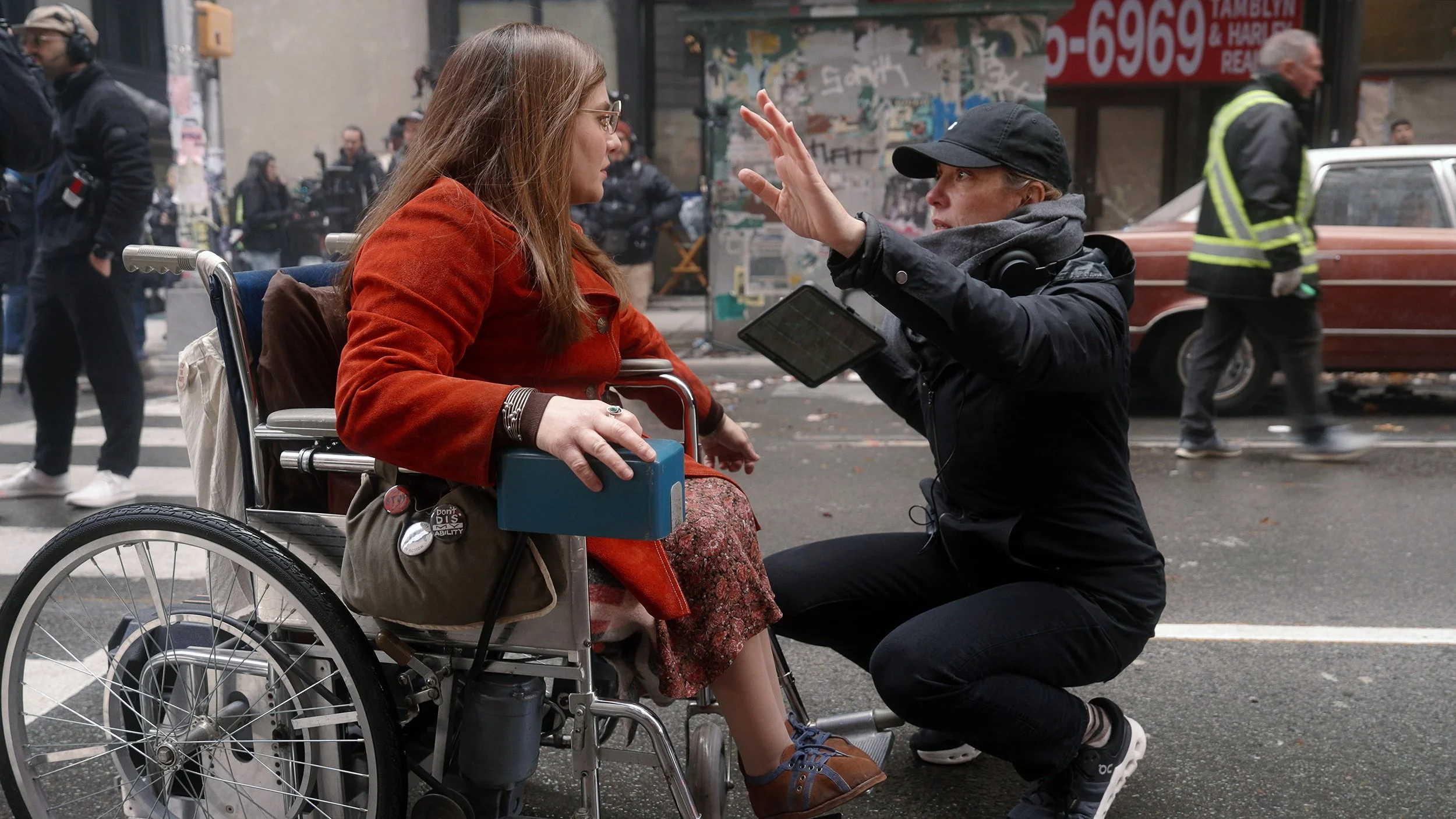
Courtesy of Apple TV
It’s way more stressful on the managing side of things because you usually have short deadlines. Record making is kind of like the other way around. Of course, the story is you and that becomes more intense on a personal level. You’re digging deep into yourself, but at the same time you don’t have a reference. You do not have a lot of back and forth. You don’t have a director giving you notes or an opinion about it. It becomes a little bit more dependent on yourself.
It’s just a different toll on yourself. Not that when you do films it doesn’t get personal, it does, but you are helped by somebody else. When you do a record, it’s just you.
Did you know anything about Judy Heumann’s story before you joined Being Heumann?
No, so it was a beautiful discovery. I didn’t know her story, and it was such a blessing in a way, to not know her story. That’s the beauty of making a film score. Sometimes you work on a project and you learn things you didn’t know about. I was very familiar with disability issues because I have a few disabled people in my family, but I didn’t know Judy’s story.
The film takes place in the ’70s. Was that a decade that you knew well in terms of music? How much of that true-to-the-era sound did you want to bring into your score?
I know a good amount, I would say, because I play drums and bass. There was a lot of rock music and synthesizers going on in the late ’70s, early ’80s. The sonics of the score were informed by the spirit of the film, which is also a reflection of the time.
I stuck to the spirit of progress. The fact that it was very DIY, they were organized, very improvisational. The punk rock spirit of the period. Those elements informed my choices behind using drums in their unconventional way, with broken cymbals and weird snare sounds. I used a plastic bucket to make some percussion. I used my hands, which gave it a sense of homemade-sounding percussive elements.
Instead of using an electric guitar, I used an acoustic guitar processed. I was back to the effects of the ’70s. We recorded the strings with a guitar pick to create a variant, unconventional sound.
When you are thinking of new ways to make that punk rock sensibility, how do you discover broken cymbals? How do you get the idea of the guitar pick on the violin? What’s that process like of throwing things at the wall to see what’s gonna work?
This kind of goes back to working on records as well. The way I approach a film is similar to when I do records. I had these ideas in my head. Unfortunately, or fortunately, it depends on the way you see it, you’re forced to work with players immediately in scoring. I had to go in with a close drummer friend of mine. He’s a great player, and is also very artistic, so he has a producer mindset. He started playing with these broken cymbals and then he tried a few other things, kind of following my directions. He figured out a way to break down the drum beats so they didn’t sound like prepared drum beats. Because everything is so improvisational as the protest starts at the beginning of the film, I wanted that to be sparse. As the film progresses, then eventually we have more cohesive drumbeats.
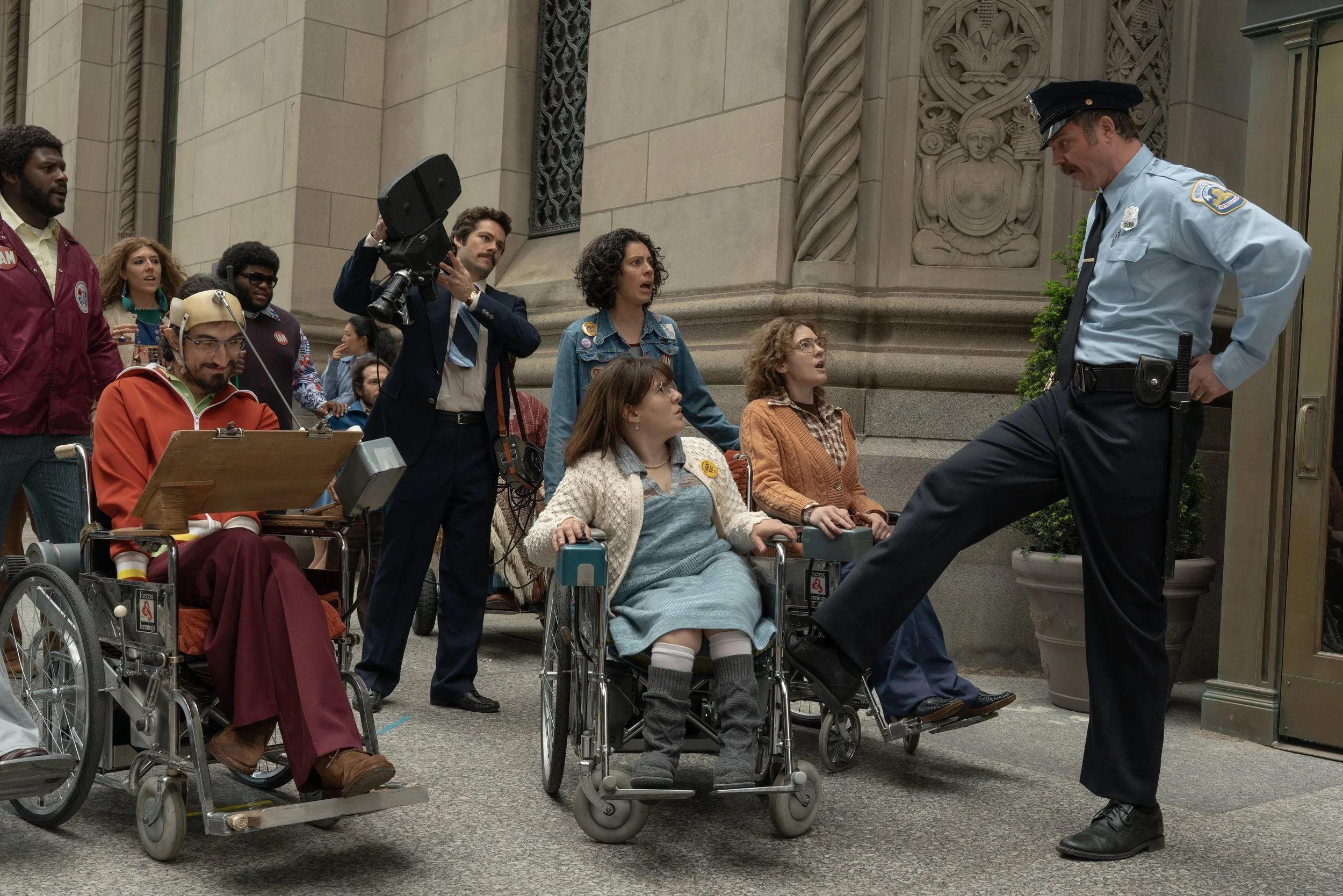
Courtesy of Apple TV
My sister and I grew up playing instruments. I quit, but she still plays and she loves percussion. I feel like it’s not that common anymore for scores to be percussion- or drum-heavy. Do you agree? Do you feel like there’s something missing when we rely on the electronic drum machines instead of that real percussion rhythm?
You do have a point. I believe when you think of film scores, you think of cinematic percussion. The use of a drum kit, it’s not something people do often. The challenge I faced with this film is that the score comes from an honest place. It’s very honest, it’s very intimate. Big cinematic percussion wasn’t part of the discussion for me personally.
On the other hand, I didn’t want to have a straight drum groove because drums played as a proper drummer would, to me, sound a little bit dedicated and expected. It was challenging to find the balance of using drums, which is not, as you said, as used anymore. Not in a jazzy way, not in a rock way, not in an epic way, but in a very deconstructed and unconventional way. That’s where Fabrizio, the drummer, was key to the process, because he really understood how to break those beats down in a way that didn’t sound like jazz, rock, or a bombastic, cinematic thing. That’s something I strongly believe we achieved and I’m proud of.
Judy’s theme is built around melodies that don’t resolve until the movie progresses forward. What does that mean for somebody who doesn’t know a lot of musical terms, but will sense that something is slightly off or hasn’t been resolved?
Internally, I think you have the feeling of things that keep on moving. The fact that the melodies don’t resolve gives you a sense of wanting more. In my mind, it was a sense of conveying this progress throughout the film and going back to the melodic writing. The fact that instead of having a straight and counter melody in the harmonic structure of the orchestra, it’s like the melody is three or four melodies interweaving into one another.
Just the fact that you have different motifs playing to one another conveys the sense of, oh, she wants to move forward. That was the conversation I had with Siân, the director, about Judy’s personality, about her drive. She was racing with her mind, but she couldn’t do it with her body, right? You had this contrast in these melodies; they’re talking to one another the whole time, until the end of the film.

Follow me on BlueSky, Instagram, Letterboxd, TikTok, YouTube, & Facebook. Check out Movies with My Dad, a podcast recorded on the car ride home from the movies.
Support Your Local Film Critic!
~
Support Your Local Film Critic! ~
Beyond the Cinerama Dome is run by one perpetually tired film critic
and her anxious emotional support chihuahua named Frankie.
Your kind donation means Frankie doesn’t need to get a job…yet.