
Cinematographer Shawn Peters’ path to helping reinvent the look of A Different World began in a place that not many other directors of photography have started in. Peters explains that he went to film school by accident after attending Morehouse College in Atlanta as an undergrad. It was Peters’ friend who was more interested in pursuing filmmaking, and Peters tagged along.
“I don’t come from a family where there’s one single artist. Now there are, but when I was growing up, there wasn’t a single artist who did it for work. My uncle had a little book of poetry, my aunt might have painted a little bit, but they had full-time jobs. I come from a very working-class African-American family from New York. Even people in my neighborhood were real working class.”
Peters thought he might find a job in media or sports as a newscaster of some kind, but he didn’t have the idea of working in film until college. His friend had made a short film about the Gullah culture of the Sea Islands near Savannah, Georgia, and was going to show it to the professors of the small film program at the University of South Carolina. What stuck out to Peters from the screening was one professor who said that “he didn’t think the film was universal.”
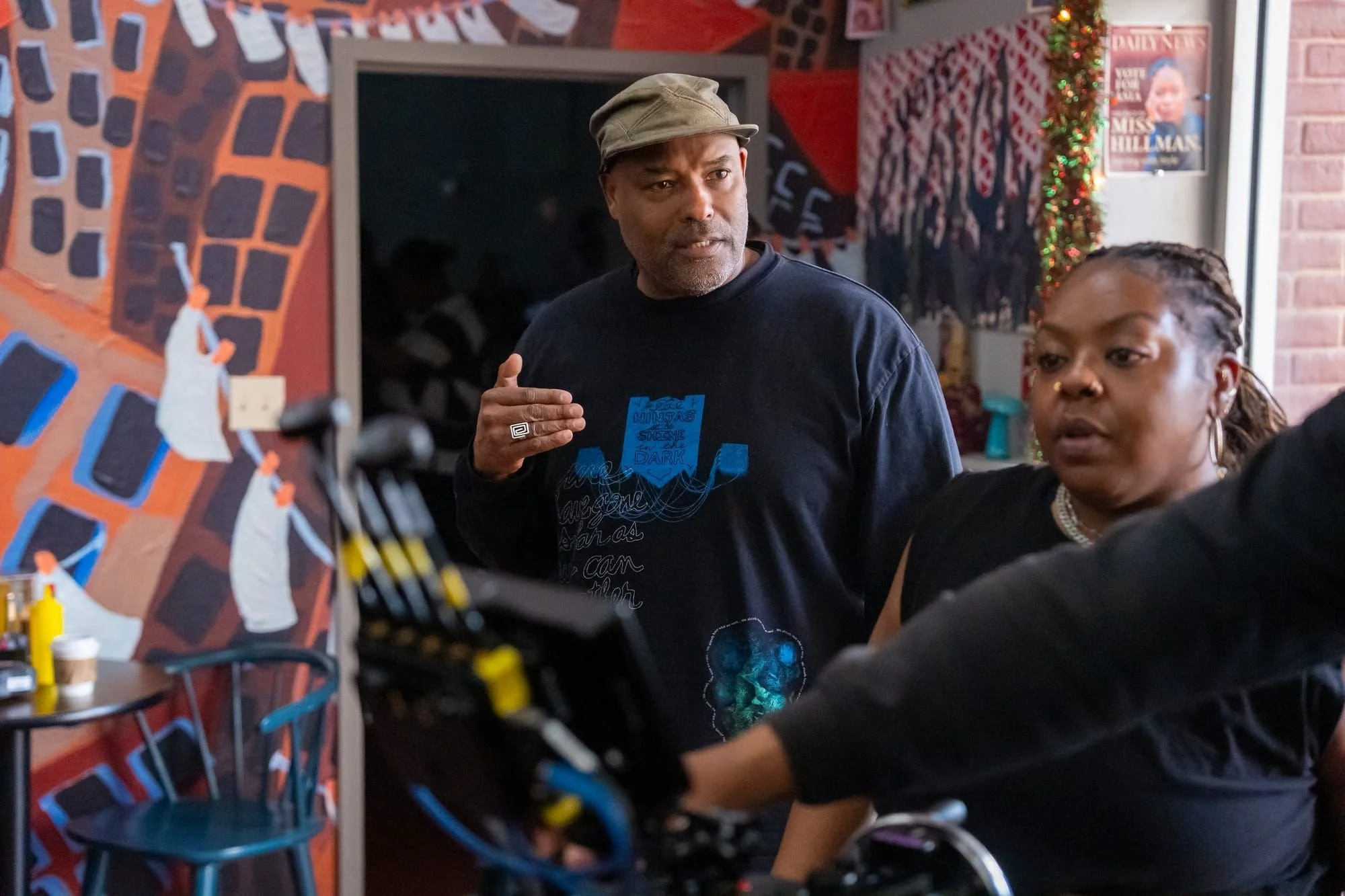
Courtesy of Netflix.
“I was like, that’s so interesting. So, Schindler’s List is universal? Is it because they’re black bodies that you don’t think people care or wouldn’t relate to these bodies or these subjects? I was so irate at his comment that I ended up in this whole debate with him and it wasn’t even my film. I just couldn’t stand for it and I had nothing to lose.”
“When I was leaving, Doctor Sandra Wertz, who was a Jewish woman from New York, asked me, so what do you do? I was like, maybe I want to teach English in high school. She was like, okay, well, let’s stay in touch, do you have a number I can have? I gave her my mom’s number back in New York. That’s really how it went down.”
Eventually, Doctor Wertz called Peters’ mom and asked if he had thought about applying to the school after their conversation. She asked for his transcripts and the next thing Peters knew, he was offered a full scholarship and a job. Still, though, it would be years before Peters fully pursued an artistic career. He worked briefly as an equipment checkout guy for Film/Video Arts and had one disastrous shoot as a DP on a 16mm camera, where he scratched the film. Peters was broke and his mom was going through a heavy situation, so it felt like this cinematography career might not happen.
Another friend of Peters’ was on the edge of the dot com boom and offered him a job making one-page websites long before that concept was common knowledge. Through creating these sites, Peters was offered a job selling data for AT&T. All the while, Peters never lost sight of a career in the arts. With the money he was making as an AT&T salesman, he was able to buy cameras and lenses to keep up his photography practice.
Peters ended up in the music industry as a managing artist who was consulted on live shows. It’s there where he started dabbling in shooting music videos. One of the musicians he met was rapper Blitz the Ambassador. It was a conversation between the two of them that would eventually push Peters to follow his dreams.
“I remember sitting with Blitz on my stoop. I was like, hey man, you should stop trying to make records like a New Yorker, bro. You’re from Ghana, so where’s the Ghana sound? He was like, well, what do you really want to do? I said if I had any courage, I’d be a cinematographer. Blitz was like, well okay, I challenge you. I’ll make this record if you pursue your cinematography thing.”
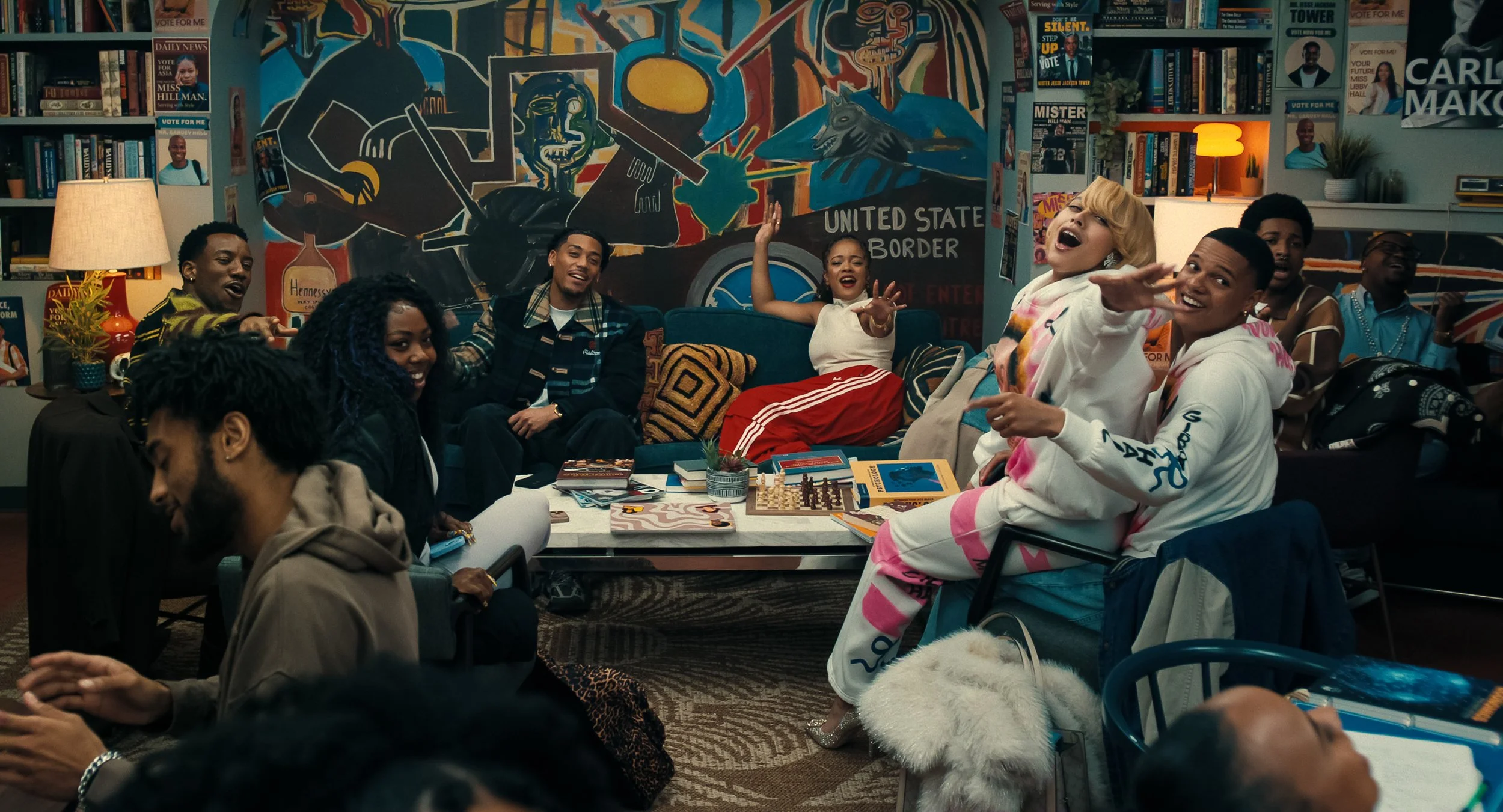
Cr. Netflix © 2026
Since diving into cinematography as a career, Peters has worked in narrative, documentary, commercial, and music video formats. Each asks something different of him, but the scale of the project is ultimately what changes his approach to his work.
“My preparation is making sure I understand the emotional beats of the whole story for a bigger project. In commercials, you don’t really have a lot of time. You’ll often show up the day before in some instances, sometimes meeting the director for the first time. You’re tech scouting, and in that process you have to really be instinctual. You don’t have the luxury of a heavy process in that regard.”
Most recently, Peters worked on six of the ten episodes of the Netflix revival of A Different World. The original 1987-premiering series of the same name was a spin-off from The Cosby Show. A Different World centers on a new generation, the daughter of Dwayne Wayne (Kadeem Hardison) and Whitley Gilbert-Wayne (Jasmine Guy), as she begins her freshman year at Hillman College. With the revival, showrunner Felicia Pride wanted to bring new audiences to the show with a new look. Part of that new style came as a result of changing from a multi-camera show to a single-camera one.
“Single-cam is often misleading because usually you’re shooting two cameras. Single-cam really just means you’re shooting in one direction at one single time. Multi-cam means that five or six cameras are going at the same time, picking up action. From a cinematography standpoint, you have to light the world in a much more flat, much more open way so all those cameras can be on the right side of the light.”
“In single-cam, you’re lighting toward one direction, which means you’re lighting from one direction, which is much more natural to the real world. If a person’s looking at one corner of the room, they’re looking at whatever light is happening through a window or through a practical light. The single camera theory is more cinematic, more natural.”
The other four episodes of A Different World were shot by John Simmons, who has been a mentor for a lot of the African-American cinematographers working today. As Peters explains it, “if you go to LA as a Black cinematographer and you’re working at a certain level, you kind of have to meet him, you know?”
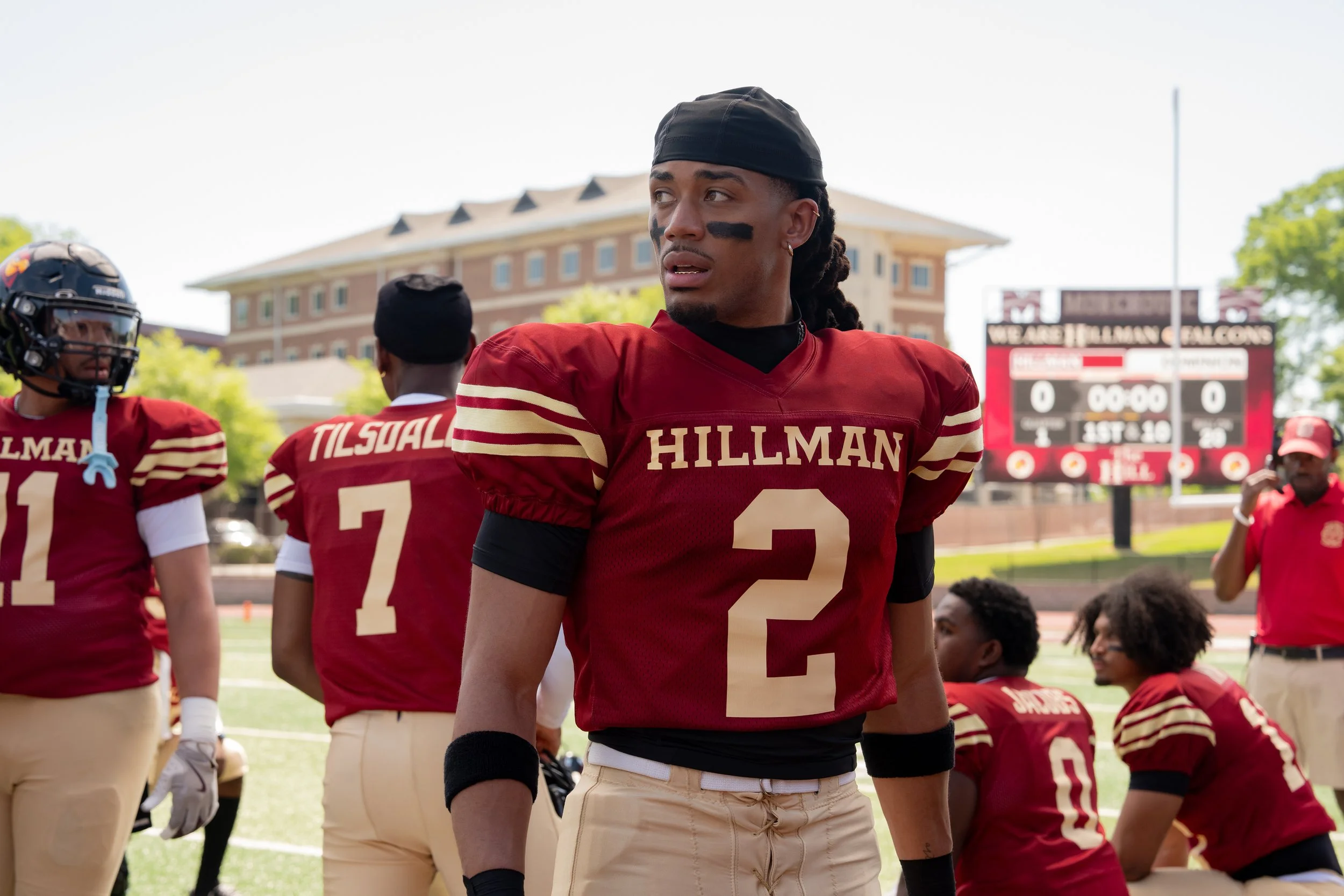
Cr. Daniel Delgado Jr/Netflix © 2026
“This industry is a bit ageist. If they’re thinking about a new look or what’s hot and trendy, they’ll think, oh, a new or younger cinematographer would have to be the one to understand that. Maybe an older one wouldn’t. It was nice for me to be able to give an older cinematographer a shot at a new, young series. He killed it, but we did speak a lot. I also wanted him around me in Atlanta where we were shooting. Turns out he was much wilder than me. I’m the younger guy, but I was trying to catch up with him. It was like having a dad or an uncle around. A really cool, talented uncle.”
When it comes to television, Peters explains that it’s up to the cinematographer and the production designer to create the world. Showrunners and head writers have to turn their attention to the actors, their blocking, and the season’s narrative arc.
“They really rely on the cinematographer to create the tone and the visual language of the show. There are five different directors on A Different World, so the responsibility of the cinematographer is that each episode can’t be a different world. No pun intended. Each episode can have different tone shifts depending on the story.”
It may be surprising to learn that, as a cinematographer, Peters’ least favorite critique of a movie from a friend or family member is “the film was okay but the cinematography was beautiful.” To Peters, that means something else fell through the cracks and didn’t allow the movie as a whole to come together to its best possible outcome.
“They hid behind the beautiful images, which is not a story. That’s just beautiful pictures, which is very different. There are films that look like art pieces, but it almost feels like a slideshow to a certain extent, with a narrator. I think all things can exist. I don’t think one thing is better or worse than the other. It’s nice as a cinematographer to be able to do that style and kind of get off in that way, but I have still photography for that. I’m much more interested in films that can have a voice that are visual but not distracting.”

Follow me on BlueSky, Instagram, Letterboxd, TikTok, YouTube, & Facebook. Check out Movies with My Dad, a podcast recorded on the car ride home from the movies.
Support Your Local Film Critic!
~
Support Your Local Film Critic! ~
Beyond the Cinerama Dome is run by one perpetually tired film critic
and her anxious emotional support chihuahua named Frankie.
Your kind donation means Frankie doesn’t need to get a job…yet.