
Gavin Brivik + Andrew Bird Clock into “The Pitt” with Their Song “Need Someone”
The second shift of The Pitt might have clocked out already, but series composer Gavin Brivik and songwriter Andrew Bird are taking the time to talk about their work on the sophomore season. Brivik scored seasons one and two of The Pitt, but the new season gave him a chance to try something different. For a pivotal scene in the final moments of episode six, “12:00 P.M.,” the showrunners wanted a lyrical song. It’s a rare occurrence for The Pitt to use a song like that, so Brivik knew he needed to call in an expert. Enter: Bird. Together, the two wrote “Need Someone.”
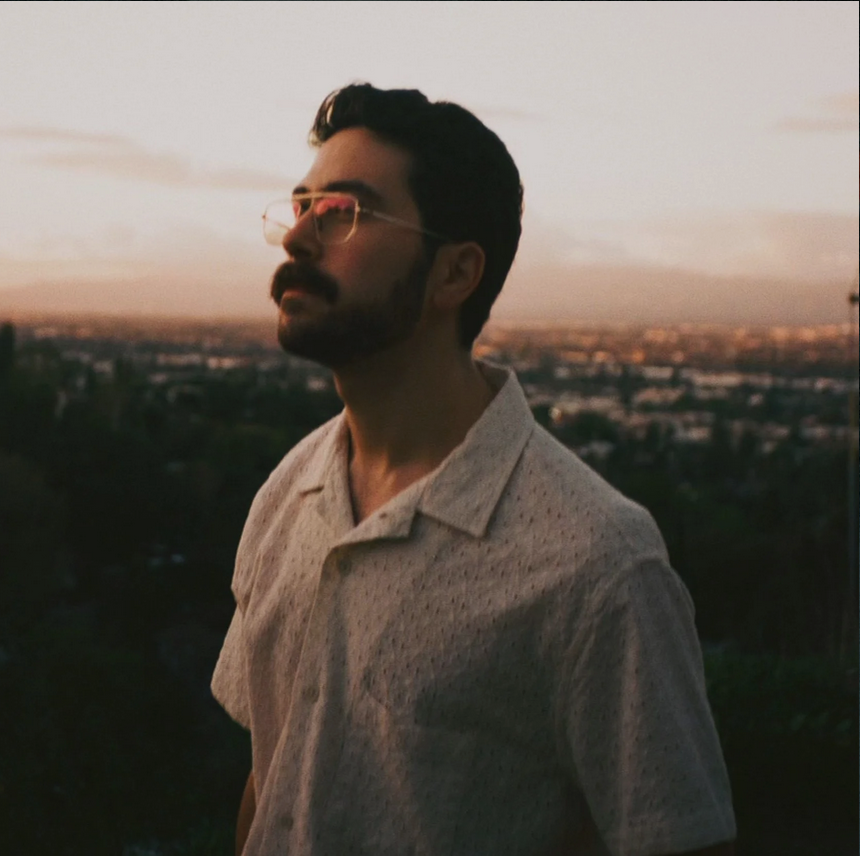
Courtesy of Gavin Brivik
Before we dive into The Pitt, I’m always curious about how composers meld their love with music and film/TV that came later.
Gavin Brivik: I have a cinephile dad, so I grew up watching so many great movies. It was always in the background. It was always something I didn’t think I would do professionally. I started off performing a lot more and then found composition later.
Even when I found composition, I wasn’t recognizing film scoring as something I would do. I was just composing for the concert stage, and then later I found film scoring. Once I found it, I started realizing that I was paying attention to all the scores I’d been watching as a kid, and it was all in the subconscious.
Andrew Bird: I was in music school at Northwestern, and I started spending more time in the film library. It was kind of like a video store. They had tons of great, old art films.
I got into silent film. I would do performances for Sam Shepard plays and then I would do live performances and music for silent films. I would just put those shows on myself.
Then I started writing songs, getting in a van, and touring the country. I kind of lost sight of that world of film music, but I was making albums that had kind of a multimedia element to them. Different characters, story arcs, and visuals. Making albums became like making movies.
In the last ten years, I’ve started scoring more regularly, but this was a different thing when Gavin came to me. He had already written these parts that were being used in the end credits of The Pitt. He gave me a library to choose from to see if any of them spoke to me to write.
One particular chord progression spoke to me. I picked up the guitar, got the chords on the guitar, and built the lyrics and the melody from there based on that excerpt of the final scene of episode six. It was all somewhat out of context for me, so I had to piece together what was happening. This kind of stuff is very refreshing compared to being in my own head with my own stuff.
This is the first time you guys have worked together, right?
GB: This is our first time. I honestly was just a fan of Andrew’s. He was a dream vocalist for the style of this piece and then we just happened to be on the same film score agency. It felt like the worlds kind of collided.
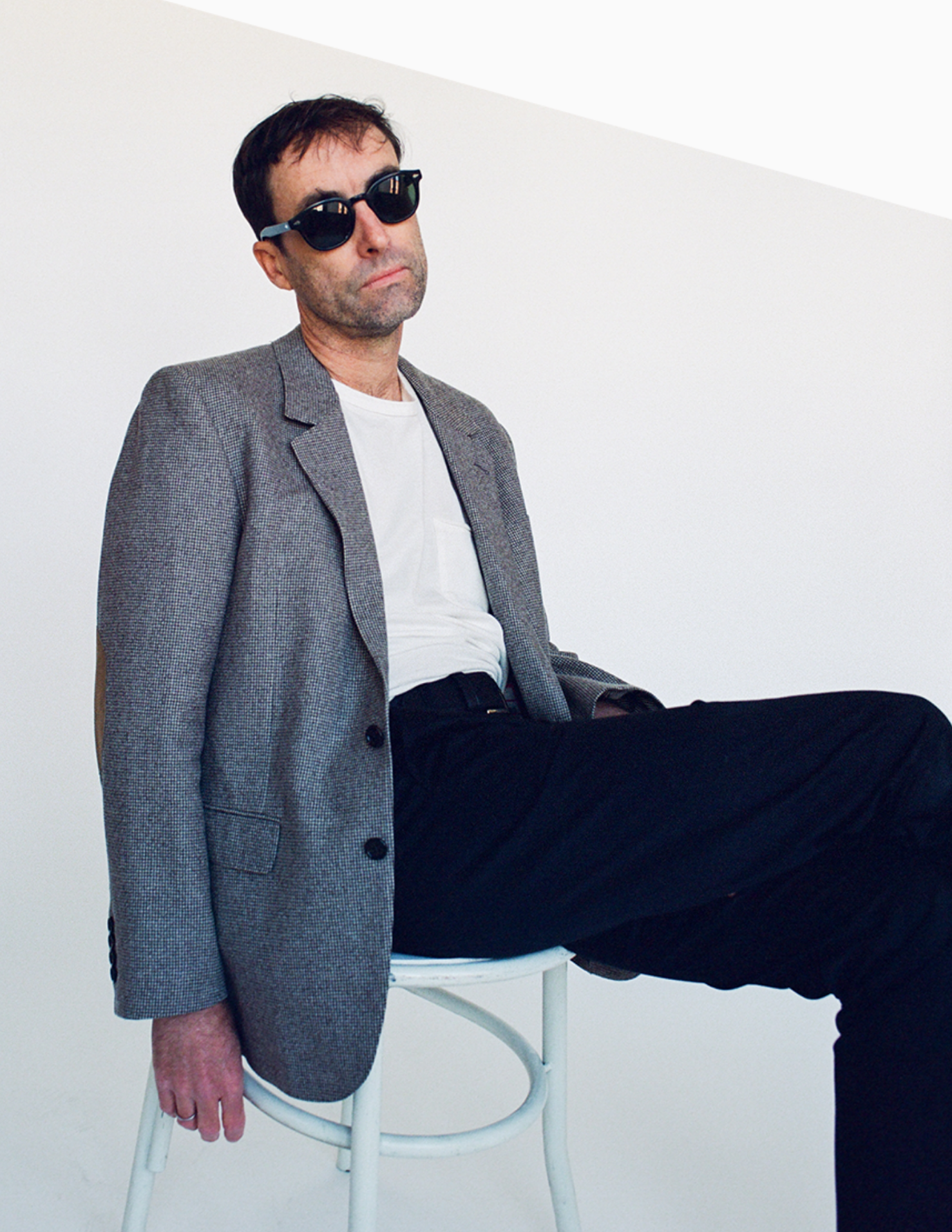
Courtesy of Andrew Bird
I sent Andrew these sketches. We took them as a frame, like a foundation, but then really heavily reworked them. Then Andrew obviously laid down guitars and we kind of reworked it together.
This was an amazing collaboration for me. Just as a fan, obviously, and also as an instrumental composer, to start getting into the world of song producing and songwriting. A new experience for me, you know?
When you sent the sketches over to Andrew, were the lyrics already done or what? What was that process like?
GB: That’s all on Andrew’s side. I have zero ability for vocals. Andrew came back and sent me a voice memo. It was this beautiful melody and lyrics that he’d written on top of some guitar stuff I’d sent him. It felt very collaborative and also great for me to be surprised by a melody and to hear a track recontextualized, you know?
AB: I was looking at the scene and I went back to watch parts of season one, because I hadn’t watched the series before. I took little bits of key moments of what the cast had been going through in the season. Dana getting punched, absorbing all the blows, etc. Just taking little bits of what they’d been through up to the point when Louie passes away.
Then, with the chorus, I was trying to drive home this idea of like, they’re just making sure this guy doesn’t die alone, he’s not obviously struggling. Probably they knew it was inevitable, but they really go out of their way to make sure he’s not alone when he dies. It’s a fundamental human fear, you know?
It’s nice to get a brief and you have a very clear assignment. You also have a license to be emotionally direct. I have to admit, this might be a little more emotionally direct than I’m inclined to go with my own stuff, but I’m like, hey, this is what it demands of me. So it’s kind of nice to have that license to just try to make people cry, you know?
Some TV shows, movies, and music, they can purposefully pull on our heartstrings in a way that feels insincere. When you cry, you feel kind of gross about it because it doesn’t feel earned. This episode and this song you wrote, they perfectly encapsulate something that feels sincere. Can you talk a little about developing that sound and making sure you don’t skew toward insincerity?
AB: Gosh, I don’t know. You kind of know it when you hear it. There’s a chance this might not have worked, but it just happened to work. I don’t think I could do this for a living. Doing this day after day or week after week. I think it would start to become…maybe it would lose some of its potency.
I keep saying to my agent, I’d much prefer the challenge of trying to write a song with lyrics for a movie or TV than doing an instrumental score, even though I’m perfectly equipped to do an instrumental score. I love the challenge of trying to make lyrics work in a way that’s not leading the listener too much or too on the nose. It’s tricky. We’ve been conditioned to know when we’re being manipulated. People are smart.
GB: The scene we did this song for, it’s toward the end of the episode, which helps. I do think that if we’d done a song in the middle of an episode, it would have felt maybe like Grey’s Anatomy or a different kind of medical drama show.
I think it’s really beautiful that the song has a climactic feeling and it goes into the credits, which helps people process the episode during the credits. That’s clever placement by the showrunners. They’re very involved and decisive about when music comes and goes. It feels like they understand the same things we’re talking about. Where they’re very sensitive to leading the audiences. It really was so well-written with Robbie’s speech and everything that it gave us the right space for this, which is the only time in this show that it’s made room for that.
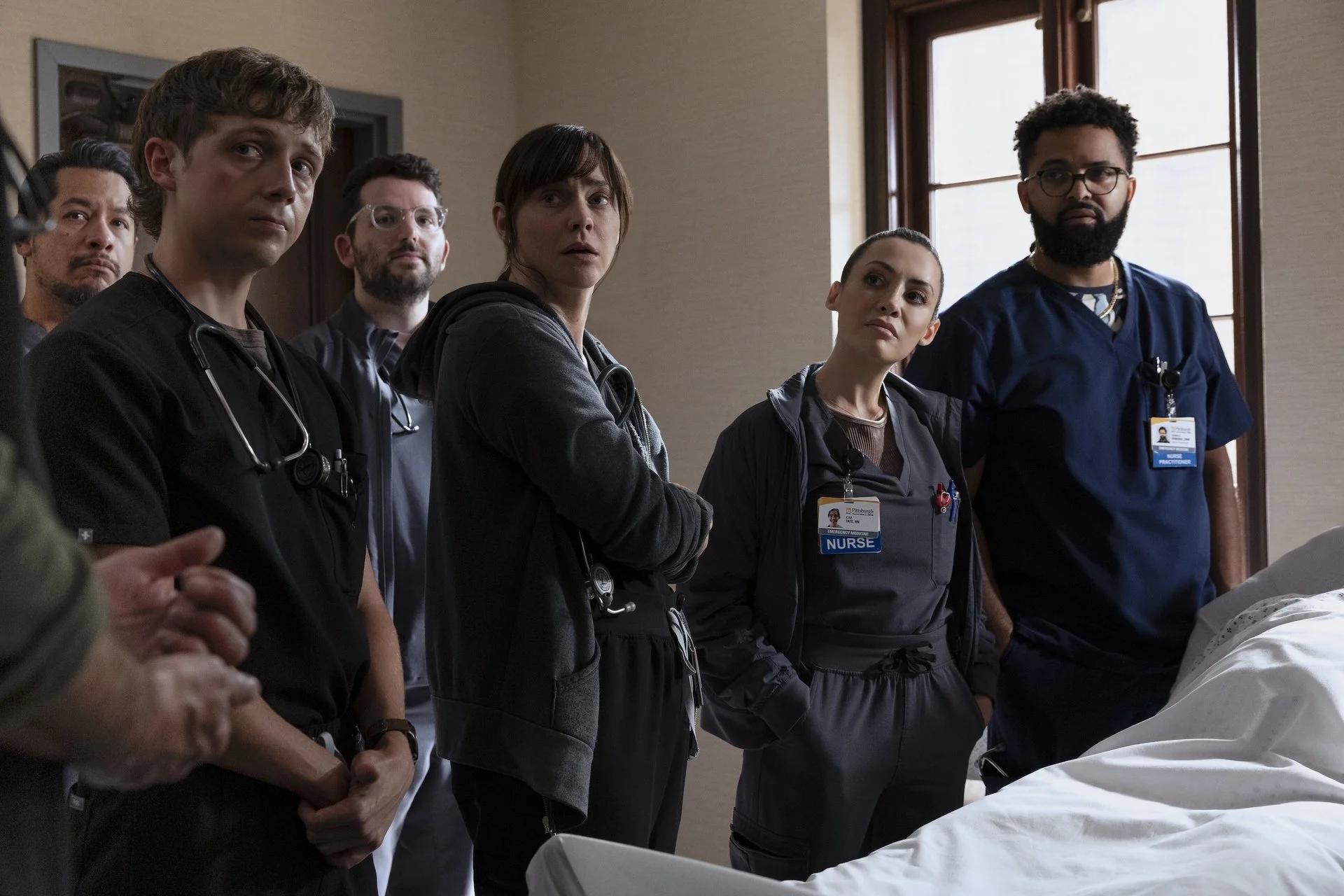
Photograph by Warrick Page/HBO Max
Gavin, you’ve worked on both seasons. The show is very particular about when they choose to add music and when they choose not to. What made them decide to have a song like this?
GB: I truly think it’s the arc of Louie’s storyline. He’s been a character throughout season one and halfway through season two. Louie was kind of comical at times, and then we learned a little about Louie’s backstory in season one. Obviously then a lot more in season two, when Robby gives the speech.
It’s a good question. I’m not 100% sure if I have the answer. I would be curious to hear the showrunners’ thoughts on that question, but from my point of view, they’ve always been open to songs and music. I just think they’re very careful. I think because this was such a meaningful character and such a thematic moment, it created that space. They carefully chose this moment versus many others.
I’m living in Pittsburgh and my cousin works at the hospital the show uses for exterior shots. I think what has made the show catch on in the city, and also catch on globally, is this refocusing of empathy in popular media. Do you want to talk about what it’s like to be part of this wave of sincere empathy.
AB: It’s helping everyone process what we went through with the pandemic. It’s sort of implied that there’s this trauma everyone’s still processing but hasn’t had time to process. Maybe because of the show and Louie or in my own reality of people that I’ve met who have a terminal disease, I’ve been observing how gracious they are when they’re at that point. People get in this myopic, self-absorbed, narcissistic cycle, and The Pitt shows people who are stuck in that way.
Then, the people who are facing mortality, they have a sort of grace about them. I think that’s really interesting. It’s also about all sorts of stuff we’re not facing as a people. It’s helping us do that. I think it’s why the show is important and why people are responding to it.
GB: With what you said about the pandemic, my uncle was a nurse who quit because of Covid burnout. He was in Texas during the pandemic. The worst state with people just denying everything. I heard all the stories.
I think The Pitt gives us empathy also because you’re on the ground floor with them and you start analyzing yourself. What is my stress tolerance? I’m sure Andrew can relate when sometimes you get notes on this creative thing and then watch The Pitt and you’re like, that person has had three people die during a shift and they’re saving lives before going home to a family.
I realized I need to check myself. That’s where empathy comes in. We all self-assess our own life when we watch The Pitt, because these are people you see at the grocery store. You don’t even know what they just did on their shift. That’s a big reality check we’ve had.
The post-Covid burnout, the staffing shortages, and then the current administration devaluing nursing as a profession…it’s impossible not to be political about all this. You see it in the episode about ICE. The medical community is so in the forefront of everything that’s happening in our world. It’s a really good mirror for society to learn how to be empathetic, if they’re not extremely empathetic already.

Follow me on BlueSky, Instagram, Letterboxd, YouTube, & Facebook. Check out Movies with My Dad, a new podcast recorded on the car ride home from the movies.
Support Your Local Film Critic!
~
Support Your Local Film Critic! ~
Beyond the Cinerama Dome is run by one perpetually tired film critic
and her anxious emotional support chihuahua named Frankie.
Your kind donation means Frankie doesn’t need to get a job…yet.