
SXSW '26: Arabella Oz Unmasks Jealousy at Heart of Mallory's Ghost
This interview was originally published on Film Obsessive.
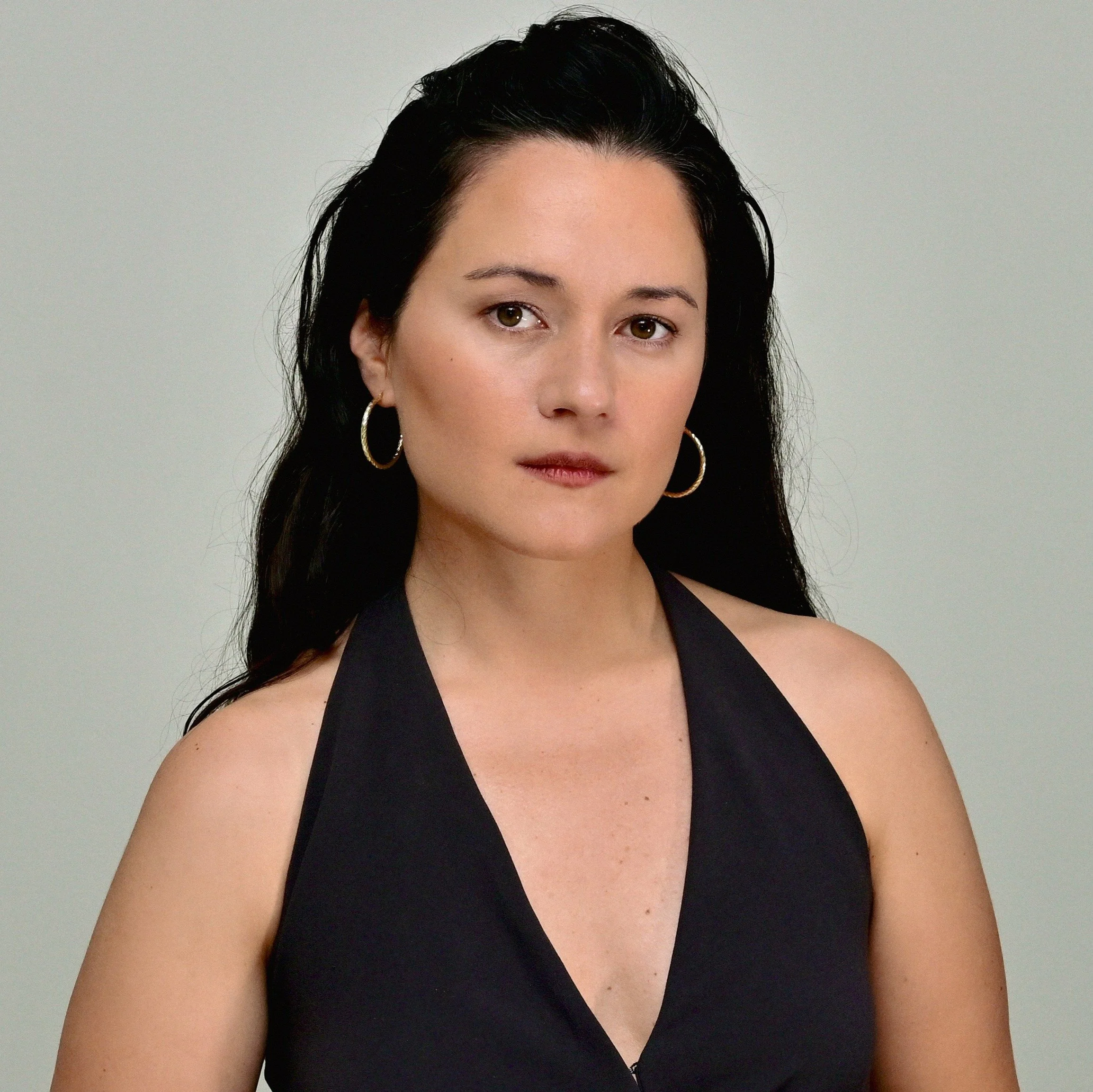
By all accounts, Mallory’s Ghost is a family affair. The film, which premiered at the 2026 SXSW Film & TV Festival, was written, directed, and co-edited by Arabella Oz and her husband, Nick Canellakis, who composed for the film as well. The two are also the lead actors, they shot in the home of Oz’s grandparents, and, after filming wrapped, Oz and Canellakis were married in the backyard of that home. Mallory’s Ghost is about jealousy, and it looks at what would happen if this emotion became a source of creativity.
There’s an old saying that you shouldn’t mix family and business, but it’s not a warning Oz and Canellakis heeded. The initial discussions about what would become Mallory’s Ghost began the same year the couple started dating, but the kernel of the idea came from a relationship Oz had before she dated Canellakis.
“In my previous relationship, we took a trip to Japan, where he had been with a past girlfriend. I felt like I was being haunted by her memory. I kept asking like, did you come here with her? It took over the whole trip, unfortunately.”
“It was also very inspiring. Why am I fixating on this? It was something I had repeated in a lot of relationships, so it started a curiosity about a pattern that I think is universal, especially early in relationships, or maybe when you’re a little younger.”
“With Nick, I started developing the script. I didn’t have any apprehension about doing it with Nick. Actually, it was encouraging. I don’t think I could have done all of this without having him to workshop ideas with, to talk it through, and then to carry it to fruition. We definitely pulled from things in our relationship. The comedic dynamic is definitely our tone, our banter.”
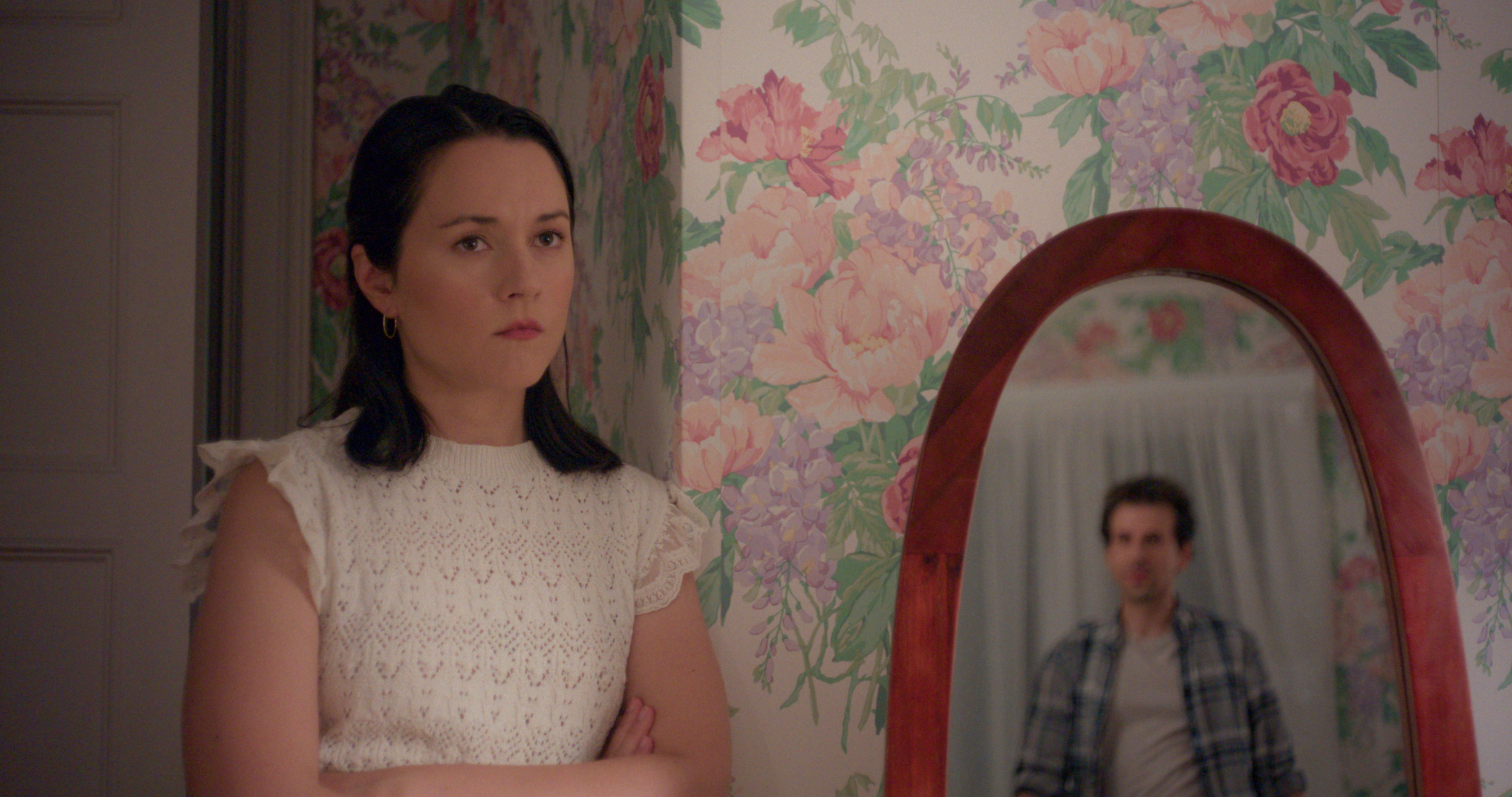
Mallory’s Ghost straddles a line between straight drama and the supernatural. As the title implies, there’s a ghost in the film. It’s one born of jealousy. Mallory (Oz) and Sam (Canellakis) have traveled to Maine for a writer’s retreat. Sam is a playwright struggling with his next idea, and Mallory wants to express herself creatively but doesn’t know how. When Mallory learns that Sam had previously come to this house with his glamorous ex-girlfriend (Anjelica Bosboom), it becomes all Mallory can think about. This jealousy eventually grows into something deeper, and that takes Mallory by surprise. In the initial draft of the film, Oz explains that the ghost follows the more traditional arc of jealousy.
Courtesy of SXSW
“Initially, the ghost was a pure ghost. She was pure evil. She definitely embodied the terror of being haunted by a phenomenal ex-girlfriend. Pretty soon after that idea, definitely within the first draft of the script, I was more curious about the love underneath the jealousy. The admiration and what would happen if you got to meet that person, humanize them, and see that the things that you’re jealous of are actually things you could love and admire and that you might be disowning in yourself.”
“I wrote the script as I was getting my training as a therapist. I was approaching the story with this psychological curiosity pretty early on. Trying to peel back the layers of a pattern or a simple idea to get to the kernel underneath. I feel like that’s a lot of what therapy is. Asking to go deeper, deeper, deeper, and peeling back the layers to discover more nuance to an idea that might feel a little simple at the beginning.”
Oz’s training as a therapist also played a role in the way she approached her experience as a first-time director. Much of therapy is about creating and holding space for the exploration of emotions. Oz believes that skill is equally important on film sets.
“As a therapist, you’re holding the space for the client, you’re creating an environment for discovery. Ideally, if you’re able to get there, that’s a good approach for the director to take. Holding space for all the artists who are involved to have a moment of discovery or a creative breakthrough, or at least just to feel safe, you know? I think that’s a necessary element of making a film. Actors need to feel safe. Crew need to feel safe in order to do the very difficult and vulnerable work of making art. It’s not something that’s easy to achieve, but that’s the goal.”
Because so much of Mallory’s Ghost is tied to Oz and her family, it seems like the lines between work and real life could blur. Due to the nature of run-and-gun indie filmmaking, though, it all happened too fast for Oz to process.
“There was so much going on. Shooting the film, you’re constantly in survival mode and I don’t know if I was ever confronted with anything too personal. The only thing that was difficult about shooting in the house is that it was on me to keep the house standing. My producer, Claire Sinofsky, and I just bubble wrapped the entire house.”
“It’s scary to film in a home that my family lives in and loves. I don’t think I’ll ever do that again. I definitely will never do that again.”
Similarly, Oz and Canellakis co-edited the film, a decision made originally because of budgetary reasons. Fortunately, editing wasn’t a foreign language for Oz and, in collaboration with Canellakis, the two laid the groundwork for the first pass of the film.
“I used to have a small videography company. Nick and I do comedy, we do short-form comedy videos a lot on social media, so we have a shorthand with editing. Our style of comedy is so specific that if you don’t have an ear for what we were going for, I think it would have been very hard to communicate that to an editor.”
“That was the initial impetus, but then we got to a point with the edit where we were really struggling with the tone, finding and refining the tone of the film, because it’s a unique tone that’s hard to explain. Even though it was unique, we wanted it to feel cohesive. Even though it jumps between genres, storylines, and timelines, I wanted it to feel like a cohesive story tonally.”
“We brought on this additional editor, Katie McQuerrey, and she was just a genius. I was like, okay, this is why I’m not an editor and there are real editors out there because she saw things we didn’t. She moved scenes around, extended moments, made moments weirder, and she tightened the story. She did an incredible job. She took what we did and tinkered with it to snap it into place.”
“I think that’s probably something I’ll do again for my next movie. Nick and I edited for a year before we brought on Katie. We got to really chew on it and get it to a place where we could bring in someone to do the final touch.”
As Sam attempts to find his next inspiration, Mallory takes this time as an opportunity to explore what she wants to be creatively. She sits in a beautiful room and types a sentence on her laptop: “sitting inside someone else’s memory.” It’s a line the character quickly deletes, but one that Oz sees as a baseline of sorts for Mallory’s Ghost.
Credit: Jeff Griecci
“It’s a thesis of what I was trying to do without giving too much of a spoiler, you know? What I was really trying to do was find a way to express this feeling when I was Facebook- or Instagram-stalking someone, I would get this feeling of not existing. I would say I feel wiped out of existence. All my energy is going into imagining and thinking about these other people. I wanted to find a way to express that. When you feel that sense of being wiped out and being in someone else’s memory, where do you go and how do you find your way back into your life? That’s Mallory’s journey — needing to get back to her life, but really, she’s done this to herself.”
SXSW, like the city it takes place in, celebrates the weird. Movies there treat genres like Play-doh to be smushed together to make something new. Mallory’s Ghost is one of those movies that enjoys refusing to confine itself to one color, one box. For Oz, it’s a thrill to premiere her film to movie lovers of this ilk.
“It couldn’t be more exciting. This is an interesting film and we didn’t know how it would resonate with people. We didn’t know if people would be interested in it. It feels so at home at SXSW.”
“These audiences want to laugh. They want to be surprised. They want to see something new. All the things that were kind of risky when we were making it feel like they’re the reason that they’re here. SXSW feels like one of the only highly prominent film festivals that’s still positioning strange films like this one that otherwise wouldn’t necessarily reach such a wide audience.”
Follow me on BlueSky, Instagram, Letterboxd, TikTok, YouTube, & Facebook. Check out Movies with My Dad, a podcast recorded on the car ride home from the movies and I Think You’ll Hate This, a podcast hosted by two friends who rarely agree.
Support Your Local Film Critic!
~
Support Your Local Film Critic! ~
Beyond the Cinerama Dome is run by one perpetually tired film critic
and her anxious emotional support chihuahua named Frankie.
Your kind donation means Frankie doesn’t need to get a job…yet.