
“Night in West Texas” is Long-Fought Justice
True crime has gripped our collective consciousness, for better or for worse. There are a lot of cons associated with the way these brutal stories of homicide have been turned into podcasts for people to listen to between Squarespace ads. The positive effect of these stories being more widely circulated is that it can lead to new eyes on cold cases. Deborah S. Esquenazi’s Night in West Texas is an example of how long it can take for justice to be restored after it was ripped away decades ago.
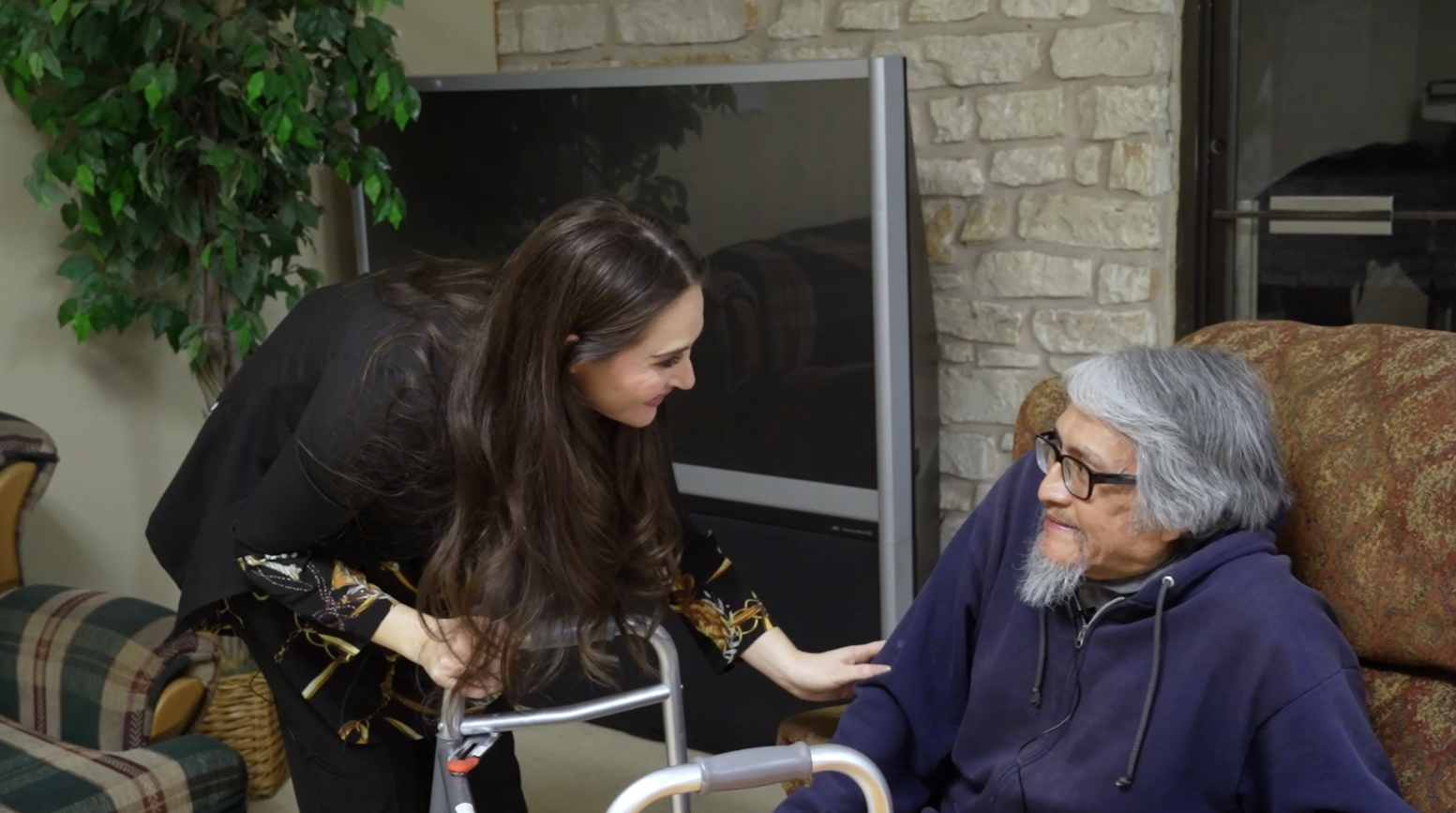
James Harry Reyos is an Apache man who found himself hitchhiking in the Permian Basin area of Texas. It’s oil-rich but empty, the sort of desolate, wide-open expanse of land that can only exist in the American West. In the middle of the Permian Basin is the city of Odessa, where a Catholic priest named Patrick Ryan was murdered in 1981. James wasn’t in the state at the time of Father Ryan’s murder, but he was charged with the crime and sentenced to thirty-eight years in jail. James has always maintained his innocence, but it wasn’t until a 2021 episode of the Crime Junkies podcast that his case for exoneration really picked up steam. Odessa Police Chief Mike Gerke reopened the case because his daughter-in-law heard the podcast and asked him why James was convicted. Unable to answer, Gerke took a look at the file himself.
Courtesy of Night in West Texas
Another key player in the fight for James’ freedom is the Innocence Project of Texas’ Deputy Director Allison Clayton and her team. Clayton wants to make the case for “actual innocence,” a review of a legal case that would prove the defendant did not commit the crimes they were charged with. Not only that, but if Clayton is able to achieve this verdict, James would be financially compensated as well. As much as we’d all like to believe that our justice system values truth above all else, James’ case proves that prejudices against queer and Indigenous people frequently cloud the facts. Night in West Texas is an indictment of the system that’s meant to protect us. It’s also a rightful indictment, because James’ story is not the only one that ends in this way.
As is common when the story of a crime is at the center of a narrative, James deserves a larger focus in the film. It’s obvious from listening to the bare bones of the case that James was a scapegoat for the image of the Catholic Church. Much of Night in West Texas is about the judicial side of this fight, an immensely important engine that saves lives, but the documentary doesn’t make James’ voice the loudest one in the room. Perhaps that was his choice. Maybe, after having his hopes dashed time and time again, he didn’t want the documentary spotlight to be pointed brightly at him. That’s completely understandable given everything he’s been through. A fuller picture of James could have been painted in Night in West Texas through more conversations with his family, B-roll of where he grew up, etc. Night in West Texas is a condemning piece of filmmaking, but one whose central voice should have been shifted.
support your local film critic!
~
support your local film critic! ~
Beyond the Cinerama Dome is run by one perpetually tired film critic
and her anxious emotional support chihuahua named Frankie.
Your kind donation means Frankie doesn’t need to get a job…yet.

Follow me on BlueSky, Instagram, Letterboxd, YouTube, & Facebook. Check out Movies with My Dad, a new podcast recorded on the car ride home from the movies.