
“Sirāt” is a Long Walk Through an Empty Desert
The title of Óliver Laxe’s latest film, Sirāt, comes from the Arabic word meaning “way” or “path.” In Islam, the As-Sirāt is a bridge everyone must cross on the Day of Resurrection in order to enter Paradise. It’s no surprise that Laxe’s film is an odyssey, but it’s not the kind one would read about in classical Greece. This is a story without a hero, but with an always-booming rave track in the background. Sirāt is surely a long path in search of something, but whether the viewer connects with it will come down to if they believe the journey was the destination all along.
Luis (Sergi López) and his young son Esteban (Bruno Núñez Arjona) are the odd ones out at a massive rave in the desert of Morocco. The two live out of a van with their dog, Pipa. Luis is desperately searching for any information about his missing daughter. It’s been months and they’ve had no luck, but they gain a renewed sense of hope when a group of ravers say she might show up at another rave that’s happening in a more remote part of the desert. As Luis, Esteban, and some of the ravers begin their journey deeper into the desert, a group of soldiers arrives. While never completely explained, it appears as though a World War III-like event has broken out.
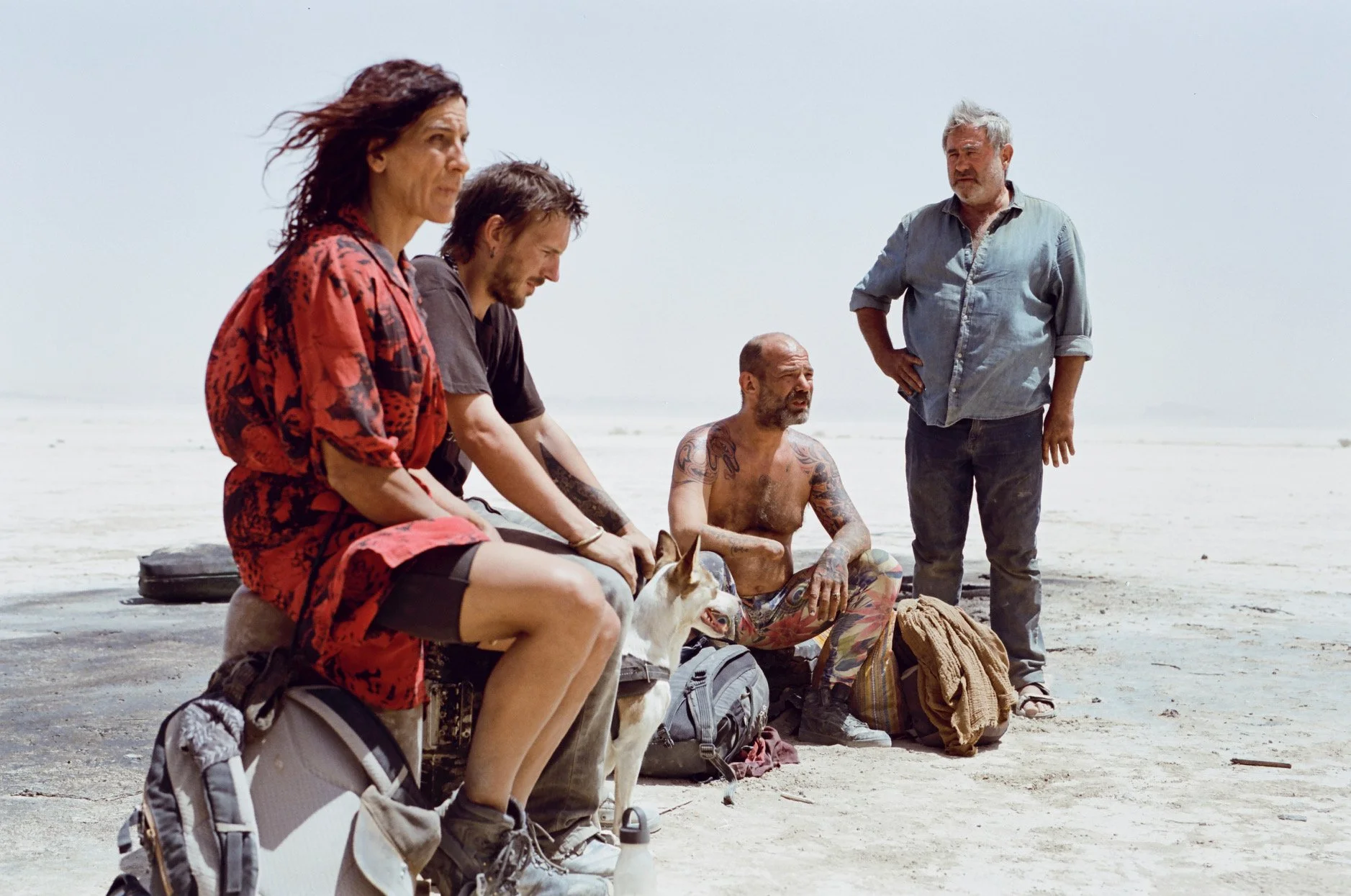
courtesy of Neon
“Is this what the end of the world feels like?” ponders one of the ravers as they listen to a radio broadcast reporting troops moving across borders. Because of the desert setting, this quest feels far removed from the world at large. It speaks to how easy it is to center one’s own personal loss over the tragedy that is impacting millions. At the end of the day, we’re connected to our smallest communities first, our families, and then we consider the rest of the world. Sirāt is just that. It’s a man’s obsession with finding his daughter, despite the fact that the world is ending around him. One could even argue that the decision to set the film in southern Morocco, a place that has a long history of colonization, and only feature characters who are clearly not from the area is a decision that follows along with the larger theme where individual desire trumps all. It’s an odd choice to set the film here without really engaging with the politics of the land, the people who live there, and the people who have come from afar to live a hedonistic lifestyle. Yes, the natural landscape of the area provides a stunning backdrop, but the setting should serve a larger purpose.
It’s no question that Sirāt provides a heart-pounding, trance-like experience. The pulse of the rave music and the bodies of those dancing to it are strange and hypnotic. Then, when the music ends, the audience is forced to remember the reason this film even began. A man is searching for his daughter, with the help of his young son. Nothing about Sirāt feels good, but that’s complimentary. Laxe wants the audience to live in the unease of Luis and Esteban that comes from their missing loved one, the isolating atmosphere of their surroundings, and their choice to trust strangers to lead them through the desert. Sirāt is surely a journey of profound proportions, but one that may leave audiences searching for meaning that isn’t found along this path.
support your local film critic!
~
support your local film critic! ~
Beyond the Cinerama Dome is run by one perpetually tired film critic
and her anxious emotional support chihuahua named Frankie.
Your kind donation means Frankie doesn’t need to get a job…yet.

Follow me on BlueSky, Instagram, Letterboxd, YouTube, & Facebook. Check out Movies with My Dad, a new podcast recorded on the car ride home from the movies.