
A House is Not a Home in “Sentimental Value”
A house is many things. At its most rudimentary, a home provides shelter for people who reside under its roof and within its walls. But therein lies the rub. So much of what a house means comes from what takes place inside those walls. In Joachim Trier’s Sentimental Value, the Borg family home looms large over the lives of the characters, both physically and metaphorically. It’s a structure that contains decades of history, that has seen the film’s characters in their most intimate moments. Sentimental Value is a profound exploration of trauma and the generational cracks it forms.
Nora (Renate Reinsve) and Agnes (Inga Ibsdotter Lilleaas) are the daughters of famed film director Gustav (Stellan Skarsgård). The sisters don’t think fondly of their father because he divorced their mother (Ida Marianne Vassbotn Klasson) and left the family when they were young. Nora and Agnes were raised by their mother in the home that has been in Gustav’s family for generations. In adulthood, Agnes is married with a child (Øyvind Hesjedal Loven) and works as a historian. Nora is a successful stage actress who struggles with stage fright. After the death of their mother, Gustav returns home with an offer for Nora. He has a script for a new movie and he’d like her to play the lead role. When she declines, Gustav offers the role to upcoming American actress Rachel Kemp (Elle Fanning).
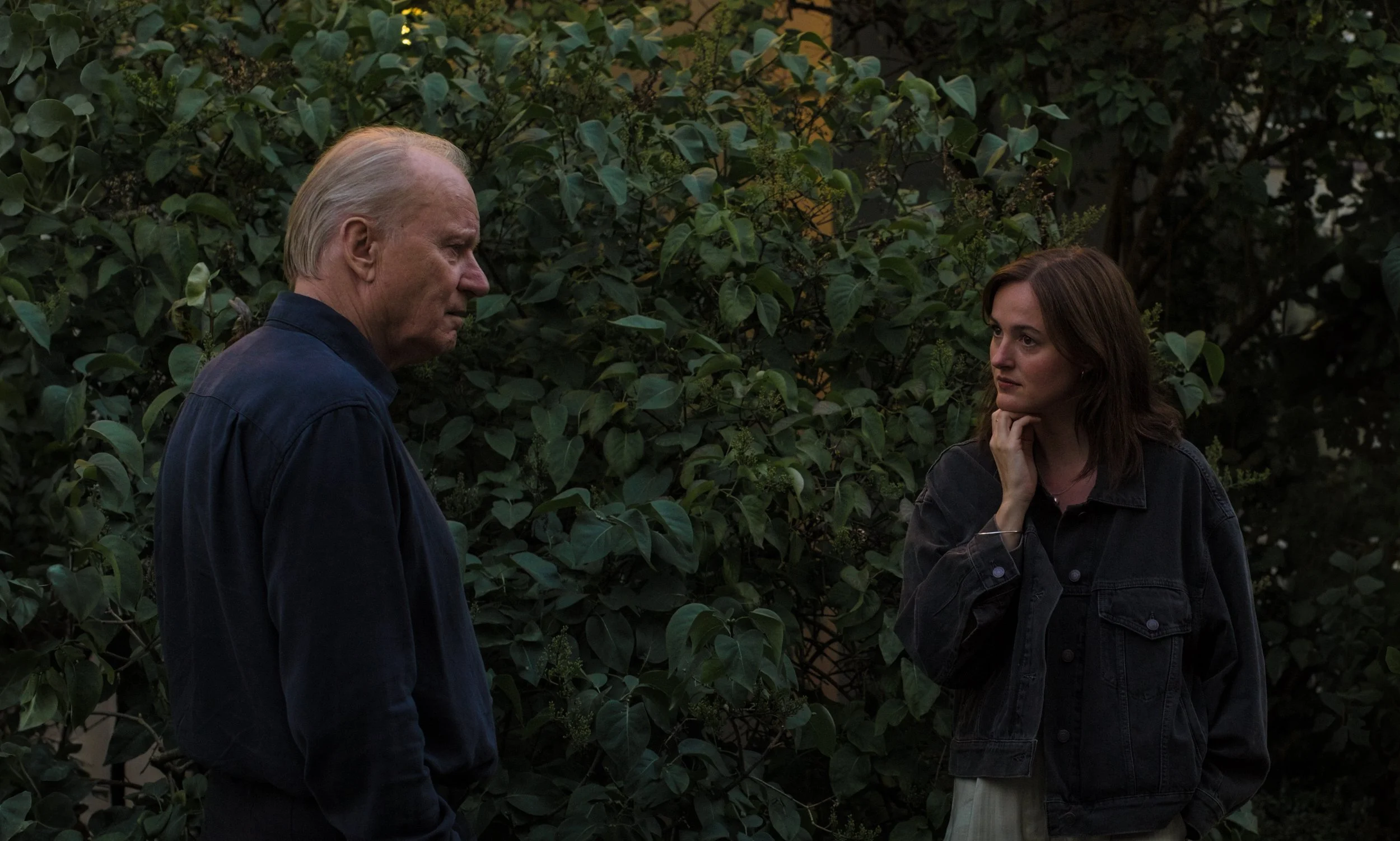
Photo by Christian Belgaux
There’s a literal crack that runs through the Sentimental Value house. It came from an error in the initial build, but there’s also a crack that has been growing through the generations of the Borg family. When Gustav was seven, his mother, Karin, committed suicide in the home. Karin was a member of the Norwegian resistance during World War II and was brutally tortured by the Nazis. She never spoke about what she endured, but it would be foolish to think there were no lasting effects that impacted her children and grandchildren, even though she never got to meet them.
The crack in the house is festering, and has been for years. Gustav’s desire to film his movie in the house is what makes the pain finally boil over. Sentimental Value is confined to the house and exists far beyond it. The film opens with a voiceover that describes one of Nora’s elementary school projects in which she writes of the house as a living being. She talks about her parents arguing loudly, but says the silence felt worse and that the house “probably liked to be full.” Is it better to have a house that’s filled with bouts of anger, or is the silence of being left behind better?
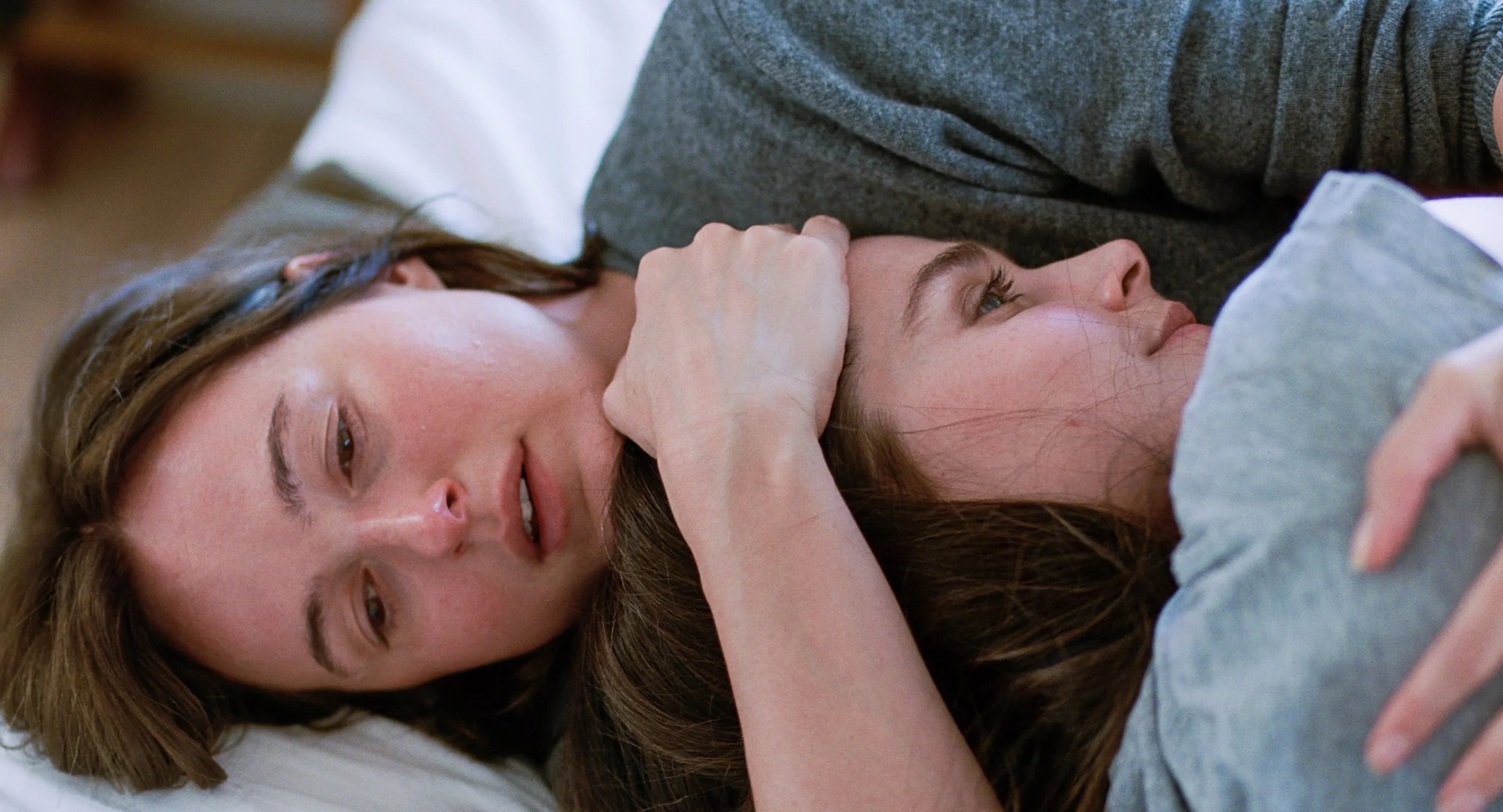
Photo by Kasper Tuxen Andersen
There are so many ghosts within the frames of Sentimental Value. Artifacts, people, memories, reminders of what never was, all clogging every inch of the screen. To bottle emotions and traumas is to essentially create a bomb whose impact goes far beyond the person who decided to keep their feelings hidden. Gustav’s mother couldn’t know how her torture at the hands of the Nazis would impact her life, let alone her son’s, and even less so her grandchildren’s. Nora particularly feels the burden of Gustav’s absence because she’s the older daughter and saw her role as the protector. As an adult, Nora believes she’s broken and that her adulthood is not what it could have been because of her childhood. Nora asks Agnes why things are so different for her. Agnes has a husband, a good job, a kid, and a good head on her shoulders. Agnes tells Nora, “But we didn’t have the same childhood. I had you.”
Gustav’s script is a bit like Chekov’s Gun. When it’s introduced, Nora refuses to read it. She sees Gustav’s return as that of a desperate man who wants to make a film, but who needs funding. Nora’s name would help in that regard. She sees it as a vanity project, but in actuality, it’s an attempt to look at the crack that has been splintering this family for years. Not necessarily to fix it, but to start with an acknowledgment of its existence. Sentimental Value doesn’t heal the wounds of the past, but it does offer an opportunity for reconciliation, as long as those involved are brave enough to recognize the cracks in their own home.
support your local film critic!
~
support your local film critic! ~
Beyond the Cinerama Dome is run by one perpetually tired film critic
and her anxious emotional support chihuahua named Frankie.
Your kind donation means Frankie doesn’t need to get a job…yet.

Follow me on BlueSky, Instagram, Letterboxd, YouTube, & Facebook. Check out Movies with My Dad, a new podcast recorded on the car ride home from the movies.