
“El Canto de las Manos” Recontextualizes Beethoven for a New Audience
In 1942, Gallaudet University’s drama club was given the opportunity to perform Arsenic and Old Lace on the Broadway stage. Gallaudet is still the only liberal arts college in the world for people who are deaf or hard of hearing. They had special permission to mount their own production of Arsenic and Old Lace at their school during the play’s original run on Broadway, but that wasn’t the end of things. Star Boris Karloff invited the drama club to perform in New York. It would be the first mainstream instance of Deaf theater recognized by a mainstream audience. Roughly eighty years later, as chronicled in María Valverde’s El Canto de las Manos, Deaf theater reaches a new height with the performance of Fidelio, Beethoven’s only opera.
In 2022, in collaboration with the Tony Award-winning Deaf West Theatre, conductor Gustavo Dudamel staged a production of Fidelio in Los Angeles. Also part of this troupe was the Coro de Manos Blancas (White Hands Choir), a group of Deaf and hard-of-hearing musicians from Venezuela. After the success of this production in Los Angeles, Dudamel had the idea to stage Fidelio again, but this time in Venezuela with all the roles played by members of the Coro de Manos Blancas. It was a personal choice on Dudamel’s part, as he grew up in Venezuela and his own musical career was shaped by experiences El Sistema offered him. Formed in 1975, El Sistema is a publicly financed music education program meant to give young people a sense of community and an outlet for their creativity. El Canto de las Manos follows the members of the Coro de Manos Blancas as they prepare, audition, rehearse, and ultimately perform Fidelio on stage in Caracas.
Obscured Pictures
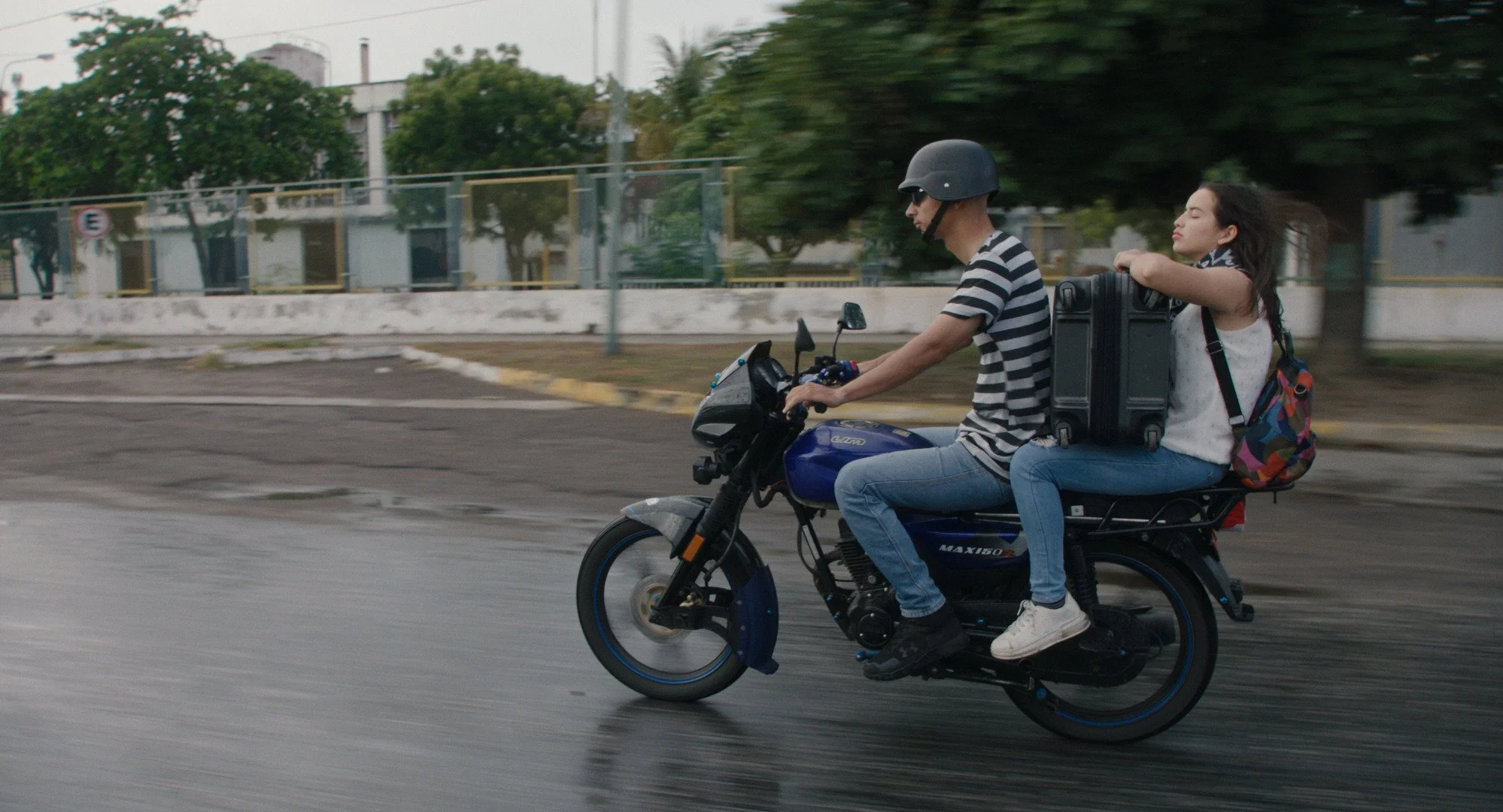
Part of the reason Dudamel opted to perform Fidelio with Deaf West and Coro de Manos Blancas is because Beethoven wrote it as he was going deaf. The two lead roles are Leonore and Florestan, a married couple who are separated by Florestan’s imprisonment. Leonore disguises herself as a guard to rescue Florestan from jail. While there are many members of the Coro de Manos Blancas, the documentary focuses on Jennifer, Gabriel, and José, who take on the challenge of a lead role. When they’re not in rehearsal, the camera follows them to their home and their daily routine. Each of the subjects shares their frustration of being written off by people in their lives simply because of their hearing loss. Family members abandoned them and didn’t bother to learn sign language, leading to feelings of isolation. It’s clear how much this production of Fidelio matters to them. It’s not merely an artistic outlet, it’s a source of pride. They haven’t been given an opportunity like this before, so they’re going to push themselves to prove they’ve long been ready for the world to see them as the musicians and performers they are.
“You can’t deceive in art. Everything’s real,” says Fidelio director Alberto Arvelo. He’s speaking to the musicians as they ready themselves for auditions. Art doesn’t look or sound or act in any one particular way. Good art, work that makes a tangible impact on the audience, comes from a place of vulnerability. From allowing yourself to display pain, joy, and heartache so the audience can make sense of their own. There’s a selflessness to a performance, a recognition that what happens on the stage is bigger than the people who stand there. El Canto de las Manos is a testament to that understanding of art’s purpose in the world. Passionate, emotional, and transformative, El Canto de las Manos redefines art’s ability to communicate.
support your local film critic!
~
support your local film critic! ~
Beyond the Cinerama Dome is run by one perpetually tired film critic
and her anxious emotional support chihuahua named Frankie.
Your kind donation means Frankie doesn’t need to get a job…yet.

Follow me on BlueSky, Instagram, Letterboxd, YouTube, & Facebook. Check out Movies with My Dad, a new podcast recorded on the car ride home from the movies.