
“Sorry, Baby” is the Best Movie of 2025 You Haven’t Seen Yet
Back in the before times, when Twitter was still a fun place to be, Eva Victor was one of the best people to follow for a joke. They started working as an intern at Reductress, a satire website with a feminist focus. She penned such pieces as “‘I’m Feeling Good These Days,’ Says Woman Who Clearly Does Not Get NYTimes Notifications,” “6 Photos of Hugh Jackman That Prove Once and For All He Is a Healthy Alien,” and plenty more. Victor later made Comedy Central and TikTok videos that once again show off their comedic chops. One would think that when they made the pivot to filmmaking, their debut would be a laugh-a-minute riot. Instead, Sorry, Baby is a magnificently subtle reflection on trauma as Victor’s brand of anxious comedy finds a way to add levity to this deeply emotional work.
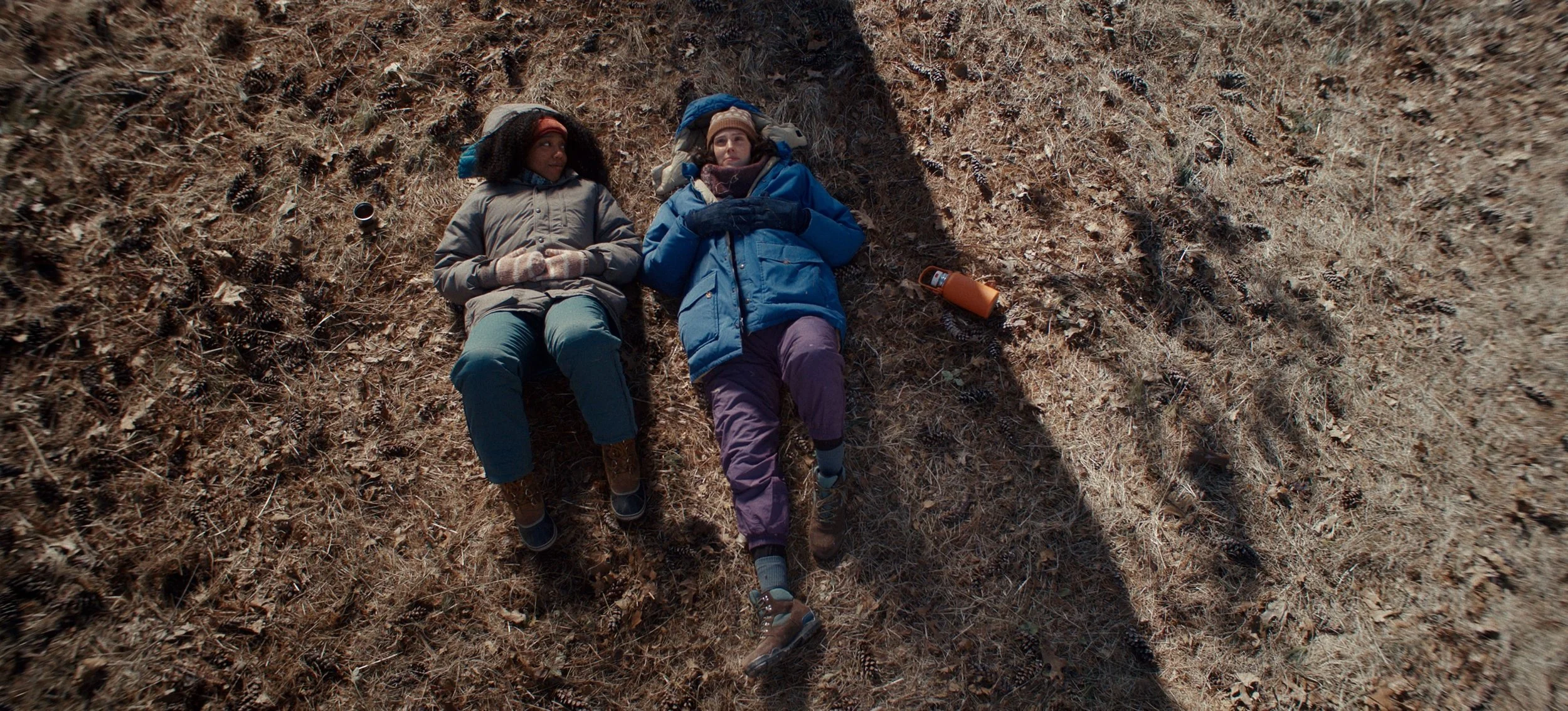
Agnes (Victor) lives alone in a secluded, forest-surrounded house. It’s the same place she lived with her best friend Lydie (Naomi Ackie) when they were in their graduate program. After they graduated, Lydie moved to New York City while Agnes stayed in the small town and got a job as a professor at the liberal arts college the friends attended. Lydie, now married and newly pregnant, has traveled to visit Agnes and she can tell immediately that Agnes still struggles with a traumatic event that happened during the end of their grad school days.
courtesy of A24
Sorry, Baby isn’t presented in a wholly linear fashion. Title cards inform the viewer when the film is changing time, but not in a numerical way of describing it. Instead, it’s “The Year with the Good Sandwich,” “The Year with the Baby,” “The Year with the Bad Thing.” It’s the aforementioned “Bad Thing” that is looming so profoundly and darkly over Sorry, Baby, but that Victor does not show us. Instead, the audience is told the events through Agnes about what happened when her professor (Louis Cancelmi) asked her to come to his house so he could give notes about her thesis. We see Agnes walk into his house and then the camera stops. Plants itself across the street and waits…and waits…and waits until Agnes emerges again. It’s a staggeringly effective means of putting the audience in Agnes’ shoes without the visual of the assault that occurs.

courtesy of A24
It’s such a fine string that Victor has managed to thread with Sorry, Baby. They wrote the script, which bears the familiar awkwardly endearing comic markings of their early work, but also so refined in how Victor wants to tell the story of someone who has been abused. In an interview with NPR, Victor says, “I tried to create a film that I feel like I needed, and I couldn’t find a film that didn’t freak me out to watch.” Many films about abuse are built around the moment where the assault occurs, and obviously, to an extent, so is Sorry, Baby because Agnes would not be where she is emotionally without what happened to her. Sorry, Baby is about living, breathing, and the way forward. Both mourning what happened and how that inevitably forked the life plan, then also how life keeps going on. How one stumbles upon a baby kitten one day or how a panic attack leads you to a good sandwich through the kindness of a stranger (John Carroll Lynch).
It’s quite humbling to witness a film like Sorry, Baby that is unassuming yet bruisingly impactful. The film’s final sequence sees Lydie’s return to Agnes’ secluded home, but she comes with two guests: her partner (E. R. Fightmaster) and their baby. Throughout the film, Agnes and Lydie talk about their fears and hopes surrounding children. They’re afraid of the pain of childbirth and of what is the most daunting aspect of parenthood: ensuring that your baby grows up into someone good and kind. Agnes, when presented with a moment alone with the baby, speaks in such a way that you don’t expect an adult to talk to a kid who’s only a handful of months old. She speaks in a serious manner, a monologue that reflects on life and the bad and good things that happen during it. Sorry, Baby is a gargantuan piece of filmmaking that tricks you into thinking it’s small. What Victor has captured here, in the way trauma freezes you and the unexpected bits of life that thaw you out again, is purely remarkable.
support your local film critic!
~
support your local film critic! ~
Beyond the Cinerama Dome is run by one perpetually tired film critic
and her anxious emotional support chihuahua named Frankie.
Your kind donation means Frankie doesn’t need to get a job…yet.

Follow me on BlueSky, Instagram, Letterboxd, YouTube, & Facebook. Check out Movies with My Dad, a new podcast recorded on the car ride home from the movies.