
It’s estimated that The Odyssey is somewhere between 2,700–3,000 years old. It’s regarded as one of the backbones of modern storytelling. Almost every tale that’s told has roots in this epic journey of a homecoming. To make a film version of it now, all these years later, must mean that a director has something new to add. Some new version of a classic tale. Christopher Nolan has decided to throw his hat in the ring with his adaptation. The Odyssey is a behemoth retelling of Homer’s epic poem, one that doesn’t seek to reinvent itself or the story.
Odysseus (Matt Damon) is the King of Ithaca, but he’s been gone for almost two decades. The first ten years were spent fighting in the Trojan War and the subsequent years were spent trying to find his way back home. Still in Ithaca are his wife, Penelope (Anne Hathaway), and their son, Telemachus (Tom Holland). The kingdom is overrun by suitors who wish to compete for Penelope’s hand in marriage and gain control over Ithaca. The Odyssey moves between Odysseus’ retelling of the Trojan War, the trials and tribulations that followed, and Telemachus’ quest for information about his missing father.
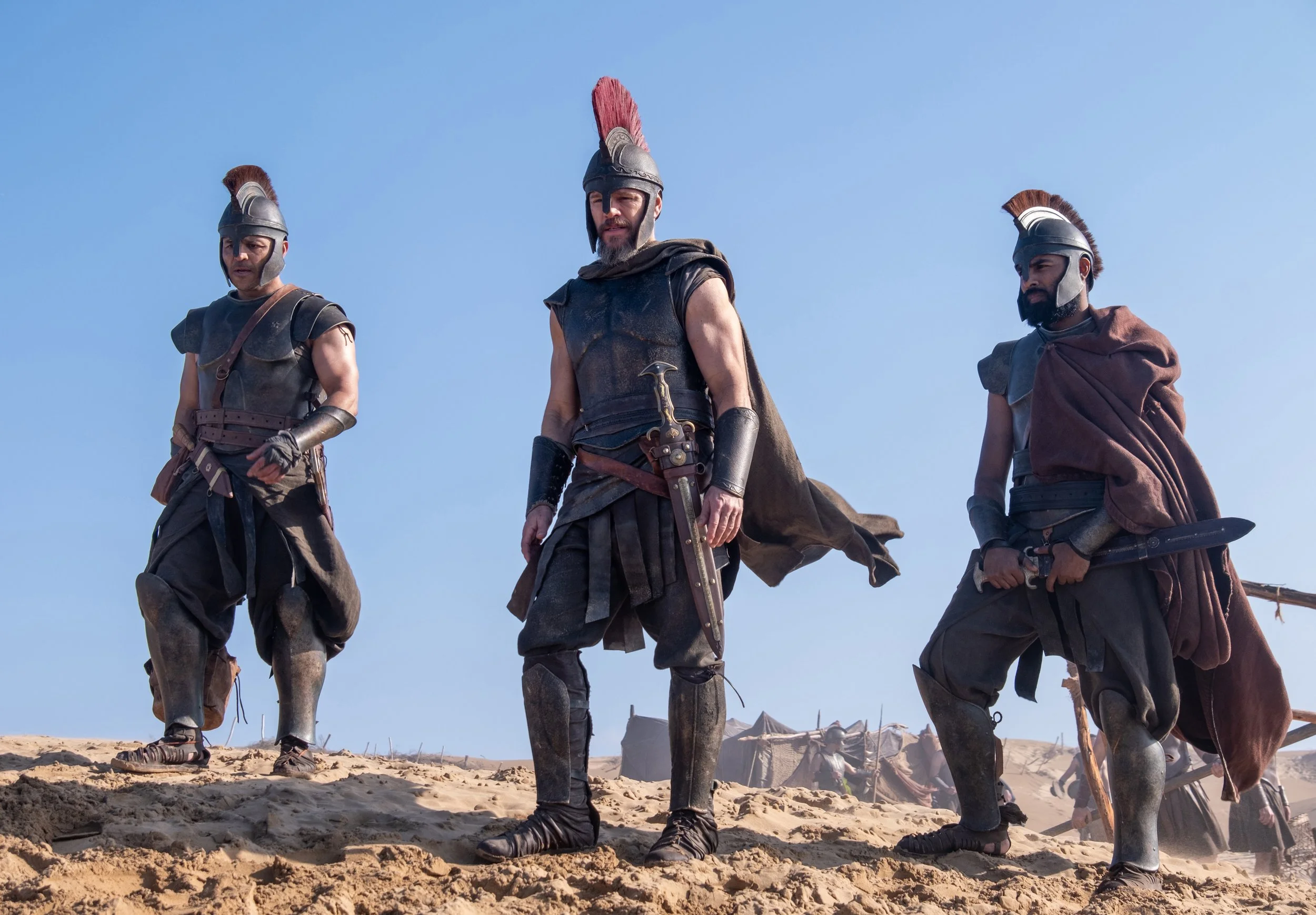
Courtesy of Universal
In 2023, Nolan made Oppenheimer. The film focused on J. Robert Oppenheimer’s role in the development of the atomic bomb. Over the course of the film, the audience saw him begin to reckon with what he had unleashed into the world. It’s the story of Odysseus, who has spent years avoiding Ithaca because he’s afraid of the violence and cruelty he has brought into the world with his actions at Troy. Odysseus and Oppenheimer are cut from the same cloth. They’re people whose names are remembered throughout history, but who lived to regret the role they played in allowing the worst parts of humanity to take hold.
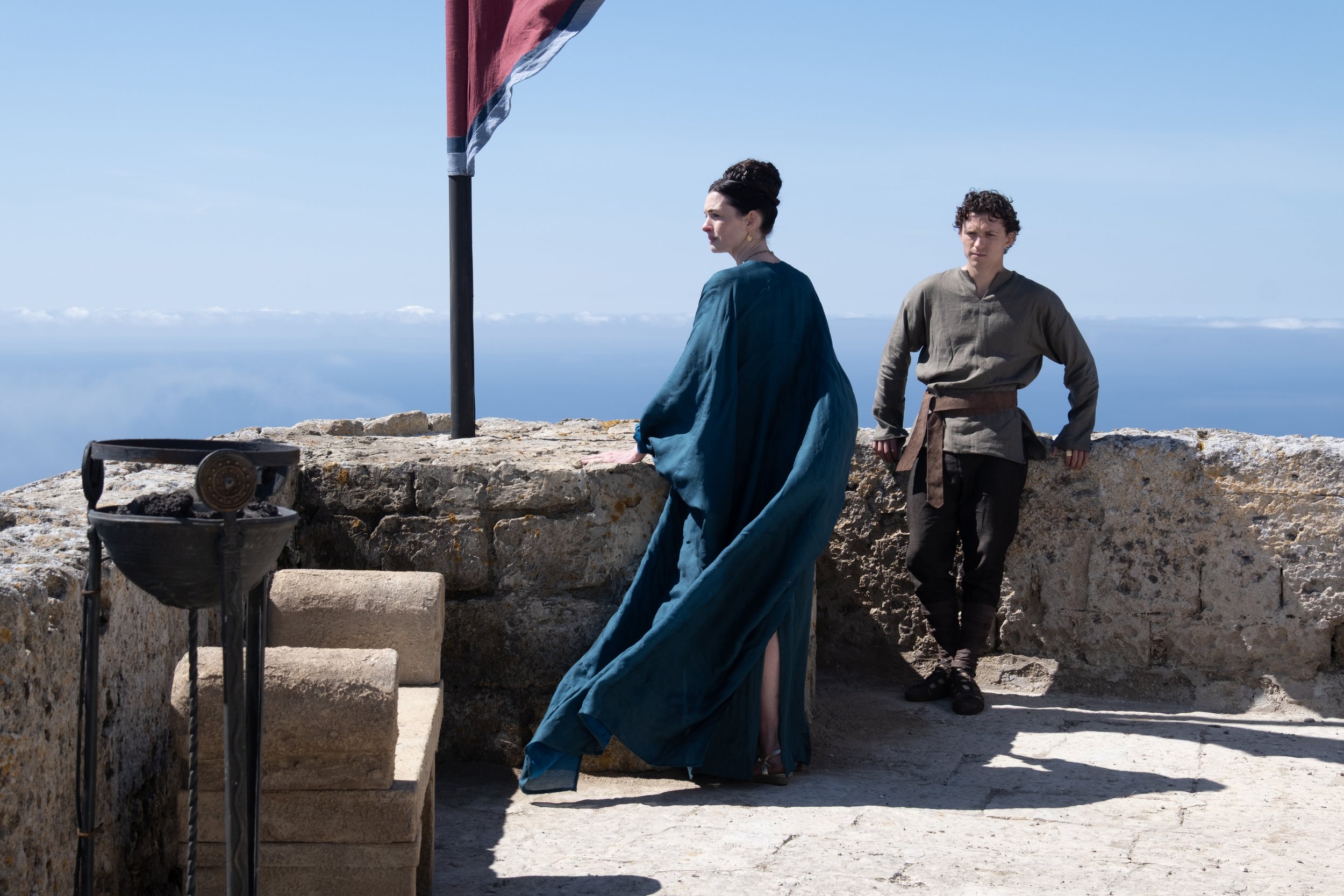
Courtesy of Universal
The similarities between these two characters speak to the way history repeats itself and to how prescient the stories of the Odyssey were. Because the films are presented in such quick succession in the filmography of Nolan, some of the wind is taken out of the sails of his version of The Odyssey. Despite existing thousands of years apart, these men fundamentally altered the course of human history and are afraid of the world they’ve directly influenced. Everything Nolan had to say about this burden and these stories of greatness was already said in Oppenheimer. That film’s final moments are stark, with the weight of Oppenheimer’s actions coming down hard on both Oppenheimer and the audience. Nolan tries to recreate that profound heft in The Odyssey with a moment when Odysseus looks on as Troy burns around him. It’s an instant Nolan keeps cutting back to. Odysseus on the steps of a building, aglow in the flames, looking upward. The audience is shown this moment three times before they finally see what Odysseus is looking at. It’s a tedious way to create meaning when a guiding purpose already exists. Much of Nolan’s take on The Odyssey is like this. Plodding, ponderous, and removed from the humanity of it all.
In ancient Greek times, the story of Odysseus was passed along through performance. These oral traditions were sources of news and entertainment. In modern times, they can be difficult to adapt. With image-based mediums, the adage of “show, don’t tell” holds true. It’s more captivating to see the images rather than to just hear characters talk about them. The Odyssey sees a lot of characters telling tales to others as opposed to simply allowing the actions to speak for themselves. It feels a little over-narrated at times and creates a barrier between the audience and the characters. This story is supposed to be about a man’s love for his wife and children and his fear of what humanity is capable of, but Nolan’s film is coldly removed from the pulpiness of humanity. It’s an epic for a reason. Not just because of the miles traveled or trials faced, but because of what is at stake; love, peace, and humankind. Nolan’s The Odyssey is an undeniable feat of filmmaking, but one that struggles to make sense of its mortal purpose.

Follow me on BlueSky, Instagram, Letterboxd, TikTok, YouTube, & Facebook. Check out Movies with My Dad, a podcast recorded on the car ride home from the movies.
support your local film critic!
~
support your local film critic! ~
Beyond the Cinerama Dome is run by one perpetually tired film critic
and her anxious emotional support chihuahua named Frankie.
Your kind donation means Frankie doesn’t need to get a job…yet.