
“The Saviors” Finds Discomfort in Suburbia
Americans have long had an idealized version of suburban life. It’s where neighbors care for each other, kids run wild and free until the streetlights come on, and there’s a strong sense of community. In reality, many suburban Americans don’t know their neighbors. Instead, they have video doorbells to further isolate themselves and keep them from having to get to know one another. We have social media echo chambers that keep us informed, but also in our own little worlds. Sure, technology and times change, but aren’t we losing something when we have so many barriers between us and the people who live on our street? Kevin Hamedani’s The Saviors, which premiered at the 2026 SXSW Film & TV Festival in March, is about our neighbors and the assumptions we make through windowblinds.
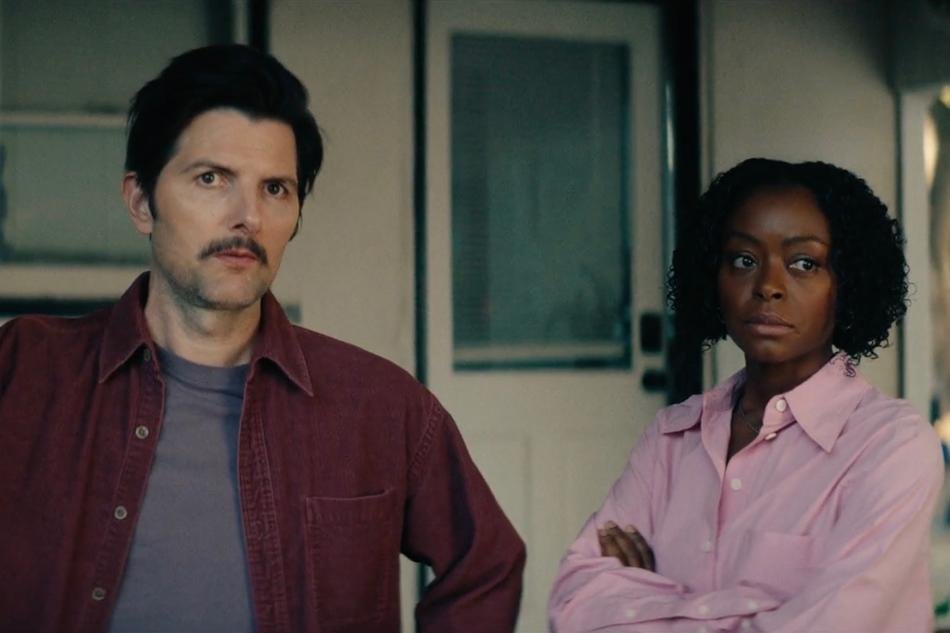
The relationship between Sean (Adam Scott) and Kim (Danielle Deadwyler) has seen better days. They’re technically married and living under the same roof, but they’re sleeping in separate rooms. There’s not bitter animosity between them, but something worse, something sadder. A mourning for what the relationship won’t have the chance to be. They’ve just decided to rent the guest house to a quiet Middle Eastern brother and sister, Amir (Theo Rossi) and Jahan (Nazanin Boniadi). Sure, they’re a little odd, but so could the routines of anyone appear to be when looked at under a microscope. Eventually, flashing green lights, bizarre technology, and lies about their past make Sean and Kim suspicious of their new tenants.
Courtesy of SXSW
Sean is the first to grow judgmental of Amir and Jahan. All the odd things the siblings are up to take on new meaning when Sean is reminded that the president will be coming to town in a few days. At first, Kim thinks Sean is out of his mind and jumping to conclusions of terrorism simply because Amir and Jahan are Muslims. Would he be looking at their tenants this closely if they were White? The audience finds themselves in a similar situation. There is enough in the actions of Amir and Jahan to raise some red flags. Why do they never leave the house unattended? What are these blueprints being shipped to there? Why would they lie about their lives before they came to town? Sean jumps to one conclusion, but is there another answer to these questions?
When Hamedani and Travis Betz’s script for The Saviors ended up on the Black List in 2017, they couldn’t have known the world they would be releasing it into. Islamaphobic rhetoric is rising. A shooting at a San Diego mosque in May of this year had Muslim leaders asking the FBI for help investigating this hate crime. American politicians have made it part of their official position to be anti-Muslim, and they are only encouraging the general public to grow increasingly hateful. As a people, Americans have always been a country of paranoia, but that has steadily increased over time. The Saviors is a heightened exploration of one of America’s ugliest attributes.
For as much as people like Sean want to preach about acceptance and open-mindedness, they’re often quick to fixate on the same outcome as someone who is racist. That inclination from a character like Sean is insidious in a frightening way, different from someone who is outwardly, combatively racist. That’s what The Saviors is trying to get people to realize. That prejudice doesn’t only manifest in loud, angry voices, but also in smaller, just as sinister ways. We build walls around our way of life to limit our interactions with people we see as Other. The Saviors is a Twilight Zone episode for the age of paranoid xenophobia we live in today and maybe, unfortunately, always have.

Follow me on BlueSky, Instagram, Letterboxd, TikTok, YouTube, & Facebook. Check out Movies with My Dad, a podcast recorded on the car ride home from the movies.
support your local film critic!
~
support your local film critic! ~
Beyond the Cinerama Dome is run by one perpetually tired film critic
and her anxious emotional support chihuahua named Frankie.
Your kind donation means Frankie doesn’t need to get a job…yet.