
Tribeca: “Summer War” Meticulously Plots its Moves
Roberto Bolaño was a Chilean writer who was described by The New York Times as “the most significant Latin American literary voice of his generation.” Bolaño passed away in 2003, a few years before the first of his novels, Una novelita lumpen, would be adapted for the big screen in 2013 by fellow Chilean storyteller Alicia Scherson. A little over a decade later, Scherson is once again adapting one of Bolaño’s works. Written in 1989 but not published until 2010, El Tercer Reich is the source material for Scherson’s Tribeca world-premiering Summer War.
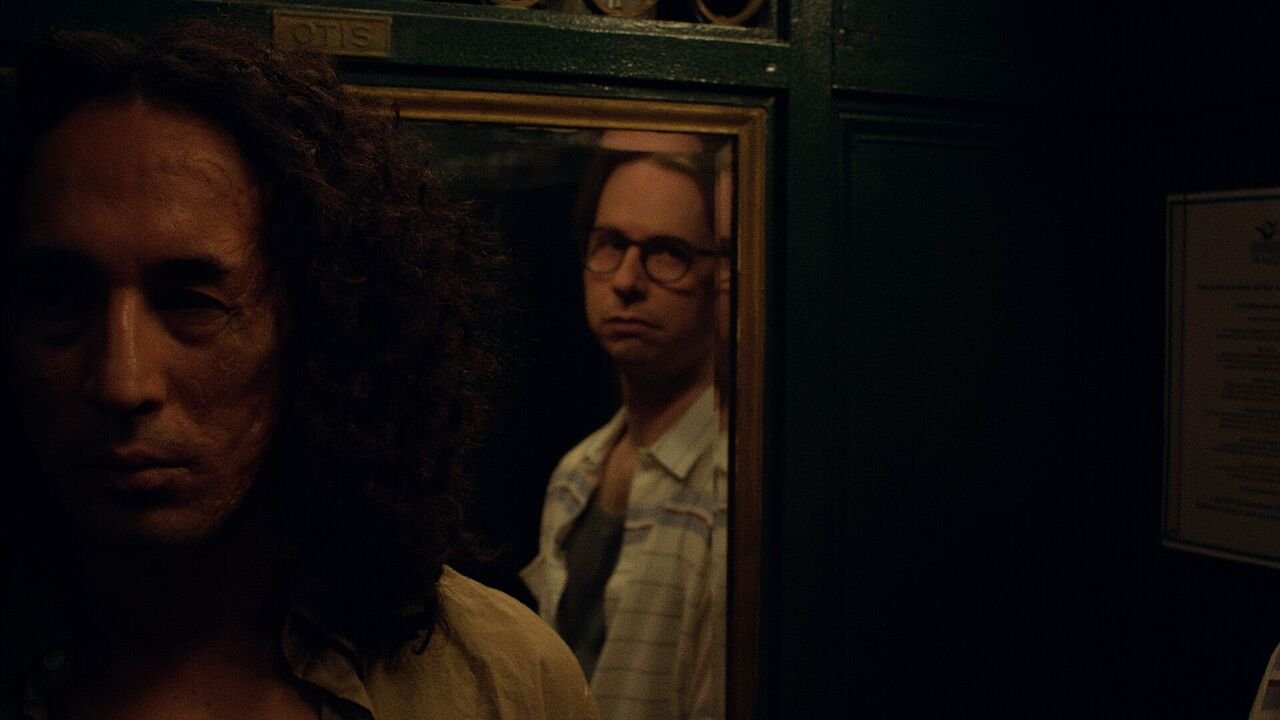
It’s 1989, and American Udo Berger (Dan Beirne) is on vacation in Chile with his girlfriend, Ingrid (Lux Pascal). The two are taking their first trip together, but Udo is antsy. While Ingrid is content to lie on the beach, he wants to get back to his tabletop games. He’s a wargame champion and is currently enchanted by a strategy game that asks players to try their hand at the Nazi Germany invasion of Europe. Udo’s attention is torn between the game and the locals he meets. The intersection of these two worlds forces him to recognize that he may not be as politically aware as his success in the game makes him feel.
Courtesy of Tribeca
Scherson leans into the time period to add some flare to the filmic elements of Summer War. The movie opens with archival, grainy images of airplanes and clouds as an incredibly dreamy score accompanied the imagery. Even though the images seem to point to war, the score makes the viewer drop their guard a bit. Immediately, the audience is forced into Udo’s unreliable mindset. He prides himself on being a champion of wargames and, by extension, he believes himself to be an intelligent man who is aware of the goings-on. In reality, he exists on an entirely different plane, more like the dreamy score and the war imagery. He believes Chile is a democracy because that’s what the United States told him. Even when in the country, he can’t tell that the arms of Pinochet’s regime touch everything in sight. Udo can be physically present and mentally incapable of seeing the trees that make up the forest in front of him.

Courtesy of Tribeca
Scherson further shows this disconnect between Udo and the world around him through picture-in-picture moments and split screens. Everything in Summer War is working to prove that Udo is not as smart as he thinks he is. However, the movie doesn’t go too far beyond that general concept. There’s a missing-person angle that comes about and Udo invites a guy from the beach to play his wargame, but these don’t tie together in a way that makes the viewer feel they’ve gotten a complete picture. It’s a critique that Bolaño’s novel received when it was published as well.
Even though there may be less of a resolution than some would have wanted, Summer War does make for a challenging, exciting watch. There’s palpable anger present for this era of Chilean history and the way the United States contributed to it, but that feels too tertiary to make enough of an impact and set the film’s fury free. There’s style here to Scherson’s vision, and the collection of characters milling about the hotel is an interesting group, but Summer War’s weak spot keeps the film more muted than it should be.
Follow me on BlueSky, Instagram, Letterboxd, TikTok, YouTube, & Facebook. Check out Movies with My Dad, a podcast recorded on the car ride home from the movies.
support your local film critic!
~
support your local film critic! ~
Beyond the Cinerama Dome is run by one perpetually tired film critic
and her anxious emotional support chihuahua named Frankie.
Your kind donation means Frankie doesn’t need to get a job…yet.