
“Wicker” Gets Hard for Sentimentality
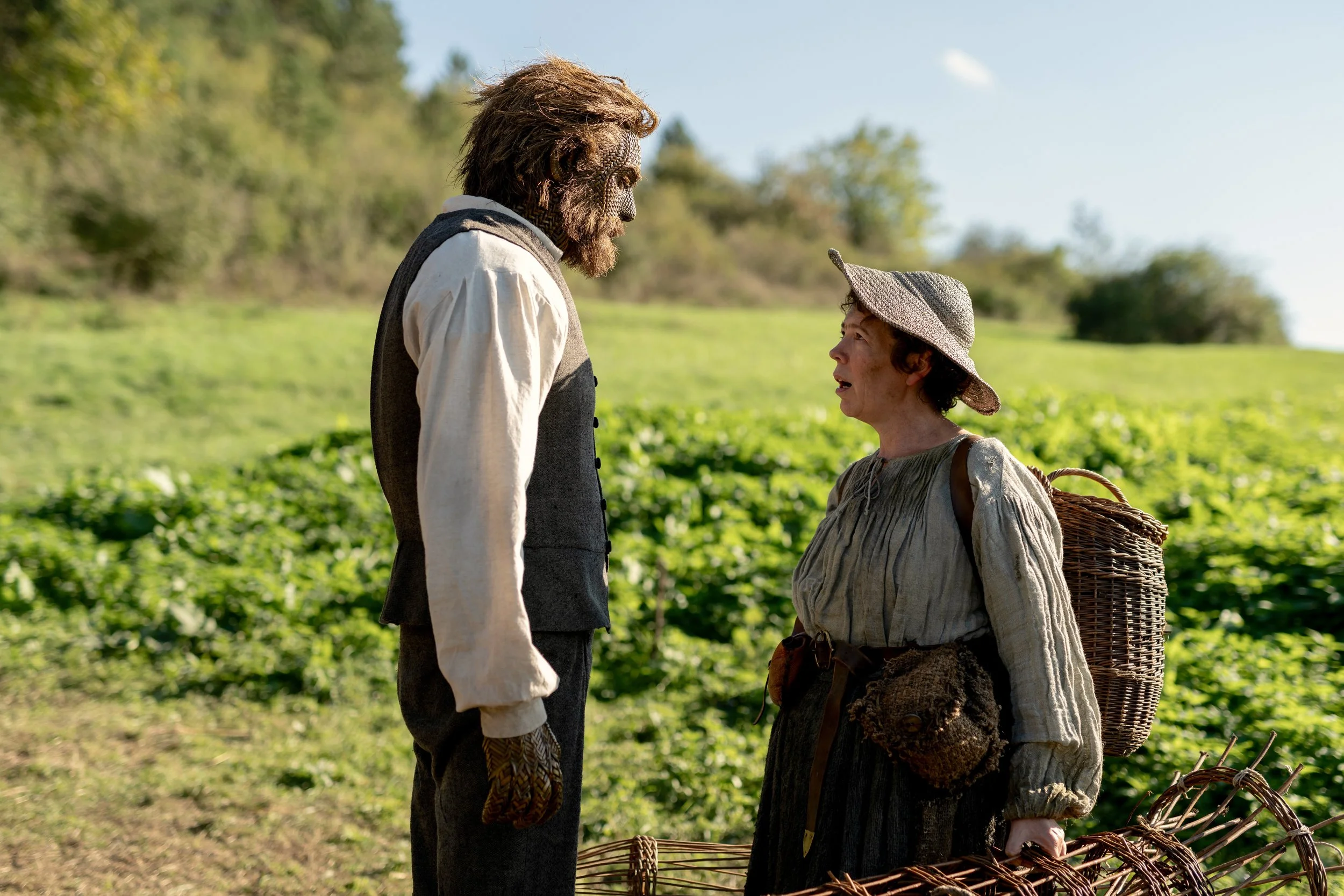
Once upon a time, there was a fisherwoman (Olivia Colman) who lived in a small English town that was full of rules and rituals she didn’t much care for. Fisherwoman keeps to herself, allowing the townsfolk to be burdened by societal expectations. This isolation is partially self-inflicted, but also a consequence of Fisherwoman’s refusal to act as a woman should. She does, however, want companionship, which leads her to the home of Basket Weaver (Peter Dinklage). Fisherwoman offers him a small fortune to make her a husband. He agrees, and in one month’s time, Wicker Husband (Alexander Skarsgård) has come alive. Such is the setting for Eleanor Wilson and Alex Huston Fischer’s fable, Wicker.
Based on Ursula Willis’ short story The Wicker Husband, the film adapts and expands the original idea into a modern exploration of what a marriage dynamic should look like. While Wicker takes place in an undeclared time in the past, the thematic questions of gender roles, relationship power dynamics, love, and parenthood are all contemporary. Even though technology has brought us to a modern world, humans haven’t the desire to share their life with someone. To find connection, compassion, and companionship. Wicker does enjoy the absurdity of crafting a perfect man out of wood, but the film also recognizes that the inherent emotions driving the characters are grounded in a genuine desire for love.
Courtesy: Black Bear
The beginning of the marriage between Fisherwoman and Wicker Husband is all about the physical. When she’s not fishing to make a living, she’s naked in bed with Wicker Husband. Colman and Skarsgård are two actors who seem to seek out the strangest roles imaginable. They’re willing to play, to be weird, ugly, odd, or made of wood if it gives them the chance to tell a universal story. Colman and Skarsgård are two peas in the same freaky little pod, and Wicker is all the better for it. The film needs two people at its center who want to push themselves past the point of comfort in order to show that life’s absurdities are actually merely mundane. That the only thing we can know for certain about life is that it’s strange, and it’s best if we find others to help ease our burdens.
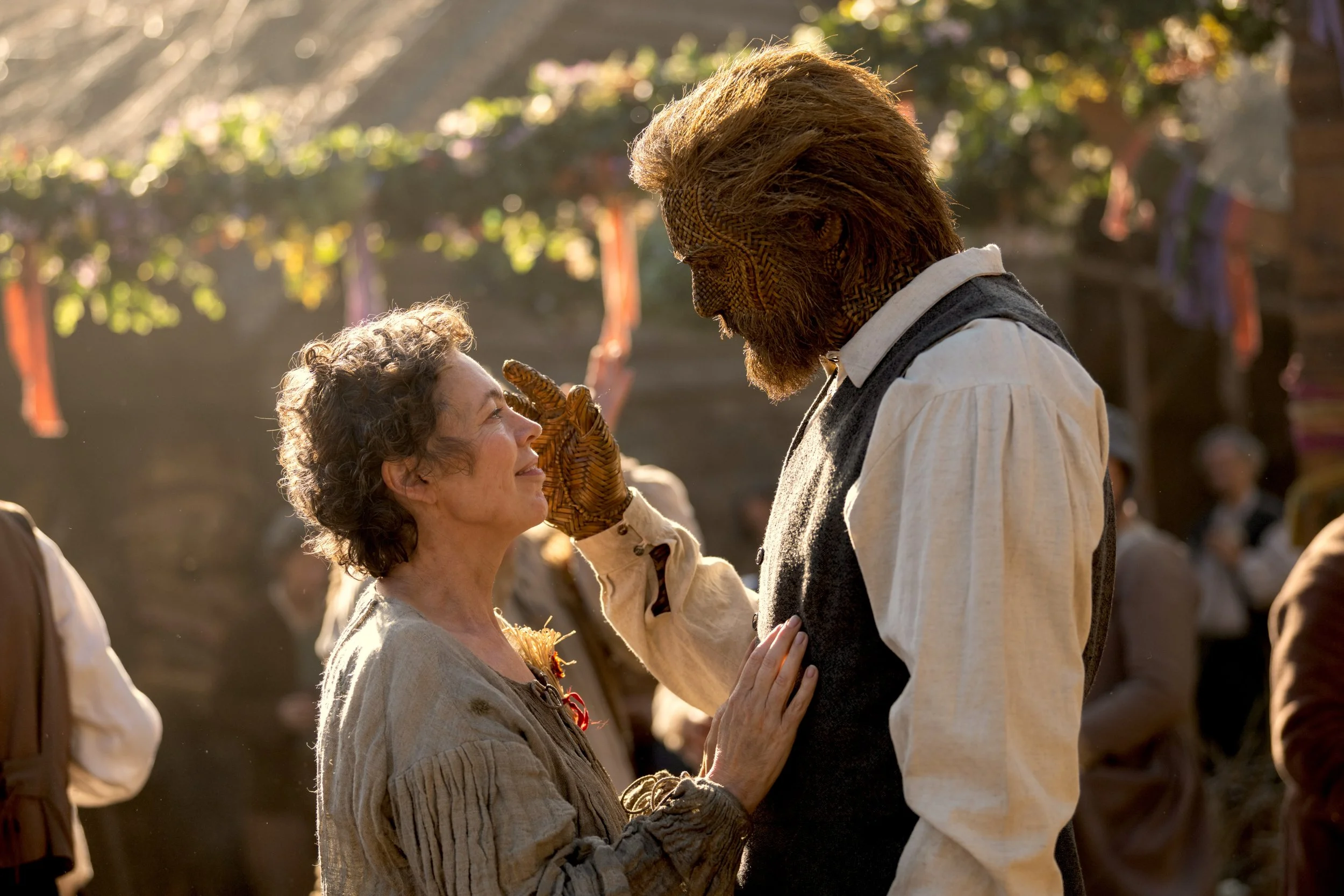
In the lead-up to the release of Wicker, much has been made of Wicker Husband. He’s hunky, handy around the house, and honest about how he feels. It’s that last attribute that sends the conservative town into a tizzy, because wives are mad their husbands don’t talk like that. Wicker makes the argument that a good relationship is one made on mutual love and respect. All the men in town feel threatened by Wicker Husband because their wives are so drawn to him. It’s not about his looks, not really, but about the fact that Fisherwoman and Wicker Husband are a unit, proud of being on the other’s arm and working together to create a home. That is love. Not forced roles that come from marriage rituals that have existed for decades or what people do because they feel they have to. In the beginning, Fisherwoman writes off the idea of love, calling it “more a burden than a prize.” She has it wrong, though, and her developing relationship with Wicker Husband makes that clear to her. He says, “my love doesn’t require a promise.” A good relationship is action and reaction, a give and take toward a common goal.
Courtesy: Black Bear
Wicker is a fantastical fable so beautifully constructed that the viewer is effortlessly swept up in its world. The design of Wicker Husband is gorgeous and intricate. Coupled with the ever-creaking sound design that matches his every movement, there’s never a moment when Wicker Husband doesn’t feel fully alive and real. The weaving along his back and fingers is delicate and sturdy, much like the man himself. Anna Meredith’s whimsical, airy score also has moments that highlight the natural essence of Wicker Husband. Low, plucked string instruments feel earthy and warm, much like the man himself.
Even though Wicker takes place hundreds of years before AI, and while that doesn’t seem to have been a main focus of critique from their filmmakers, an easy connection can be drawn between Wicker Husband and the people who are dating their AI chatbots. The essential difference is that Wicker Husband was not forced to fall in love with Fisherwoman. He chose to, over and over again. Unlike AI chatbots that simply parrot back what the user wants to hear, Wicker Husband has his own wants and needs. Wicker may not have been intended to be a rebuttal to AI, but it certainly has found itself in this position. It’s a cry for mutual desire and respect as a means of love.

Follow me on BlueSky, Instagram, Letterboxd, TikTok, YouTube, & Facebook. Check out Movies with My Dad, a podcast recorded on the car ride home from the movies.
support your local film critic!
~
support your local film critic! ~
Beyond the Cinerama Dome is run by one perpetually tired film critic
and her anxious emotional support chihuahua named Frankie.
Your kind donation means Frankie doesn’t need to get a job…yet.