
"It’s Just Me and My Punk Friend Gore" - Geoff Zanelli on Good Luck, Have Fun, Don't Die Score
This interview was originally posted on Film Obsessive.
Gore Verbinski is one of those absolutely gonzo filmmakers behind visually immersive heavy hitters like Pirates of the Caribbean: The Curse of the Black Pearl, A Cure for Wellness, and Rango. All those pale in comparison to his newly released futuristic, anti-AI comedy, Good Luck, Have Fun, Don’t Die. He brought on frequent collaborator Geoff Zanelli to compose the score. When Zanelli asked what Verbinski was thinking, his response was, “this score can be literally anything.”
Good Luck, Have Fun, Don’t Die is the first official time that Zanelli served as the lead composer for Verbinski, but the two have been working together since The Curse of the Black Pearl. They worked on the next two Pirates films, as well as on Rango and The Long Ranger.
“I would say Rango and Lone Ranger were about as close to a co-writer situation as you could get without it actually being one, if you see what I mean. My credit was appropriate, but I did quite a lot of work on those. Whereas the first three Pirates, I maybe did 20% of the score.”
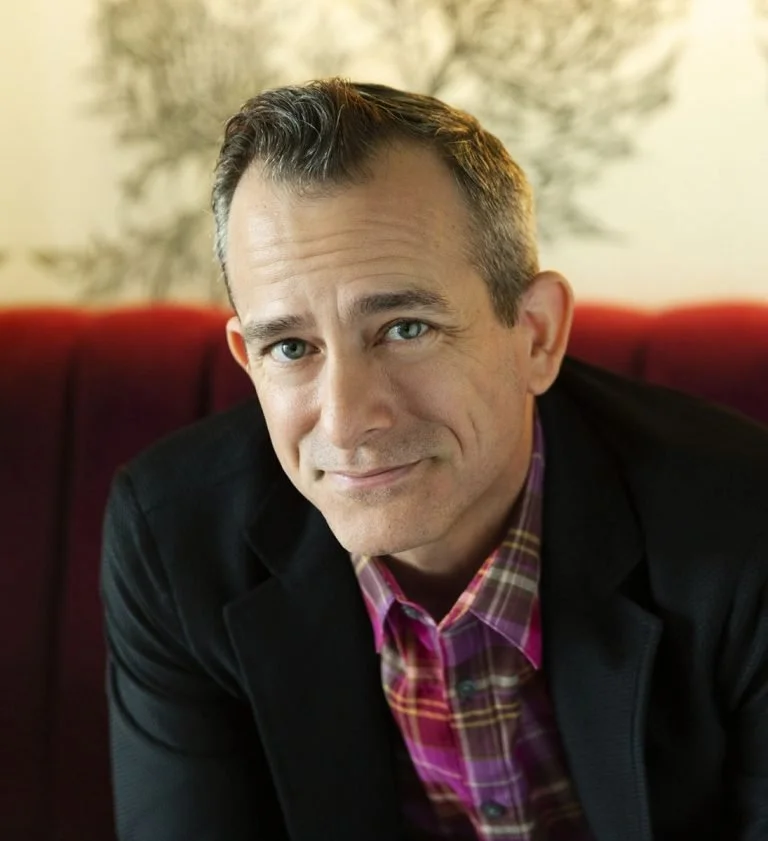
courtesy of Geoff Zanelli
“On Lone Ranger, I did the train chase at the end, which is almost like its own movie. That was six months of just working on that, bouncing it back and forth. The Lone Ranger train sequence turned into, I have to say, far and away the hardest single scoring assignment in the year it came out. It was a very heavy lift and I’m very, very glad I did it. It was put the blinders on and you go, this is what I’m doing, I’m committed to it, we’re going to make it great. I think that’s how Gore shot it too, and it’s why the sequence holds up the way it does.”
You might be wondering, if the train sequence took Zanelli six months, how long did he have to write the score for Have Fun, Good Luck, Don’t Die? A score that Zanelli describes as a “nine-headed monster.”
“Probably about six months as well,” Zanelli laughs. “I think I benefit from those longer schedules and I think it really helps Gore because he and I both have a process where we like to iterate a lot.”
“I’m a little different from a lot of composers in that sense. A lot of people want to finish something. I actually quite like it if Gore and I are looking at a film and asking ourselves, now that we’re here, what have we learned?”
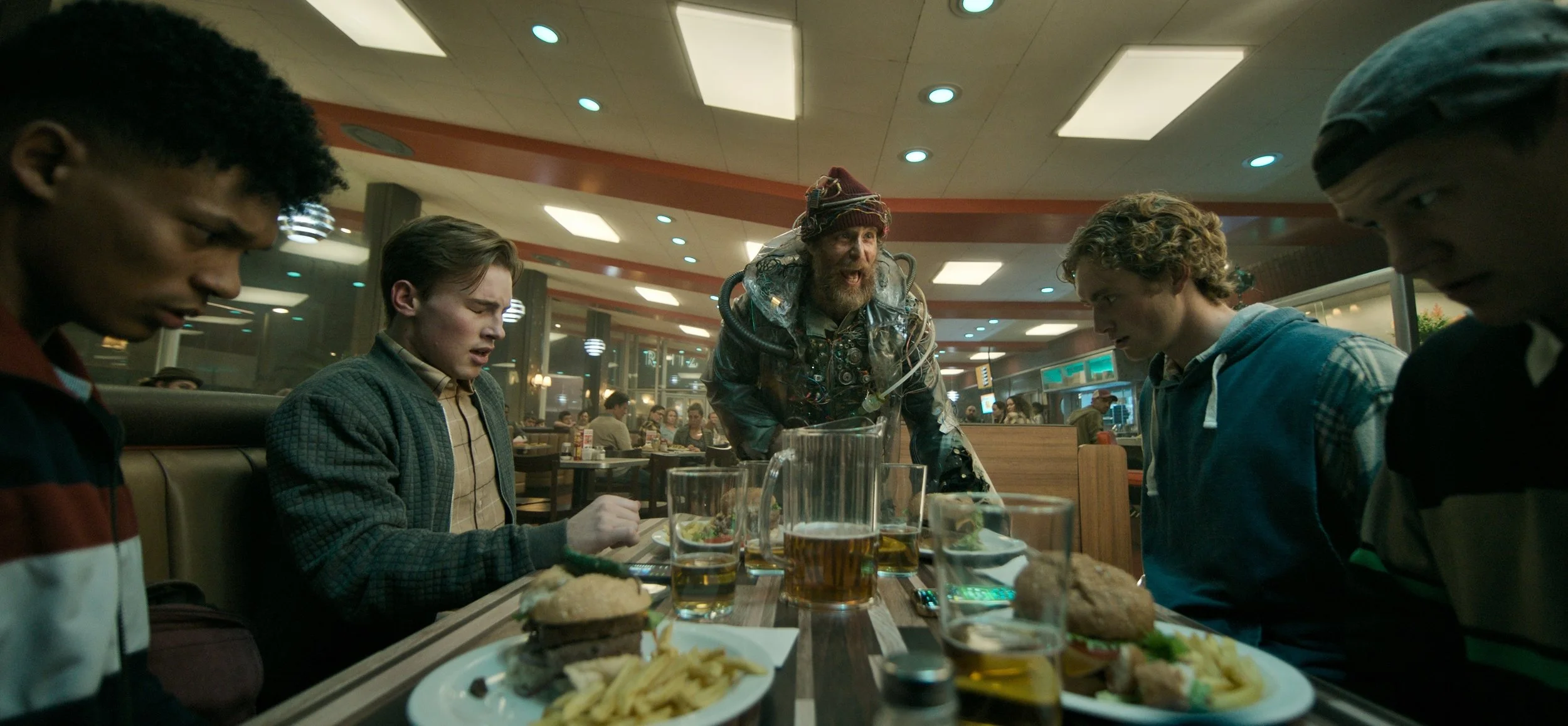
courtesy of Briarcliff Entertainment
“The Norm’s Diner sequence that opens this movie, we went back to it very often during the process because we’d go, oh, we have a new idea. There’s also a point where even Gore would go, let’s wait three weeks before we open that sequence up again, because I think we all feel the whole score, especially a score like this, benefits if you have the time to go back.”
Good Luck, Have Fun, Don’t Die takes place over the course of one night as an unnamed man from the future (Sam Rockwell) arrives in Norm’s Diner to compile a group of volunteers to help him save the world. He believes that some combination of diner patrons will be the key to saving the future from the apocalyptic world he has traveled from.
“The inherent problem with scoring a movie about AI is that it can create basically any image on the planet, things we can’t even think of. So what is the score? Well…anything you can think of. There isn’t really an obvious entry point to how to write it. It’s not like Pirates where you go, okay, we have a sword fight, let’s start there.”
“It’s so different. You really have to throw the laboratory doors open and go, I’m going to grab the rocks on my desk to bang together. I’m going to hit a pan with a chopstick and see what that sounds like. I’m going to record my cat and slow it down. This all happened. It’s all in the movie.”
“There’s a spirit of experimentation that helps you allow yourself to learn as you’re going. There are very few composers in the world who would pitch to their director a score with something like, I don’t know, let’s try stuff. I’m being a little facetious, I’m not that abstract, but you can see how it would talk a director out of hiring you.”
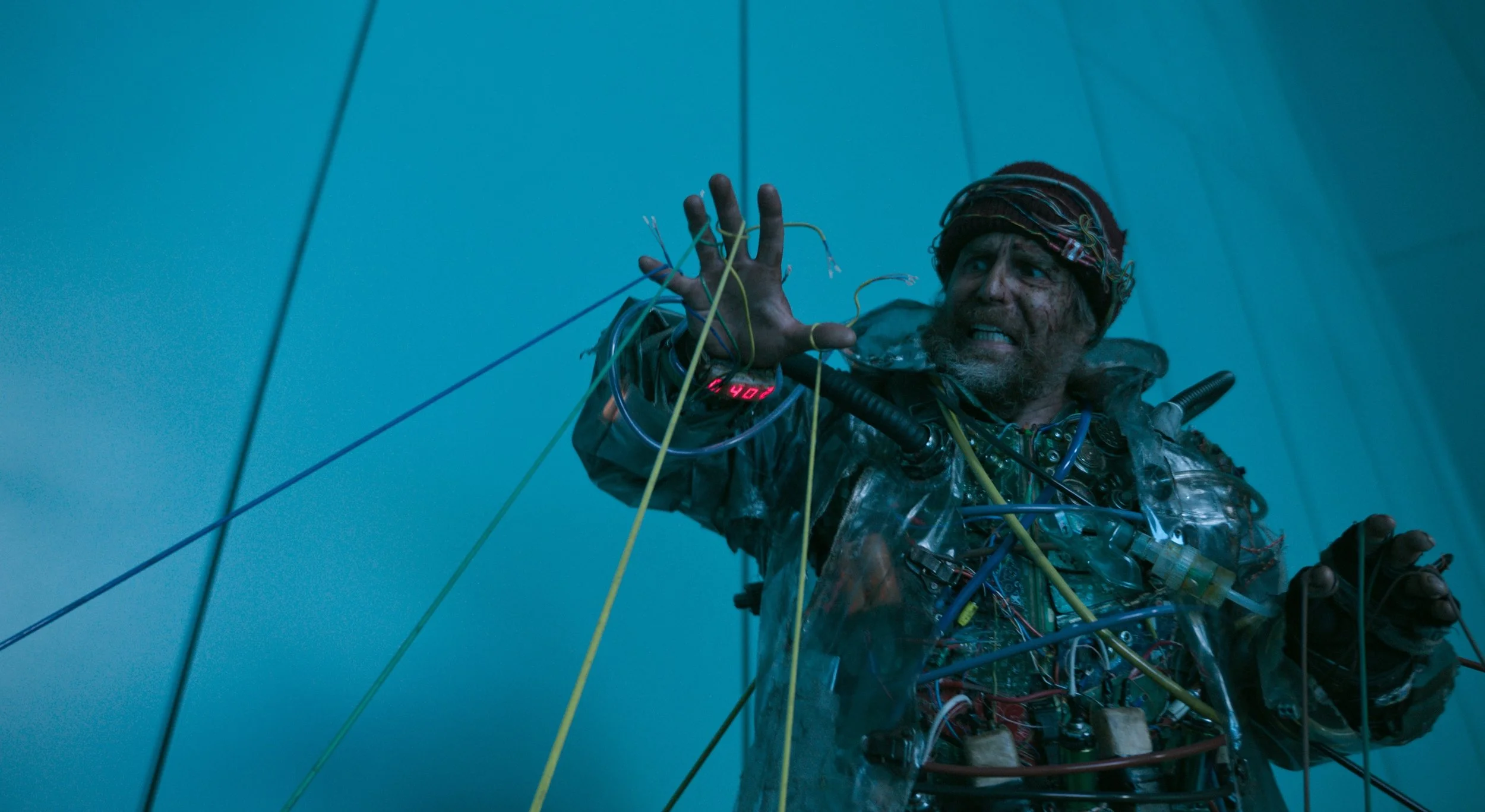
courtesy of Briarcliff Entertainment
“That’s why I like working with Gore, because he is absolutely willing to go for it. I can play music that I know isn’t right, but I know will generate a conversation so I can say, hey, listen, I’m not trying to put this in your movie, but let’s just talk about this for a second because there’s something in there I’m responding to. There’s got to be some reason I thought I had to slam the waffle iron, you know what I mean?”
“I didn’t actually do that one, I just made it up,” he laughs. “Gore is also a musician, and he would play things for me too. In a funny way, we kind of started a two-person band for this project. He gets an additional music credit, which is very much deserved, because there’s music in there that he wrote. It wasn’t the kind of typical director relationship where they like it or they don’t, or they give their notes or something. He was very much willing to just go, I spent the weekend looking at this thing, and I came up with this little guitar riff.”
“I think that’s an unorthodox way of writing a film score, but it’s one that a movie like this and a director like Gore really benefit from.”
Like most people on the planet, even before signing onto this movie, Zanelli has been contemplating the role of Artificial Intelligence. How does it impact Zanelli’s livelihood as a composer? What does it mean when artists are being replaced by cheap, fast AI work? What do we lose?
“None of us are saying we don’t want AI to detect cancer earlier than our current tests do. That’s a great use of the science of AI. I want it to figure out how we can stop some natural disasters or solve whatever problem we’re trying to solve. I think there’s a way to ride this wave and enjoy it and expose its problems and celebrate what it’s useful for.”
“This movie is a satire, but I’ll tell you, I did have a really interesting experience with AI as it relates to music. I put on music to fall asleep sometimes. It plays many hours and it’s typically instrumental, or I might find a sleep playlist. This was months ago, but it was during the writing of the score. I woke up in the middle of the night, three in the morning, feeling like something’s wrong. I’m a good sleeper, so this is unusual.”
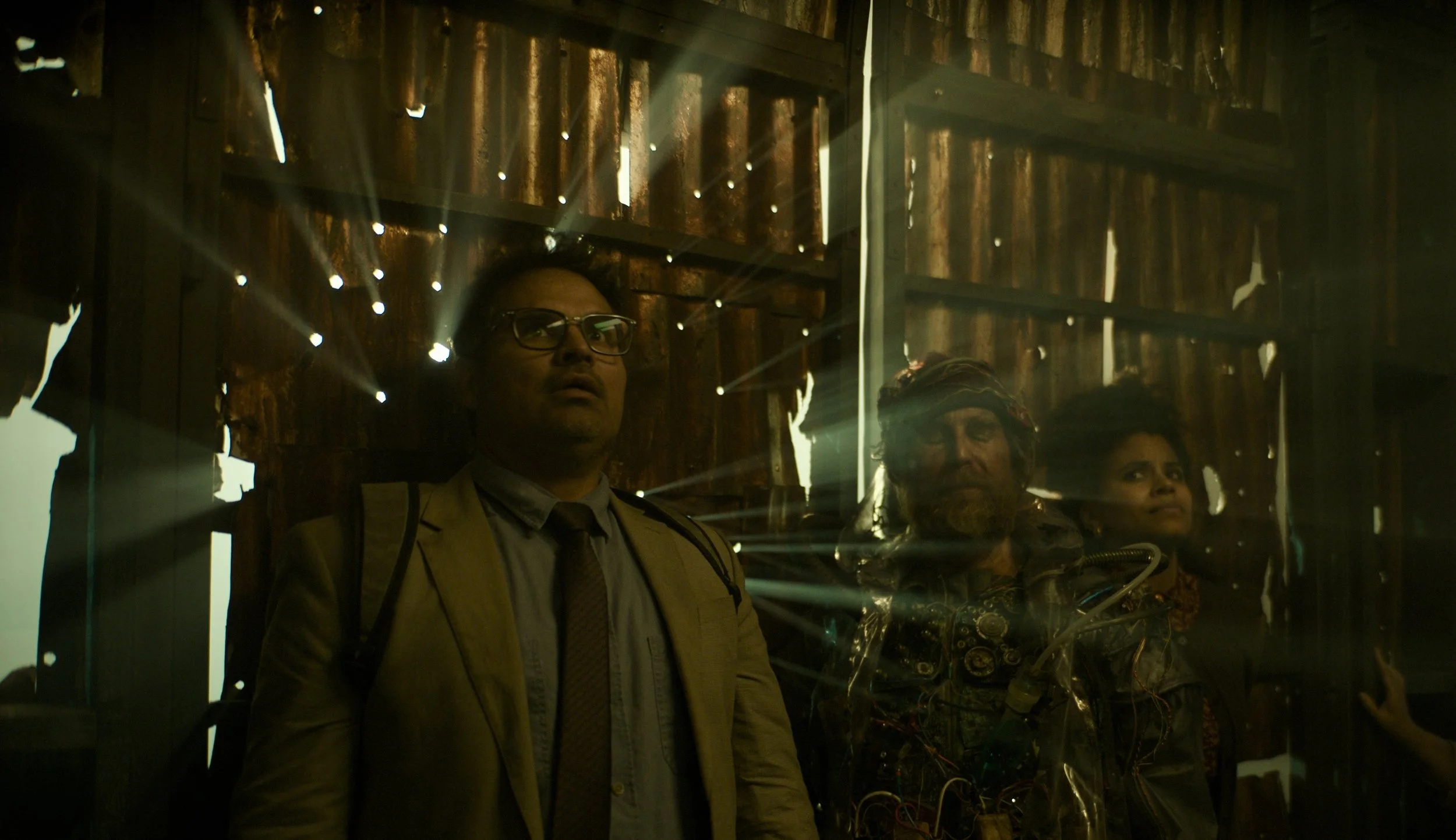
courtesy of Briarcliff Entertainment
“I look at the phone and it’s got the name of an artist and the title of a song that kind of looks suspicious to me. A red flag goes up. It doesn’t sound like a real person. I Googled the person and they don’t exist, and then I realized, this is AI music.”
“I was asleep, and for whatever reason, Spotify decided to play some AI music. I think they have recently gone through their algorithm, are aware of this problem, and are doing a lot now to solve it. At the time, these things were creeping into the playlist. I woke up because it was weird. There wasn’t really a way to identify what was weird about it because the notes were okay, the sounds were okay. It was a sort of synthesizer, almost spa music, but none of the note choices were the ones a musician would make. I don’t just mean a different musician from me, because obviously I choose my notes and John Williams chooses his. However, I can hear John’s music and go, those sounds make sense. There was intellectual intent.”
“This music didn’t have it. I’m sure you’re familiar with, in animation, what they call the Uncanny Valley. It was exactly that, but in audio. Uncanny Valley is if you have an image that looks almost human, but not quite, and so it’s actually creepier than something that looks totally inhuman or totally human. There’s a musical version of that which I’m not sure everyone can identify in exactly the same way. Some people aren’t bothered by it in animation. Some people are.”
“To me, it’s pretty insightful for the way Gore and I could approach the score for Good Luck, Have Fun, Don’t Die. You have this idea that AI is encroaching in, at first, very subtle ways. Ways that you almost don’t perceive. Then, the next thing you know, there’s a 90-foot cat stomping on your car, you know what I mean? Now you notice it, right?”
“Every single person, me included, has had that experience of scrolling on their phone and it’s longer than they thought. It’s one thing to look at your phone for five minutes and go on social media. It’s a whole other thing when it becomes your personality, when it takes over your life. It’s not different from alcohol. It’s not different from so many things where many people can do it, but many people cannot.”
“That’s what I think is actually really fascinating about this movie. Not to go so far down this rabbit hole, it’s ultimately a really fun movie, but there are a lot of ways to look at AI. One of them is to kind of point laugh every once in a while, which I think is actually what we’re doing. It works in the same way that South Park works. There’s a very earnest commentary being made in a way that’s also extremely funny.”
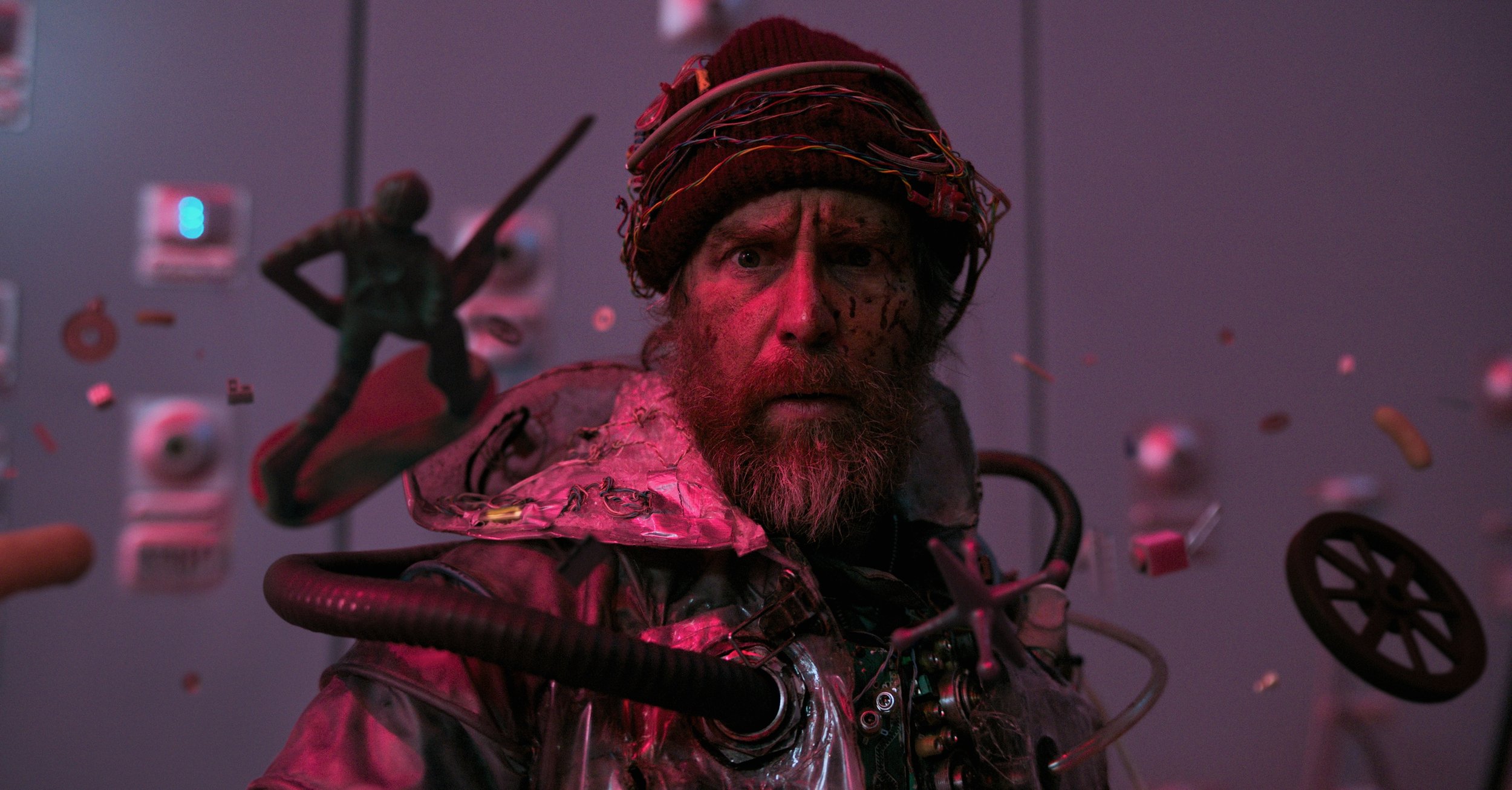
courtesy of Briarcliff Entertainment
Zanelli’s score is pure mayhem in the best possible way. In a distinctly human way. Nearly 100 musicians were recorded with no AI involvement, and he drew from inspirations far and wide. From punk to Zappa to experimental influences that are all combined with orchestral writing, the score to Good Luck, Have Fun, Don’t Die is an ode to the messiness of humanity. The thing we lose by turning to AI. Part of how Zanelli captured this sensation was with handmade synths and guitars.
“It dawned on me in the last few years as a composer, especially now when we all work digitally, that other composers have the same software. They have the same samples, the orchestra, they have access to the same exact equipment. They can all go to a Guitar Center where I get my stuff. That’s not different in any way at all from the person to the left and to the right of me.”
“What is different is how it’s performed, how it’s recorded, how it’s presented, and mixed. These are the decisions that I think now are so much more important than they ever have been. I’ve heard amazing music come out of my daughter’s GarageBand on her iPad, right? She’s not using synths that nobody else has. It’s free. Justin Bieber could top the charts with GarageBand and a microphone. It’s all because of what he did that came from his personality.”
“For Good Luck, Have Fun, Don’t Die, I want the sound of a cello, but I don’t want it to sound perfect. All that kind of handmade feel, it’s really by design. I drove an orchestra crazy once before because they spent their formative years learning to play together. When I say no, I don’t want to hear 16 violins playing one line, I want to hear 16 violins individually, they’ll embrace it, but it takes a second because it’s a mindset shift. It’s closer to a Rolling Stones record where, if you really listen to it, it’s pretty messy, but the cumulative effect is incredible.”
“This morning, I talked to Kristin Naigus, who played the woodwinds in this score. She gets a couple really important emotional solos. I had to tell her, your woodwinds were so perfect that they didn’t sound right with the guitars. Gore and I played, so I had to put you out of tune. I went through her tracks and deliberately went, okay, I’m going to crunch this up a little bit and all of a sudden went, okay, now it sounds like it has an attitude.”
“I’m like, you can take your name off it if you want because it’s not how you played it, it’s so out of tune. She got a kick out of it because she’s a world-class woodwind player, so she’s not going to play out of tune. But I am because it’s just me and my punk friend Gore and we just love doing this.”
“I actually thought, if not now, then when am I going to get an opportunity to do that to an orchestra and have it be the right thing to do?”
“When you watch it, you’ll see it’s really a commentary on how messy people actually are and why that’s great. That’s the crux of the movie: trying to perfect something that doesn’t need perfecting. We all want better health care worldwide. We want less famine. We don’t need AI to write our songs for us. That’s the stuff we want to be doing.”

Follow me on BlueSky, Instagram, Letterboxd, TikTok, YouTube, & Facebook. Check out Movies with My Dad, a podcast recorded on the car ride home from the movies and I Think You’ll Hate This, a podcast hosted by two friends who rarely agree.
Support Your Local Film Critic!
~
Support Your Local Film Critic! ~
Beyond the Cinerama Dome is run by one perpetually tired film critic
and her anxious emotional support chihuahua named Frankie.
Your kind donation means Frankie doesn’t need to get a job…yet.