
70 Years On and Tim Matheson is Still Damn Glad to Meet You
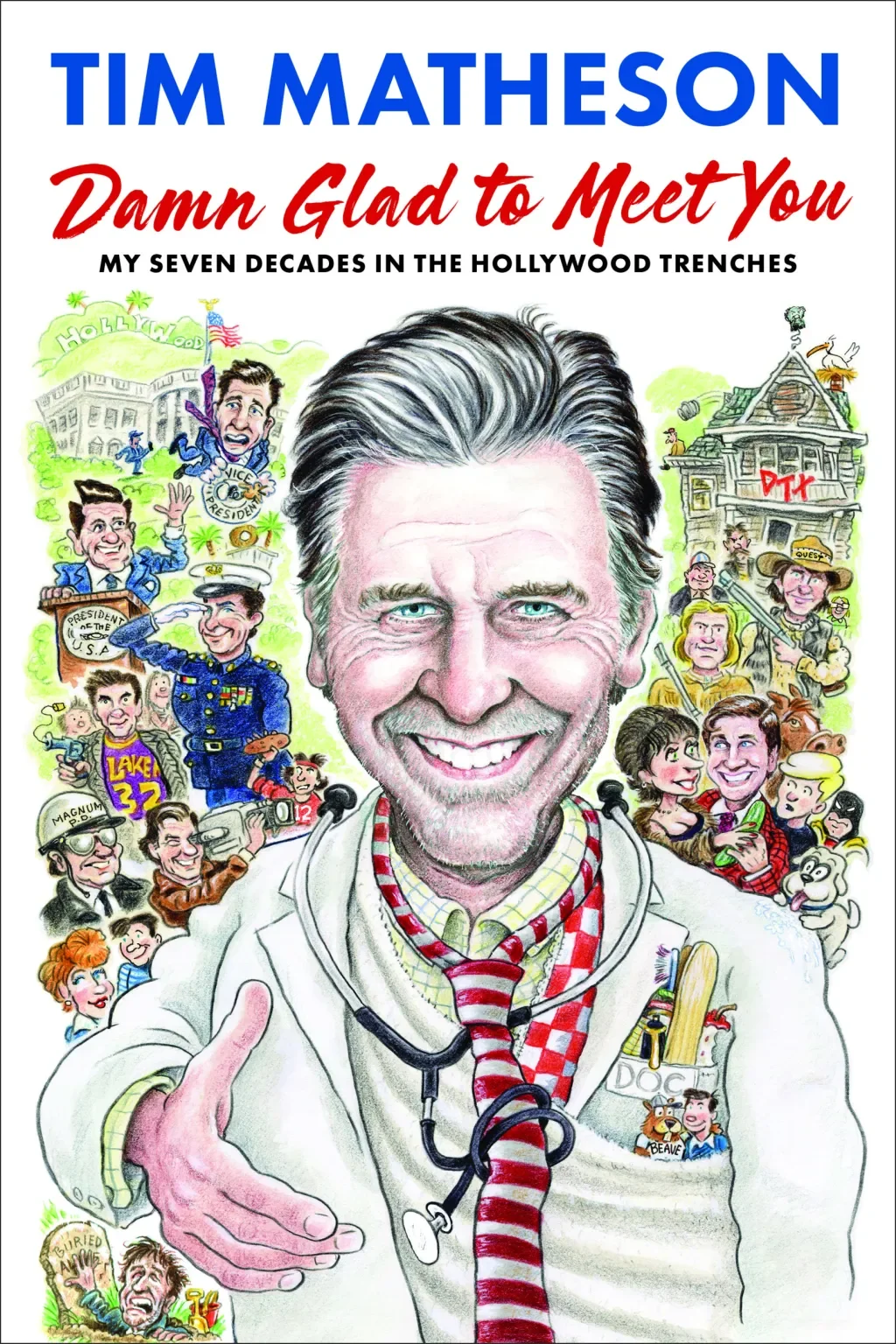
Courtesy of Grand Central Publishing
Tim Matheson is one of those guys whose career is so varied and decade-sprawling that it makes those of us at home feel like he’s a pal. His memoir, Damn Glad to Meet You: My Seven Decades in the Hollywood Trenches, now available in paperback, chronicles his time in front of and behind the camera. He’s worked with everyone from Lucille Ball to Aaron Sorkin, but all this had to start somewhere. For Matheson, it was the sixth grade.
“I never really enjoyed anything more than I did acting. It was such a release for me. My mother was having a hard time, so she sent my sister and me to San Bernandino to be with our aunt and uncle, Joe and Estelle. They took care of us for that year.
“In the fifth grade, I’d gotten to a point, because of the divorce and everything, where I was angry and taking it out on my classmates. I was turning into a person I didn’t like. I didn’t like feeling all these feelings, and I didn’t understand them. When I got up to San Bernardino, I found my school would do acting sketches. We would do a pretend Today Show two or three times a week. It was such a relief and a release for me.”
“I was allowed to become this new person who didn’t have all that negativity I had growing up in Los Angeles. It was a sort of a rebirth and a new beginning for me, and I associated that with acting. I just dreamed that when I went back to LA, perhaps after the sixth grade, I was going to become an actor.”
When Matheson returned to Los Angeles, he would sneak onto film lots, dreaming of the chance to be there to perform. Much of Matheson’s inspiration came from the vaudeville performers of the generation before him. Despite not growing up with them, he was captivated. In his memoir, Matheson reflects on the impact this style of performance had on his career.
“I was a big Jackie Gleason fan. I watched his show, The Jackie Gleason Show, where he basically would do a similar character in a similar sketch every week. He was essentially doing vaudeville stuff. It was a comfort to see the same character in a different context every week. Also, how you could make the same material just as funny or even funnier every week.”
“I had read a lot of biographies of people and how they worked in vaudeville and how arduous it was. People stealing your jokes, three or four different shows a day, being on the road…it was a brutal existence. The people who did it, they could sing, dance, act, tell jokes. They could do all those things and eke out a living doing it.”
“I couldn’t sing or dance, but I did take all the classes I could take. It was like the minor leagues for me, you know? That’s what those movie stars came from, so I just tried to emulate their earlier days.”
While vaudeville may not exist in contemporary times in the way it once did, Matheson draws a line between the grind of those performers to that of modern, independent filmmakers. There’s a scrappiness that must exist in the artists, a resourcefulness that allows creativity to flow into something larger than anyone could have conceived.
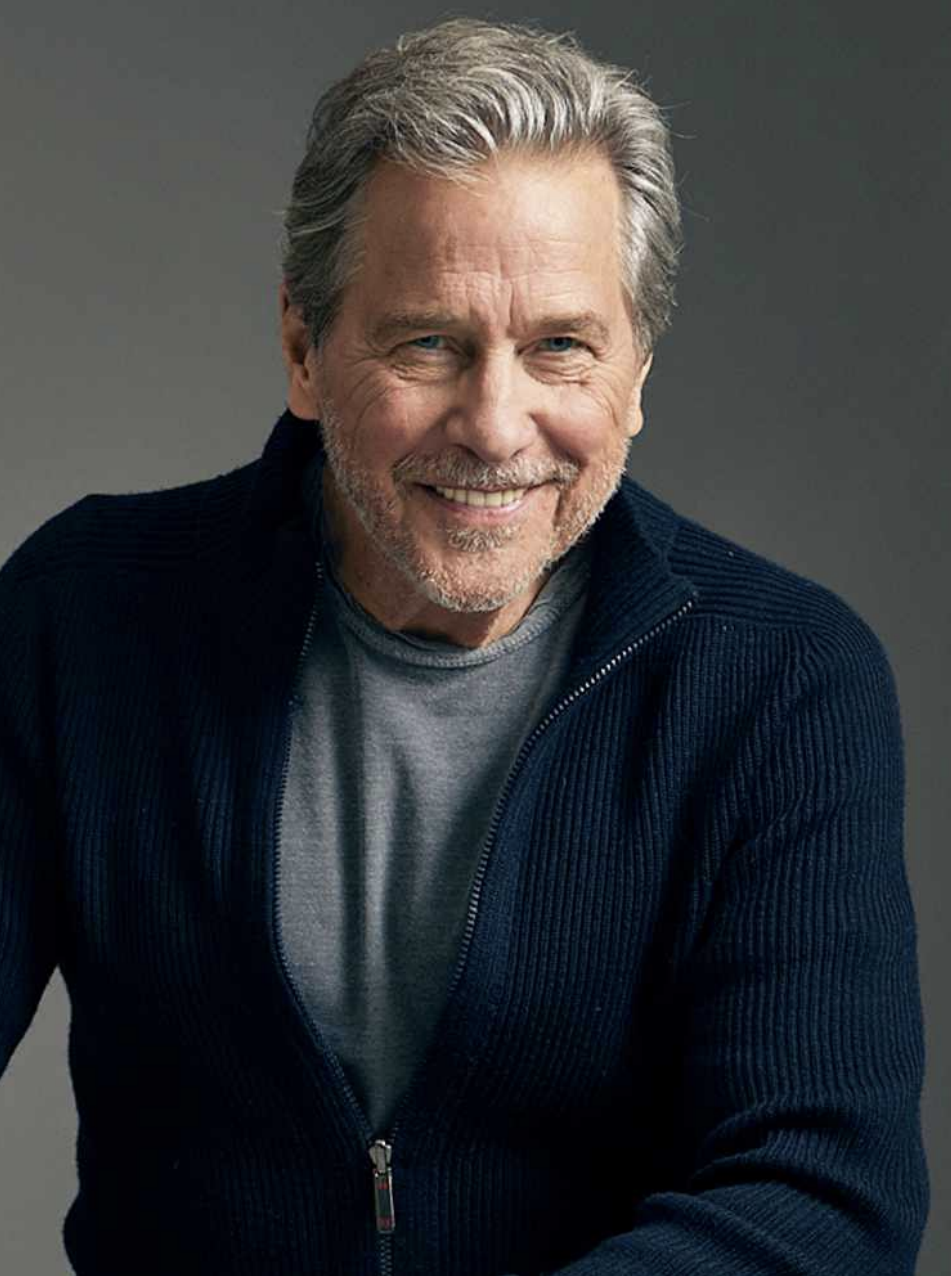
Courtesy of Tim Matheson
“When you talk about indie filmmaking, you have to make this movie or this show on a nickel. There’s a program, it started in Canada, called Heated Rivalry. It’s a story about two male hockey players who are lovers. To me, it’s like Romeo and Juliet. Two people who shouldn’t be together, nobody wants to be together, but they are together and in love with each other.”
“They made it for very little money. It’s so creative, and the people behind it are so talented. The way creator/director/writer Jacob Tierney does that show, I think is so good because it was so limited. They had no money to do it. He had to be more inventive with how he constructed the show. He got performers who could do it live in one take instead of having to cut it up. I think all the challenges that are present, either in indie filmmaking, acting, time of shooting, or in a budgetary sense, are vital. You have to be creative and innovative to survive that, and it challenges you to be more inventive.”
If there’s anyone who knows what it’s like to experience a Heated Rivalry meteoric rise to fame, it’s Matheson. One of his most famous roles is Eric “Otter” Stratton in National Lampoon’s Animal House, a movie no one could have guessed would have the longevity that it does almost fifty years later.
“We had a glimpse that maybe this could work because we had John Belushi, we had National Lampoon’s first movie, we had an amazing script, and the smartest, funniest people I’d ever run into. It was the first comedy written by young people for young people. Saturday Night Live was in its second year. The timing seemed to coincide and mesh with what was happening in the zeitgeist of television. So I thought, well, yeah, this might work.”
Similarly, Matheson is currently starring on Netflix’s Virgin River. The show is based on the Virgin River series by Robyn Carr and focuses on a small town in Northern California. Matheson plays Vernon “Doc” Mullins, the local physician and husband of the town’s mayor. This show, now filming its eighth season, has become a juggernaut for Netflix, but Matheson admits that he wasn’t so sure at the beginning.
“With Virgin River, it was uniquely strange in that we shot the first season and said goodbye, thought that might be it, you know? I never worked for a streamer before, so I didn’t know that it takes so long to translate into so many different languages and prepare it for release around the world.”
“A couple of months later, we were home and we got word they wanted to do another season before it had even been on the air. It was like, okay, well great, let’s do it again. We’re still in a vacuum. Then Covid hit and they said they wanted to do another season. It had still not been on the air.”
“At that point, you don’t know what works because you’re not getting a lot of feedback. Actors are very self-doubting and insecure sometimes. On the last day of the third season, the first season was released and it became the number one hit all over the world.”
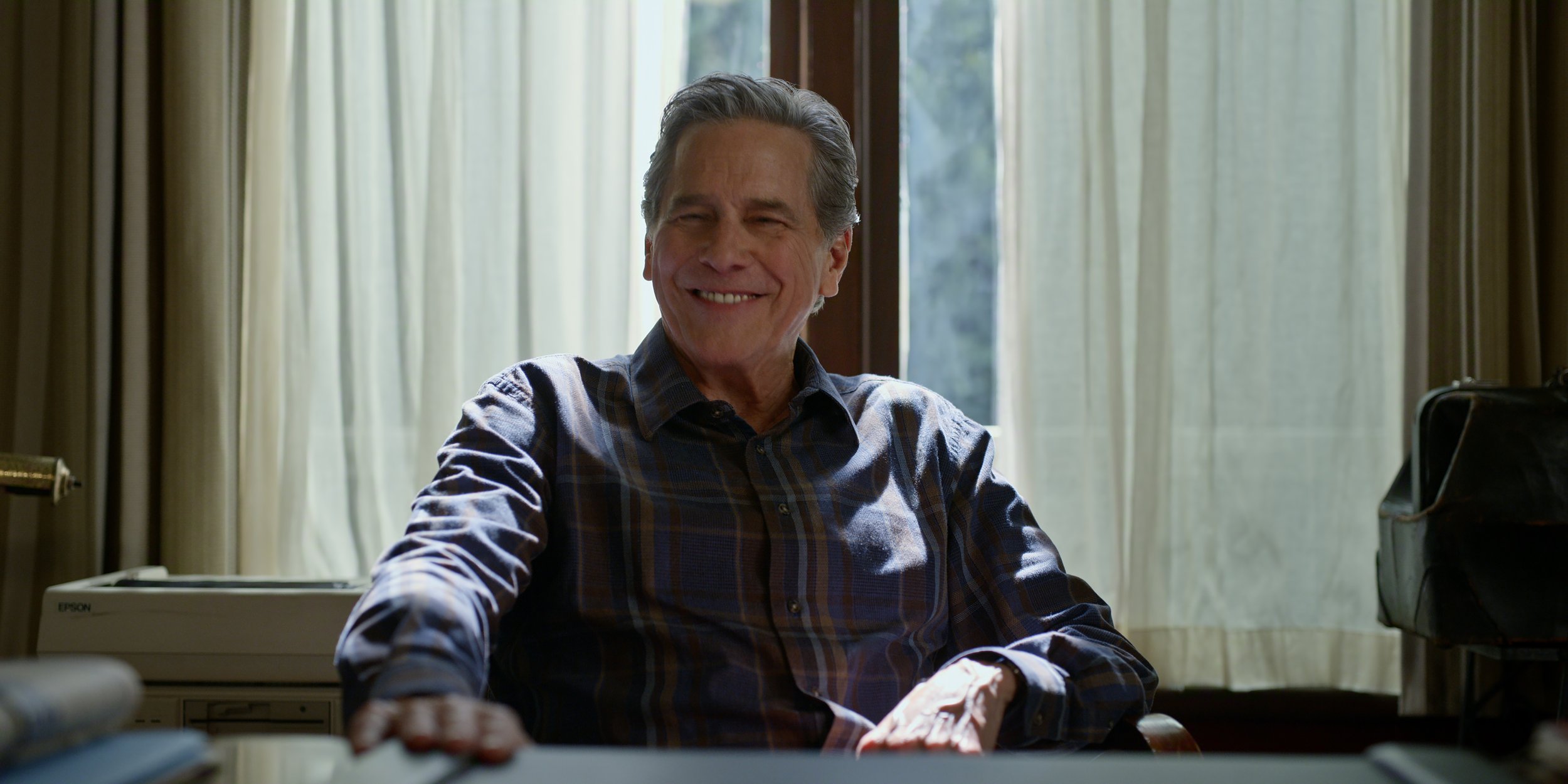
Courtesy of Netflix © 2025
“It was like, oh my God, we did not see it coming. We liked the characters, we liked the world. We didn’t know if the audience would enjoy it or not. It was the number one show everywhere in the world. That was like bingo.”
“Now, we are toward the end of our eighth season. We’re shooting that now. It’s so exciting and so invigorating. We still love the show, the characters, and we have a ball doing it.”
In addition to his live-action work, Matheson has had his fair share of voice roles. Some of those credits include Jonny Quest, Sinbad Jr. and His Magic Belt, and Samson & Goliath. Those three shows were all produced under the umbrella of Hanna-Barbera, a north star in terms of what voice acting could be. Matheson found the transition to voiceover work daunting, but ultimately inspiring.
“You don’t want to overact and yet you want to make it real. I’m working with these actors who can create a dog’s voice or a bird’s voice so easily. I was working with Bugs Bunny! Mel Blanc and these brilliant, brilliant voice actors who could do so much. I think Mel actually did a scene where he was playing two characters talking to each other. I was learning on the job, and I couldn’t have had a better place to do it.”
“I would sneak in and watch them do The Flintstones and The Jetsons. They did it live with all the actors in front of microphones, looking into the control room where the technicians and the director were, and we would perform it as a stage play. A 30-minute show and then retakes with added lines here and there.”
“I would go and study how these guys and the ladies did it. June Foray and all the different voice stars that were there. I mean, they were the best. I would try and pick up as much as I could, watching them do it and then trying to emulate that.”
One part of Matheson’s career that isn’t as widely reported on as his time on The West Wing is his portrayal of Captain Braddock in the since-closed Walt Disney World attraction of Body Wars. The gist of the motion simulator ride was that park goers would be miniaturized to examine the effects of a splinter on the human body. Captain Braddock was the pilot of the vehicle.
While it may seem like a strange deviation from the rest of his career, the way Matheson describes the opportunity makes perfect sense.
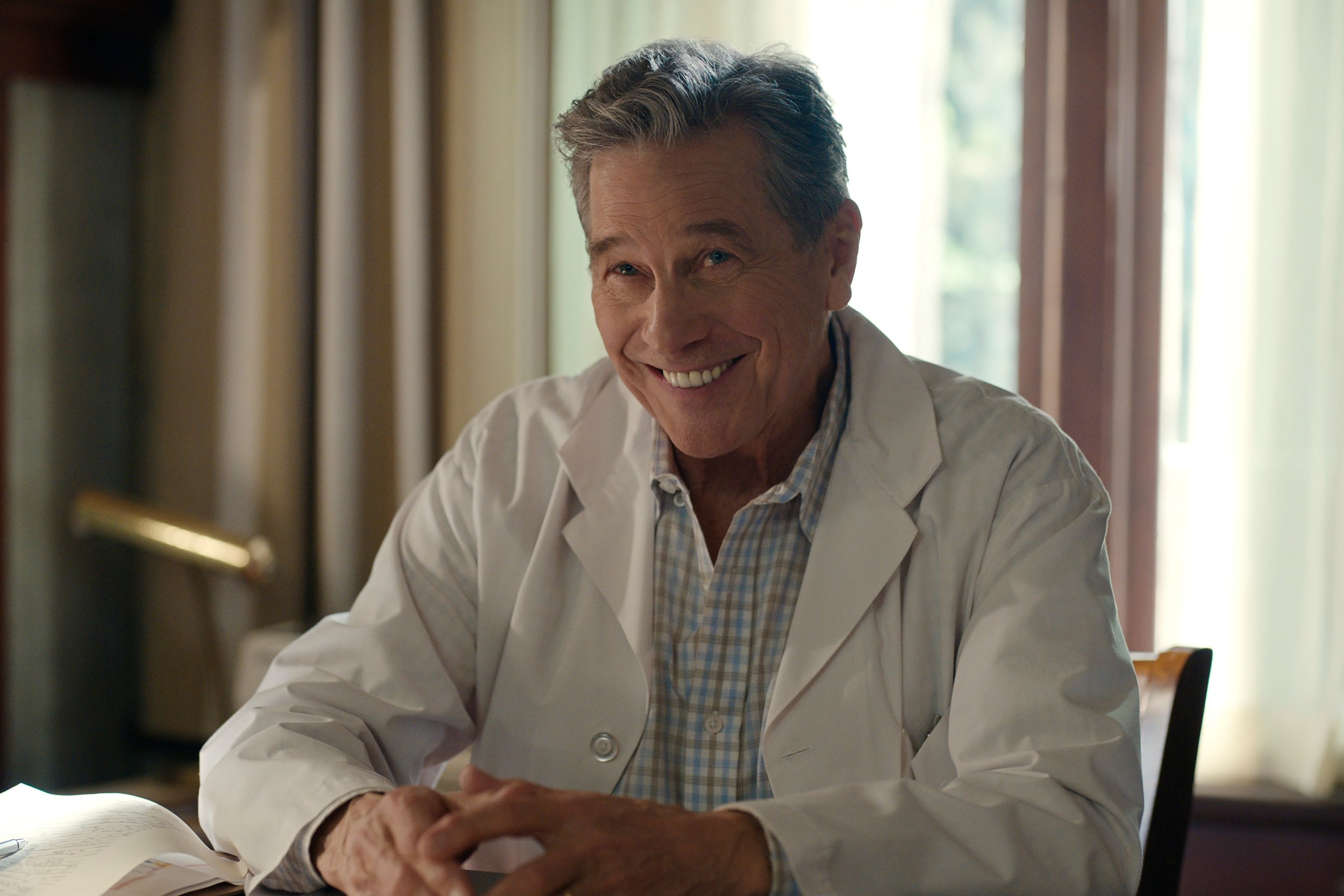
Courtesy of Netflix © 2024
“I got a call from my agent and they said Disney wants you to do this thing, Elisabeth Shue is going to be in it, and Leonard Nimoy is directing it. I went, wow. They sent me the script and it was basically a one-act play. Leonard gave us a day’s rehearsal and he told us how he was going to shoot it. We had to learn the entire script and play it like it was continuous, which was exciting and fun. The chance to work with Leonard was wonderful. He’s a wonderful actor and a wonderful director. It was really remarkable.”
Throughout Matheson’s life as an actor, he’s had almost every career under the sun. He’s played presidents, doctors, cowboys, you name it. Spending seventy years, day in, day out, pretending to live the lives of others has to rewire a person’s brain in some way. While Matheson loves the historical research components that go into playing real-life people like Ronald Reagan or JFK, it’s his roles as doctors that have changed his perspective.
“I love playing doctors because they’re devoted to helping people. It’s one of those things that awakens in you how to give back to society. It makes you think about what it takes to become a doctor, how disciplined you must be, how precise and restrictive with your own life you must be.”
“I think the most valuable thing for me was I got to stop being me. I got to step away from and outside of my life to get a perspective on myself. It’s like therapy in a way, so I find it’s very valuable to me too, because then I can’t take myself so seriously.”
In writing a memoir, Matheson has had the chance to take stock of his career, his life, and the people along the way who helped shape him. Matheson admits that he doesn’t think much about the idea of legacy, but instead wants to focus on the help and support he’s had in his lifetime. In a way, that is a legacy of its own. To recognize that we’re all the sum of the people who helped us. That sort of self-reflection passes down to the next generation so they, too, can realize none of us do this alone.
“I wanted to share the successes and mistakes I’d made so younger performers or directors could learn from those things and try not to make the same mistakes again. I want to share shortcuts you can take to achieve things. You don’t have to bang your head against a wall for a year and a half to go, oh gee, I shouldn’t be doing this.”
“I was trying to be insightful about the moments in my career where someone had shared knowledge or experiences with me that helped me get by those roadblocks that come up all the time. One of the most important was Lucille Ball, who basically taught me that you’ve got to be tough. You’re going to get knocked down, but you’ve got to get back up. It’s the recovery business.”
“She felt, I think, that I was a sensitive, good actor, but she wanted to toughen me up and teach me that it’s 12 hours a day, seven days a week. You’re going to get parts and you’re not going to get parts. You cannot let that knock you down. You’ve got to bring the work to the set and deliver it. She told me, if you want to be a star, you have to act like a star. What that meant to me was you’ve got to bring the performance with you, prepare it, make sure it’s ready and that it works, and deliver it time after time after time.”
Damn Glad to Meet You by Tim Matheson is available as hardcover, ebook, audiobook, and paperback now!
Follow me on BlueSky, Instagram, Letterboxd, YouTube, & Facebook. Check out Movies with My Dad, a new podcast recorded on the car ride home from the movies.
Support Your Local Film Critic!
~
Support Your Local Film Critic! ~
Beyond the Cinerama Dome is run by one perpetually tired film critic
and her anxious emotional support chihuahua named Frankie.
Your kind donation means Frankie doesn’t need to get a job…yet.